Indonesian President Prabowo Subianto has a message for global index provider MSCI: Indonesia "is not afraid of anyone."
His comments came days after MSCI said it was considering moving the country down from emerging-market to standalone status, sending its stocks tumbling. Full story: https://t.co/Gygsq1VkQq
📷: Dimas Ardian/Bloomberg
Cross-chain, compliant tokens used to mean wiring both yourself.
Now OpenZeppelin's Wizard ships tokens with Chainlink CCIP hooks prewired, plus ACE policies (KYC, sanctions, limits) you can update without redeploying.
You still set them up, but the plumbing's done.
NEW: @OpenZeppelin, which S&P Global agreed to acquire, embeds Chainlink into its tooling standard used by the vast majority of the industry, including BlackRock, WisdomTree, Franklin Templeton, and more.
Chainlink CCIP, CRE, & ACE are now built into the tools behind $38+ trillion in transferred value.
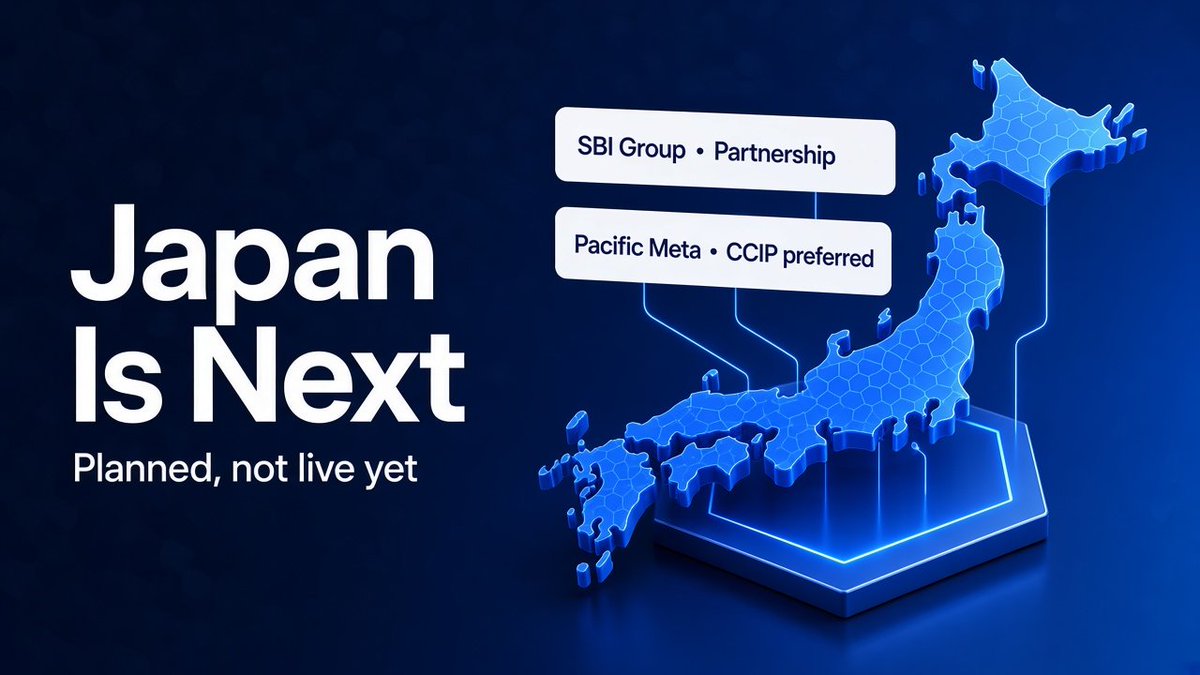
Japan is next on the map.
SBI Group signed a strategic partnership with Chainlink for tokenized assets and cross-border settlement, and Tokyo firm Pacific Meta made CCIP its preferred cross-chain tool. No Japanese bank is live yet, so watch for the first one.
NEW: @PacificMeta enters a strategic partnership with Chainlink to unlock institutional tokenization in Japan 🇯🇵
Through the partnership, Pacific Meta has:
🔗 Adopted Chainlink CCIP as its preferred interoperability solution
🏛️ Listed Chainlink's Automated Compliance Engine (ACE) on its marketplace, with more services to come
As Japan's trusted gateway for onchain finance and AI, working with leading Japanese enterprises across telecommunications, consumer electronics, and digital advertising, Pacific Meta is helping accelerate digital asset adoption by Japanese financial institutions.
Markets close. Collateral shouldn't.
With Chainlink Fulcrum, institutions can mobilize collateral intraday, weekends and holidays included, while risk checks run all day instead of once at close.
Financial institutions borrow against securities to fund their operations.
Chainlink Fulcrum brings that capability to tokenized assets, enabling institutions to access financing and manage collateral 24/7 across blockchains.
Chainlink Labs’ Ryan Lovell shows it end to end ↓
A Stellar lending pool lost ~$10.2M in Feb. Nobody hacked the oracle: one tiny trade in a near-empty market moved a price from $1.05 to $106.7.
Chainlink feeds, now live on Stellar, price from many exchanges at once. Not every asset is covered yet, but that's the fix.
NEW: Chainlink oracle infrastructure is now live on @StellarOrg, bringing Data Feeds and Data Streams to Stellar network’s $4B+ RWA ecosystem.
Devs gain verifiable market data powering lending, stablecoins, tokenized equities, & more.
Through the Chainlink Scale program, Stellar is making a substantial capital commitment to give its builders cost-efficient access to high-quality, institutional-grade oracle infra.
We’re excited to announce that Gravity has integrated industry-standard @chainlink CCIP as its canonical cross-chain infrastructure, alongside Chainlink Data Streams, on Gravity L1 Mainnet 🌀
WETH and USDC can now move between Ethereum Mainnet and Gravity L1 in both directions via Chainlink CCIP, with Data Streams bringing low-latency, high-frequency market data onchain.
Start bridging: https://t.co/Yw0OjUDP65
@BTSE_INDONESIA Melihat market Crypto itu sendiri sudah mulai stabil diikutin dengan bukti seperti ETF Tokens, Tokenized Stock, Oracle.
Apakah cara kita approach market Crypto masih sama atau ada perbedaan yang harus kita adaptasikan?
Thank you mas
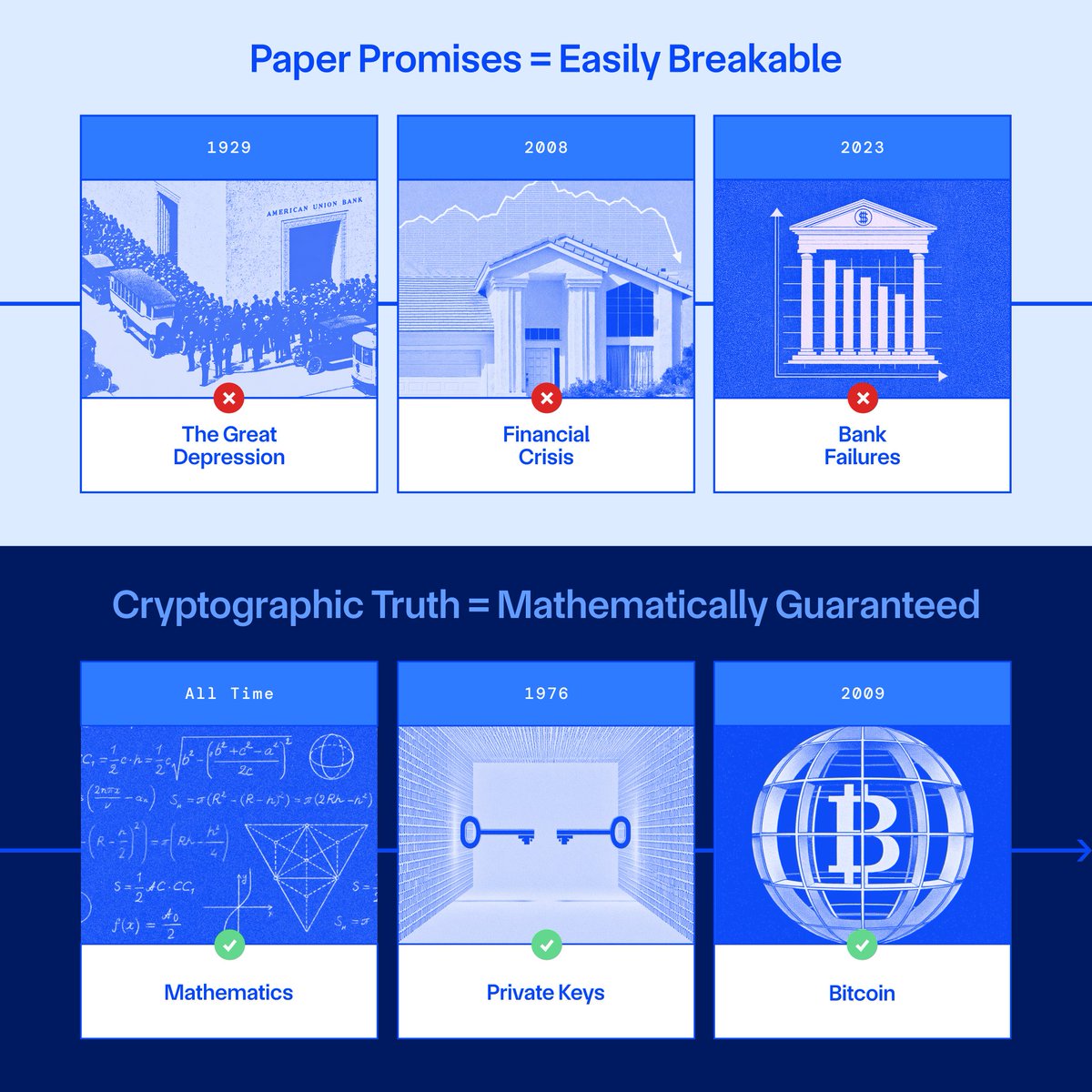
Paper promises have slowed the advancement of society.
But new solutions powered by mathematical certainty are changing how the world works.
Chainlink technology unlocks this fair, unbiased world.
A bank issuing a digital asset still has to control who can receive it, how much can move, and which transfers require approval.
Those responsibilities follow the asset wherever it goes.
That becomes difficult when the asset moves between blockchains. Each network has different infrastructure and transaction rules. The bank needs a reliable way to carry its controls across those boundaries.
Chainlink’s newly launched CCIP 2.0 addresses that requirement directly.
An institution can now add its own Cross-Chain Verifier, or use one operated by a trusted provider. The required verification sits alongside Chainlink’s default decentralized verification network. A transfer configured to require the institution’s approval cannot execute without it.
That means a bank can require an additional check for a large transfer and have the infrastructure enforce that decision.
Chainlink’s Automated Compliance Engine adds another part of the workflow. Issuers can configure eligibility checks, transaction limits, and other policies governing how their assets move. The controls become part of execution across supported networks.
CCIP 2.0 also gives issuers a choice over confirmation requirements. Full source-chain finality remains the default. Faster execution is an explicit option for transactions where the participants accept the associated risk.
These are the practical decisions institutions make before putting capital into a system.
The launch announcement names Aave, Maple, and Re as adopters of faster-than-finality transfers. Lombard is adopting custom verification. Infosys and Nethermind are among the firms developing verifier infrastructure for customers.
Chainlink is creating room for institutions and service providers to build their own requirements into CCIP. Their internal controls can operate within the same shared infrastructure.
That makes CCIP more useful as institutional adoption grows. Different banks can have different policies and still use Chainlink to transact across the same networks.
Introducing Chainlink Fulcrum: the gateway connecting the world’s largest financial institutions to onchain financing.
As tokenized assets and financing venues expand across public and private blockchains, institutions need to mobilize collateral and access liquidity without building bespoke infrastructure for every market.
Chainlink Fulcrum solves this with an end-to-end solution that separates where financing agreements are managed from where cash & collateral settle. Counterparties define the eligible assets, financing terms, and the settlement networks through which the assets move.
For institutions, this unlocks:
• Faster collateral mobilization that enables intraday financing, including on holidays and weekends.
• 24/7 risk management through automated collateral coverage checks throughout the day, extending beyond end-of-day processes.
• Greater capital efficiency by making assets across networks available for financing, helping institutions free up balance sheet capacity.
• Lower operational complexity through reusable workflows that connect existing systems across public and private blockchains.
The solution combines multiple aspects of the Chainlink platform, including the Chainlink Runtime Environment (orchestrates transaction lifecycle), CCIP (cross-chain data and asset transfers), and Data Streams (collateral valuation data).
Chainlink Fulcrum is designed to serve all market participants, including banks, dealers, prime brokers, agent lenders, custodians, hedge funds, pension funds, insurers, sovereign wealth funds, money market funds, asset managers, tokenized fund and stablecoin issuers, and corporate treasuries.
Each can lend, borrow, or mobilize collateral on terms that fit its mandate and risk parameters.
Fulcrum is in the process of being integrated with leading TradFi environments, providing a single platform where participants can compare financing terms and route transactions to the venue of their choice, where the agreement is executed and governed.
This is a foundational step toward global financing markets, where an asset’s utility extends beyond the network on which it was issued.
🧵↓