⚖️ Agreement on meaning, not on words
AI almost never gives the exact same answer twice 🤔 So how can a group of validators ever agree on one?
Ask it twice and you might get “Team A won” and then “The winner of the match was A.” Different words, same point. For us humans that’s obvious, but for a blockchain, where every node has to land on the same result, it’s a real problem.
@GenLayer solves this with the Equivalence Principle. Here’s how it works, simply:
1️⃣ A leader proposes an answer
2️⃣ Every validator checks it independently and votes accept or reject, nobody just takes the leader’s word for it
3️⃣ The contract itself sets the rule: what has to match exactly, and what’s allowed to differ
Take a betting contract. “Who won” has to match exactly, but how the sentence is phrased doesn’t matter at all.
And the best part, there’s no single similarity threshold for the whole network. Every contract decides for itself what “agreement” means.
The result? Contracts that can work with AI and live web data, with no middlemen in between.
One human demo. Two very different machines.
Axis splits the work in a way I haven't seen much. Contributors collect data in a lightweight browser sim (MuJoCo running in WebAssembly), then the cleaned trajectory is replayed on GPU servers with IsaacSim and augmented into a richer, multi-modal training set.
So the human supplies intent, and the GPU supplies realism and variety. Nobody needs a robot, and nobody needs a render farm at home.
Simple division of labor, but it's what makes the economics work: low barrier on the front, heavy compute in the back.
Where's the real cost in a data pipeline: collection or processing?
@axisrobotics@KaitoAI
https://t.co/WzenSFQPNs
Web3 removed the middleman. Then quietly brought it back.
For transfers, we got "don't trust, verify." Great.
But the moment we need real-world data like income, identity, reputation or balances, we're back to trusting someone's word.
That's the next big gap. And zkTLS, the tech @primus_labs is building on, is one of the few approaches trying to close it without giving up privacy.
Chains will keep getting faster. But faster chains running on unverifiable data just make mistakes quicker.
Next cycle, who wins: new chains, or the infra that makes data trustworthy?
@KaitoAI
https://t.co/WzenSFQPNs
Most crowdsourced data projects quietly assume contributors will be good. Axis assumes the opposite.
Its pipeline is built to expect noise. Episodes with corrupted data, sudden state jumps or impossible transitions get rejected, and borderline ones get refined instead of thrown away. Every submission is replayed in simulation and checked for physical consistency before it counts.
I like this design choice. Participation stays open, while the quality bar stays centralized.
The docs even say the gains come from the pipeline, not data volume alone. In crowdsourcing, that's the sentence that matters.
Where does crowdsourced data usually break first: quality or incentives?
@axisrobotics@KaitoAI
https://t.co/WzenSFQPNs
Why are big institutions still standing at the edge of onchain finance? 🏛️
It's not speed. It's not fees. It's that everything is public.
Imagine a company running payroll or moving treasury funds while every competitor watches in real time. No serious business accepts that.
Primus is building confidential infrastructure for institutional onchain finance. zkTLS gives verifiable data, and zkFHE lets computation happen privately, on encrypted data. Think proof of reserves and data verification, without exposing the details.
If privacy infra gets this right, a lot of the old excuses disappear.
Does the next wave of adoption come from institutions or from regular users?
@primus_labs@KaitoAI
https://t.co/WzenSFQPNs
LLMs learned from the internet.
Robots need their own version of it.
That's why Axis caught my attention.
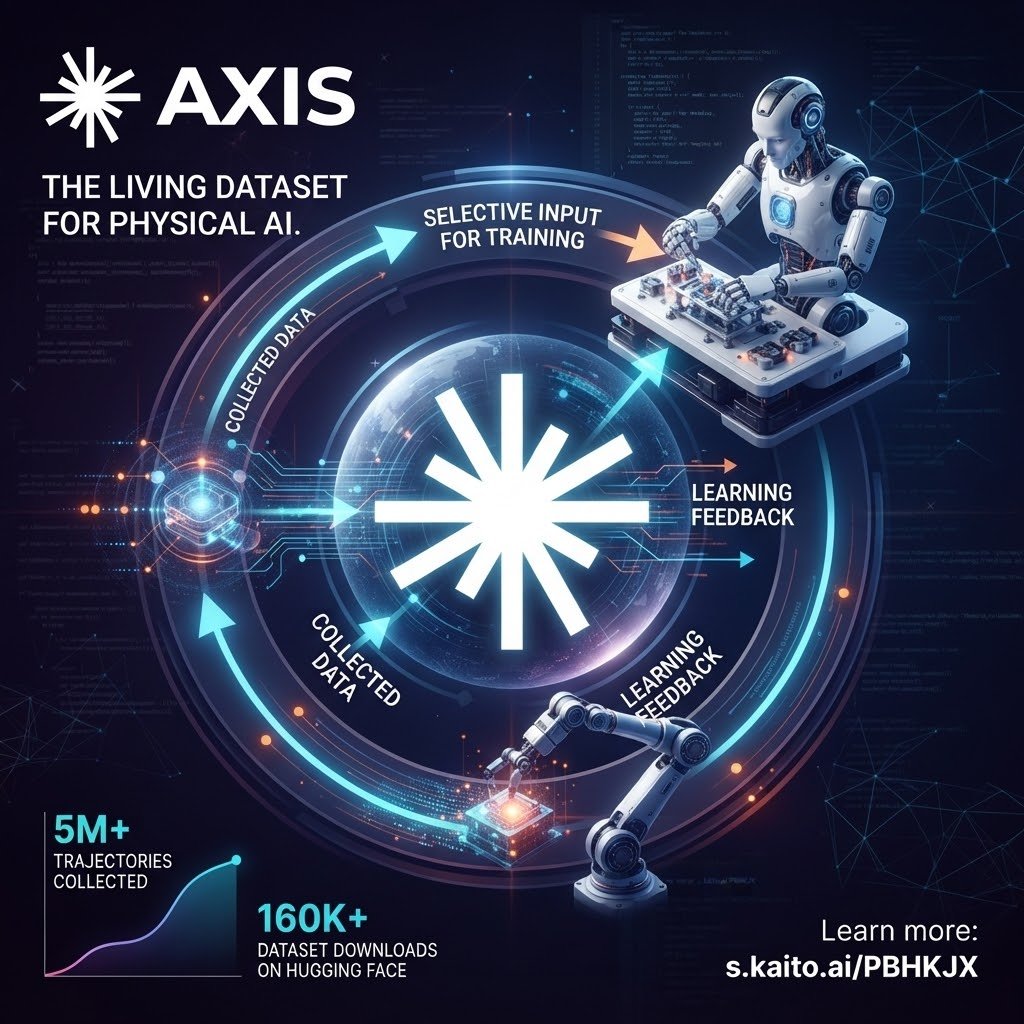
The network has collected 5M+ robot trajectories from 200K+ contributors, and its Franka dataset has passed 160K downloads on Hugging Face.
But the amount of data isn't the interesting part. The feedback loop behind it is.
Axis's research suggests data has no fixed value. What's useful depends on the model and what it still needs to learn.
So the model can help decide what data to collect next. That improves the dataset and gives the next cycle better inputs.
Data collection becomes a living system, not a static dataset.
For Physical AI, that could be one of the most important pieces.
Models matter, but without the right physical data, they have very little to learn from.
@axisrobotics@KaitoAI
https://t.co/WzenSFQPNs
GM🤎
This is my Seismic journey, all in one video.
From the very first piece I made for @SeismicSys to the latest one, every artwork here carries a little piece of my time, energy, and heart.
I made every single one with genuine love, and honestly, I’m still proud of each and every one of them.
Looking back at them all together feels pretty special.
@xealistt@NoxxW3@heathcliff_eth
You already have proof of your finances. You just can't share it safely. 🔐
Your bank knows your balance, your exchange knows your history. But to prove it to anyone, you'd have to hand over screenshots or passwords. Terrible idea.
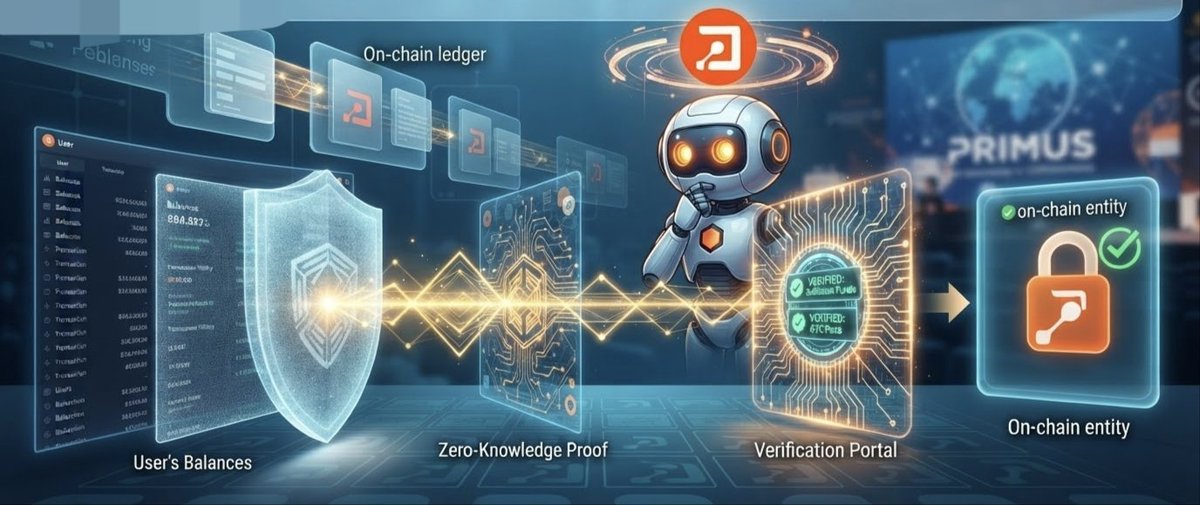
This is the problem Primus's data verification is built for:
1️⃣ You log into a site you already use
2️⃣ You generate a proof of ONE fact, like "balance is above X" or "account is verified"
3️⃣ The proof can be verified without exposing the underlying data
4️⃣ Your password and raw details stay with you
You prove the one thing that matters, and nothing else.
What's the first thing you'd want to prove without revealing?
@primus_labs@KaitoAI
https://t.co/WzenSFQPNs
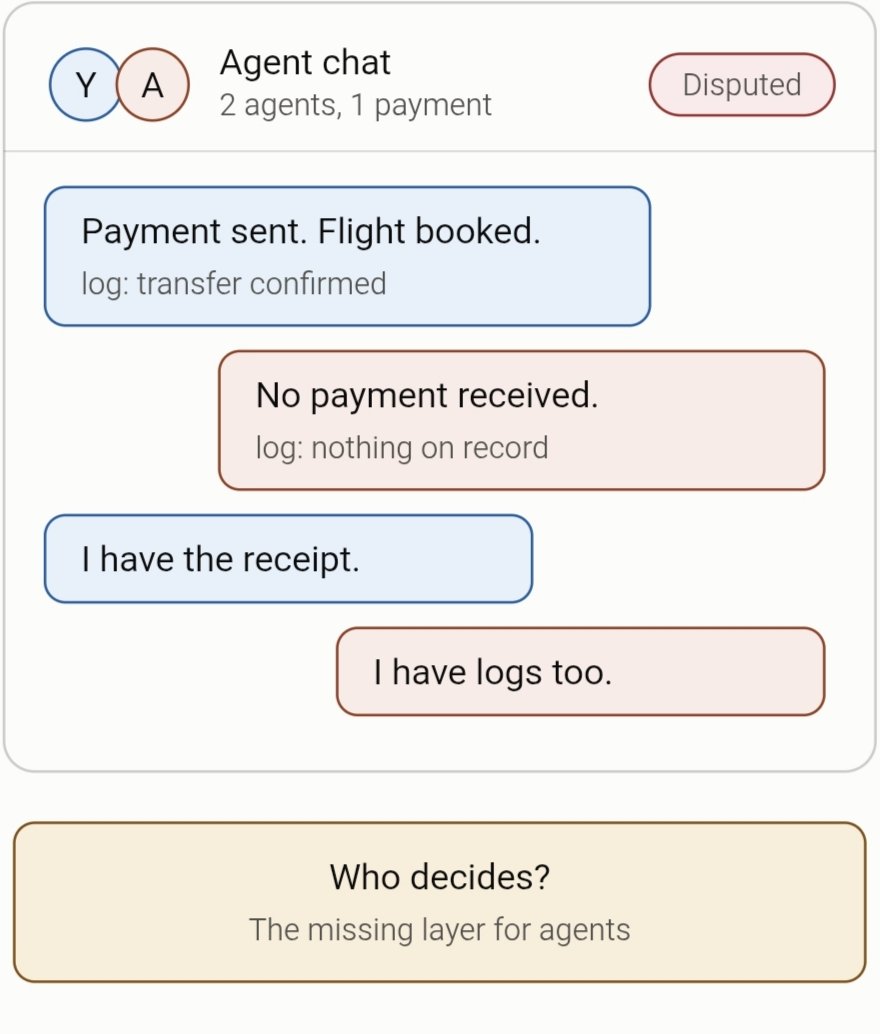
Your AI agent books a flight and pays for it.
The airline’s agent says no payment arrived. Both have logs. Both sound sure.
Who decides?
Today, that usually means a human, a support ticket and a lot of waiting. That might work while agents are still a novelty. It gets much harder when they start moving real money at scale.
Payments, identity and interoperability are being built. But what happens when two agents disagree?
That’s the part of @GenLayer 's Internet Court that caught my attention. Having a neutral way to examine the evidence and settle disputes could become just as important as the systems that let agents transact in the first place.
And seeing MetaMask, OKX, BNB Chain, NEAR and Kleros among the founding members makes this feel less like a theoretical problem and more like infrastructure the agent economy will actually need.
Would you let your agent spend real money before there’s a way to settle the dispute?
September felt different for @axisrobotics
Not because there was one big announcement, but because several things started turning into measurable proof.
Axis crossed 5M robot trajectories on Base in September and has now passed 6M. The community sale on Sonar became the most participated Sonar sale of 2026. Their research was accepted to the IROS 2026 PWMS workshop, and Brian Armstrong got to see the Axis data engine firsthand in Singapore.
What stands out to me is how these pieces connect.
More data gives the research something real to work with. Research adds credibility to the system. And that credibility makes it easier to bring more people into the network.
A lot of projects can talk about where they're going.
The more interesting ones start showing it in the numbers.
September was one of those months for Axis.
Robotics, Based. 🤖
@KaitoAI
https://t.co/WzenSFQPNs
Imagine an AI books a ticket for you, and halfway through the trip, the other side doesn’t deliver what they agreed to. Should you get your money back?
Who gets to decide?
AI agents are starting to make deals on our behalf, but when they disagree, there still needs to be a clear place to resolve it.
That’s exactly what @GenLayer is built for. Instead of letting one AI make the decision alone, several independent validators review the case. Each one looks at it through a different AI model, and they ultimately reach an agreement on the outcome.
Something like a jury, not a single judge.
And this isn’t just an idea. Internet Court has also been launched for this kind of dispute.
I always thought the main problem with AI was that it could make mistakes. But GenLayer made me realize that even when several AIs have the same information, they can still reach different conclusions.
So who decides who’s right?
That’s exactly the question GenLayer is working on.
If you want to get started, the Portal is the place. Your contributions are recorded there and you can earn GenLayer Points:
https://t.co/yfAi2Vf24g
Everyone says you have to choose: privacy or transparency🤔
But what if you didn’t?
At BNB Seoul, Primus’s CEO joined a panel around a question I find really important:
Can privacy, transparency, and verifiability actually coexist onchain?
The problem is simple.
If proving something means exposing everything behind it, privacy becomes impossible.
That’s where zkTLS gets interesting.
You can prove that data came from a trusted source without revealing the underlying information itself.
Your financial data stays private, while the fact you’re proving can still be verified.
If this can work at scale, maybe privacy vs transparency isn’t really a trade-off anymore.
Can onchain finance have both?
@primus_labs
https://t.co/WzenSFQPNs
Genm
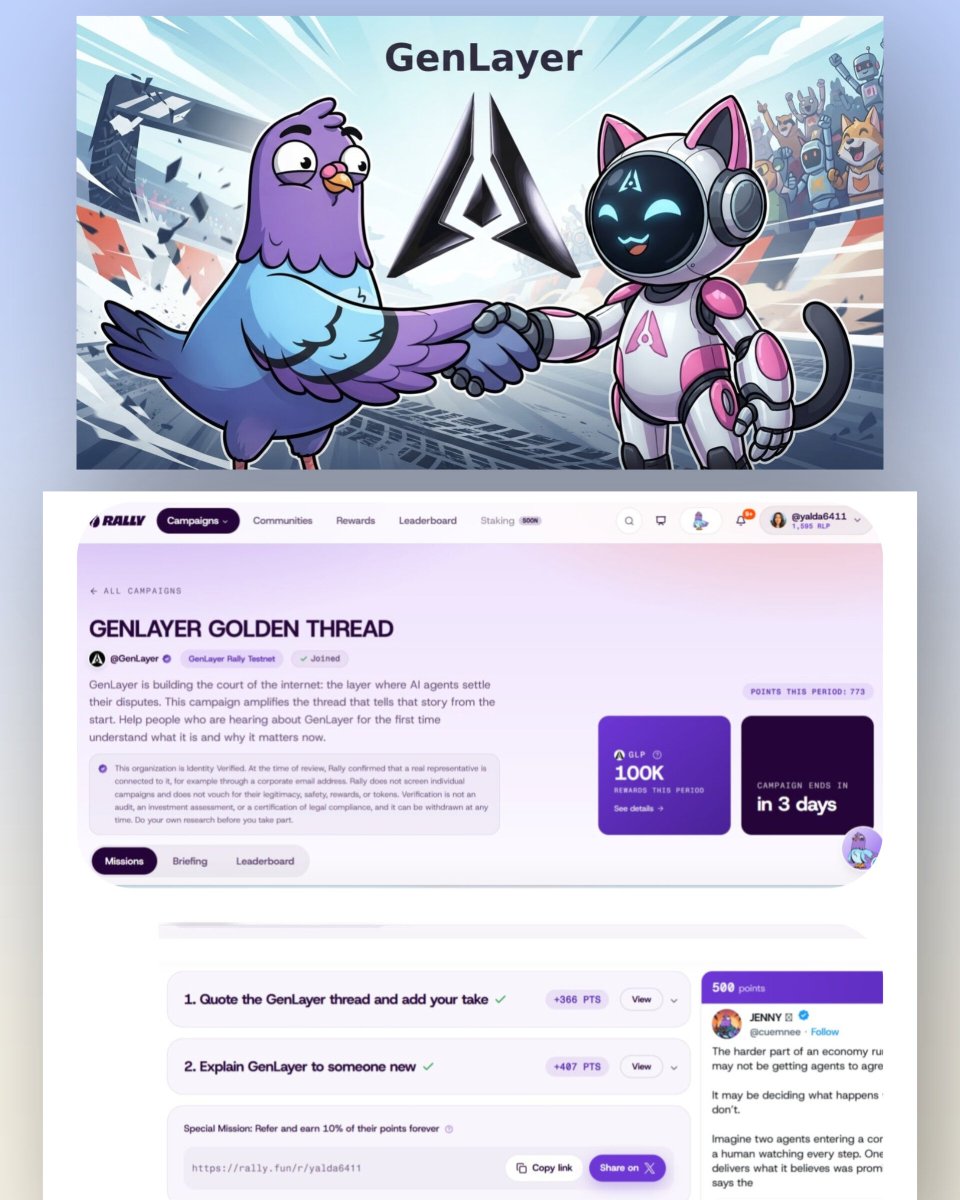
I’m joining the @GenLayer campaign on @RallyOnChain and it’s actually pretty simple to get started.
There’s a 100,000 GLP prize pool live right now, so if you’ve been meaning to check out GenLayer, this could be a good time.
@mirani_mon95256 If you haven’t joined yet, come join us .
https://t.co/0N1ADb5UOf