The South African National Treasury's draft Public Procurement Regulations have instituted a structural threshold that effectively excludes white-owned enterprises from bidding on state contracts valued under R20 million, mandating 100% black ownership for all public tenders below this financial baseline.
When you mandate a 100% racial quota instead of a 100% competence standard for winning a public contract, you're not promoting transformation.
You're eliminating competition, efficiency, and engineering capability by design.
You're making it illegal for the most qualified, cost-effective provider to fix a water pump, repair a road, or supply a hospital, simply because their equity structure doesn't match a political spreadsheet.
The result is entirely predictable; the institutionalization of the tenderpreneur middleman.
A real business, one with the trucks, the engineers, and the machinery to actually deliver, gets locked out. The contract instead goes to a politically connected paper-pusher whose only asset is a compliance certificate.
That middleman then subcontracts the real work back to the very operator who was disqualified in the first place, pocketing an inflated markup for doing nothing.
The taxpayer pays twice. The timeline stretches toward infinity. And the project collapses within six months because the maintenance budget was consumed by the cartel's cut.
This is the same structural rot that ran Eskom, Transnet, and every major municipality into the ground over the past three decades. You cannot run a modern economy on ideological tokenism and expect a different outcome.
A R20 million contract is the baseline of local government, the level at which clinics are maintained, school roofs repaired, and sanitation systems kept running. Lock the productive tax base out of that tier, and procurement stops functioning as a public service. It becomes a feeding trough.
The politicians seem content to watch the country's infrastructure rot to the ballast, so long as the remaining scrap is distributed strictly along party lines.
They've decoupled their own survival from the material reality of the country, proof that in South Africa, the state exists to serve the cartel, while the ordinary citizen is left to starve in the ruins.
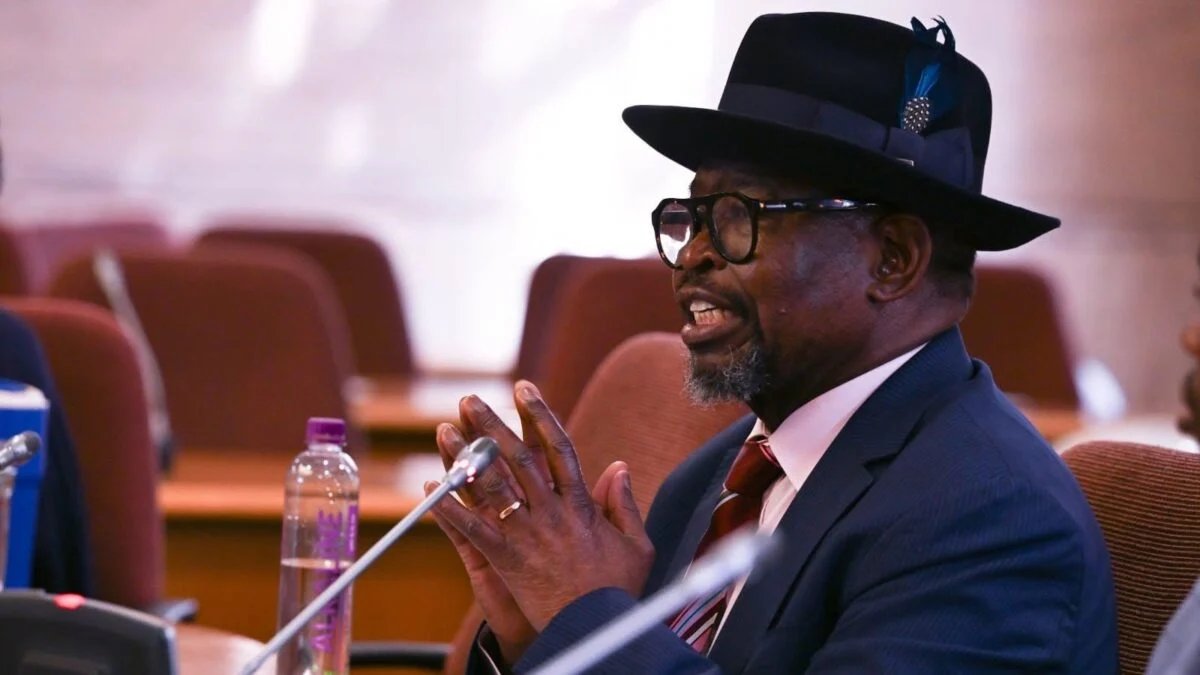
Cyril Ramaphosa's sudden, hand-wringing panic over the continued erosion of South Africa's industrial base is the absolute peak of political gaslighting.
For the President to stand at a podium and declare manufacturing "fundamental to our economic sovereignty" while his own administration actively strangles the private sector is pure theater.
The industrial base isn't eroding because of external bad luck. It is being systematically dismantled by the ANC's own ideological obsessions: BBBEE and cadre deployment.
Ramaphosa laments a dying industrial base while forcing capital intensive, high risk manufacturing firms to navigate an oppressive maze of BBBEE compliance.
Foreign and domestic investors are not looking for compliance lectures; they are looking for economic viability.
When you prioritize skin color and political connections over global competitiveness, investors pack up and take their factories to Vietnam, India, or Mauritius.
You cannot have a manufacturing sector without electricity, rail, and ports. Ramaphosa's sacred cow, cadre deployment, has stuffed the boards of Transnet, Eskom, and Prasa with incompetent party loyalists instead of technocrats.
By turning state owned enterprises into patronage feeding troughs, his government has made it impossible for factories to reliably power their machinery or move their goods to port.
It is laughably hypocritical to talk about economic sovereignty when your state's economic policy has rendered the country completely dependent on Chinese loans, IMF bailouts, and Western green-energy handouts.
Local businesses are shutting down because the cost of doing business in South Africa, driven by rigid labor laws, state extortion, and broken infrastructure, is too high.
The ANC has successfully colonized the economy with red tape, ensuring that only politically connected elites survive while real entrepreneurs go under.
Ramaphosa has mastered the art of speaking like a concerned observer rather than the head of the executive.
He laments the crisis as if he didn't spend the last decade chairing the committee that oversaw the deployment of the very cadres who broke the state.
No amount of social compacting or high-level investment summits can undo the damage of a state policy framework designed to extract wealth rather than create it.
Manufacturing requires cheap electricity, functional railways, and regulatory certainty.
Ramaphosa's administration offers the exact opposite, erratic power, stalled trains, and aggressive racial engineering.
If the President truly cares about South Africa's industrial base, he needs to stop diagnosing the disease and look at the ideological poison his own party keeps feeding the patient.
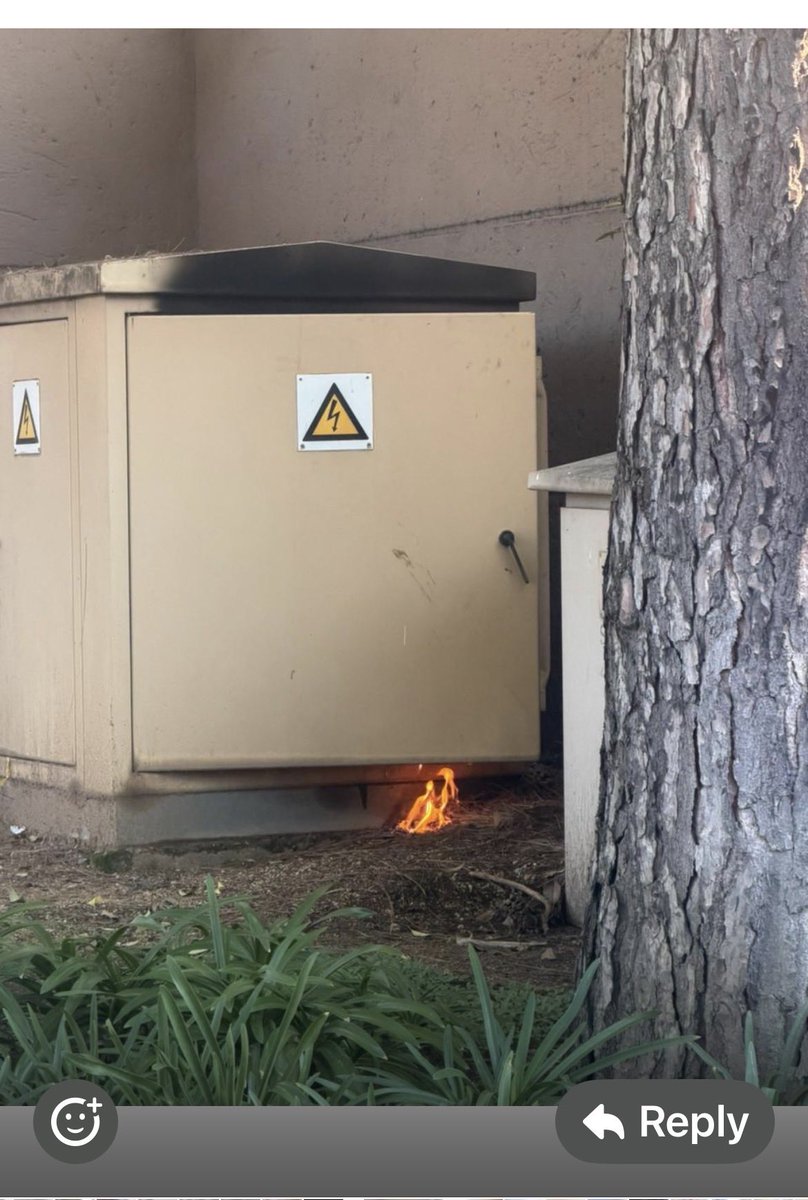
@CityPowerJhb
CP 3522395 reported early Sunday morning, substation vandalized, cables cut, complex without power. Ticket has not been assigned yet. Could we please escale ? Many thanks
@CityPowerJhb Dear Ashlen Mammen, your City Power call ref is CP3522395 for account 220082552 https://t.co/NTVut0tWyP
Our substation was vandalized around 6am this morning. Please report. Many thanks
@CityPowerJhb We’ve had no power for 3 days, multiple tickets cancelled, calling CP endlessly, no feedback, no technicians. What do we need to do to get resolution ?
@CityPowerJhb New ticket CP3506914. The cables burnt out, phoned CP multiple times wanting to avoid a fire. No one came, we are now without power since last night. Pls attend. Many thanks
@CityPowerJhb CPWEB5013310 cables burning for 4 days in substation on Sloane St Bryanston. We have had repairs done 3 times in the last 2 months. Pls report with urgency. Many thanks
@CityPowerJhb cables burnt in distribution box in Sloane St Bryanston, 3rd time recently, last month we had no power for 5 days, no permanent fix. CP3503823. Please attend. Many thanks