New book out on the teacher and the state where we look at the relationship between the state and the teacher in the Nordics and East Asia from the dawn of the nation-state to the age of globalization.
https://t.co/TVQ1eMiirA
@DavidDeutschOxf@KonstantinKisin You are right, but a problem is that people use a desire for working liberal institutions as an analytical model of how the world is and ought to be in an absolute sense, when human nature tends to indicate it doesnt work that way.
This depends on what you put in "won". If its contributed to the defeat of Germany then the USSR was vital, but thats not what winning is. The US won the war because after it they were the dominant country in the world with the richest population.
I mean, the UK refuses to accept it but you lost WW2 to the US! The world went from UK dominated to US dominated between 1914 and 1945.
@SandyofCthulhu Neil DeGrasse Tyson is an idiot’s idea of an intellectual. He is a pure midwit with some charisma, who has made no contributions of his own, and spreads a dangerous understanding of research to the masses anchored in his own limited understanding and ideology.
@peterrhague We observe that the public school system is failing. When parents can (and think about it), they send kids to private schools. When they cant, they go ballistic against the teachers. We have messed up quite badly to be fair for a range of reasons.
Success is not so much a matter of personal merit: it is about making sure there are no jealous fools in your inner circle.
Jealousy is the most disgusting human emotion and the one that has always been the most detrimental to the development of humanity. Nothing can harm you more than a jealous person, especially if they are hiding it—and they usually are, because they refuse to admit their inferiority complex. Yet, they always strangely drag you down.
Success is a structural phenomenon, not a heroic one. We tend to romanticize the individual, but functionality is almost always a result of network effects and logistics.Therefore, the composition of your immediate environment is not a social preference; it is an operational baseline. If success is collective, then a single compromised element—a jealous individual—acting within that mechanism renders the entire machine inefficient. You cannot optimize a system if one of its components is actively, albeit quietly, working to undermine the rest.
Unlike anger, which can drive action, or fear, which ensures survival, jealousy is a mechanism of stagnation. It is the refusal to compete combined with the desire to punish those who do. From an evolutionary or civilizational standpoint, it is a dead weight, a psychological defect that prioritizes the leveling of the playing field over the advancement of the game. It is the hallmark of the weak who, unable to generate value themselves, seek to redistribute the deficit of their own status to you. It is psychiatric communism.
The most dangerous aspect of these individuals lies in their cowardice. A jealous person rarely attacks openly because that would require admitting their own perceived inferiority. Instead, they operate through concealment, masking their resentment as concern, realism, or cynicism. They do not stab you; they simply hold you back. They act as a gravitational drag, a subtle, constant force pulling you toward mediocrity. To tolerate such a person in your orbit is a strategic error; you cannot ascend if you are voluntarily tethered to someone whose psychological stability depends on you remaining on the ground.
This threat metastasizes when the individual defect scales into a collective pathology. In certain environments, jealousy ceases to be a private vice and becomes a social organizing principle, swallowing entire societies in a "crab bucket" mentality. The culture shifts from aspirational to punitive; the herd instinct is weaponized not to protect the group from predators, but to protect the group from the humiliation of witnessing one of their own succeed. "Equality" is reinterpreted as a ceiling rather than a floor, creating a feedback loop where ambition is treated as a defection.
Under these conditions, extracting yourself from mediocrity becomes an immense logistical challenge. You are no longer merely fighting the friction of the task itself, but the active resistance of the substrate you inhabit. The energy requirement for success doubles: you must generate enough force to achieve your objective while simultaneously overcoming the gravitational pull of a milieu that views your elevation as a personal insult. In such societies, the only way to win is often to completely sever ties, as the cost of remaining is the slow, inevitable erosion of your potential.
When a political system obsesses over "Equality", it inevitably institutionalizes the jealousy of the masses, transforming the state into an agent of entropy.
@ahmedsharif The west has become all about narratives (maybe it always was), they dont seek truth. Evidence is only of use when it supports the narrative, and discarded when it does not.
@peterrhague Not to mention research on how European nation-states themselves have limited democracy compared to the US. Eg due to how in the US senior civil servants are replaced following elections, and positions such as judges and police chiefs are also elected in the US
@peterrhague It also shows people’s ignorance and/or tendency to focus on who said something rather than what is being said. The democratic deficiencies of the EU have been highlighted in academic literature for decades, but once Musk points them out that entire body of work seems forgotten.
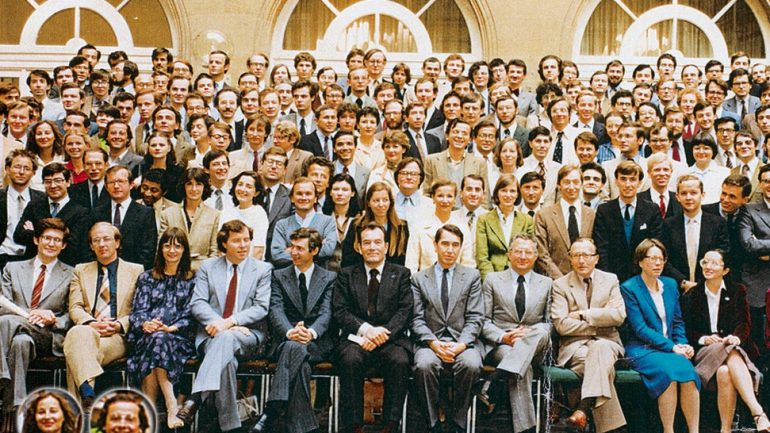
France had a competent technocratic elite.
Then they decided to create a special National School of Administration (ENA) that ruined the country by TEACHING INCOMPETENCE.
In 1945, General de Gaulle, a man who generally preferred action to paperwork, founded the École Nationale d'Administration (ENA) with a noble, republican goal: to break the nepotistic stronghold of the Parisian bourgeoisie and replace it with a meritocratic "state nobility." It was intended to be the grand equalizer of the Republic.
Instead, France accidentally invented a machine for cloning people who believe that the solution to any crisis is a well-formatted memo.
Before ENA, France was built by engineers (from the École Polytechnique) who knew how to build bridges that didn't fall down. ENA replaced them with administrators who know how to explain, in eloquent subjunctive, why the bridge was never built in the first place. The curriculum focuses less on solving problems and more on the "Note de Synthèse"—the art of compressing complex reality into two pages. The ENA graduate is trained to view the world through the lens of the "Plan in Two Parts and Two Sub-parts" (I. A, I. B, II. A, II. B). If a problem cannot be divided into two symmetric arguments, the Enarch concludes that the problem does not exist. They are masters of a specific dialect of French where verbs are decorative and accountability is grammatically impossible.
The school became a hotbed for pensée unique (groupthink). By forcing every aspiring high official to digest the same textbooks, pass the same conformist exams, and socialize in the same cafeteria in Strasbourg, the state ensured that no matter who you voted for—Socialist or Conservative—you ended up with a Minister of Finance who had the same roommate in 1974. It is a closed loop of intellectual incest. They possess a terrifying confidence derived from being told at age 24 that they are the smartest people in the room, a conviction that persists even as they drive the national deficit into the stratosphere.
Perhaps the most egregious sin of the system is "pantouflage" (literally, putting on one's slippers). This is the mechanism by which ENA graduates, having spent a decade mismanaging public funds, slide effortlessly into the private sector to mismanage shareholder funds. The state pays for their elite education, and in return, they leave the civil service in their 40s to become bankers or CEOs, leveraging their Rolodex rather than their business acumen. It created a perverse incentive where the regulator and the regulated are not just friends; they are quite literally the same person at different stages of their career.
The ultimate achievement of ENA was the creation of a ruling class that is "hors-sol" (soilless)—completely detached from the organic reality of the country they govern. An Enarch can be parachuted into a rural province as a Prefect, managing agriculture and industry without ever having grown a tomato or tightened a bolt. They view France not as a collection of human beings, but as a spreadsheet to be optimized
The story of ENA is a tragedy performed by people who believe they are in a heroic biopic. The school succeeded in its unspoken mission: to create a caste so cohesive that it became immune to the consequences of its own decisions. It produced an elite that treats the French Republic not as a nation to be served, but as a case study to be managed. They are the captains of a ship who, upon hitting an iceberg, immediately form a committee to discuss the theoretical implications of ice on maritime structural integrity, while the passengers quietly drown in the steerage.
When Emmanuel Macron—the ultimate ENA cyborg—announced the school's closure, it was the most "Enarque" move possible. He didn't actually fire the incompetents or burn the curriculum; he simply renamed the building. ENA has been replaced by the Institut National du Service Public (INSP). It is a classic bureaucratic sleight of hand: changing the label on a bottle of vinegar and selling it as Grand Cru. The walls may have a new coat of paint, but inside, the same people are teaching the same students how to write the same two-part memos and make sure France keeps failing.
Nothing they have done is wrong. I would even say this is European integration. However, immigration policies - and overarching economic policies - are not aimed at this kind of migration. And that is an issue. Politicians seem to think all immigrants and migrants are to integrate - or not - equally, there are no differentiations. And this creates problems over time.
If you believe free speech is for you but not your political opponents, you're illiberal.
If no contrary evidence could change your beliefs, you're a fundamentalist.
If you believe the state should punish those with contrary views, you're a totalitarian.
If you believe political opponents should be punished with violence or death, you're a terrorist.
Now we find even many of Oliver Sacks's case studies were fabrications.
People think I am exaggerating, but the amount of fraud and misconduct in science is beyond comprehension. It goes far beyond what the most trenchant critics say publicly. (In private, they shock even me.)