@Alan_Couzens Hi Alan! @altini_marco himself had an article about his economy changes by regulating his food (and not for a super long time), "periodized nutrition" he calls it https://t.co/4dJ3MG2rVz
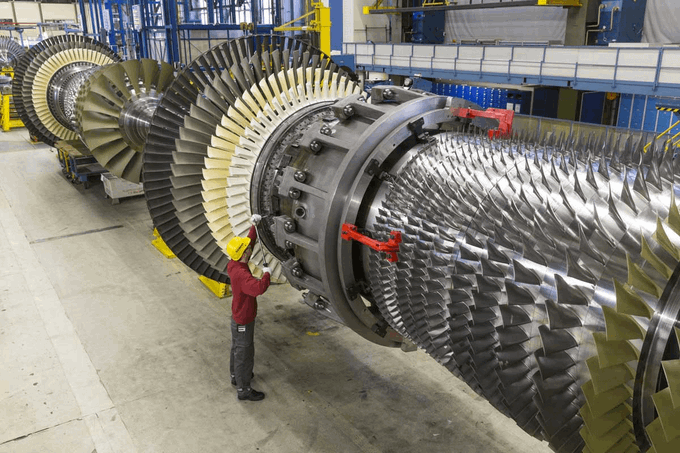
You've seen this image do the rounds.
The story goes Gas turbines blades - 5 years booked - single crystal blade technology - only 3 companies etc.
Yes & No.
Here's a no nonsense, first principles breakdown:
Firstly, Single crystal blades are used in a gas turbines (power) or a jet engines SPECIFICALLY where temperatures exceed 1,600°C
A single crystal blade is a piece of metal made of one continuous grain of nickel superalloy. No grain boundaries, no weak seams.
That is why it can survive 1,600°C gas at 10,000 g of centrifugal force for 30 years.
But SC blades for Jet engines vs power turbines are very different.
Same process but very different.
In a jet engine, the single-crystal blade is the Stage 1 rotor of the high-pressure turbine. It is roughly 10 centimetres long and weighs a few hundred grams.
It spins at 15,000 to 20,000 RPM. It runs in cycles, takeoff to landing, ten times a day.
What kills a jet blade is fatigue i.e - The slow weakening of metal under repeated cycles of stress and temperature change.
A power turbine Stage 1 blade is roughly 20 to 30 centimetres long, including the root and shank. It weighs 1.5 to 5 kilograms
It spins at a steady 3,000 to 3,600 RPM. It does not cycle, it sits in 1,600°C gas continuously for months.
What kills a power turbine blade is creep i.e - The slow stretching of metal under continuous heat and centrifugal force, year after year.
Different killer = different alloy.
Power turbine blades carry more rhenium for creep resistance.
AND Different size means different physics.
Growing a defect-free single grain through a 30 cm volume is multiple times harder than through a 10 cm one.
Casting yields are lower.
That's WHY the number of facilities that can do IGT-grade SC reliably is much smaller than the number that can do aero-grade.
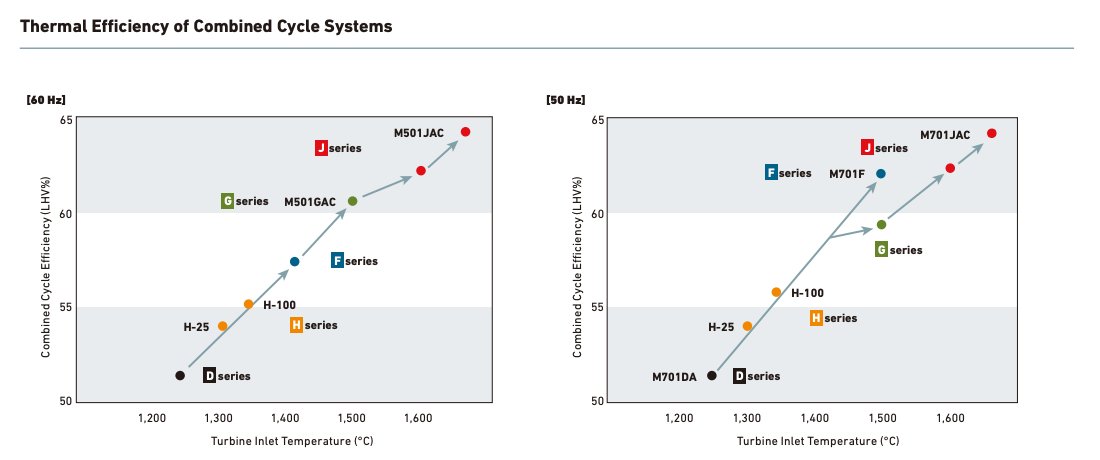
EVEN Within gas turbines we have F-class, H-class, J-class and theese Gas turbines for power generation are sorted by firing temperature.
Meaning, higher firing temperature means higher efficiency, which means more electricity per cubic metre of gas.
1. F-class (mature, 1990s onwards) fire at around 1,300°C with combined-cycle efficiency of 58 to 60%.
2. H-class / HA-class (2000s onwards) fire at 1,450 to 1,500°C with combined-cycle efficiency of 60 to 63%.
3. J-class / JAC-class fire at around 1,600°C with combined-cycle efficiency of 63 to 64%, using rhenium-rich alloys at the absolute limit of metallurgy.
As firing temperature rises, the metallurgy gets harder.
The reason customers want H and J, not F is that each generation jump cuts fuel cost by 5 to 8% per MWh.
For a 1 GW base-load plant, that is over ~₹1,000 crore in fuel savings every year.
Every utility, hyperscaler, and LNG developer specifying new capacity wants H-class or J-class, not F.
WHERE IS THE BOTTLENECK TODAY FOR GAS TURBINES?
F-class capacity has plenty of headroom. Customers do not want F.
H-class and J-class capacity are the constrained ones.
Howmet's IGT-grade Stage 1 single-crystal line for H and J class is sold out. The in-house casting lines at GE Auburn, Siemens Berlin, and MHI Takasago are sold out.
WHO CAN ACTUALLY MAKE THEM?
For aero, capable countries number about 8.
For heavy-duty power turbines, the commercial club drops to 3 as far as ROW is concerned.
GE Vernova in the US, Siemens Energy in Germany, Mitsubishi Power in Japan + China & Russia have turbines that perform with varying performance parameters.
Hope this was insightful. If you're still reading. follow and repost. Tc.
@teortaxesTex Also it's incredible how most of those who speak about Europe like that.. have clearly not been here. London is the only city which feels like a melting pot. Go basically anywhere else and it's not that well mixed. Half of the continent doesn't even speak broken english
@BenjiNaesen @lucasaganronald I'll ignore the children and dachshund comparison because that's not a take that any person with children would say, it's so so bad.
@BenjiNaesen @lucasaganronald That's an unusually bad take Benji. Kids don't get sickness on their own. If they are rich and are not sent to kindergarten to lick snot of other kids.. they won't get sick 😂
@NukitToBeSure Hi! I saw the page for the Nukit Tempest Euro isn't available anymore on the website. Any chance of putting it back (unlinked) at least for assembly instructions? Thanks a lot for your work!
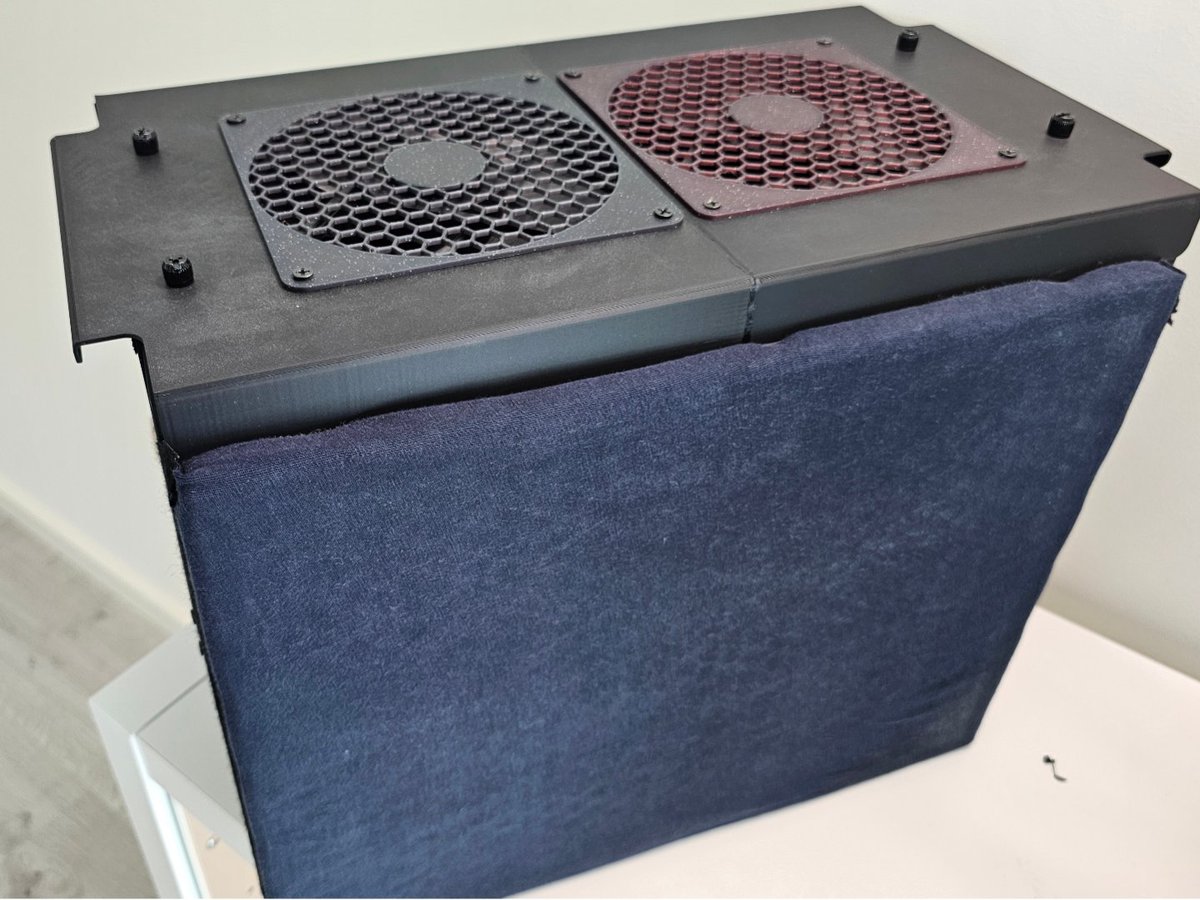
Someone very kindly make a 3D printed version of the Tempest Euro (STARKVIND) available.
https://t.co/bUHgFjpPHr
(The name use is fine there, I just have to keep it down on social media)