Bonus Episode - Assassin's Creed Origins
Set in the time of Cleopatra VII, Origins provides one of the most authentic presentations of Hellenistic Egypt in modern media. I discuss what the game did right, and the balancing act of "accuracy" and "fun"
https://t.co/6w6Z75WbIG
When a Campanian lady staying at the house of Cornelia, the mother of the Gracchi, showed her her jewels and other ornaments... Cornelia remained talking with her till her children returned from school. "And these," she said when they appeared, "are my ornaments."
- Val. Max. 4.4
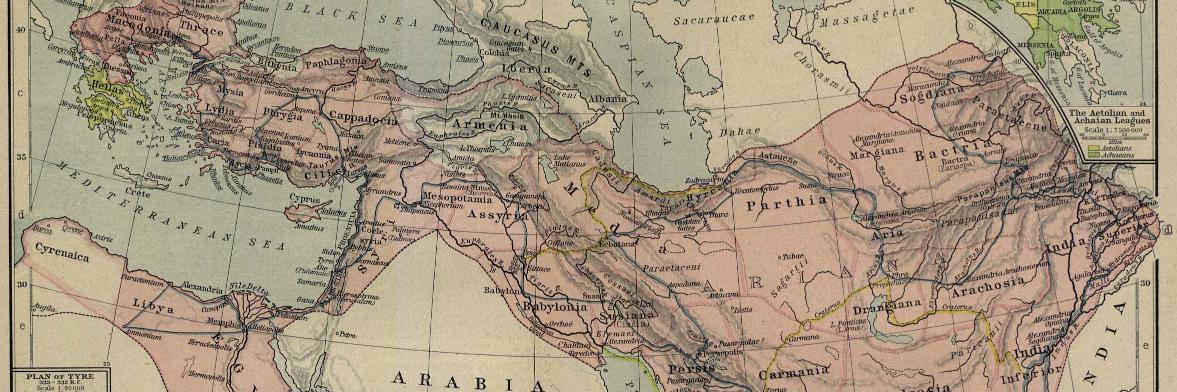
A silver drachm of Vahbarz, one of the “Frataraka” who ruled in Persis under the authority of the Seleucid Empire (late third century BC?)
His coins portray a Persian killing a Greek soldier, either a Seleucid or perhaps one of the Greek enemies of the Seleucids (eg Ptolemies)
While I am doubtful that we will ever find the tomb of Alexander, the possibility of uncovering one of the Ptolemaic tombs seems far more likely. I’ll keep my fingers crossed and wait with cautious optimism:
https://t.co/pY9UPLimJv
While I am doubtful that we will ever find the tomb of Alexander, the possibility of uncovering one of the Ptolemaic tombs seems far more likely. I’ll keep my fingers crossed and wait with cautious optimism:
https://t.co/pY9UPLimJv
Sandwiched between the much busier tombs and palace of Aigai (Vergina, Greece), the rather unassuming remains of its theater witnessed a world-changing event: the assassination of Philip II of Macedon, enabling his son Alexander the Great to be declared king in 336 BC
📸 3/2024
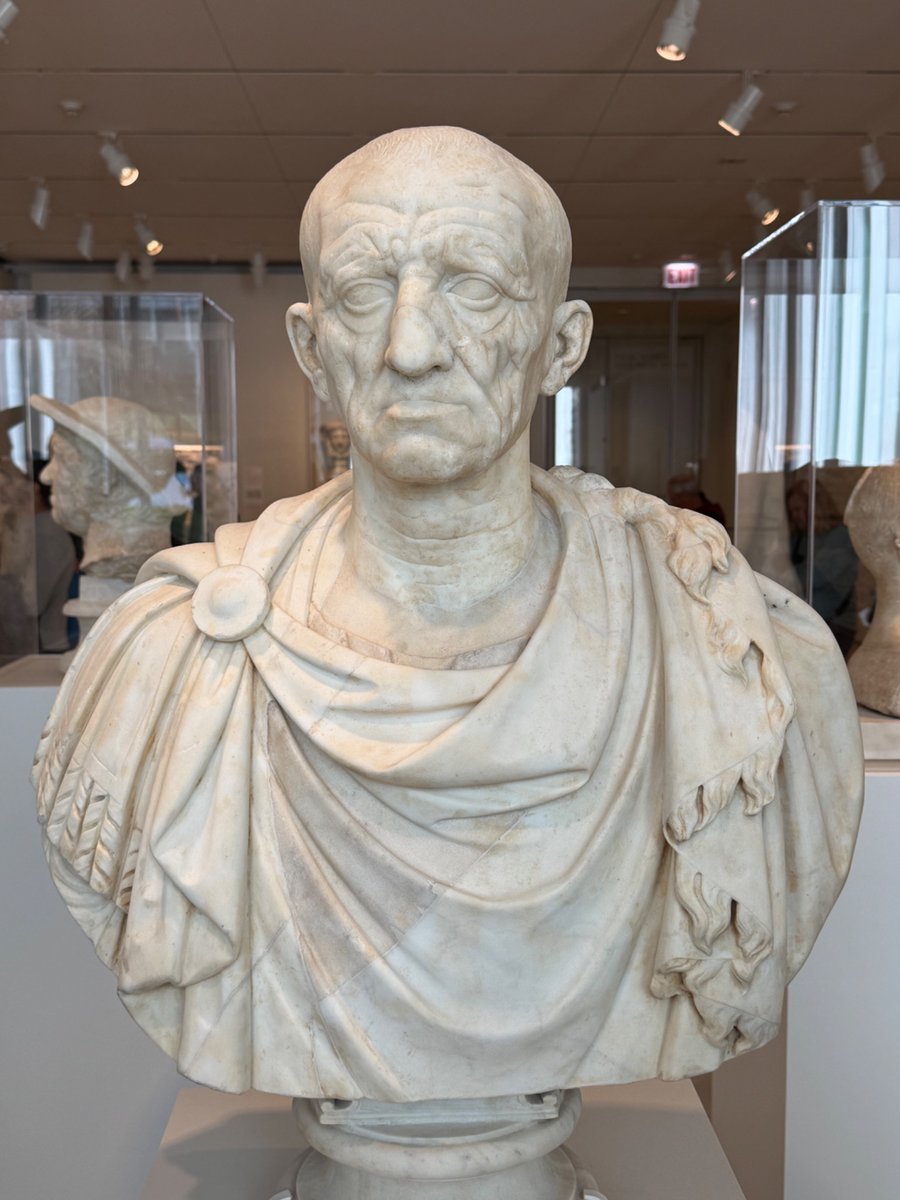
“And seeking to prejudice his son against Greek culture… [Cato declared], in the tone of a prophet or seer, that Rome would lose her empire when she had become infected with Greek letters.”
- Plutarch, Cat. Mai. 23.2
📸 Art Institute of Chicago (4/2025)
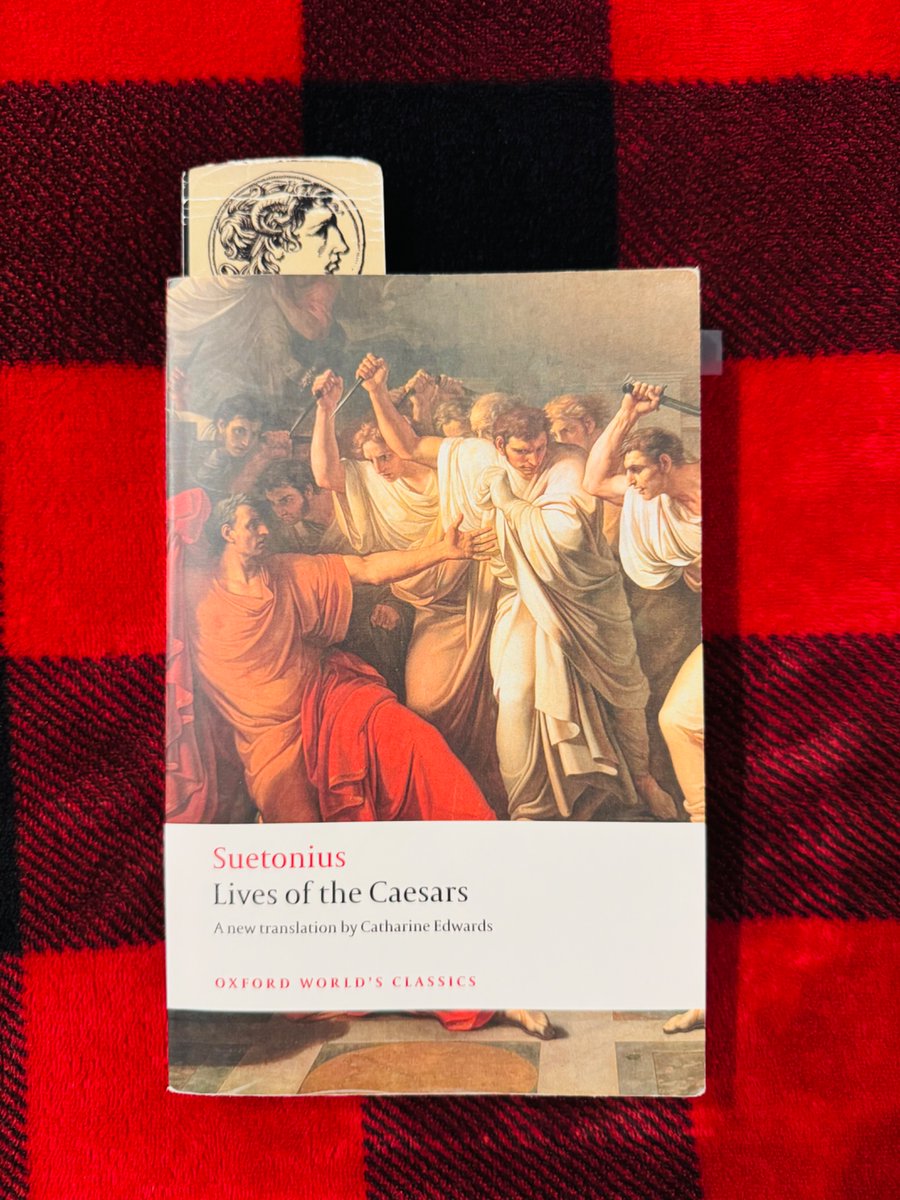
Now Reading: “Lives of the Caesars” - Suetonius
Covering the lives of Rome’s first eleven emperors (and the deified Julius Caesar), Suetonius’ notorious biographies are filled with colorful and often scandalous anecdotes about the earliest century of imperial rule.
Esce oggi un volume a cui tengo molto, perché vuole essere un omaggio alla memoria di un brillante collega che con la sua prematura scomparsa ha lasciato un grande vuoto nel mondo dell'antichistica. https://t.co/PVNvJRJ65p
A modern statue of Viriathus, a Lusitanian warchief who led a resistance movement against Rome throughout the Iberian Peninsula during the 140s BC. After a decade of success, he was murdered in 139 by his former comrades after they were bribed by the Roman consul Caepio.
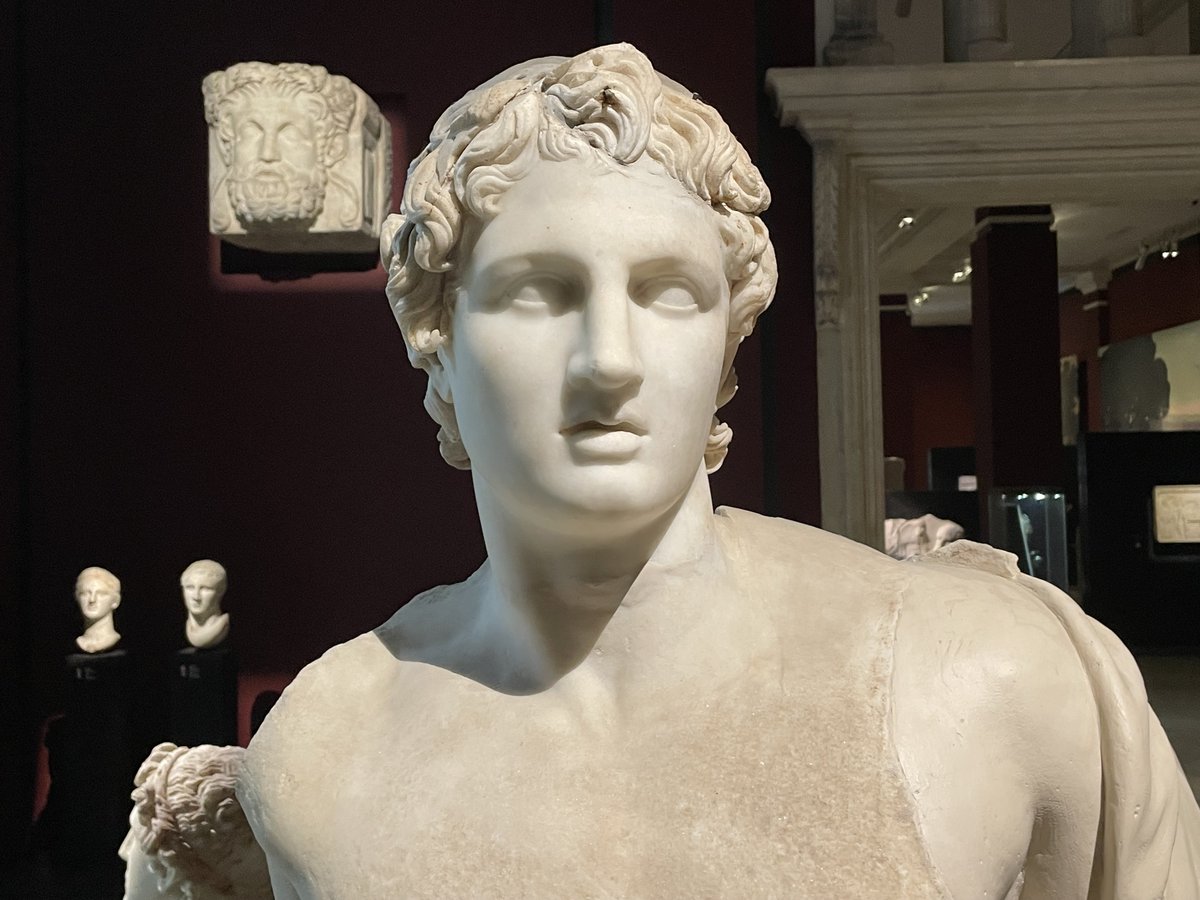
A marble statue of Alexander the Great, found in the city of Magnesia-ad-Sipylum (modern Manisa) and dating to the third century BC. This to my knowledge is the largest and most intact Alexander statue we have from the ancient world.
📷 taken at the Istanbul Arch. Museum, 9/2023
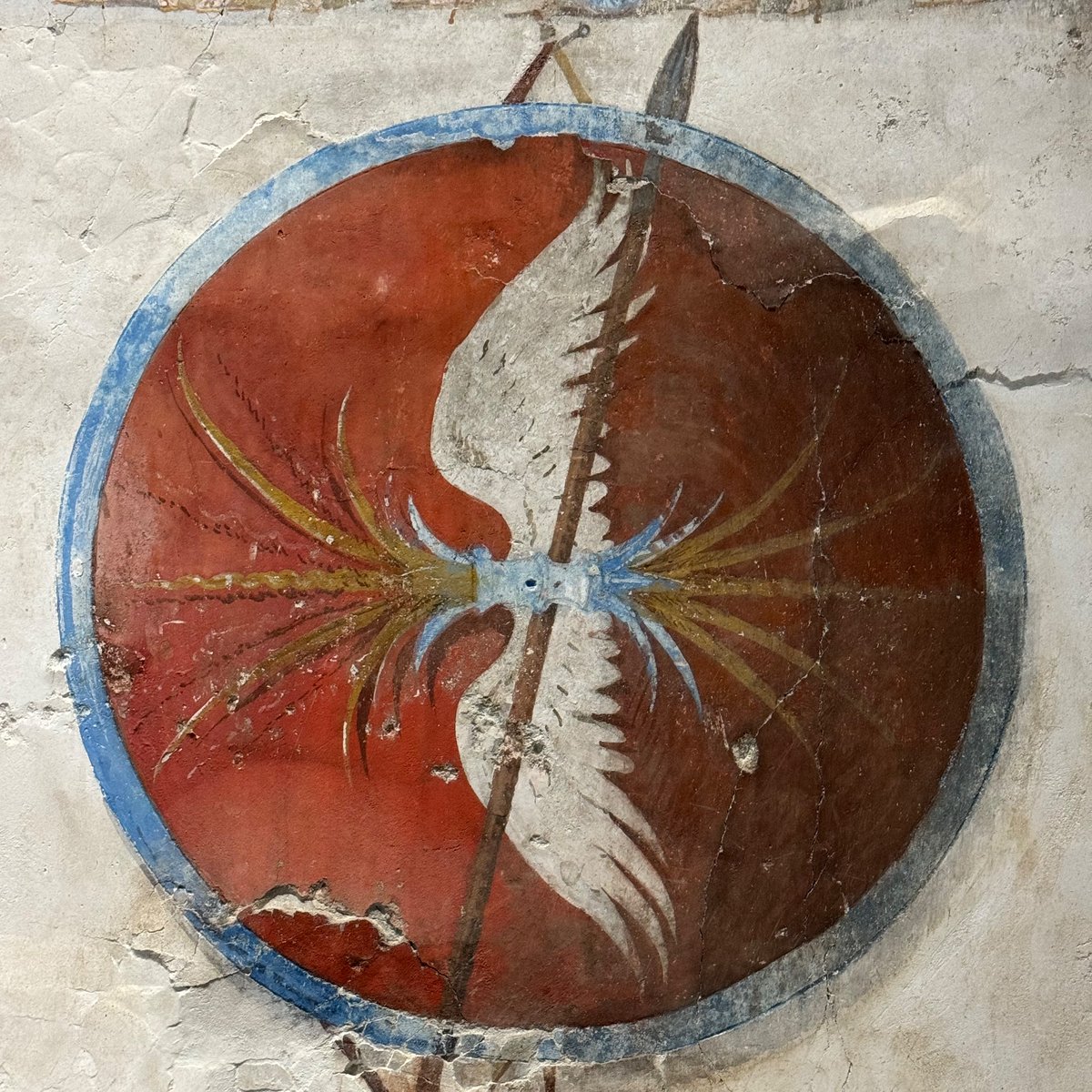
A Macedonian tomb painting, late fourth century BC.
This shield design shows a winged thunderbolt to symbolize the power of Zeus and carried royal connotations as well - the occupant was likely a Royal Friend or bodyguard of the king.
📸 Agios Athanasios, Greece (4/2024)
According to Cicero (Tusc. Dis. 1.34.83) the Cyrenaic philosopher Hegesias argued that the highest good was pleasure, but life was so miserable that it was impossible to achieve. His arguments were so convincing that many listeners committed suicide, leading to a ban of his work.
A splendid example of an Egyptian funerary portraits of the Fayum, dating to the second century A.D.
I hope to be able to see many more of these in Egypt next month!
📸 Art Institute of Chicago (2/2024), 1922.4798
"[But, o Apollo,] preserve the god-founded [city] of Pallas [and its renowned people]... and expand the empire of the Romans, spear-crowned by unaging [power], flourishing and victorious."
- Hymn to Apollo, composed at Delphi by Limenios of Athens, 128 B.C. (CID 3.2.33-40)