We further found that dementia risk was higher in long-term AD users compared to short-term users
Causality cannot be inferred, but the results warrant further research to examine underlying mechanisms that may explain the association
Led by Carola Huber, head of the brilliant research department of Helsana health insurance, we published a new study on the association between long-term antidepressant use and dementia risk:
https://t.co/PX8DXjP9mn
We examined longitudinal health claims data of 19155 AD users and 20648 propensity-score matched non-users. Long-term AD use was defined as continuous AD use for more than two years:
Long-term AD use was associated with increased dementia incidence
Mental Health 'Awareness':
"1. lowers the threshold for what counts as a disorder.
2. trains people to scan their inner lives for symptoms and reinterpret normal distress as pathology.
3. Once someone adopts an illness identity, they behave in ways that confirm & deepen it".
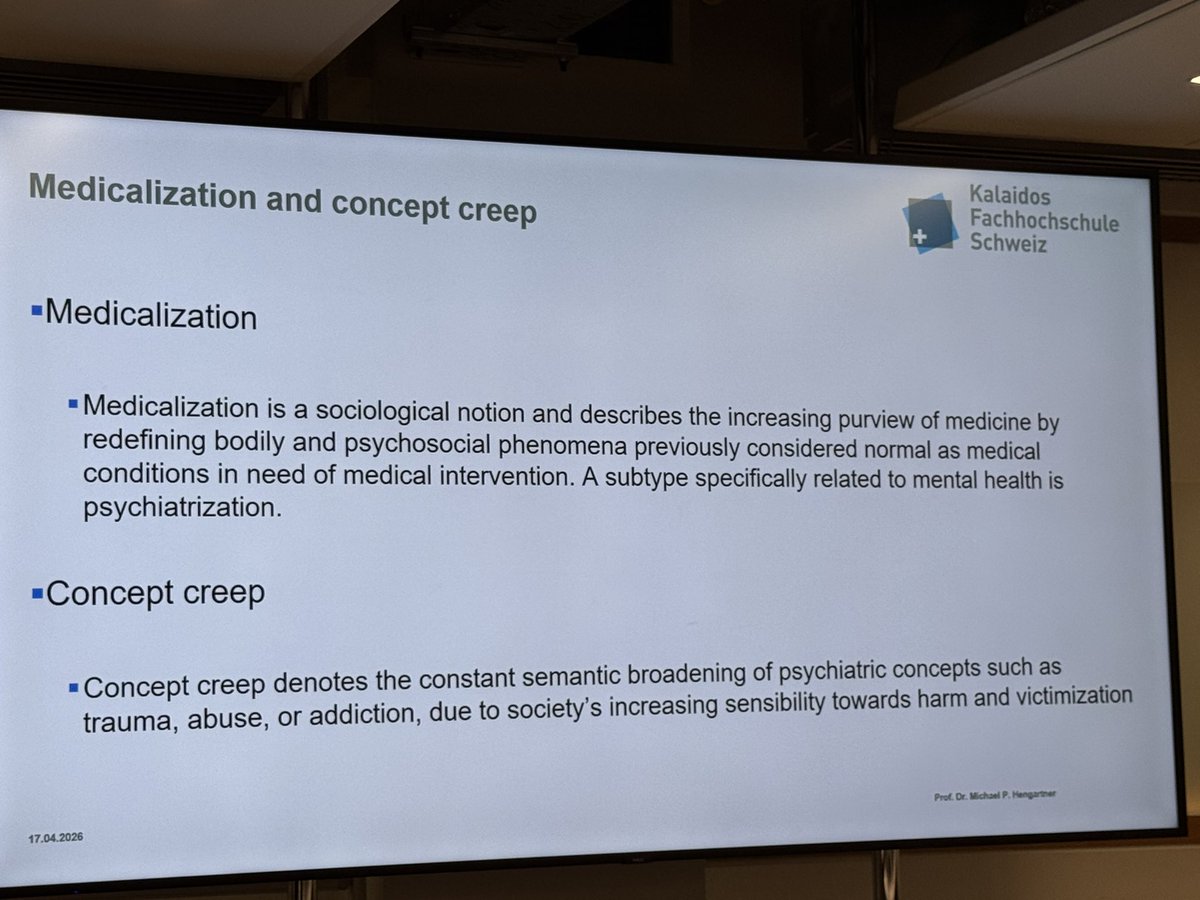
I published a new paper on concept creep in narcissistic personality disorder. It shows that the semantic expansion and over-inclusive use of the concept of pathological narcissism is a real thing with potentially negative practical consequences
https://t.co/bfkmw7K6Aq
I welcome this paper stressing the adverse long-term effects of antipsychotics and their potential to cause anhedonia and dysphoria. But it bothers me that these adverse effects were long downplayed and admitted just as a new drug class entered the market
https://t.co/T4M3JRXkcv
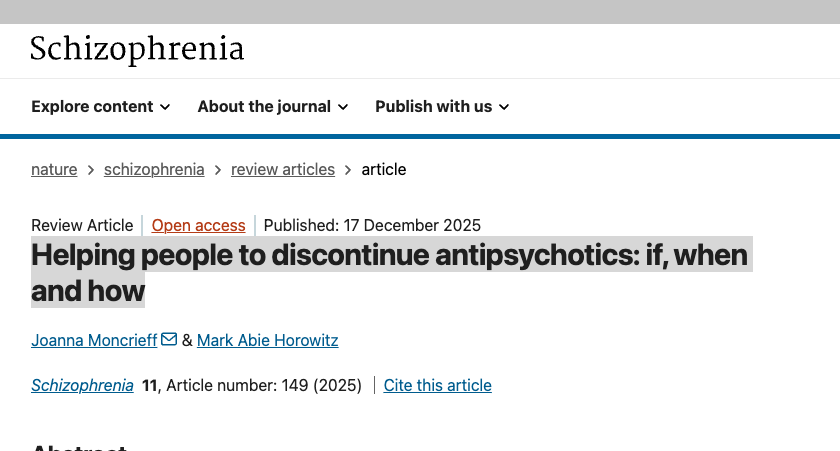
We published a summary article on "Helping people to discontinue antipsychotics: if, when and how" (with @joannamoncrieff) and responses from many psychiatrists/commentators https://t.co/KVcBlC0aIg
@PloederlM @markhoro@joannamoncrieff@SchleimStephan Oh, I thought it‘s a syndrome characterized by dysregulated affect. But obviously low mood and loss of interest is best explained by dysregulated neuroplasticity. Imagine asking someone „why are you so sad?“ and that person answers „because my neuroplasticity is dysregulated“
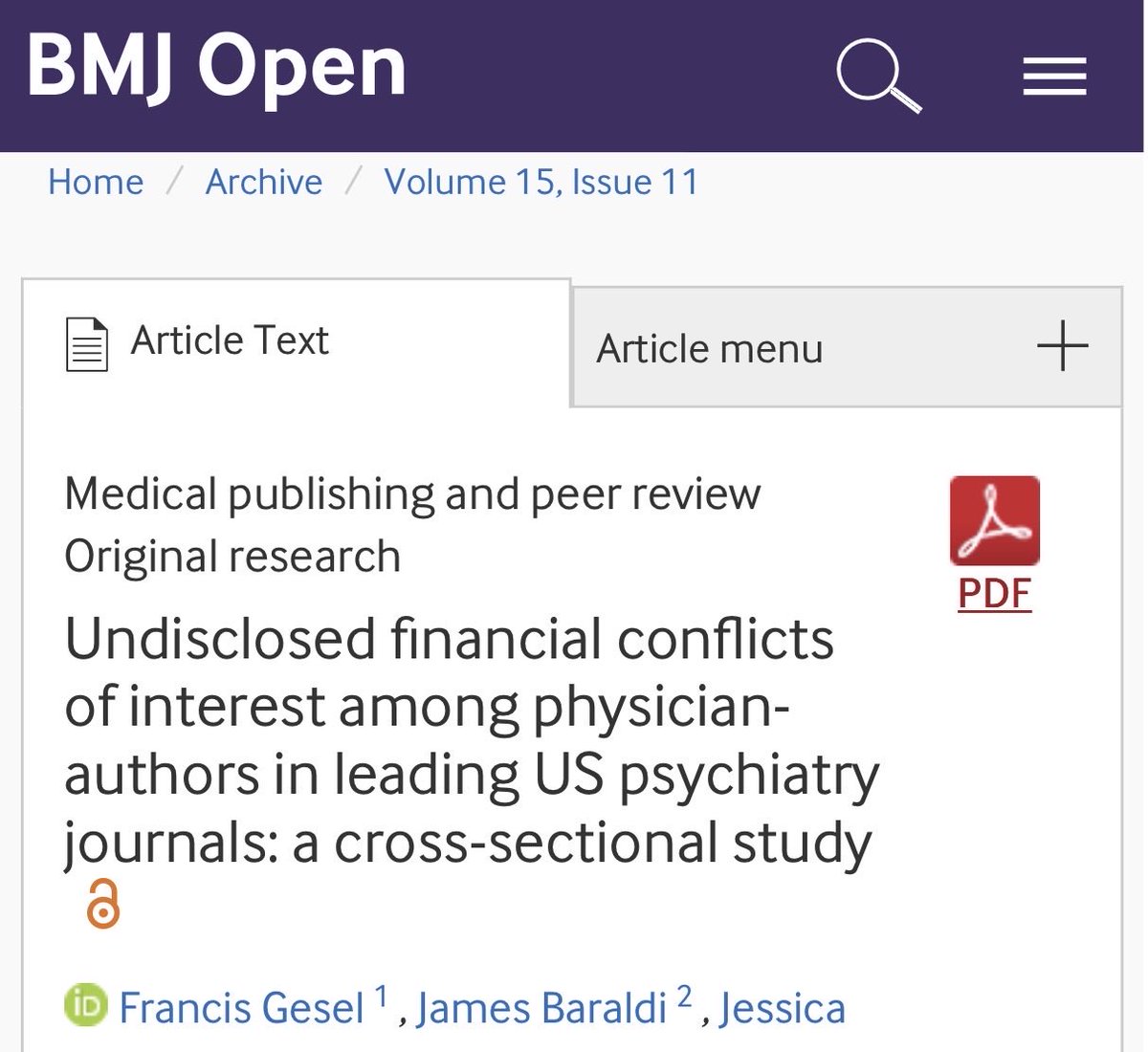
Undisclosed conflicts of interests for authors of top psychiatric publications
“Substantial undisclosed financial COIs were identified among the top 10 earners in high-impact psychiatry journals. These findings highlight potential risks to research transparency and integrity.”
Sigh
Any idiot can prescribe meds- takes real clinical & interpersonal skill to deprescribe them.
Less is often more- subtracting meds often helps more than adding.
Failure to deprescribe main cause harmful polypharmacy.
Excellent interview shows how to partner with the patient:
About a quarter of “healthy” young adults think they have ADHD (28%), according to new research. But that number jumped to more than half (58%) after they received an ADHD awareness campaign based on popular ADHD advocacy groups’ material. worrying? https://t.co/vBfLIETfdg