Germans including the Kaiser himself inspect a captured British tank before testing it against a dastardly French lamp post. You can almost see the love affair with tanks beginning to form within their hearts
All-time top scoring fighter ace Erich "Bubi" Hartmann feted for exceeding the 300-victory mark after he claimed eleven Soviet fighters shot down over Poland 82 years go today on August 24th 1944 in his Messerschmitt Bf 109 G
WTF. Mother of a student at @MarvinRidgeHSNC in North Carolina, says her son's senior year American Flag parking spot design was reportedly DENIED by the school because it "might offend someone."
This student, who is enlisting in the military, can't have an AMERICAN FLAG parking spot at an AMERICAN PUBLIC SCHOOL.
Wtf is going on @MarvinRidgeHSNC?!
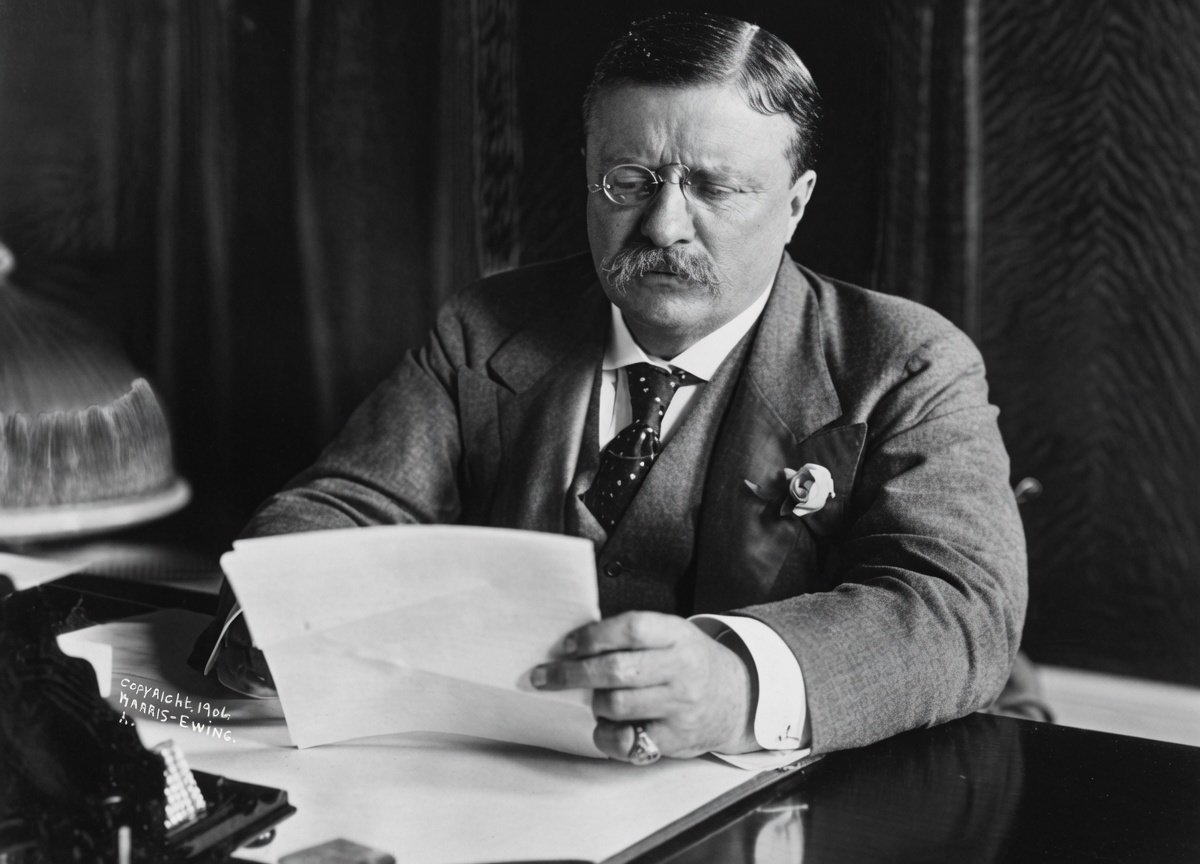
TEDDY ROOSEVELT: "The one absolutely certain way of bringing this nation to ruin would be to permit it to become a tangle of squabbling nationalities."
June 25, 1944. D-Day plus 19.
At 4:15 in the morning, in thick summer fog, the British 49th Infantry Division begins to advance.
Tomorrow, Operation Epsom starts. Tonight, the 49th is doing the work that makes tomorrow possible: seizing the high ground at Rauray, seven kilometers west of Caen, to prevent German tanks from hitting VIII Corps in the flank when 60,000 British troops cross the start line.
The mist is so heavy that soldiers hold onto each other in the dark. The Hallamshire Battalion is taking compass bearings every few yards. The 11th Royal Scots Fusiliers disappear into the fog and immediately begin taking casualties.
This is called Operation Martlet.
But to understand what the 49th Division is fighting against this morning, you need to understand what the Germans have left.
---
Germany's best division in France on June 6 was called the Panzer Lehr.
"Lehr" means instruction, or teaching. The division had been formed in late 1943 from Germany's training and demonstration units: the most experienced tank instructors and school troops in the Wehrmacht, assembled specifically to form the strategic reserve for the anticipated Allied invasion. Almost all of its original cadre had seen combat on the Eastern Front, in North Africa, in Sicily or Italy. Many had decorations for bravery. These were not green conscripts. These were men who had survived years of war and had been teaching others how to survive it.
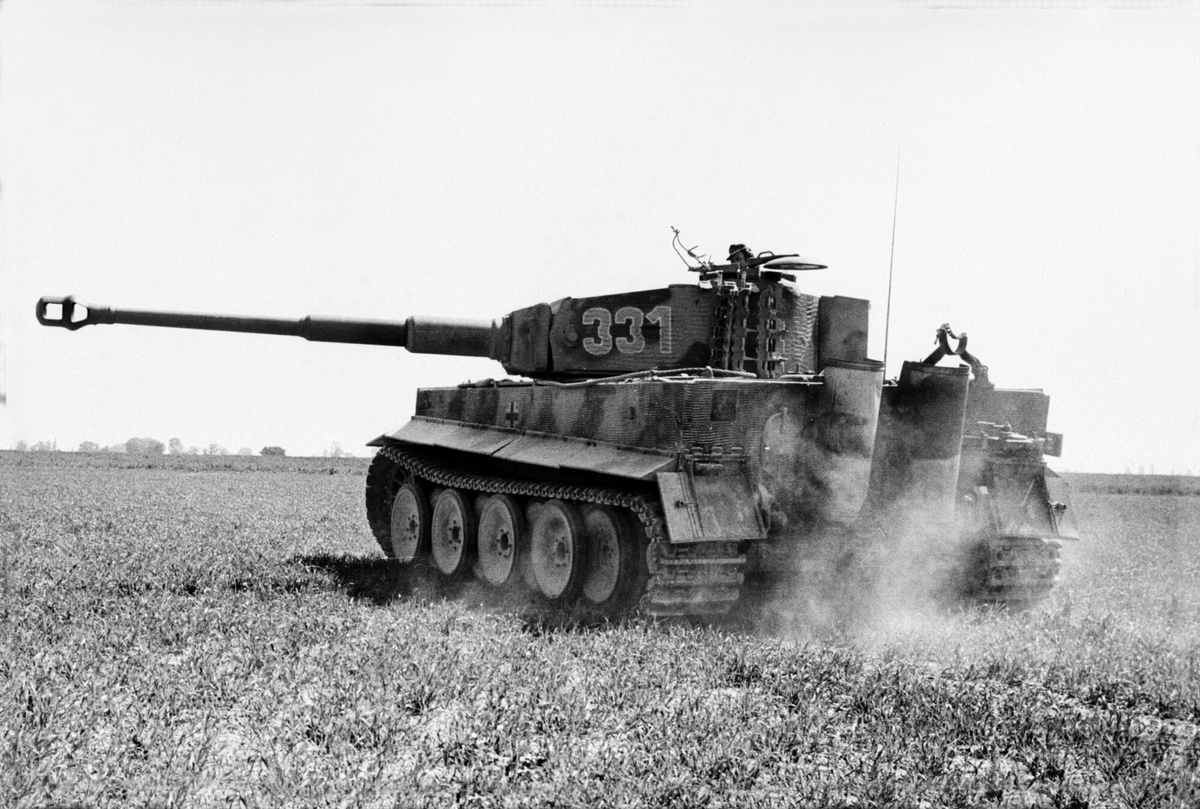
The division was the only Panzer division in the Wehrmacht to transport all of its infantry in armored halftracks. Not just one battalion in halftracks as was standard. Every battalion in both Panzergrenadier regiments rode in armored vehicles. Its reconnaissance battalion drove the new Sd.Kfz 234/2 Puma armored cars. Its combat engineers were armored. Its panzer regiment carried 208 tanks and assault guns when Normandy began: 97 Panzer IVs, 86 Panthers, 6 Tigers, 9 assault guns.
It had a nickname inside Germany: the "Parade Division." People said it was trained for display rather than combat. What the name really captured was something else: this was a division equipped and manned at a level that the rest of the German army could only demonstrate, never sustain.
On June 6, 1944, Hitler's personal reserve included the Panzer Lehr. It could only be released with his direct authorization. He was asleep when the landings began. His staff didn't want to wake him.
Authorization came around noon.
The division was ordered to march immediately from its assembly area near Le Mans to the front near Caen.
The distance was approximately 150 miles.
---
On June 7, 1944, Panzer Lehr marched through France in daylight.
German movement doctrine required night marches. You moved your tanks and heavy vehicles under cover of darkness because Allied fighter-bombers owned the daylight sky. Allied air power had been established over France for months. The Luftwaffe had been ground down to a shadow. By June 1944, Allied aircraft outnumbered German aircraft over France by roughly 30 to 1, and German pilots had neither the training nor the fuel to contest that imbalance.
But the order said immediately. The front was breaking open. The division moved.
The P-47 Thunderbolts found them on the roads.
On June 7 alone, before Panzer Lehr fired a shot in combat, before it reached the battlefield for which it had been specifically formed, it lost 84 halftracks, prime movers, and self-propelled guns. 40 fuel bowsers. 90 soft-skinned vehicles. 5 tanks.
All of them destroyed from the air while marching.
One day's march. That was more transport destroyed than many divisions lost in actual battles.
The division arrived at the front in Normandy on June 8, already bleeding, already short of fuel, already without a large part of the transport that was supposed to keep it moving and fighting.
---
The Allied air campaign against German logistics had been going on for months before D-Day.
In early 1944, there was a fierce internal debate among the Allied high command about how to use the strategic bombing forces. General Carl Spaatz, commanding the American strategic air forces, wanted to bomb German oil production. Air Marshal Arthur Harris at RAF Bomber Command wanted to continue the strategic bombing of German cities. Both men believed their campaigns were the most direct route to German defeat.
Eisenhower wanted something different. He wanted to bomb the French and Belgian railway network: every marshaling yard, every bridge, every major junction. Destroy the transport infrastructure that connected Germany to its forces in France, and when the invasion came, those forces would be unable to move, unable to receive supplies, unable to reinforce.
This was the Transportation Plan.
It was controversial. French civilians would die in the bombing. The French government in exile protested. Churchill worried about the political consequences. Roosevelt overruled the objections.
By D-Day, the French railway system was carrying approximately 30 percent of its normal traffic.
German divisions that would normally take three or four days to move by rail from central France to Normandy were taking two or three weeks. Das Reich, as I told you two weeks ago, left Montauban on June 8 and arrived piecemeal between June 15 and June 30. The Panzer Lehr, ordered to march immediately, was hit from the air every day of the march. Other divisions coming from distant positions were cut off from their supply trains entirely.
The campaign was being won before most of the killing even began.
---
The German forces holding the line on June 25, between the 49th Division and Rauray, are shells.
The Panzer Lehr Division had suffered approximately 2,300 casualties by June 24, mostly among its infantry. It was supposed to be relieved for refit but the division that was to replace it hadn't arrived yet. Its tanks tell the story: from 208 operational on June 6 to 36 Panzer IVs and 32 Panthers fit to fight by late June.
The 12th SS Panzer Division, two weeks into combat against the Canadians, had taken about 2,550 casualties, roughly half of its infantry strength.
In the fog before dawn on June 25, these are the defenders the 49th Division is walking into.
---
The 49th "Polar Bears" Division had been in the British Army since 1939 but had never fought as a complete division. Today is the first time.
They advance through the mist in two columns. On the right, the 4th Lincolns and tanks of the 24th Lancers push toward Fontenay. A German officer tries to signal his men with a bugle; he is shot before he gets the call out. A group of German halftracks are destroyed with hand grenades. The Hallamshires knock out two German tanks with 6-pounder anti-tank guns and reach the first objective line.
On the left, the 11th Royal Scots Fusiliers push into Fontenay itself. The mist and smoke have reduced visibility to almost nothing. As the sun rises, German snipers and machine-gunners begin to pick off soldiers who become silhouettes against the fog. The Fusiliers reach the village and fight through it hand-to-hand.
By nightfall, the 49th Division has advanced roughly a mile and a half. Rauray is still about a mile away. The objectives have not been fully reached.
---
But something more important has happened.
The German command, watching the 49th Division's assault from the west, is uncertain where the main British blow is going to land. Is it here, aimed at Rauray and the road toward Villers-Bocage? Or is this a diversion?
To meet the threat, German reserves are moved west. Tank battalions shift. Infantry elements consolidate against the 49th Division's pressure. The high ground at Rauray is held at increasing cost.
The 49th Division has not taken Rauray.
But it has pulled those German tank units out of position.
Tomorrow morning, VIII Corps crosses the start line seven miles to the east, toward the Odon River and the outflanking of Caen. The area where German armor was supposed to be sitting in reserve is now occupied by those reserves trying to stabilize the Rauray front. When the 15th Scottish Infantry Division steps off into the bocage tomorrow, the German response will be slower and weaker than it would otherwise have been.
A British analyst writing after the battle put it plainly: the German armor had been "left out of position when the main attack by VIII Corps began."
---
June 25, 1944 is not one of the famous days of the Normandy campaign. No single action defines it. No famous name is attached to it.
But in the village of Fontenay, in the fog before dawn, soldiers who have never fought a real battle are holding hands to maintain direction, taking compass bearings every few yards, walking into fire from men who have been fighting since Poland.
They are buying tomorrow.
---
Tomorrow: June 26, 1944. Operation Epsom.
The 15th Scottish Infantry Division crosses the start line. 60,000 British troops, 600 tanks, artillery that fires for miles. The objective is the Odon River and the high ground beyond it, Hill 112, from which all of Caen can be seen.
The Germans are going to move every Panzer division they have left to stop it.
The fight for Hill 112 is going to last weeks. And it is going to cost both sides more than anyone expected.
On April 24, 1952, a Nike missile successfully intercepted and completely destroyed in mid-air a remotely controlled QB-17 bomber high over White Sands. WSMR IGOR tracking telescope operator Joe Marlin photographed the intercept and won the 1955 Ernie Pyle Award for outstanding still photography in support of national security.🤘😎
25 June 1940. First flight of the Arado Ar 240 V1 prototype DD+QL. German twin-engine multi-role heavy fighter aircraft prototype. Powered by two 1,175 hp DB 601A engines.
The Blohm & Voss Ha 139 V2 (Nordmeer) was an enormous, four-engine German mailplane built for Deutsche Luft Hansa. In 1937, it pioneered transatlantic airmail routes by launching via pneumatic catapults (because it was too heavy for water take off) from specialized depot ships, such as the Schwabenland and Friesenland, allowing it to cross the ocean without refueling.
During World War II, the Luftwaffe pressed the three civilian Blohm & Voss Ha 139 prototypes into military service, where they were heavily modified for transport, maritime reconnaissance, and minesweeping. However, because they were designed strictly for shipborne catapult launches, they proved poorly suited for rugged frontline combat and were quickly phased out.
Four F-22 Raptors from the 199th Fighter Squadron fly alongside a U.S. Air Force KC-135 Stratotanker from the 909th Air Refueling Squadron during fifth-generation fighter training near Mount Fuji, Japan.
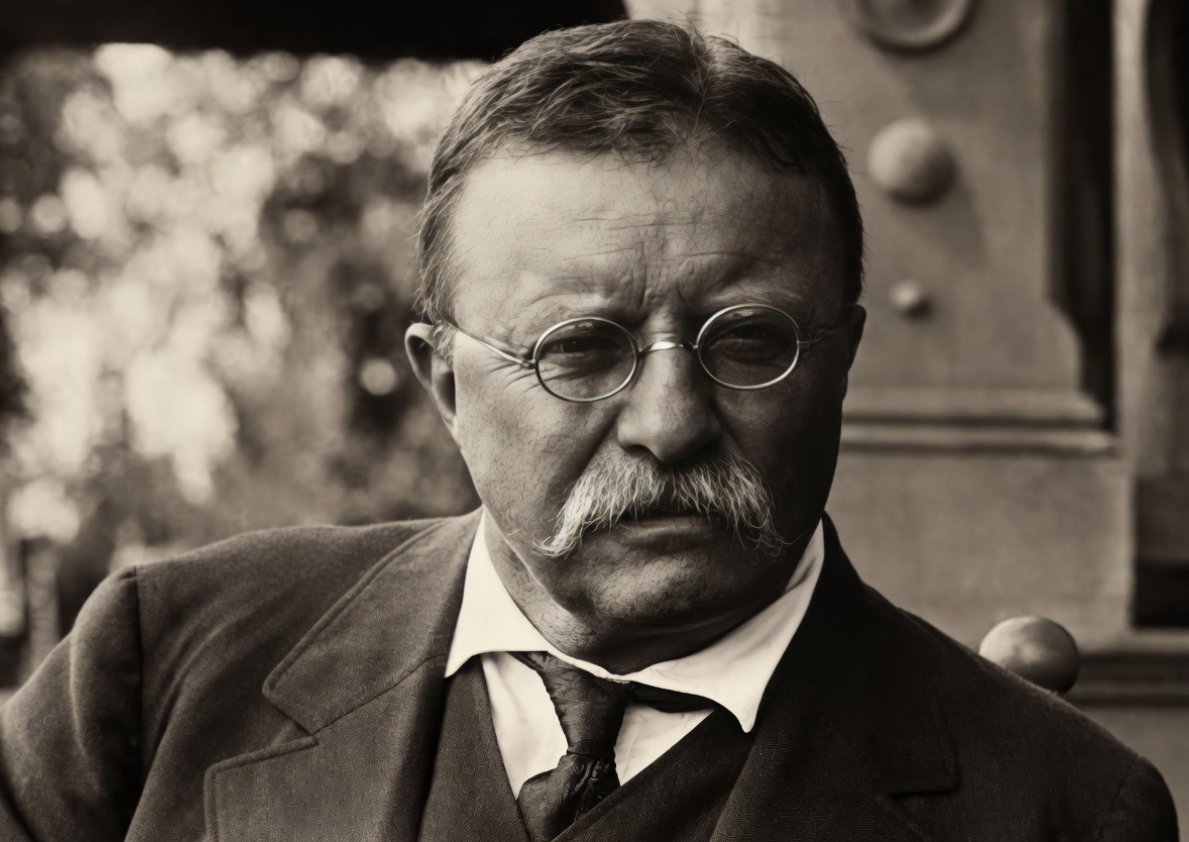
“There is no room in this country for hyphenated Americanism. When I refer to hyphenated Americans, I do not refer to naturalized Americans. Some of the very best Americans I have ever known were naturalized Americans, Americans born abroad. But a hyphenated American is not an American at all. This is just as true of the man who puts ‘native’ before the hyphen as of the man who puts German or Irish or English or French before the hyphen. There is no such thing as a hyphenated American who is a good American. The only man who is a good American is the man who is an American and nothing else.”
-Theodore Roosevelt, “Americanism” speech (address to the Knights of Columbus, Carnegie Hall, New York City, October 12, 1915)
TEDDY ROOSEVELT: "No man who is not willing to bear arms & fight for his rights can give a good reason why he should be entitled to the privilege of living in a free community."
TEDDY ROOSEVELT: "Wherever Muslims have had complete sway, wherever the Christians have been unable to resist them by the sword, Christianity has ultimately disappeared."
At least 11 Focke Wolf FW 190s exist in museums worldwide.
Four of these are Fw 190 Ds, and all are in the United States, including one at the U.S. Air Force museum at Wright-Patterson AFB, OH., and one here at NASM.
The Focke-Wulf D, nicknamed “Dora.” It has a long nose due to its inline engine.
This aircraft is extremely rare. To my knowledge, I am not aware of any that are still flying.
The Focke-Wulf Fw 190 D-13/R11 “Yellow 10” (Serial Number 836017) has had a rather remarkable history: it is now the only authentic surviving Fw 190 D-13 in the world.
Its post-war history
Delivered to the Luftwaffe in March 1945.
Assigned to the commander of JG 26, Major Franz Götz.
Captured by the Allies at the end of the war and transferred to the United States for evaluation under the number FE-118.
Later donated to the Georgia Institute of Technology, where it ended up being stored and then neglected for several years.
Purchased in 1972 by collector Doug Champlin, who sent it to Germany for a major restoration carried out with the help of Art Williams’ team and even the Fw 190’s designer, Kurt Tank.
Subsequent restorations
After its return to the United States:
Displayed at the Champlin Fighter Museum (Arizona), which has since closed;
completely rebuilt in the early 2000s by Gosshawk Aviation;
subsequently displayed at the Museum of Flight;
finally transferred to Paul Allen’s collection, now known as the Flying Heritage & Combat Armor Museum in Everett (Washington State).
Where is it today?
The aircraft is still housed in Everett, near Seattle, at the Flying Heritage & Combat Armor Museum. It has long been maintained in near-flight condition, but due to its extreme rarity, it is generally not flown.
Why is it so important?
The D-13 was a very rare variant of the Jumo 213-powered “Dora.” Few were built, and 836017 is the only known complete survivor. For aviation historians, it is one of the most valuable German World War II aircraft still in existence.
Interesting fact: the famous yellow “10” painted on the fuselage was Franz Götz’s lucky number, which explains the aircraft’s distinctive livery.
🎬Jerry Crandall Studios