Even toddlers experience the joy of giving.
Evidence: When kids under 2 share a snack with a puppet, they exude enthusiasm. They actually smile bigger and laugh more after giving a treat than getting one for themselves.
Kindness is a fundamental source of happiness.
People ask me all the time, “How do I keep my kids in the faith?”
The answer is simpler than most people want it to be: your example matters more than your words.
Children learn by imitation long before they learn by instruction. If you want your kids to be more grateful, let them see your gratitude. If you want them to complain less, let them see you complain less. If you want them to have faith, let them see you practice it sincerely and wholeheartedly.
A child watches the way you live far more closely than they listen to what you say.
Everyone is missing what this study actually says to parents.
The graph shows two paths to the same destination. The yellow line (early specialization) gets there faster in the early years. The blue line (multi-disciplinary) gets there slower but breaks through to world-class.
The key insight: individuals who perform best at a young age are usually not the same people who later reach the world-class level.
This came from 34,839 top performers across four domains: Nobel laureates, Olympic medalists, elite chess players, and renowned classical composers.
The researchers found three consistent patterns.
First, the best kids and the best adults are mostly different people.
Second, future world-class performers showed gradual development and weren’t among the best in their age group.
Third, they didn’t specialize early but engaged in multiple disciplines.
The research team proposes three mechanisms that explain why breadth beats depth.
The search-and-match hypothesis suggests that exposure to multiple disciplines increases the likelihood of eventually finding the best personal fit.
The enhanced-learning-capital hypothesis proposes that learning in diverse areas strengthens overall learning capacity, making it easier to continue improving later at the highest level within a chosen field.
The limited-risks hypothesis argues that engaging in multiple disciplines reduces the chance of setbacks such as burnout, unhealthy work-rest imbalances, loss of motivation, or physical injury.
That third one matters enormously. Specialized athletes are 2.25 times more likely to get overuse injuries than multi-sport athletes. The American Academy of Pediatrics, AOSSM, and American Medical Society for Sports Medicine all recommend against early specialization before age 15 for most sports.
The lead researcher, Arne Güllich from RPTU University Kaiserslautern-Landau, puts it bluntly: “Don’t specialize in just one discipline too early. Encourage young people by providing opportunities to pursue different areas of interest, and support development in two or three disciplines.”
The two or three disciplines don’t need to be related. Language and mathematics. Philosophy and geography. The researchers cite Einstein pursuing physics and violin.
The connection between domains seems to build cognitive infrastructure that pure depth cannot replicate.
Here’s what makes this uncomfortable for parents. The early specialization path produces visible results faster. Your kid looks better at age 10. They make the travel team. They win the tournament. The graphs cross and diverge later, around peak performance age, when the multi-disciplinary kids start pulling ahead.
The entire youth talent ecosystem runs on selecting early performers and accelerating them. Travel leagues, elite academies, showcase tournaments. Every incentive pushes toward specialization.
But the research shows this system is optimizing for the wrong metric.
It produces great 14-year-olds, not great 24-year-olds.
The practical takeaway: let your kid play three sports until at least middle school.
Let them quit the piano and try drums. Let them be mediocre at several things instead of great at one thing. The data says this approach produces both more elite performers and fewer burnout casualties.
The hardest part is watching other kids pass yours on the yellow line while trusting the blue line catches up.
Based on everything I’ve seen, a simple recipe can work: focus on what’s in front of you, design great days to create a great life, and try not to make the same mistake twice. That’s it. If you really want extra credit, try not to be a dick, and you’ll be a Voltron-level superstar.
The secret to winning any game lies in not trying too hard.
Feeling as though you are trying too hard indicates that your priorities, technique, focus, or mindfulness is off. Take it as a cue to reset, not to double down. And take comfort in the fact that, whenever in doubt, the answer is probably hidden in plain sight.
What would this look like if it were easy?
In a world where nobody really knows anything, you have the incredible freedom to continually reinvent yourself and forge new paths, no matter how strange.
Embrace your weird self.
There is no one right answer . . . only better questions.
NEW: Schools across the country are requiring students to lock their phones in a phone pouch for the entire school day, can unlock the pouch at the end of the day.
Teachers and principals say phones in the classroom are becoming too much of a distraction.
“The last couple years, we left it up to the teachers to kind of govern their classrooms,” said Danville High School Principal Jacob Bretz.
“We were just running into the constant battle that temptation of that phone being accessible in the pocket, wondering do I have a message, feeling the notifications go off and the urge to check them.”
Students are required to put all cellphones, ear buds and smart watches in the magnetically locked pouches at the start of the school day.
At the end of the school day, the students are allowed to unlock the pouch.
Good!
@RAMONRAYA23 el jugador de Tigres gana la posición, Chiquete se equivoca y más que el golpe abajo lo que es muy claro es que recarga el antebrazo en la espalda. Era mucho menos polémico haberlo marcado. Ahí se decide la serie.
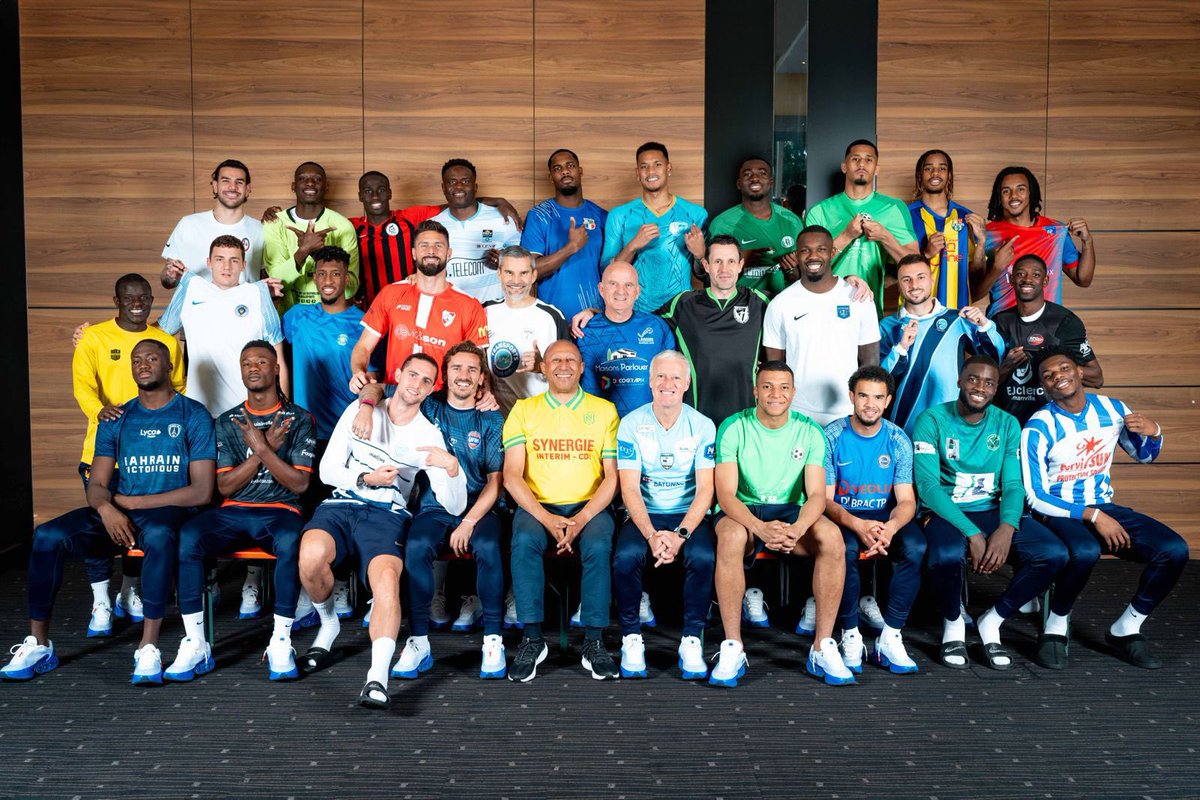
Los jugadores de la selección francesa, staff incluido y presidente de la Federación, han posado con la camiseta del primer equipo en el que se formaron. Extraordinaria iniciativa para no olvidarse de los clubes amateur.