As a good citizen of Nigeria, remember the promise Bola Ahmed Tinubu made to Nigerians in 2023: he said that if, by the end of his first term, he could not provide reliable electricity for Nigeria, Nigerians should not vote for him again.
Now, Nigerians should take him at his word and act accordingly.
Promises made during elections are not meant to be forgotten once power is secured. Electricity is not a luxury; it is the foundation of a functioning economy. Businesses need it to operate, manufacturers need it to produce, students need it to study, hospitals need reliable power, and ordinary Nigerians should not be forced to spend a large part of their income running generators just to survive.
However, beyond electricity, Nigerians have seen that many campaign promises have not been fulfilled. When leaders fail to deliver on key commitments, trust is broken and accountability becomes necessary.
This is not about tribe, religion, party, or personal loyalty. It is about integrity, accountability, and respecting the voices of the people who voted in good faith.
Tinubu asked Nigerians to judge him by his performance. Based on that standard, Nigerians must be honest about what has been delivered and what has not.
Mr. President, Nigerians have seen the promises. Nigerians have also seen the results.
Because these promises have not been fulfilled, Nigerians should not vote for him again. The democratic choice must reflect performance, not words.
Nigerians should remember the promises, evaluate the outcomes, and vote him out based on unfulfilled commitments.
God did not “design” Tinubu’s presidency. Let’s be honest with ourselves: what happened in 2023 was the result of human actions, choices, failures, and, unfortunately, the collective weakness of more than 200 million Nigerians. God was not the one who conducted the election, declared the results, or prevented Nigerians from demanding accountability.
And even after everything that has happened under Tinubu’s administration, some people—including some respected men of God—still choose to defend and support him. So please, let’s not attribute political decisions and human actions to God just to make them easier to accept. This is about the choices Nigerians made and the institutions we allowed to fail.
How can the president of the most populous Black nation on earth be unable to clearly provide the primary and secondary election results that should substantiate his mandate, yet the entire country simply moves on? Where are our courts? Where are the SANs and senior legal practitioners? Where are the prominent voices that should be demanding answers? Why is there so much silence?
Nigeria makes noise for a few weeks whenever a serious issue arises, then everyone moves on and forgets. Meanwhile, those in power understand that Nigerians have short political memories. That is why they continue to act as though nothing will happen.
Tinubu knows the controversy surrounding the 2023 election. Nigerians know it too. The real question is: how long will we continue to accept a system where accountability is demanded loudly for a few days and then forgotten?
This is where we are today—not because God designed it this way, but because human beings allowed it to happen. If we want a better Nigeria, we must stop blaming God for the failures of our institutions and start demanding accountability from the people responsible.
JUST IN — SHOOTING REPORTED IN AARAU, SWITZERLAND
Aarau, Switzerland: Shots were fired at an event in the Schachen area of Aarau early Sunday morning, with police confirming multiple victims.
According to reports, the shooting occurred at or near a rave at the Schachen horse-racing track shortly before 3:00 a.m. A large police, ambulance, and emergency response is currently underway, and authorities have urged people to stay away from the area.
The exact number and condition of the victims, whether there were fatalities, the identity of the shooter(s), and the motive have not yet been confirmed.
Video/Source: Blick
Source: Blick / Aargau Cantonal Police
God did not “design” Tinubu’s presidency. Let’s be honest with ourselves: what happened in 2023 was the result of human actions, choices, failures, and, unfortunately, the collective weakness of more than 200 million Nigerians. God was not the one who conducted the election, declared the results, or prevented Nigerians from demanding accountability.
And even after everything that has happened under Tinubu’s administration, some people—including some respected men of God—still choose to defend and support him. So please, let’s not attribute political decisions and human actions to God just to make them easier to accept. This is about the choices Nigerians made and the institutions we allowed to fail.
How can the president of the most populous Black nation on earth be unable to clearly provide the primary and secondary election results that should substantiate his mandate, yet the entire country simply moves on? Where are our courts? Where are the SANs and senior legal practitioners? Where are the prominent voices that should be demanding answers? Why is there so much silence?
Nigeria makes noise for a few weeks whenever a serious issue arises, then everyone moves on and forgets. Meanwhile, those in power understand that Nigerians have short political memories. That is why they continue to act as though nothing will happen.
Tinubu knows the controversy surrounding the 2023 election. Nigerians know it too. The real question is: how long will we continue to accept a system where accountability is demanded loudly for a few days and then forgotten?
This is where we are today—not because God designed it this way, but because human beings allowed it to happen. If we want a better Nigeria, we must stop blaming God for the failures of our institutions and start demanding accountability from the people responsible.
AL JAZEERA REPORTS ON THE BENIN–AGBOR–ASABA ROAD: A NATIONAL EMBARRASSMENT
The condition of one of Nigeria’s most critical highways has deteriorated for years, and recently, the road ground to a complete halt for days.
Al Jazeera spoke to Nigerians who use the Benin–Agbor–Asaba road and witnessed firsthand how this infrastructure crisis is affecting ordinary citizens.
This is one of the worst things that can happen to a nation.
Our leaders should be ashamed. Where is the human sympathy? These same politicians travel abroad with their families. They see good roads, functioning infrastructure, reliable public services and modern cities. Do they ever stop and ask themselves: “Why can't Nigeria have roads like these?”
The problem with this road did not begin with the current administration. It has existed for years, and successive governments have failed to provide a lasting solution.
And what makes the situation even more painful is that Nigeria has many of the resources and raw materials needed for development. Yet we continue to depend heavily on imports and export our natural resources instead of building industries that can create jobs and prosperity at home.
Look at the technology Nigerians use every day. We import phones, computers, vehicles and countless other products that could create enormous opportunities for Nigerian manufacturing if we developed the necessary industrial capacity.
So what exactly is stopping us? Are we cursed, or have we simply been failed by decades of bad leadership and misplaced priorities?
Peter Obi himself cannot transform Nigeria overnight. Even eight years would not be enough to repair the damage accumulated over decades. The country has been weakened by corruption, poor infrastructure, unemployment, insecurity and a political system that too often puts personal interests ahead of national development.
That is why Nigeria must go beyond ethnicity, religion and political patronage.
These politicians may not personally use these terrible roads. Their children may not have to travel through them. But millions of ordinary Nigerians do.
And sometimes, a person accepts ₦50,000 during an election because they are struggling to survive. But that ₦50,000 does not repair a road. It does not create a hospital. It does not provide electricity. It does not create a sustainable job.
We must stop selling our future for temporary handouts.
And let us be honest about elections: young people are not powerless. The older politicians cannot rig an election by themselves. Young Nigerians are involved at almost every stage of the electoral process—as voters, polling-unit officials, party agents, observers and election workers.
The power is ultimately with the people.
If Nigerian youths unite, reject ethnic politics, reject vote-buying, and understand that the money being used to buy their votes belongs to the Nigerian people, perhaps that is when we will begin to exercise the wisdom and political power necessary to change our country.
2027 must be about the future of Nigeria—not the interests of a few politicians.
As the 2027 election approaches, Nigerians must carefully examine the record of every candidate and every political party.
Peter Obi represents the change I believe Nigeria urgently needs.
If you believe Nigeria deserves better infrastructure, better leadership, stronger institutions, industrial development, jobs and a government that puts citizens first, then your vote matters.
Vote for competent leadership.
Vote for accountability.
Vote for a better Nigeria.
Vote Peter Obi/Kwankwaso.
Vote NDC.
Vote for the liberation and rebuilding of Nigeria.
Nigeria belongs to all of us. It is time we stopped allowing politicians to divide us while the country suffers.
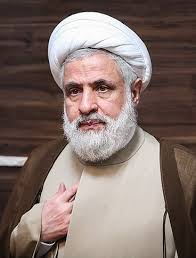
Hezbollah leader Naim Qassem:
We reject the framework agreement with Israel and call for its cancellation. We do not agree to the pilot zones or their outcomes. The framework agreement is illegitimate, illegal, humiliating, and undermines Lebanese sovereignty.
The Lebanese authorities have chosen a path that dishonors them, Lebanon, and the sacrifices of the Lebanese people. Say no for once. Try to show that you have what it takes to achieve something in the future.
BREAKING: Fires Reported at Major Warehouses in Russia’s Rostov Region
Overnight, fires broke out at DNS and Ozon warehouse facilities in Russia’s Rostov region following reported Ukrainian strikes in the area.
Footage circulating online appears to show large flames and heavy smoke rising from the affected facilities. The extent of the damage, possible casualties, and the exact circumstances of the fires have yet to be independently verified.
Russian authorities have not yet provided a full assessment of the reported damage.
UKRAINIAN DRONE REPORTED OVER ST. PETERSBURG
ST. PETERSBURG, Russia — August 30, 2026: Reports of Ukrainian drones operating near St. Petersburg are drawing attention as Ukraine continues expanding its long-range drone campaign deep inside Russian territory.
St. Petersburg and the surrounding Leningrad region have previously been targeted, including strikes that damaged infrastructure and logistics facilities.
SOURCE: Reuters; regional Russian authorities.
UKRAINIAN FORCES MAKE NEW GAINS IN ZAPORIZHZHIA
ZAPORIZHZHIA, Ukraine — August 30, 2026: Ukrainian forces have reportedly regained control of additional settlements in the Oleksandrivka/Novopavlivka sector, marking another local advance against Russian positions.
The gains are part of a broader Ukrainian offensive in the southern front. Ukrainian authorities say their forces have liberated 26 settlements and 745 square kilometres across the Dnipropetrovsk, Donetsk and Zaporizhzhia regions since January.
Military analysts say even limited advances can improve Ukrainian maneuver space, disrupt Russian defensive positions and place additional pressure on Moscow’s logistics and forces in the south.
SOURCE: Ukrinform; Institute for the Study of War (ISW).
LOGISTICS NIGHTMARE: RUSSIA’S CRIMEA SUPPLY ROUTE UNDER PRESSURE
KYIV/MOSCOW — August 30, 2026: Russia’s vital land supply route toward occupied Crimea is facing growing logistical pressure as Ukrainian attacks target fuel convoys and other key supply infrastructure.
Ukrainian forces have reported strikes against Russian fuel tankers in occupied parts of the Zaporizhzhia region, disrupting supplies moving toward Crimea. Earlier reports have also described interruptions to fuel supplies and transport links connecting Crimea with mainland Russia.
The pressure comes as Russia simultaneously faces a broader domestic fuel crisis. Reuters reported that Russian gasoline production had fallen to roughly 70% of domestic demand by late August following attacks on several major refineries, forcing Moscow to increase imports and introduce restrictions in some regions.
The result is a growing challenge for Russia’s military logistics: maintaining fuel supplies across long and vulnerable routes while key energy and transport infrastructure remains under attack.
The battle for logistics is becoming an increasingly important part of the wider war.
SOURCES: Reuters; Al Jazeera; United24 Media.
PUTIN MEETS LUKASHENKO AT NOVO-OGARYOVO
MOSCOW, Russia — August 29, 2026: Russian President Vladimir Putin met with Belarusian President Alexander Lukashenko at his Novo-Ogaryovo residence outside Moscow for talks focused on strengthening relations between the two countries.
The leaders discussed bilateral cooperation, strategic partnership, trade and economic relations, international developments and security issues, with particular attention to further cooperation within the Russia-Belarus Union State.
Putin said economic and trade cooperation between Moscow and Minsk continues to develop despite what he described as external attempts to influence the relationship. He noted that bilateral trade reached nearly $52 billion last year, with further growth recorded during the first half of 2026.
The meeting comes as Russia and Belarus continue to deepen their political, economic and security ties amid heightened international tensions.
SOURCE: Anadolu Agency; Reuters/Reuters Connect; Vedomosti; Interfax; Kremlin reports.
BREAKING NEWS — NIGER
A coup attempt is reportedly underway in Niger, with mutinous troops from regional military bases converging on the capital, Niamey, overnight.
According to reports, the troops targeted several key strategic locations, including the Presidential Palace, state broadcaster, and international airport.
Government forces reportedly repelled the assault on the Presidential Palace, while clashes are said to be continuing around Air Base 101.
The situation remains fluid as security forces attempt to regain full control of the capital. Further details are expected as the situation develops.
UKRAINE STRIKES RUSSIAN COMMAND POSTS IN OCCUPIED DONETSK — SENIOR OFFICER REPORTED KILLED
Ukraine has carried out a major missile strike against Russian military command infrastructure in occupied Donetsk, hitting both the main and reserve command posts of Russian forces.
Ukraine’s General Staff confirmed that air-launched missiles struck the two command positions on August 26 and overnight into August 27, saying the extent of the damage and Russian casualties was still being assessed.
Preliminary reports circulating from Ukrainian and OSINT sources put the Russian casualties at 27 killed and 58 wounded, with some personnel reportedly still trapped beneath the rubble. These figures have not been independently verified.
Among the reported casualties is Lieutenant Colonel Andriy Moiseenko, a senior officer in the operations directorate of Russia’s 41st Guards Combined Arms Army. His death has reportedly been confirmed through an obituary and by his wife.
The strike appears to have targeted Russian command infrastructure located inside the occupied city rather than frontline positions, highlighting Ukraine’s continuing effort to hit Russian headquarters deep behind the battlefield.
Kyiv has publicly confirmed the strike.
Moscow has yet to provide a detailed public account of the reported damage or the full extent of the Russian military losses.
The attack could represent a significant blow to Russia’s command-and-control structure in the Donetsk sector.
Source: Ukrainian General Staff, ISW/Critical Threats.
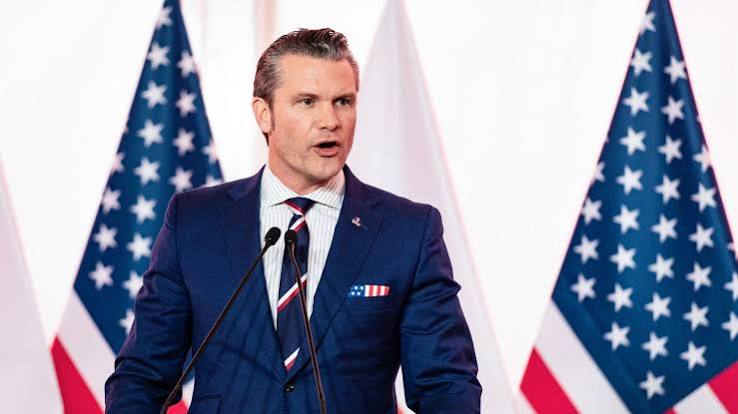
PENTAGON CHIEF PETE HEGSETH REPORTEDLY CONSIDERING 2028 PRESIDENTIAL RUN
U.S. Defense Secretary Pete Hegseth is reportedly discussing a potential run for President of the United States in 2028, according to sources cited by NBC News.
The Pentagon chief has reportedly been speaking with close friends and associates about the possibility of launching a presidential campaign after President Donald Trump’s current term.
The report has not been confirmed by Hegseth, and the Trump administration has yet to publicly comment on the speculation.
If Hegseth ultimately enters the race, he could emerge as one of the prominent figures seeking to carry the America First movement into the post-Trump era.
For now, however, the 2028 race remains wide open — and Hegseth’s reported conversations could be an early indication that the battle to succeed Trump is already beginning behind the scenes.
Source: NBC News
Contributed by @AZ_Intel_
HEZBOLLAH LEADER REJECTS LEBANON–ISRAEL FRAMEWORK, VOWS NOT TO SURRENDER
Hezbollah leader Naim Qassem has publicly rejected the framework agreement signed by the Lebanese government with Israel, describing the deal as “illegitimate, unlawful, humiliating and destructive” to Lebanon’s sovereignty.
Speaking to Hezbollah-affiliated Al-Manar, Qassem said the group rejects the proposed pilot zones and verification mechanisms included in the framework and declared that Hezbollah “will not surrender.”
The agreement, signed in late June under U.S. sponsorship, reportedly includes provisions for Hezbollah’s disarmament, a phased Israeli withdrawal from southern Lebanon, and the deployment of the Lebanese army in areas vacated by Israeli forces.
The rejection comes amid renewed fighting and escalating tensions in southern Lebanon.
More than 4,300 people have reportedly been killed since Hezbollah entered the conflict on March 2, while Israeli forces have carried out several days of strikes on the Ali al-Taher ridge and advanced into villages around Nabatieh.
The next round of talks is expected to take place in early September, although no specific date has yet been announced.
Qassem’s comments now raise serious questions about whether the framework can survive without Hezbollah’s cooperation.
A deal backed by Washington. A Lebanese government that signed it. And Hezbollah now openly calling for its collapse.
Source: AFP, Al-Manar
TRUMP ANNOUNCES “THE BIGGEST OIL DEAL IN WORLD HISTORY” — U.S. SET TO GAIN MAJORITY CONTROL OF VENEZUELAN OIL RESERVES
President Donald Trump has announced what he described as “the biggest oil deal in world history” — an agreement that would give the United States majority control over more than 65 billion barrels of Venezuelan oil reserves.
According to the announcement, the deal was negotiated by U.S. Secretary of State Marco Rubio and Defense Secretary Pete Hegseth with Venezuela’s interim President Delcy Rodríguez.
The agreement reportedly covers more than a dozen productive oil fields and would come at no direct cost to U.S. taxpayers, while giving American interests access to reserves large enough to more than double the country’s proven oil reserves.
The timing is significant.
With the Strait of Hormuz under severe pressure and the U.S. Strategic Petroleum Reserve reportedly near a decades-low level, Washington is moving to secure access to one of the largest concentrations of crude oil on the planet.
The deal also has a major geopolitical dimension. Some of the Venezuelan fields involved have previously been associated with Chinese energy interests, raising the possibility of a major shift in the balance of influence over Venezuela’s oil industry.
For months, Iran has demonstrated how vulnerable the global energy system can be when the Strait of Hormuz — one of the world’s most important oil routes — comes under pressure.
Trump’s apparent response?
If Iran can squeeze the world’s oil artery, Washington will build another one — thousands of miles away from Tehran’s reach.
If finalized as described, the Venezuelan agreement could represent far more than an energy transaction.
It could become a major U.S. geopolitical play to reshape the Western Hemisphere’s energy map.
My point is simple: if Femi Falana’s own son had been invited to speak on that panel, would he have made the same comment or offered the same criticism? That is the real question. It is about whether we apply the same standard to everyone, regardless of who they are, where they come from, or whose child they are.
We are all Nigerians, and we know what is happening in this country. VeryDarkMan has publicly raised questions and made allegations involving Femi Falana and other influential individuals. Those allegations should be addressed with facts and evidence, not dismissed simply because VDM is not a lawyer or does not carry a traditional professional title.
The bigger issue is that VeryDarkMan is, in many ways, a young man who built a massive platform without coming from privilege or a powerful background. He has grown his influence by speaking openly, challenging powerful people, and taking up issues that affect ordinary Nigerians—issues that many people would otherwise have to pay professionals or organisations to pursue.
I am not saying that everyone who criticises VDM is a government agent or part of a corrupt system. Such a claim would also require evidence. However, Nigerians have every right to question powerful individuals and institutions, especially when serious allegations and public concerns are involved.
The real issue is not whether VeryDarkMan is a lawyer. The real issue is whether what he is saying is true or false.
If his allegations are false, then disprove them with facts and evidence. If they are true, then Nigerians deserve to know the truth.
That is why I made the comparison in the first place: if it were Femi Falana’s son standing in VeryDarkMan’s position on that panel, would Falana honestly have made the same comment?
That is the question Nigerians should honestly ask themselves.
BREAKING: CIA HOLDS BACK-CHANNEL MEETINGS WITH RUSSIAN INTELLIGENCE IN MOSCOW
MOSCOW — The CIA has reportedly held a series of back-channel meetings with Russian intelligence officials in Moscow, in a development that could signal renewed behind-the-scenes diplomatic activity between Washington and Moscow.
According to reports, multiple meetings took place, with U.S. officials reportedly keeping Ukrainian President Volodymyr Zelensky informed about the discussions.
Zelensky has described the tone of the meetings as “necessary,” a measured response that suggests Kyiv is aware of the sensitive contacts and is not publicly objecting.
The reported meetings come as diplomatic efforts surrounding the Russia-Ukraine war continue, with intelligence and security channels potentially being used to explore issues that cannot easily be addressed through public negotiations.
While few details have emerged about what was discussed, the fact that U.S. and Russian intelligence officials reportedly met in Moscow — with Kyiv kept informed — is significant.
Something may be moving behind the curtain. 👀
Source: wfwitness on Telegram
🚨 BREAKING NEWS | U.S. NAVY
USS Abraham Lincoln Transits Strait of Malacca as USS Theodore Roosevelt Prepares for Pacific Deployment
The USS Abraham Lincoln (CVN-72) is currently transiting the Strait of Malacca, according to available ship-tracking information, as the U.S. Navy carrier heads toward Thailand for a brief port visit.
Following the port call, the Abraham Lincoln is expected to depart the region and make its way toward San Diego, California, marking the next phase of its current deployment cycle.
Meanwhile, the USS Theodore Roosevelt (CVN-71) is expected to depart San Diego for a new deployment in the Indo-Pacific, although the precise timing and operational details have not been officially confirmed.
The movements come as the U.S. Navy continues to maintain a strong presence across the Indo-Pacific, a strategically important region encompassing major sea lanes and areas of growing geopolitical competition.
The movements of both carrier strike groups will be closely watched as the U.S. Navy continues its operations across the Pacific.
Sources: CNN and RT.