Sorpresos amb la notícia "Sant Cugat vol construir un barri de 3.000 pisos a l'antic camp de golf". Una bogeria sense cap sentit. En JCarles de @Adenc1982 explica perquè els barris verds són una falsedat https://t.co/pgBLvkItnf #rubicity#SantCugat@AjRubi@ajsantcugat
No us perdeu aquest article que parla sobre el tantsemenfotisme lingüístic del membre de Koiné Jordi Martí Monllau que va publicar ahir @nuvol_com:
https://t.co/lxNvy1DZTj
Nit de Nadal
de Guerau de Liost
La gent reposa
colgada al llit.
El llop no gosa
moure brogit.
D'un vell estable
mal ajustat
la llum eixia.
Fuig el diable.
La nit és dia.
Jesús és nat.
Coneixes https://t.co/1O7gpxzqpj? És l'eina gratuïta per enviar arxius de la Fundació .cat amb la que ja s'han enviat 73.674MB! Més documents que els que té l'Arxiu Nacional de Catalunya.
https://t.co/mE4nBia24G
El Grup Koiné hem arribat als 20 mil seguidors a la xarxa social anteriorment coneguda com a Twitter. N'estem molt contents, i interpretarem tot RT i seguiment com un signe de suport a la nostra tasca d'estudi i conscienciació lingüística. Moltes gràcies!
‼️ Ets estudiant @la_UPC? 👩💻 Et preocupa la inclusió de persones amb discapacitat en la nostra societat? 🤝👨🦽
Implica't en millorar l'accessibilitat urbana! Participa al #ForaBarreres2023 i convalida 0'5 ECTS.
👉 Inscriu-te a la formació online aquí https://t.co/Fc4V8BuLQv
12 Reasons Why Cities Need More Trees:
1. Temperature Control
One large tree is equivalent to 10 air conditioning units, and the shade they provide can reduce street temperature by more than 30%.
2. Noise Reduction
Trees can reduce loudness by up to 50%. In urban areas filled with the sound of cars, construction, sirens, aeroplanes, and music, trees are essentially the best way to block noise and keep cities — along with the homes and workplaces in them — quieter.
3. Air Purity
Trees remove an astonishing amount of harmful pollutants and toxins from the air. In urban areas air quality is often disastrously bad — with severe consequences for our health. Trees make the air we breathe much cleaner.
4. Oxygen
And, while absorbing all those pollutants, trees also put more oxygen back into the urban environment. Oxygen levels are significantly lower in cities compared to the countryside; trees help to solve that problem.
5. Water Management
Trees do more than just shelter us and our buildings from rain — which is, in fact, extremely important. They also absorb huge quantities of water, reduce run-off, neutralise the severity of flooding, and make flooding more unlikely altogether. Not to forget that their roots absorb pollutants and prevent them from feeding back into a city's water supply.
6. Psychological Health
Studies have proven what we instinctively know to be true: that human beings are significantly happier when surrounded by nature rather than sterile urban environments. Our emotions, behaviour, and thoughts are shaped by the places we spend time — and trees have a profoundly positive effect on our psychology. The consequential benefits of being happier and more peaceful — as individuals and as a society — are immense.
7. Physical Health
Beyond all the other ways in which trees improve air quality and the urban environment, much to the benefit of our health, they also encourage people to go outside. Cycling, running, and walking are all more common in urban areas with plenty of trees. A knock-on effect of people spending more time outdoors is also social integration and stronger communities.
8. Privacy
A simple point, but not inconsequential, is that trees provide privacy.
9. Economics
The total economic benefit of urban trees is hard to calculate. There are costs, of course, including the repair of infrastructure damaged by roots and maintaining the trees themselves. But the total economic benefit — a consequence of everything else in this list and more — far outweighs the expenditure. Trees make cities wealthier.
10. Wildlife
Trees are miniature cities all of their own, serving as a habitat for hundreds of different species, including birds and mammals and insects.
11. Light Pollution
Trees don't only block the light shining down, therefore keeping us and our cities cooler — they also disrupt light shining up, from street lighting, cars, houses, and billboards. Skies are clearer in cities with more trees.
12. Aesthetics
And, finally, trees are beautiful. They break up the potential monotony of urban environments — the sharp geometry, the greyscale roads and buildings, the endless rows of cars — with their trunks, boughs, canopies, and flowers.
Just think: the gold and red of falling leaves in autumn, the white and pink blossom of spring, the vast green canopies of summer, and the branches lined with hoar-frost in winter. Every single tree is a myriad of intricacy and texture, of colour and scent, of dappled light on the pavement, mottled bark, knotted roots, of clustered leaves and delicate petals and stern boughs.
Few streets would not be improved by the kaleidoscopic aesthetic delights of a tree, not to mention the many different species of tree, all over the world, whether willow, oak, lime, cherry, aspen, maple, birch, horse chestnut, dogwood, hornbeam, ash, sycamore... the list goes on.
There are some drawbacks to urban trees, most of them context-specific, and they are not — of course — universally appropriate. But it seems fair to say that many cities would benefit from at least a few more trees here and there.
L'altre dia vaig fer un mini tutorial sobre com transcriure un vídeo en català fent servir l'eina de @softcatala, resumint: ja és possible crear subtítols automàtics en català per als vostres vídeos. El deixo per aquí per si us interessa
Reescriure els llibres del gran #RoaldDahl des d’un punt de vista políticament correcte? Ens hem esgarrifat només de sentir-ho! 😱 Ens quedem amb una frase que Teresa Duran va escriure en un article sobre aquest escriptor excepcional al #CavallFort 1303: 👇
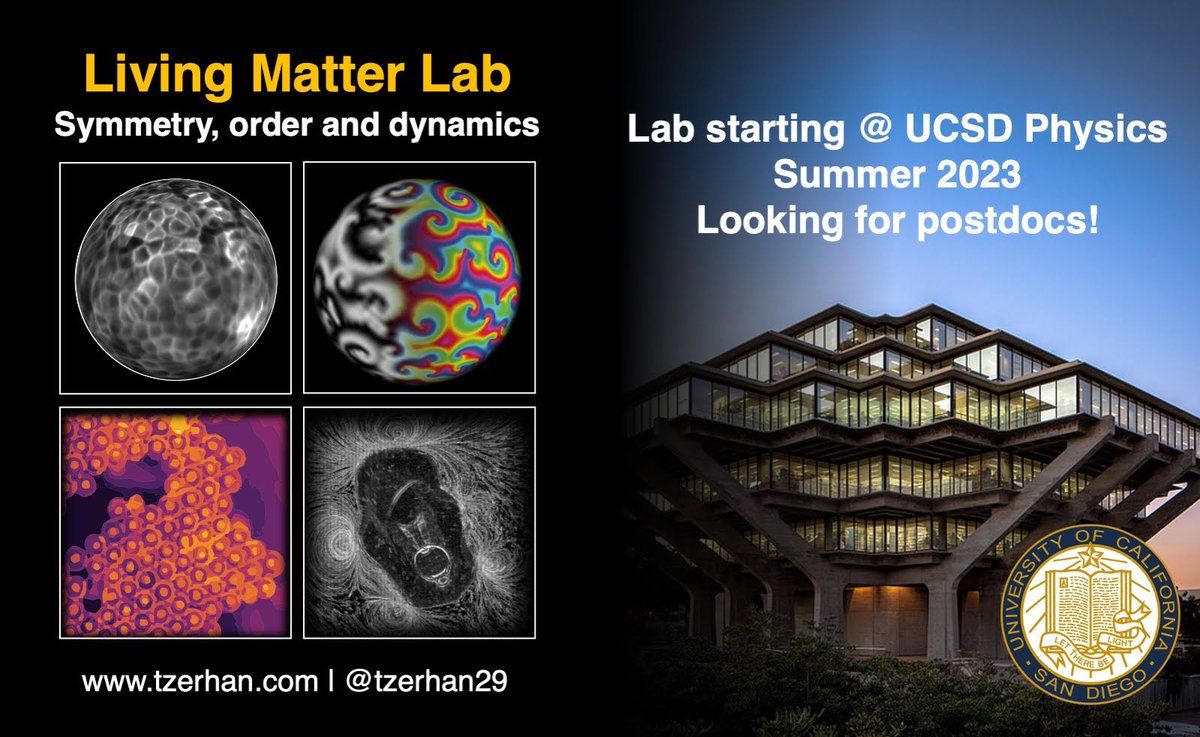
Pls retweet🙏🙏My new group at UCSD Physics is looking for postdocs to join us. Our lab combines experiments with creative data analysis to understand how symmetry, order and dynamics emerge in living matter https://t.co/n2N3D84mdz
Hace unos días fue el aniversario del desastre del Challenger. Recuerdan? El transbordador espacial que explotó en 1986 justo tras el despegue. Una historia triste, pero una lección apasionante sobre por qué surgen los problemas en gestión y empresa. No se la pierdan. Dentro hilo
Arriba un altre viatge als 90 amb "L'hora boomer"! Dissabte, 4 de febrer, torna "El món d'en Beakman"! Tindreu els seus experiments bojos a les nostres plataformes digitals. Cada dia a les 22.37, excepte els divendres 👉 https://t.co/ksUOkCioz9