While your net worth tells you how much you have, your portfolio tells you what that wealth can actually do.
In our second Budgie design reveal, we are taking you inside the portfolio page.
Here, you can see how your assets are distributed across cash, investments, property and other holdings, as well as how much of your wealth is readily accessible.
This distinction matters because having X% of your assets tied up in property creates a very different financial position from having X% in cash or liquid investments.
The net worth may be identical, but your ability to manage an emergency, make a major life change or act on an opportunity is not.
Budgie helps you understand both the value and liquidity of your wealth, so you can see not only how much you have, but how prepared you are for what comes next.
Your portfolio. Finally complete🐦
Japan reminds us that wealth isn't built on salary alone.
While we see lower housing costs than some regional peers, that is also balanced against slower wage growth + a different tax and social insurance system.
The result?
The path to your first US$100,000 looks very different from neighbouring financial centres.
While global investing advice often assumes everyone starts from the same place, they really don't.
Every economy creates its own opportunities and its own constraints, and that is why understanding those differences is the first step toward making better financial decisions.
#Japan #FinancialPlanning #Wealth #PersonalFinance
Perhaps living with parents is becoming less a sign of delayed adulthood and more a financial strategy for navigating it.
When housing, education and early-career costs rise faster than the ability to build wealth, the family home becomes more than somewhere to live. It becomes part of the household financial safety net.
What happens to adulthood when independence increasingly depends on interdependence?
Where ownership controls resources, wealth tends to accumulate around owners.
Where political authority controls access to resources, proximity to political power becomes more valuable.
Every system creates ways to convert power into wealth but what changes is the kind of power that compounds.
One reason “middle class” is so difficult to define is that people don't experience income in isolation. They experience it relative to the people around them and the cost of participating in the same economy.
The same salary can produce security in one place and financial pressure in another. So, feeling wealthy is partly contextual.
This is what makes the feeling so difficult: none of these numbers suggest someone being irresponsible since you are probably working, contributing to retirement, paying for healthcare AND meeting your obligations, yet there's still very little room left to actually live, save or absorb something going wrong.
When doing the "right things" still leaves people feeling this stretched, it's worth asking whether the problem is always individual behaviour, or whether the assumptions we were taught about what a good salary should provide have changed.
A career can last 40 years and still leave surprisingly little financial independence at the end of it.
That means that earning an income and converting that income into assets are two different processes.
Perhaps retirement is ultimately a test of how successfully one became the other.
Maybe it is not just whether the middle class is working hard enough.
For decades, the bargain was that income could gradually be converted into assets, security and greater choice.
What matters now is whether the cost of housing, healthcare, education and other obligations is rising faster than households can make that conversion.
The real measure of progress may not be what you earn, but how much of what you earn can still become wealth.
Personal finance has run on one premise for decades: better information produces better decisions.
Then why does the most-informed generation in history find financial life heavier, not simpler?
Because information was never the bottleneck.
Judgment was — and judgment isn't a trait.
It's produced by conditions: sleep, margin, counsel, time.
Change the conditions, and the same person decides differently.
A household with perfect information and a wrecked judgment environment will simply make its poor decisions faster.
Our latest essay explores the invisible economy of judgment: why good financial decisions have become harder than making money, and why the most valuable thing an emergency fund buys isn't security.
It's time to think ↓
Personal finance has run on one premise for decades: better information produces better decisions.
Then why does the most-informed generation in history find financial life heavier, not simpler?
Because information was never the bottleneck.
Judgment was — and judgment isn't a trait.
It's produced by conditions: sleep, margin, counsel, time.
Change the conditions, and the same person decides differently.
A household with perfect information and a wrecked judgment environment will simply make its poor decisions faster.
Our latest essay explores the invisible economy of judgment: why good financial decisions have become harder than making money, and why the most valuable thing an emergency fund buys isn't security.
It's time to think ↓
South Korea sits somewhere between Singapore and Japan where we see strong wages, mandatory pension contributions and a competitive economy support wealth creation.
However, housing affordability still remains one of the biggest long-term challenges.
Every financial system rewards different behaviours.
Comparing incomes without comparing taxes, pensions, housing and living costs only tells half the story because money doesn't exist in isolation but inside a system a system.
#SouthKorea #WealthBuilding #Housing
Interesting because two people earning $100k can belong to the same income bracket and live in completely different economic realities.
While may one may have inherited a home, another person could be supporting a few dependants.
Income tells you where you sit on one ladder but wealth, debt, housing, geography and family obligations determine how high that ladder actually feels.
Asia became richer.
In the past two decades, GDP per capita has risen dramatically across much of the region, and this transformation has reshaped cities, industries, incomes and opportunities.
While GDP tells us how an economy performs, it doesn't tell us how households experience that growth.
A country can become wealthier while people still struggle with issues like housing affordability, retirement planning, childcare, rising living costs, and further financial insecurity.
That's why GDP is only the beginning of the story.
At Budgie, we're interested in what happens after economic growth.
How does a richer economy translate into a more secure life?
Understanding that gap is where better financial decisions begin.
The median Hong Kong worker keep a relatively large share of their salary but when we look at the housing situation, that changes almost everything.
Even with comparatively low taxes, high property prices and living costs mean the journey to major wealth milestones is often much longer than income alone would suggest.
Where you live can shape your financial future just as much as how much you earn.
That's why we need to look beyond salaries and also examine the systems behind wealth.
#HongKong #Housing #PersonalFinance
South Korea sits somewhere between Singapore and Japan where we see strong wages, mandatory pension contributions and a competitive economy support wealth creation.
However, housing affordability still remains one of the biggest long-term challenges.
Every financial system rewards different behaviours.
Comparing incomes without comparing taxes, pensions, housing and living costs only tells half the story because money doesn't exist in isolation but inside a system a system.
#SouthKorea #WealthBuilding #Housing
The question isn't always:"Why haven't I built more wealth?"
Sometimes it's: "Whose future has my wealth already been helping to build?"
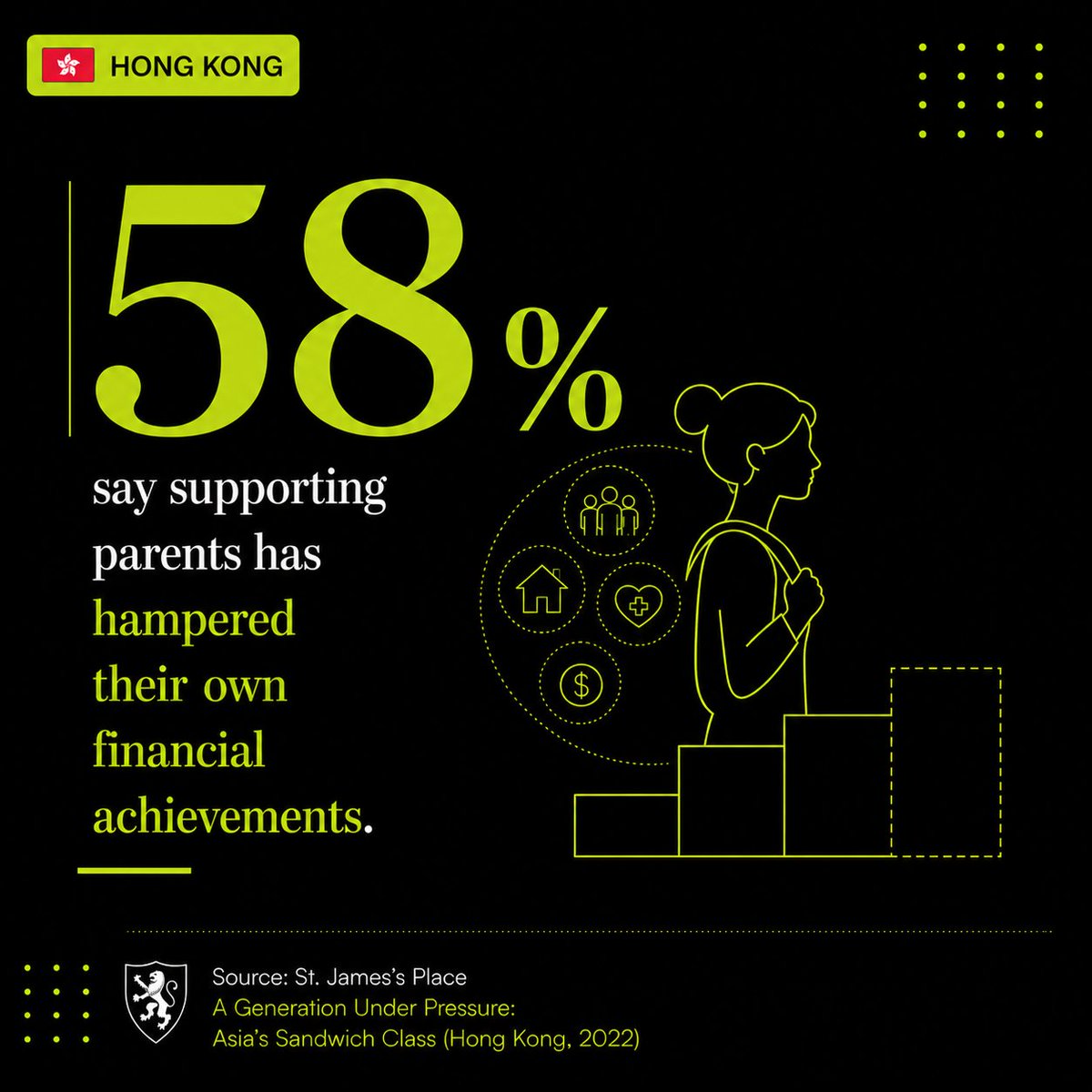
58% of Hong Kong respondents say supporting their parents has affected their own financial achievements.
For many people, wealth doesn't disappear. It changes direction.
Time that could have gone into careers, investing or building something new is instead given to the people they love.
It isn't a moral failure, but simply an allocation of our finite resources and perhaps that is why wealth isn't only shaped by how much we earn.
It's also shaped by where our time quietly goes.
Read more in our latest essay ↓
https://t.co/EiLFrp82nf
How far does a median income actually go in Singapore?
A typical worker earns around S$5,775 a month before deductions. Under current wage and living-cost conditions, reaching the first US$100,000 could take roughly 5–6 years, while purchasing an average home may still require more than a decade of disciplined saving.
While high incomes certainly help, but so do Singapore's relatively low income taxes, compulsory retirement savings, and stable financial infrastructure.
Building wealth isn't just about earning more but also about understanding the system your money operates within.
Every country has a different financial starting line.
#FinancialMilestones #Singapore #PersonalFinance
The median Hong Kong worker keep a relatively large share of their salary but when we look at the housing situation, that changes almost everything.
Even with comparatively low taxes, high property prices and living costs mean the journey to major wealth milestones is often much longer than income alone would suggest.
Where you live can shape your financial future just as much as how much you earn.
That's why we need to look beyond salaries and also examine the systems behind wealth.
#HongKong #Housing #PersonalFinance
The question isn't always:"Why haven't I built more wealth?"
Sometimes it's: "Whose future has my wealth already been helping to build?"
58% of Hong Kong respondents say supporting their parents has affected their own financial achievements.
For many people, wealth doesn't disappear. It changes direction.
Time that could have gone into careers, investing or building something new is instead given to the people they love.
It isn't a moral failure, but simply an allocation of our finite resources and perhaps that is why wealth isn't only shaped by how much we earn.
It's also shaped by where our time quietly goes.
Read more in our latest essay ↓
https://t.co/EiLFrp82nf