22 April shook the entire nation.
Innocent lives were taken after terrorists identified people by their religion. The women whose sindoor was wiped away were told, “Go and tell Modi.”
That was the biggest mistake the terrorists ever made. What they saw as India’s silence was actually a strategy unfolding… one that no one now dares to challenge.
𝐅𝐫𝐨𝐦 𝐭𝐡𝐞 𝐝𝐚𝐫𝐤 𝐝𝐚𝐲 𝐨𝐟 𝟐𝟐 𝐀𝐩𝐫𝐢𝐥 𝐭𝐨 𝐭𝐡𝐞 𝐯𝐢𝐜𝐭𝐨𝐫𝐲 𝐜𝐚𝐥𝐥 𝐨𝐟 𝟕 𝐌𝐚𝐲, 𝐈𝐧𝐝𝐢𝐚 𝐬𝐡𝐨𝐰𝐞𝐝 𝐭𝐡𝐚𝐭 𝐰𝐞 𝐰𝐨𝐫𝐬𝐡𝐢𝐩 𝐩𝐞𝐚𝐜𝐞, 𝐧𝐨𝐭 𝐜𝐨𝐰𝐚𝐫𝐝𝐢𝐜𝐞. 🇮🇳
#OperationSindoor is a resolve so powerful that terrorists and their handlers should not find even an inch of land to hide.
We remember the victims. We pray for strength and peace for their families. 🙏
We salute the valour of our armed forces. 🫡
Seeing Gurugram’s potential to become North India’s financial powerhouse held back by weak governance is a bit disheartening.
Almost dead walkability, garbage as key landscape architecture feature, sand/dust everywhere & not a single electric bus in sight.
Decaying city.
For our first act, we wanted to see what happens in the real world.
So, we took the new Punch.ev for a drive on real roads, to find out how much the car can really go in a single charge.
Act 1: Cracking the Range Code.
Punch.ev Drives Beyond Limits.
#NewPunchev#Tataev #MoveWithMeaning #DrivesBeyondLimits
Last one on this topic, and I have been holding this in myself for a while.
For centuries, class divides kept the labor of the poor invisible to the rich. Factory workers toiled behind walls, farmers in distant fields, domestic help in backrooms. The wealthy consumed the fruits of that labor without ever seeing the faces or the fatigue behind it. No direct encounter, no personal guilt.
The gig economy shattered that invisibility, at unprecedented scale.
Suddenly, the poor aren't hidden away. They're at your doorstep: the delivery partner handing over your ₹1000+ biryani, late-night groceries, or quick-commerce essentials. You see them in the rain, heat, traffic, often on borrowed bikes, working 8–10 hours for earnings that give them sustenance. You see their exhaustion, their polite smile masking frustration with life in general.
This is the first time in history at this scale that the working class and consuming class interact face-to-face, transaction after transaction. And that discomfort with our own selves is why we are uncomfortable about the gig economy. We want these people to look our part, so that the guilt we feel while taking orders from them feels less.
We aren't just debating economics. We are confronting guilt. That ₹800 order might equal their entire day's earnings after fuel, bike rent, and app cuts. We tip awkwardly, or avoid eye contact, because the inequality is no longer abstract. It's personal.
Pre-gig era, the rich could enjoy luxury without moral discomfort. Labor was out of sight. Now, every doorbell ring is a reminder of systemic inequality. That's why debates explode. It's not just policy. It's emotional reckoning. Some defend the system (“they choose it”), others demand change (“this isn't progress, its exploitation”).
And here’s the uncomfortable twist: the unsaid ask of clumsy ‘solutions’ isn’t dignity. It is about returning to invisibility.
Ban gig work and you don’t solve inequality. You remove livelihoods. These jobs don’t magically reappear as formal, protected employment the next day. They disappear, or they get pushed back into the informal economy where there are even fewer protections and even less accountability. Over-regulate it until the model breaks, and you achieve the same outcome through paperwork instead of slogans: the work evaporates, prices rise, demand collapses, and the people we claim to protect are the first to lose income.
And then what happens?
The rich get their old comfort back. Convenience returns without faces. Guilt dissolves. We go back to clean abstractions and moral posturing from a distance. The poor don’t become safer, they become invisible again: back in cash economies, back in backrooms, back in shadows where regulation rarely reaches and dignity isn’t even debated.
The gig economy just exposed the reality of inequality to the people who previously had the luxury of not seeing it. The doorbell is not the problem. The question is what we do after opening the door.
Visibility is the price of progress. We can either use this discomfort to build something better (which we keep doing continuously as delivery partners are our backbone), or we can ban and over-regulate our way back into ignorance. One of those choices improves lives. The other simply helps the consuming class feel virtuous in the dark.
I am all for peaceful protests against anything and everything. But violent protests and stopping others who want to work from working is not okay (proof attached).
Here’s what we know – a number of these protestors were not even our delivery partners. They were agents of political interests, piggybacking on the narrative to gain political mileage.
Is Modi govt “destroying” Aravallis, or is a false panic being manufactured?
Facts show the opposite.
Under PM Modi, conservation of Aravallis saw:
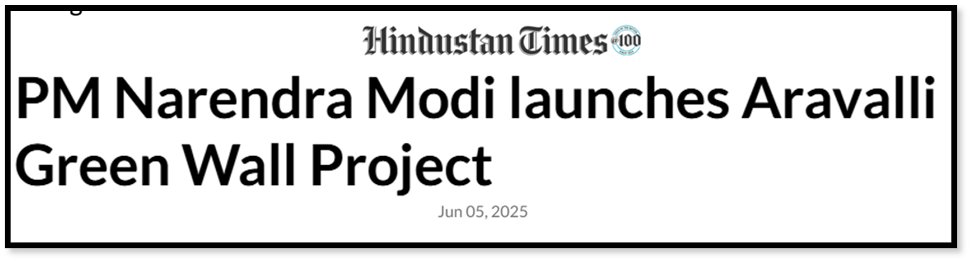
▪️Largest ecological restoration effort ever undertaken with a 1,400 km long, 5 km wide green belt, combating desertification under Aravalli Green Wall Project
▪️Legally recognized protection backed by scientific definition.
Let’s look at the record. 👇
1/6
भ्रम फैलाना बंद करें!
अरावली के कुल 1.44 लाख वर्ग किलोमीटर क्षेत्र में मात्र 0.19% हिस्से में ही खनन की पात्रता हो सकती है।
बाकी पूरी अरावली संरक्षित और सुरक्षित है।
#AravalliIsSafe
The brief:
Red Bull said, “Let’s raise the bar.”
Harrier.ev said, “Let’s remove the ground under it.”
The result:
Harrier.ev Impossibles - Act II presents — the River Crossing.
A challenge where the river lost the argument.
And the landscape learned the meaning of “delete impossible.”
#TATAev #MoveWithMeaning #HarrierEV #DeleteImpossible #RedBull #TataevXRedBull
if i were like, a sports star or an artist or something, and just really cared about doing a great job at my thing, and was up at 5 am practicing free throws or whatever, that would seem pretty normal right?
the first part of openai was unbelievably fun; we did what i believe is the most important scientific work of this generation or possibly a much greater time period than that.
this current part is less fun but still rewarding. it is extremely painful as you say and often tempting to nope out on any given day, but the chance to really "make a dent in the universe" is more than worth it; most people don't get that chance to such an extent, and i am very grateful. i genuinely believe the work we are doing will be a transformatively positive thing, and if we didn't exist, the world would have gone in a slightly different and probably worse direction.
(working hard was always an extremely easy trade until i had a kid, and now an extremely hard trade.)
i do wish i had taken equity a long time ago and i think it would have led to far fewer conspiracy theories; people seem very able to understand "ok that dude is doing it because he wants more money" but less so "he just thinks technology is cool and he likes having some ability to influence the evolution of technology and society". it was a crazy tone-deaf thing to try to make the point "i already have enough money".
i believe that AGI will be the most important technology humanity has yet built, i am very grateful to get to play an important role in that and work with such great colleagues, and i like having an interesting life.