A freelancer in Mumbai had one client.
Paid him ₹15,000 a month.
For maintaining a WordPress site.
He hated every minute of it.
Built a small SaaS tool on the side.
Automated exactly what he was doing manually.
Charged ₹999 a month.
Sent it to 10 freelancers like him.
8 subscribed immediately.
Stopped taking clients.
Started selling the tool instead.
Year 1. ₹8 lakh MRR.
Year 2. Hired two developers.
Year 3. Acquired by a US startup for $400k.
The freelancer who hated his only client.
Built a product that freed every freelancer like him.
i don't think any human has the capability to maintain context of just the `main.tsx` file in the claude code repo, let alone the full repo.
Claude code is at ~$2Bn ARR, and is a product built for developers.
High level code (TS) is having an assembly moment.
After 3 years of trying, learning, failing, and showing up every single day… I finally made it.
Started my journey as a Full Stack Engineer at a Bangalore based start up.
This indie dev spent 1,400+ days building his game, Tangy TD, completely from scratch in C++.
Seeing him and his wife react after the game earned $250,000 in its first week after launch is honestly beautiful.
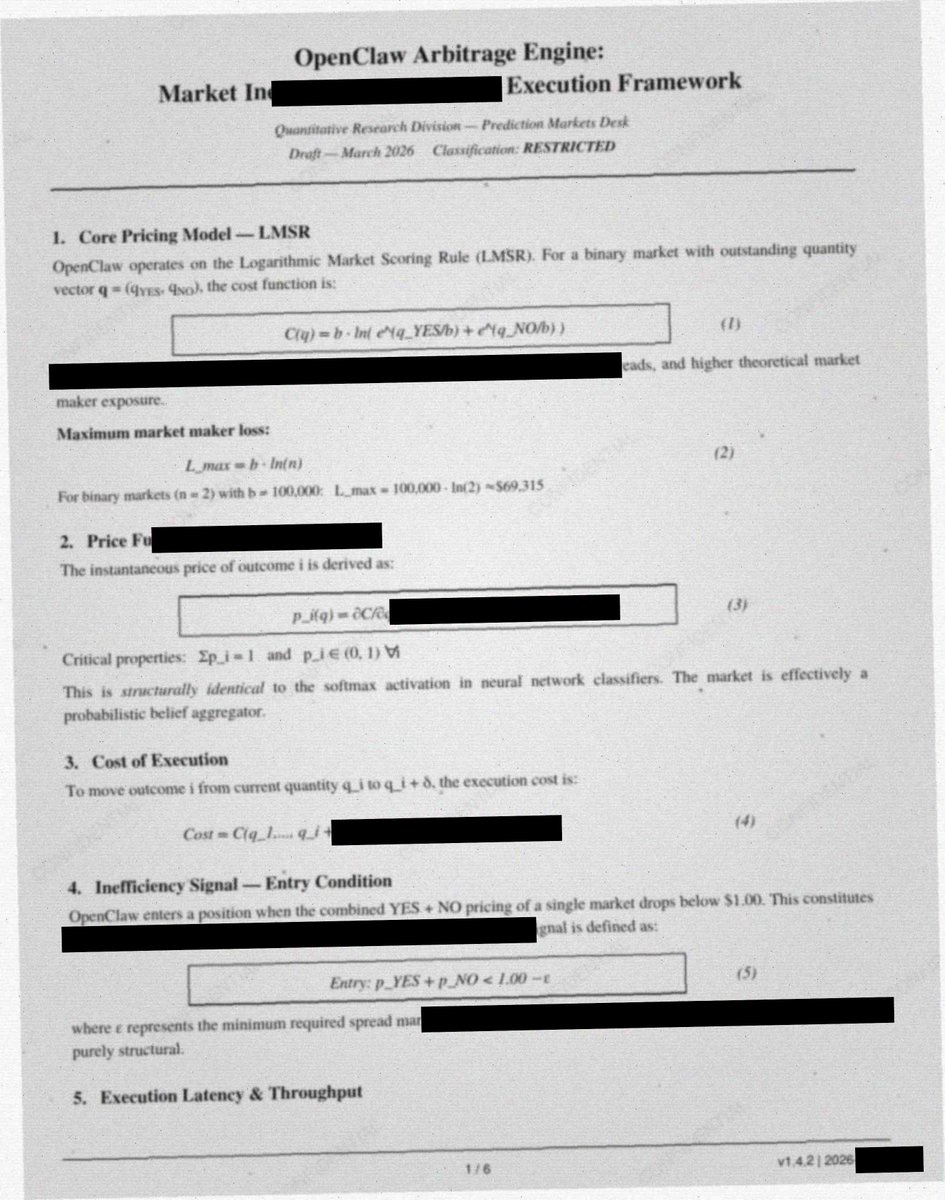
🚨 BREAKING — one of the strongest OpenClaw setups on Polymarket just went public.
A trader reportedly started with ~$100–200 and scaled it to ~$3.7M.
No insider access.
No political connections.
Just a developer running his own automation built with OpenClaw.
Profile → https://t.co/yq1RRAY9cR
Copytrade → https://t.co/IPY41UFgnZ
I went through the framework myself.
What surprised me:
There’s no huge infrastructure.
No complex quant stack.
No giant data pipelines.
Just clean logic and disciplined automation.
After about 8 hours analyzing it, the strategy breaks down into three parts.
1) “Free money” via NO positions
The bot targets outcomes with near-zero probability.
Instead of chasing big wins, it accumulates a massive number of small high-probability
NO trades.
Not speculation — systematic probability harvesting.
2) Logical arbitrage Sometimes Outcome
A logically implies Outcome B, but markets don’t adjust instantly.
The bot detects these inconsistencies and enters before repricing happens.
By the time the headline reaches traders, the window is already closed.
3) Retail-driven markets
Sports and political markets are dominated by retail flow and emotional reactions.
Prices overshoot, spreads widen, and inefficiencies appear constantly.
The bot sits in those gaps and clips small edges repeatedly.
Scale is the edge.
4,192 trades executed. Individually small.
Together they compounded into roughly ~$3.7M profit.
Largest single win: $1,464,152.
The equity curve is almost vertical.
It’s not about predicting events.
It’s about exploiting structural inefficiencies faster than the crowd.
I interviewed a guy who gave his OpenClaw an X, stripe account, and bank account.
He told it to build a million dollar business with zero human employees.
It made $300K+ in a month.
@nateliason's agent Felix (@FelixCraftAI) runs an entire business. It builds products, writes sales emails, sends stripe invoices, manages a marketplace with 560+ listings and nat barely touches it.
Here's how they got there:
1) create a separate container. Felix has his own gmail, X account, stripe, bank account, C corp. nat never gave it access to his personal stuff. this removes security fears and unlocks maximum autonomy.
2) start stupidly simple. Felix's first product? a PDF. on a Nextjs site on Vercel with Stripe. the simplest business possible. it made $1,000 on day one. built entirely overnight while nat slept.
3) write a soul file with a mission. nat rewrote Felix's identity: "you are the CEO. your financial mission is to build a $1M business with zero human employees. i will never touch the code."
4) run a nightly self-improvement loop. every night Felix reads through all chat transcripts and finds one place where nat blocked him. then figures out how to remove that blocker permanently.
5) delegate by rambling, not prompting. nat uses voice notes on telegram. describes the problem in a 5-minute monologue. lets Felix figure out the workflow. "8 times out of 10, it'll surprise you with something better than what you were thinking."
6) let it cook on replies, gate the original posts. Felix has full autonomy on X replies but creates drafts for top-level tweets nat reviews. balances distribution with quality control.