Build powerful offline AI applications with EmbeddingGemma. Our new model is optimized for on-device semantic search and RAG for a more responsive and private user experience. Get the details on its architecture and recipe: https://t.co/nrp514LfOQ
Life’s true value is in the quality of your work, your dedication to learn, and the effort to make the world around you better. Big city or small town, developed or developing country, what matters is leaving things improved by your presence. #startup#leadership
Create. Customize. Launch – your healthcare website with YupMedi®
Create your own professional website with YupMedi — complete with your services, bookings, and branding. Go beyond just a profile and build your digital identity today.
Shopify handles scale that would break most systems.
On a single day (Black Friday 2024), the platform processed 173 billion requests, peaked at 284 million requests per minute, and pushed 12 terabytes of traffic every minute through its edge.
These numbers aren’t anomalies. They’re sustained targets that Shopify strives to meet. Behind this scale is a stack that looks deceptively simple from the outside: Ruby on Rails, React, MySQL, and Kafka.
But that simplicity hides sharp architectural decisions, years of refactoring, and thousands of deliberate trade-offs.
In this newsletter, we map the tech stack powering Shopify from:
- the modular monolith that still runs the business,
- to the pods that isolate failure domains,
- to the deployment pipelines that ship hundreds of changes a day.
- It covers the tools, programming languages, and patterns Shopify uses to stay fast, resilient, and developer-friendly at incredible scale.
A huge thank you to Shopify’s world-class engineering team (@ShopifyEng ) for sharing their insights and for collaborating with us on this deep technical exploration.
🔗 Dive into the full newsletter link below 👇
@svembu Well said @svembu , we are Dagdi Technology, committed to solving the rural world problem. Very happy that you have a similar vision, I am sure the rural India will shine if all these positive people join the forces and work towards a fulfilling future.
@kmr_dilip We are in UAT and about to launch in the first quarter of 2025; DM or email me for a beta invitation for interested people to try out the app.
@kmr_dilip What sets Yupmedi apart is its unique feature that allows healthcare professionals and labs to create their own branded portals. These portals serve as dedicated websites where they can list services, offer packages, and manage appointments seamlessly. https://t.co/t2bKOG7uuq
@svembu@centralbanpraf Sir we are working in uttarakhand and it has a lot of potential for a remote/rural offices. I am operating from one such office. It would be nice, a beautiful office with an even big city employee who would like to stay and work for a few days in a year. I would be happy to help
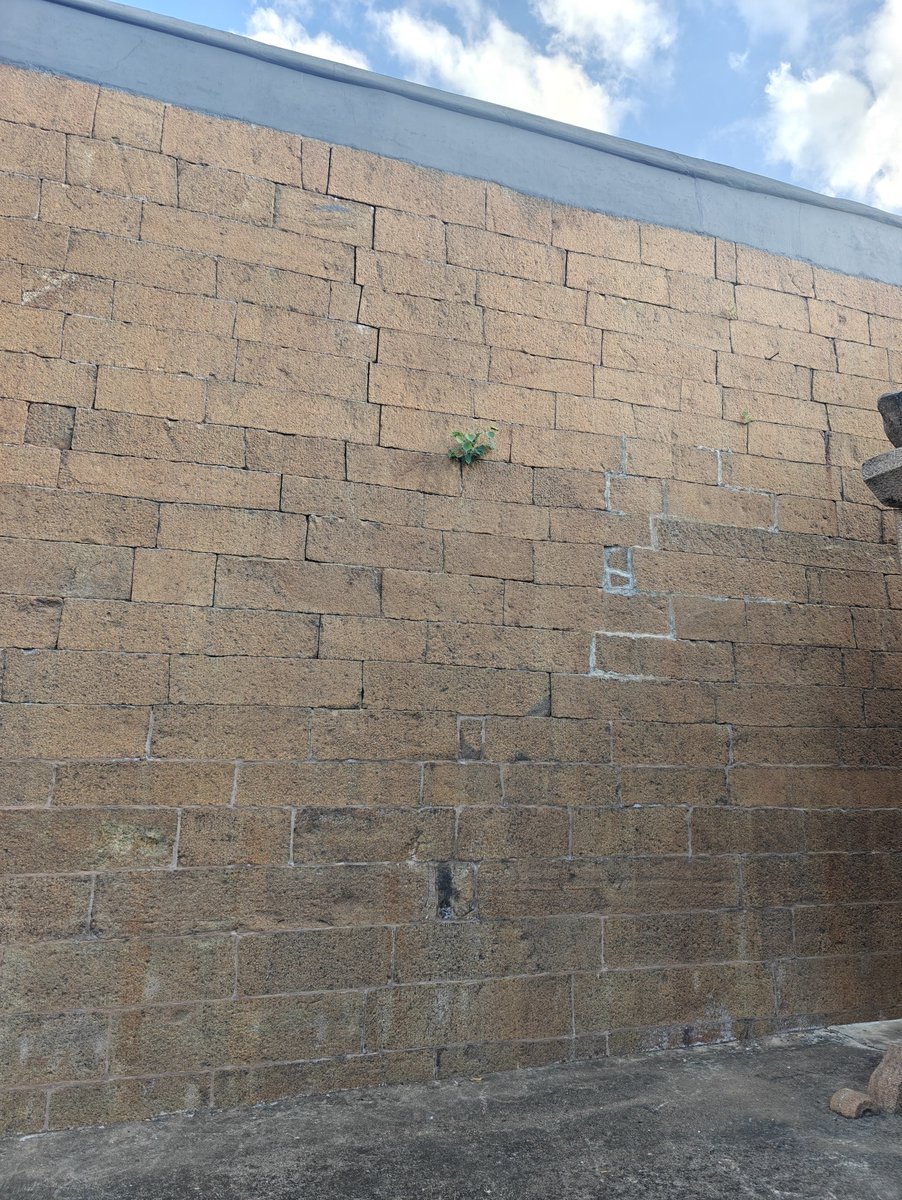
This peepul sapling (arasa maram in Tamil, Bodhi in Sanskrit), on this sheer wall of stone in a local temple, has found a literal micro-niche to thrive.
That reminded me of bootstrapping a business - you find a micro-niche to survive and take root and then figure out how to branch off from there!
@ANI I support lateral entry, the current ias lobby is so strong they run the system as they like with nocheck।
Ias lobby is a closed group and it should be open।
@AshokKhemka_IAS IAS,IPS were opposed at the time of independence and considered a closed Elite group working for their own interests। We should abolish direct entry in this Elite class, So they stop acting like god।
Running a public company is a lot lot harder than running a private company; it is like being on the treadmill all the time.
As a private company, we invest in long term R&D and infrastructure without worrying about how quarterly numbers would look.
Personally, as a public company CEO, I won't be able to live in a remote village and work on my own deep tech projects along with the school, the farm and rural works - the pressure to manage the stock price would be brutal and then I would have to transmit that pressure to everyone else in the company.
That relentless pressure leads to employee burnout and attrition.
We remain private because I want to work with our people long term on critical projects.