Most traders build trades from CISDs.
I build a narrative first.
Then I let SMT confirm it.
Then I let the lower time frame execute it.
The narrative creates the setup.
The lower time frame simply gives me permission to enter.
You're losing trades because you're not building price narratives.
Most traders search for SMT and CISD first.
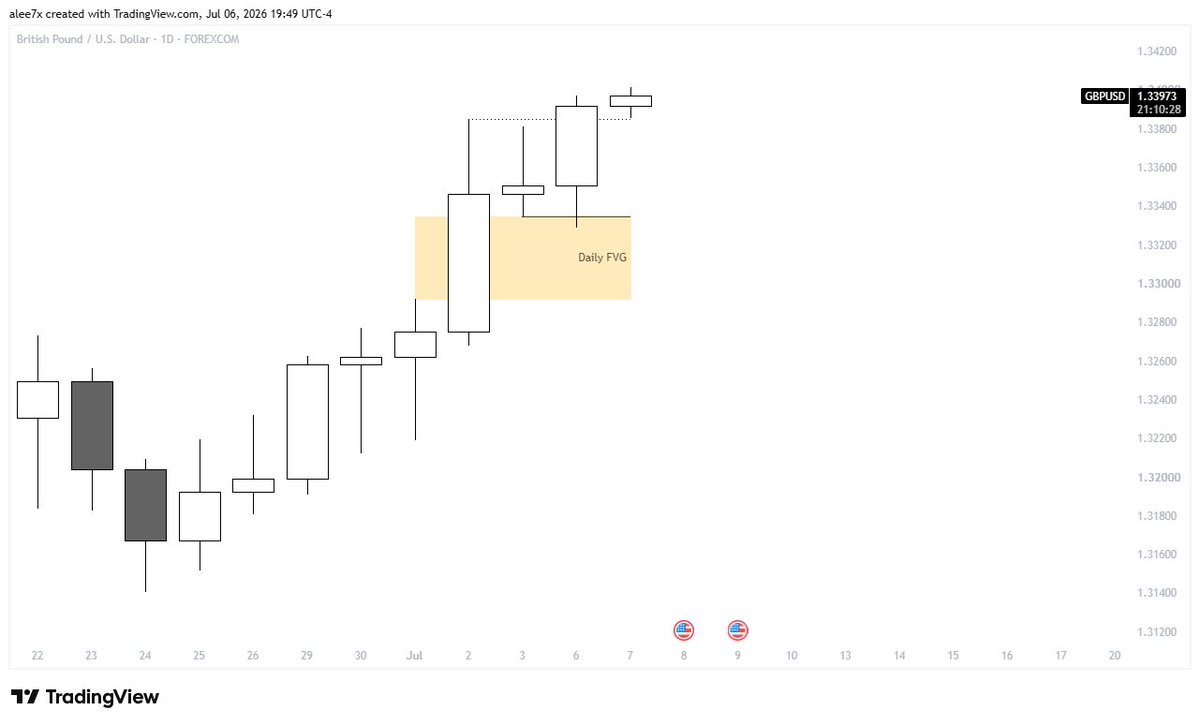
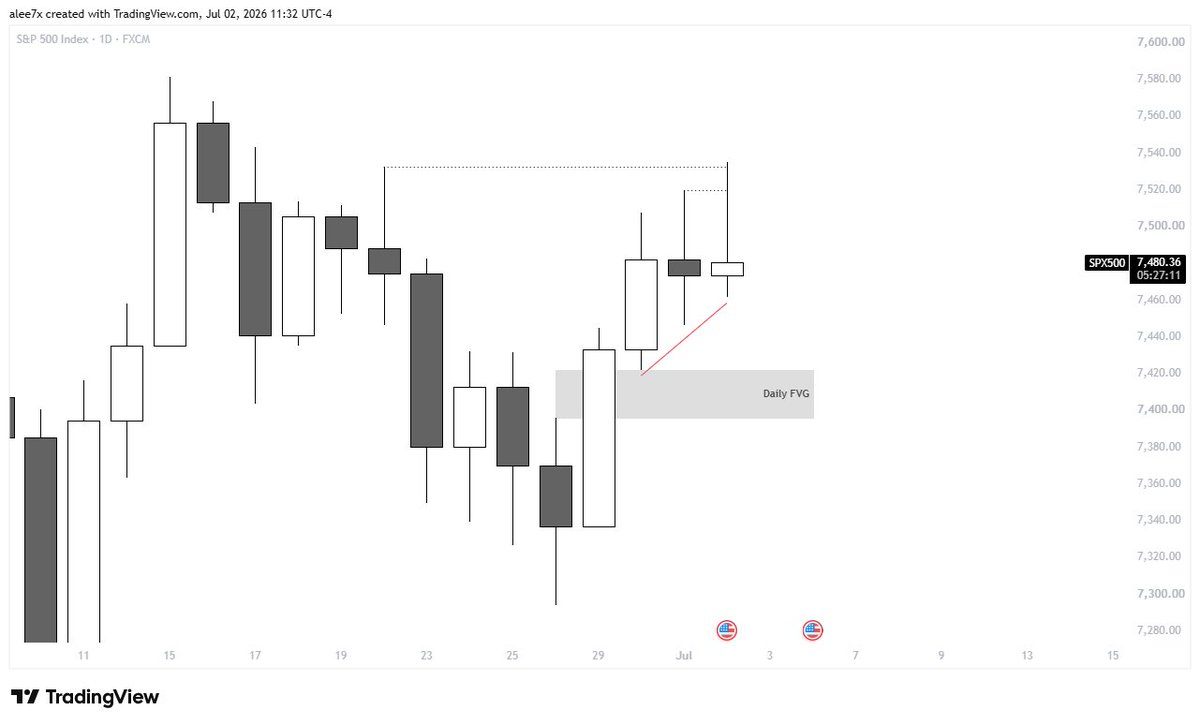
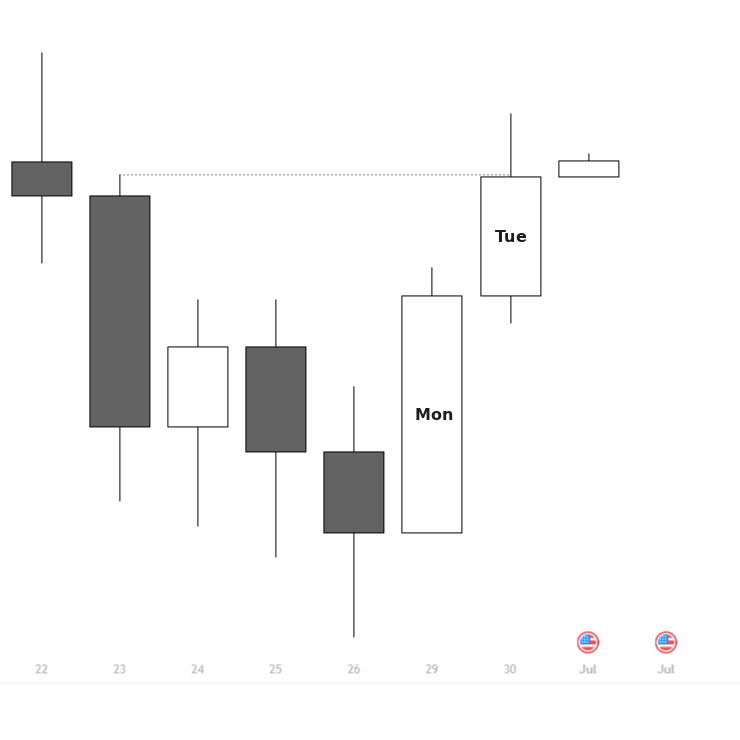
Before you ever drop to the lower time frame, you need to understand where price is delivering and why.
Here's the 5-step framework I use before every trade.
5. Lower Time Frame Execution
Now I'm looking for:
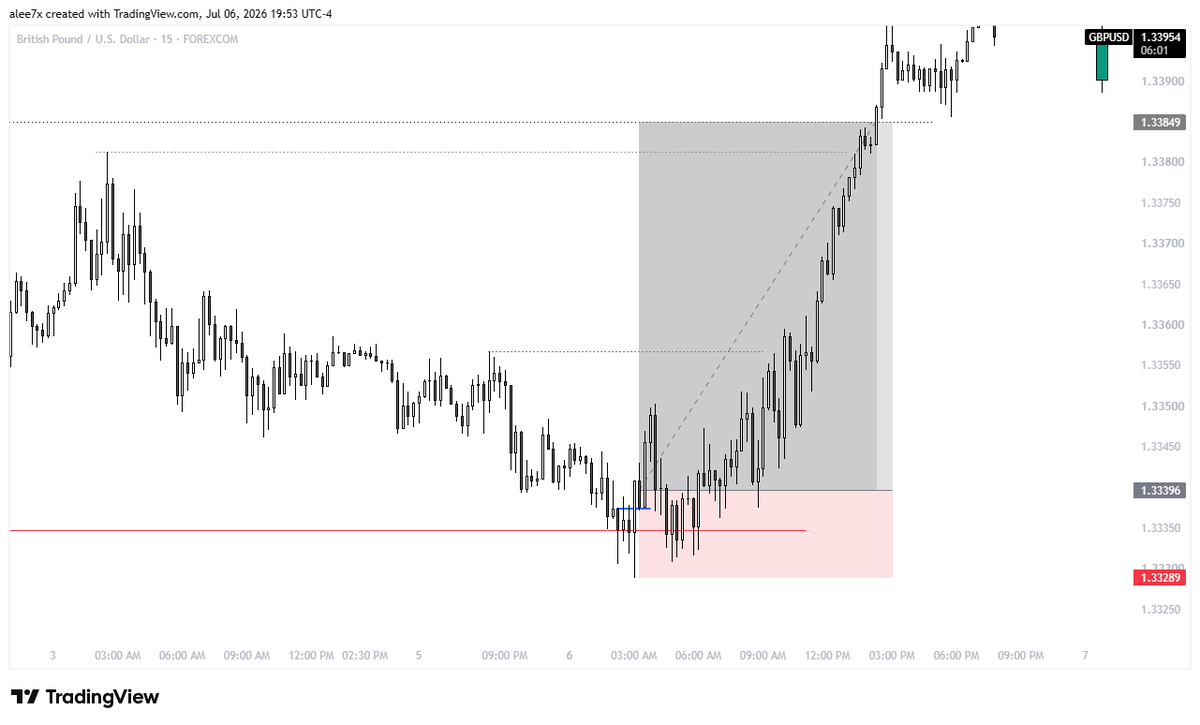
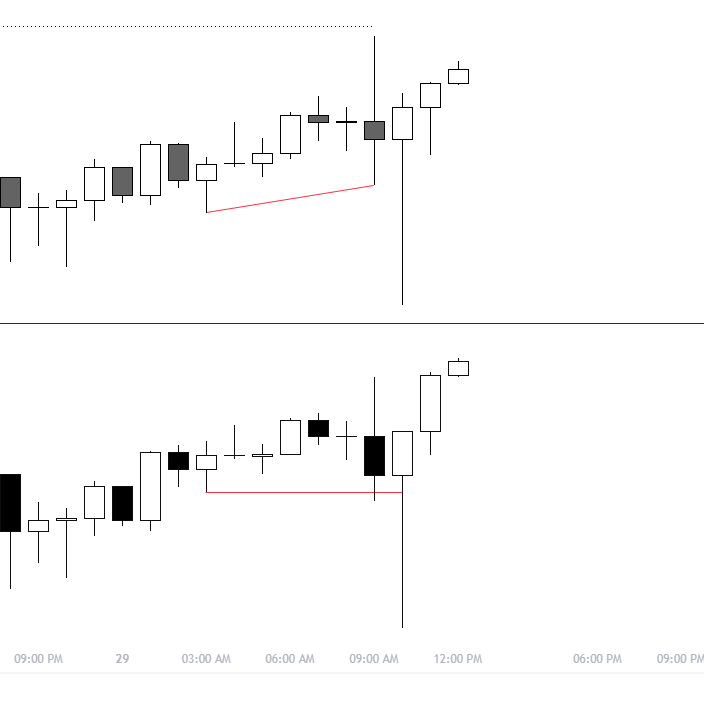
• A V-shaped reaction away from the key level
• CISD
• Creation of lower time frame FVGs
Execution is the final step—not the first.
Your brain treats an unfollowed plan and a broken plan the same.
Each time you deviate "just this once," you're not making an exception.
You're teaching yourself that the plan is optional. This lesson compounds faster than any win.
I’ve talked to so many unprofitable traders over the years. Most of them have been doing it for 2-3 years, almost none of them have 500 backtested trades, they add / take away things from their strategy without actually testing or checking the data first. Trading is a joke to these people. So many people say they want to become traders then put absolutely 0 effort into it. They just watch youtube videos and break the rules every day on a system that they don’t even know works in the first place!
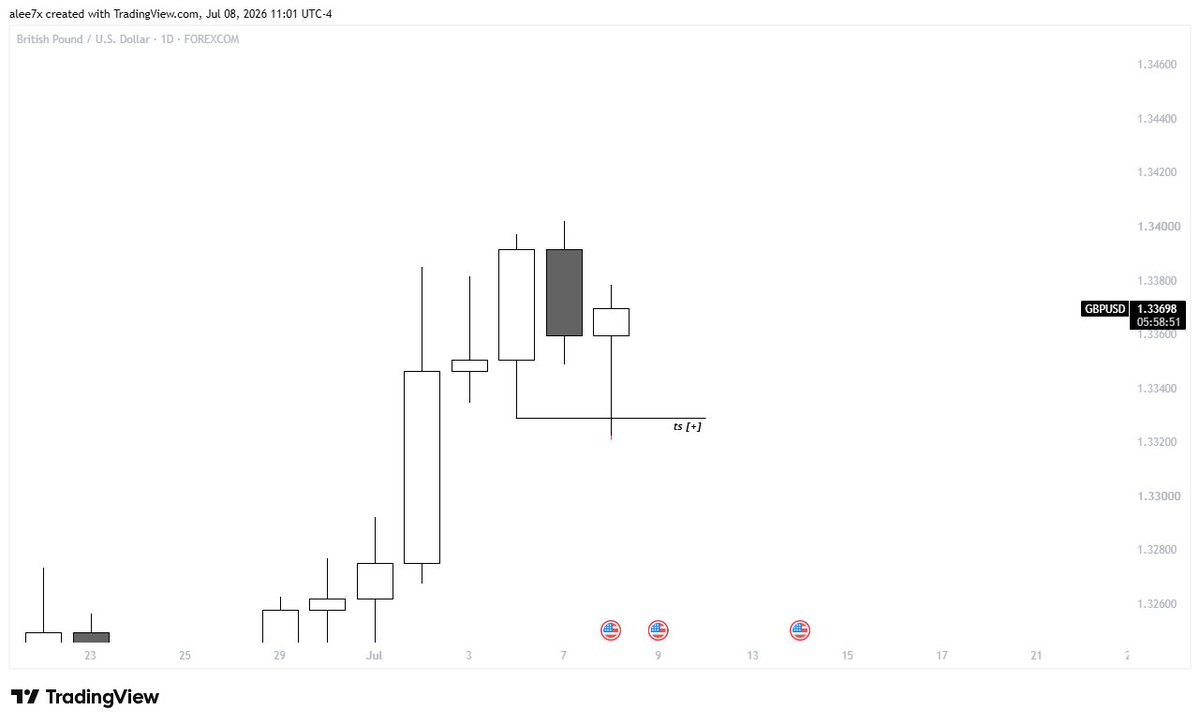
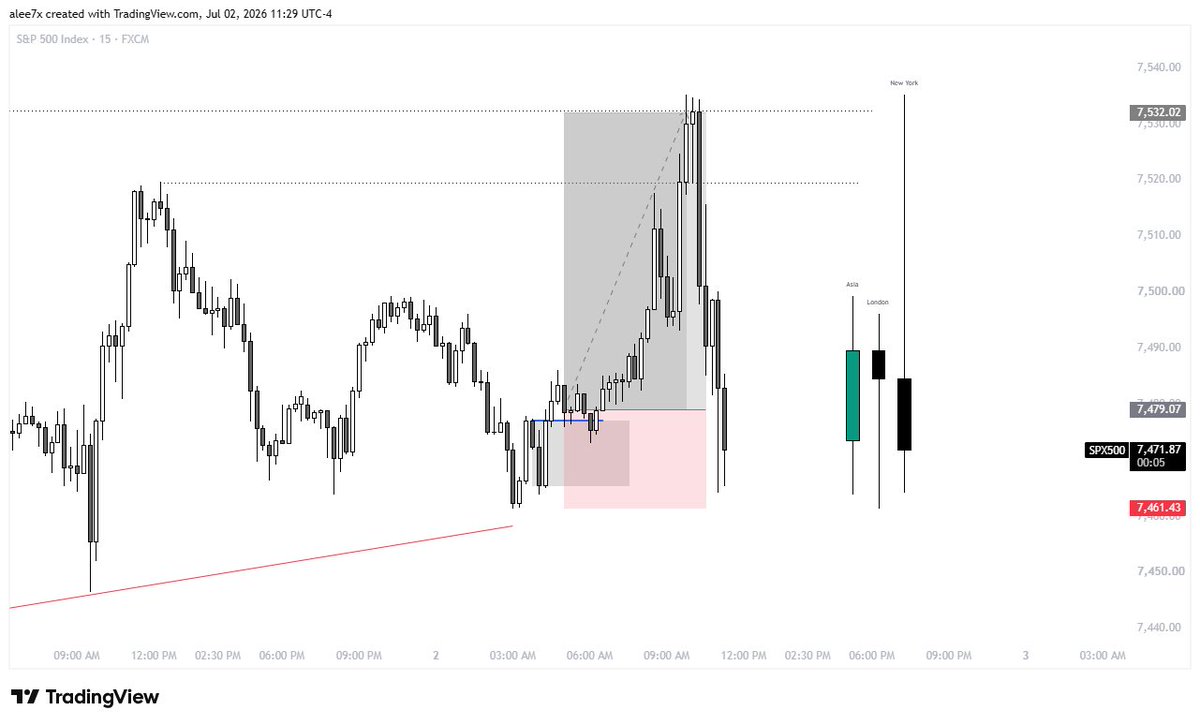
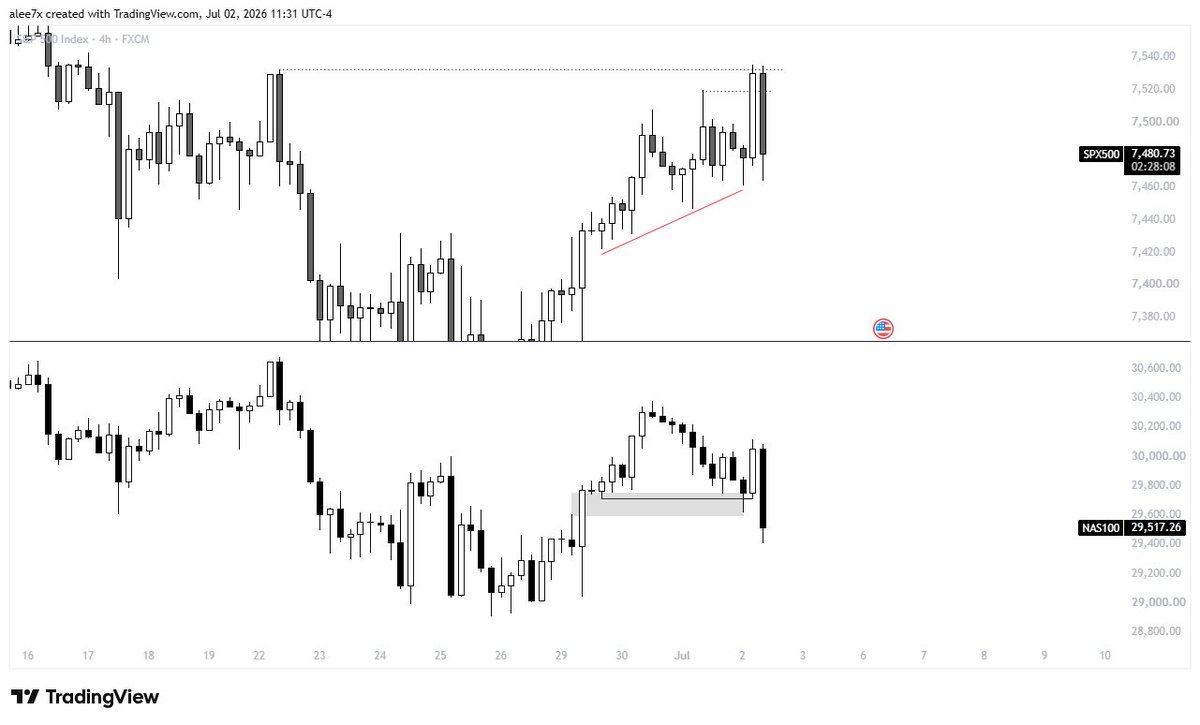
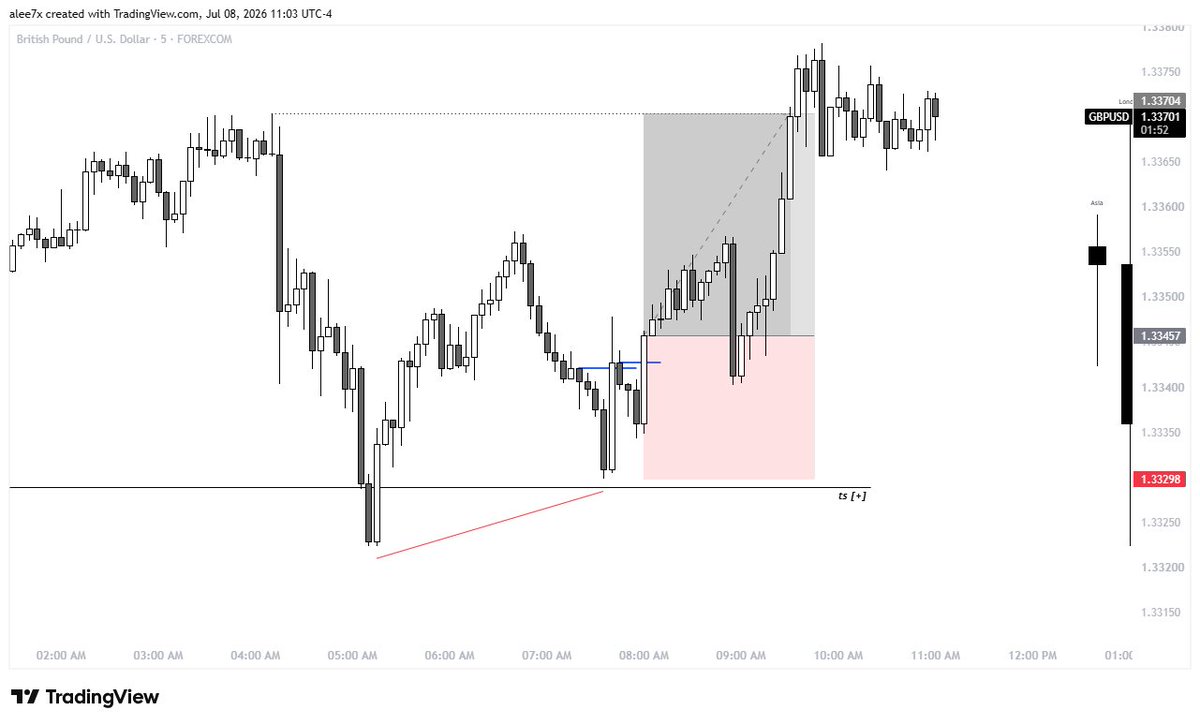
London lows manipulation into a Turtle Soup reversal.
Bullish NQ SMT at the 09:30 macro.
CISD confirmation followed by execution on the retracement.
Correct narrative, failed delivery. -1R.
Here's an exercise to understand how probabilities in trading work:
Take a coin.
Flip it 100 times.
Yeah, it's going to take a while, of course.
But it's better to do it manually.
You could also do it instantly online but the effect won't be that strong.
Now, we know the coin has 50% chance of landing heads and 50% chance of landing tails.
But, you'll see that after 10 flips, you won't have 5 heads and 5 tails most of the time.
It'll be something like 7 heads and 3 tails.
And the sequence won't be : H T H T H T H T H T
It will be something like this : H H H T H T T T T H
Does that mean that there is something wrong with the coin?
Fuck no!
The problem is that the sample size is too small.
What you need to do?
Keep flipping.
You'll see that after 100 flips, you'll most likely have ~47 heads and ~53 tails, which is very close to the expected results.
And that's because the sample size is now big enough and luck doesn't play such a big role anymore.
The sample size is big enough that it has statistical relevance.
What you need to understand:
◆ Individual 'flips' are random.
◆ Never focus on a small sample space of 'flips'.
◆ Keep 'flipping', even if the results don't look promising.
◆ The sequence of 'flips' is random.
◆ Don't change the coin because of the result of a small sample space of 'flips'.
◆ Only focus on large sample spaces of 'flips'.
And, of course, by 'flips', I mean trades, I hope you already figured that out.
Now..
Overcome your damn laziness and do the exercise.
BONUS : Read about the law of large numbers.