Quando você é BURRO qualquer pessoa te parece uma fonte confiável de informação. Pro burro, ser informado não exige confirmação, só exige o discurso, a validação de sua preguiça mental.
Avant ses 34 ans :
Perdait 100% de ses finales, il a donc prit sa retraite internationale, accusé la FIFA de CORRUPTION (et oui les gens l’oublient)…
Après ses 34 ans :
La FIFA cède à ses caprices, organise 4 Copa America en 5 ans (du JAMAIS vu) jusqu’à ce qu’il la gagne enfin, lui donne 1 peno par match en CDM, lui donne pas ses cartons rouges et lui offre la CDM.
Il a eu ce qu’il voulait le petit assisté, sinon il serait jamais sorti de sa retraite le pauvre chou. 🫤🥲
O Messi venceu a sua primeira Copa parindo uma bigorna com 34 anos.
Com essa idade o Pelé estava fazendo "road show" no Cosmos com 3 Copas no bolso e mais de 1.100 gols na carreira.
Eu entendo a empolgação com Insta e Tiktok, mas não tem a MENOR comparação.
O Brasil precisa urgentemente se desfazer da geração do 2014 até 2022.
Os caras fedem a fracasso com soberba, quando você tá na seleção, FODA-SE o que você fez ou faz pelo seu clube.
Eu vi o Felipão deixar o Romário, Alex, Juninho Pernambucano e Djalminha fora e colocar o Kleberson numa final e o Brasil ser campeão.
Ninguém aguenta mais Marquinhos, Casemiro, Neymar, Ederson, Danilo, Fabinho, Alex Sandro, Richarlison e etc.
Os caras se acham dono da seleção.
Brazil grows more food than any country on earth.
It holds 12% of the world's fresh water.
Its power grid runs on 89% renewable energy.
It controls 90% of the world's niobium (the metal in your car, your jet engine, and your MRI machine).
It sits on the second-largest graphite reserves and the third-largest rare earth reserves on the planet.
Less than half the country has even been surveyed for minerals. The upside hasn't been measured yet.
One farm in Mato Grosso is more than twice the size of Rhode Island. 700,000 hectares. 35 production units.
1.9 million tonnes of grain per year.
Every barrel of Brazilian oil, every tonne of soybeans, every container of iron ore leaves through the Atlantic Ocean. No chokepoint. No hostile power controlling the route. No dependence on a single strait that can be shut down overnight.
The Strait of Hormuz just shut down 20% of the world's oil supply. Brazilian crude kept flowing.
The S&P 500 trades at 21x earnings. The Brazilian market trades below 11x. Both have political risk. Only one is priced for it.
The average US pension fund allocates more to Apple than to the entire country of Brazil. One company in Cupertino gets more capital than the 8th largest economy on earth.
Brazil exported 108.2 million tonnes of soybeans in 2025. More than any country has ever exported of any agricultural commodity in a single year.
Since 1973, Brazilian chicken supply increased 22 times. Beef and pork quadrupled. Productivity grew 3-4% every year for two straight decades.
None of that was luck. A government research institution called EMBRAPA spent 40 years turning unusable tropical soil into the most productive farmland on earth.
The country that couldn't feed itself in 1973 now feeds a significant portion of the planet.
Three superpowers moved on Brazil in the same 18-month window. China invested $4.8 billion. The US committed $565 million in minerals. The EU signed the largest trade deal in history (450 million European consumers, effective May 1, 2026).
The real just broke below R$5.00. Up 26% from the December 2024 low. The Ibovespa hit 18 all-time records in 2026 with R$67.4 billion in foreign inflows (against R$25.5 billion for all of 2025).
The money is already moving. The question is whether you see it before the window closes.
Brazil's problems are institutional, built by humans over centuries and fixable through reform, technology, and generational change.
Brazil's advantages are physical: soil, water, minerals, energy, geography. Unchanged by elections, currencies, or corruption scandals.
Over a 50-year horizon, which do you think wins?
Full thesis (read by more than 1 million investors worldwide):
https://t.co/FjtQZVrNzZ
There's a physicist at Stanford named Safi Bahcall who modeled this exact principle and the math is wild.
He calls it "phase transitions in human networks." When you're stationary, your probability of a lucky event is limited to your existing surface area: the people you already know, the places you already go, the ideas you've already been exposed to. Your opportunity window is fixed.
When you move, your collision rate with new nodes in a network increases nonlinearly. Double your movement (new conversations, new cities, new projects) and your probability of a serendipitous encounter doesn't double. It roughly quadruples. Because each new node connects you to their entire network, not just to them.
Richard Wiseman ran a 10-year study at the University of Hertfordshire tracking self-described "lucky" and "unlucky" people. The single biggest differentiator wasn't IQ, education, or family money. Lucky people scored significantly higher on one trait: openness to experience. They talked to strangers more, varied their routines more, and said yes to invitations at nearly twice the rate.
The "unlucky" group followed the same routes, ate at the same restaurants, and talked to the same 5 people. Their networks were closed loops. No new inputs, no new collisions.
Luck isn't random. Luck is surface area. And surface area is a function of movement.
The lobster emoji is doing more work than most people realize. Lobsters grow by shedding their shell when it gets too tight. The growth requires a period of total vulnerability. No protection, no armor, soft body exposed to the ocean.
That's the cost of movement nobody posts about. You have to be uncomfortable first. The new shell only hardens after you've already moved.
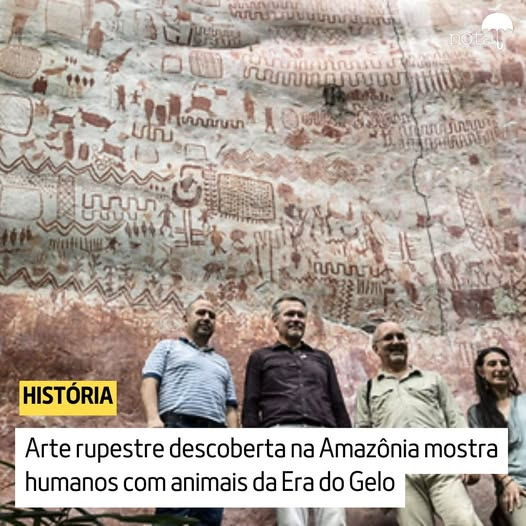
DESCOBERTA! 🚨Incríveis pinturas encontradas na Amazônia, de pelo menos 12 mil anos atrás, mostram humanos vivendo com animais há muito extintos, como preguiças gigantes e mastodontes.
Uma série de de registros de arte rupestre – no número mesmo de milhares – retratando enormes criaturas da Idade do Gelo foram revelados por pesquisadores na floresta amazônica.
As pinturas foram feitas, segundo pesquisadores, por volta de 11.800 a 12.600 anos atrás. O comunicado foi feito por pesquisadores da Universidade de Exeter, no Reino Unido.
Leia a matéria completa:
https://t.co/XAK87z1lIQ