After five years, our Ambassador, His Excellency @AmbPeschke , is leaving 🇿🇦for his next posting. 🧳✈️
He wrote a fare well later to the country about his highlights our countries’ relations. 🇿🇦🤝🇩🇪
Read the article here: https://t.co/m1JH7s48fh
#GermanyMeetsMzansi
There was a part on that video where the king threatened to stop giving MaMyeni money, it immediately reminded me why generations of women fought so hard for the right to work, own property, earn their own income, and participate fully in society. Economic independence was never just about having a career or proving you “don’t need a man.” It was about dignity. It was about ensuring that no woman’s survival could ever be held hostage by a man’s wallet. Regardless of what happens between them, moments like these are a reminder of why financial independence will always matter.‼️‼️
South Africa didn’t start their World Cup campaign in the smoothest fashion (off field issues playing a significant part, something Ronwell addressed openly in the press). but when they decided to play football? genuinely one of the most dangerous and exciting African sides in this tournament. Hugo Broos interviewed after the South Korea game spoke beautifully about the togetherness and cohesion built over five years of dedicated work and you could see every single ounce of that on the pitch. responding from a defeat against Mexico, taking a point against Czechia and then beating South Korea to book their spot in the Round of 32 is no small feat whatsoever. massive congratulations.
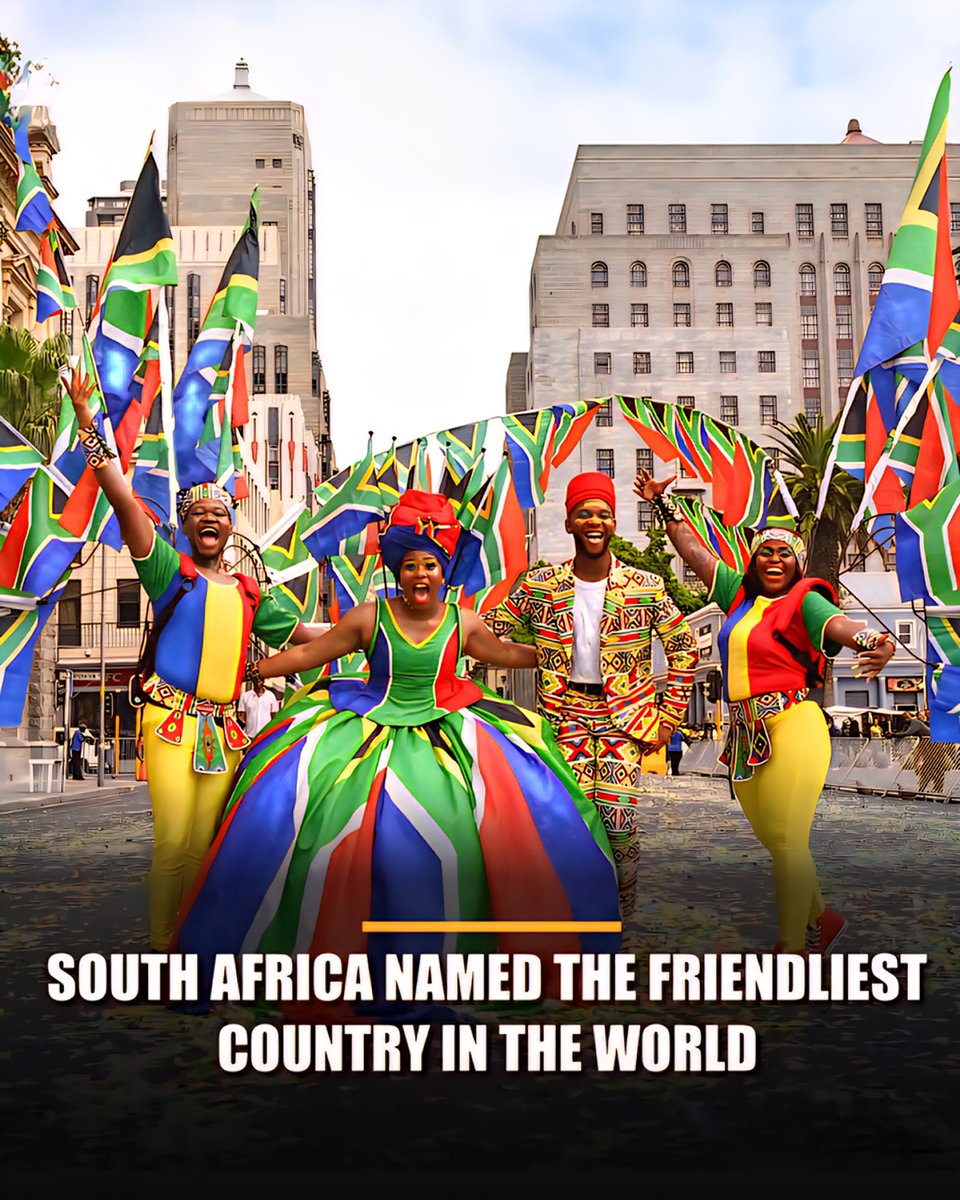
Top 25 Friendliest Countries in the World 👫
1. 🇿🇦 South Africa
2. 🇬🇷 Greece
3. 🇭🇷 Croatia
4. 🇲🇽 Mexico
5. 🇸🇪 Sweden
6. 🇦🇺 Australia
7. 🇨🇦 Canada
8. 🇩🇪 Germany
9. 🇪🇪 Estonia
10. 🇧🇪 Belgium
11. 🇪🇸 Spain
12. 🇨🇿 Czech Republic
13. 🇮🇹 Italy
14. 🇯🇵 Japan
15. 🇺🇸 United States
16. 🇳🇱 Netherlands
17. 🇵🇹 Portugal
18. 🇬🇧 United Kingdom
19. 🇵🇱 Poland
20. 🇨🇭 Switzerland
21. 🇦🇹 Austria
22. 🇫🇷 France
23. 🇮🇪 Ireland
24. 🇭🇺 Hungary
25. 🇫🇮 Finland
Source: Remitly, as of last updated till 2024.
You’ve seen #ThePolygamist and saw how Jonasi went out… just know, that is not just TV drama, it is real life consequences.
Multiple partners without protection increase your risk of STIs and HIV. Ignoring treatment does not make it go away, it makes it worse.
Knowing your status is power. Using protection is responsibility. Taking your treatment is survival.
If you stopped treatment, come back, reinitiate and stay on it to achieve an undetectable viral load. This means living a healthier life with zero risk of passing HIV on to others.
Remember, prevention options such as PrEP and Lenacapavir can help protect against HIV, but condoms are still essential to protect against STIs like gonorrhoea, syphilis, herpes, chlamydia and more, as well as unwanted pregnancies.
Credit: Clip from The Polygamist on @NetflixSA
#AsibeHealthyGP #EndAIDS #STIAwareness
We are on the road, listening to @SAfmRadio, and @JoanneGJoseph is discussing the key issue of food security in South Africa. They place the blame for our country's food insecurity on the Department of Agriculture. But I think this is a wider issue that requires a broader intervention.
Agriculturally, South Africa is doing well.
South Africa has an excellent agricultural sector and produces more than we need; in fact, about half of what we produce is exported.
The fact that we export half of what we produce does not imply that we do not keep food for the domestic market.
We have enough supplies for the domestic market and export the surplus. The South African food insecurity challenges are mainly at the household level.
At a national level, we are food secure as a country, the most food secure country in the sub-Saharan Africa region.
The challenge of household food insecurity is not that food is more expensive in South Africa than in other parts of the world; rather, many households lack income.
We have an income poverty problem in South Africa.
So indeed, agriculture can play a role in resolving our food insecurity problem at the household level through job creation, and we must also continue to support smallholder farming, which supplements household food needs, and gardening.
Still, the broad challenge that we all face is about how to grow the economy and create jobs.
The agricultural sector holds the potential to create jobs.
We are a country with 2.5 million hectares of land that will be fully utilised for agriculture, and we need to ensure we take advantage of this opportunity.
Other jobs can also be created within the agricultural value chain.
But most importantly, the solution to our food insecurity problem requires a more comprehensive socioeconomic approach than just agriculture; we have an income-poverty problem.