BREAKING: Infiltration Bid Foiled Along LoC in J&K's Rajouri
Indian Army troops opened fire after detecting suspicious movement near the Line of Control (LoC) in the Tarkundi sector of Rajouri on Friday night, triggering an exchange of small-arms fire with Pakistani positions.
The firing reportedly lasted around 90 minutes. No casualties have been reported.
A search operation is underway to determine whether any infiltration attempt succeeded, while security forces have placed the area under heightened surveillance.
Congratulations to the entire Skyroot Aerospace Team on the successful launch of Vikram-1 (Mission Aagaman) from the Satish Dhawan Space Centre, Sriharikota.
The mission marks a significant milestone for India’s private space sector and reflects the growing capability of the country’s space ecosystem.
Congratulations to IN-SPACe and ISRO teams, who enabled and facilitated the launch and ground testing operations along with technical consultancy and 24x7 safety surveillance.
This achievement is also a testament to the Space Sector Reforms envisioned by our Hon’ble Prime Minister Shri Narendra Modi ji.
#Vikram1
#IndiawithVikram1
#SkyrootAerospace
#OpeningSpaceForAll
ORBIT ACHIEVED. 🚀
Vikram-1 Test Flight-1 has reached orbit. India's first privately developed orbital rocket has completed its final burn and injected its payloads into a ~450 km orbit, making India the third country in the world with private orbital launch capability.
History is made. 🇮🇳
#Vikram1 #JourneyToOrbit #SkyrootAerospace
BREAKING: Gujarat ATS has foiled an active time bomb plot, arresting 5 Jaish-e-Mohammed (JeM) operatives across the state.
Here is a breakdown of the ongoing operation:
The Plot: One of the arrested operatives had advanced explosive knowledge and was captured right before completing a live time bomb. A previous attempt by the group to test a crude explosive had failed.
The Network: These arrests bring the total number of captured operatives to 18. The sleeper cell, operating under "Darul Islam Gujarat Jaish-e-Mohammed," was actively targeting vulnerable local youth for recruitment.
The Backing: Interrogations revealed the module was receiving direct financial support and instructions from handlers based in Pakistan.
The Evidence: Authorities have seized over 250 radicalized digital files, technical manuals, and translated texts used by the module.
Central and state intelligence agencies are currently conducting multi-state searches to map the financial pathways and recover any hidden weapon caches.
Baloch nationalist leaders, have declared independence from Pakistan, announcing independent "Republic of Balochistan". The statement asserts that freedom fighting forces control 85% of the province of Balochistan, claim ownership of local natural resources, and feature a new national flag, anthem, and currency.
Following the recent violence in Senapati (Manipur), the CRPF has tightened security protocols across Manipur, mandating convoy-only movement in Armoured vehicles for security personnel in vulnerable areas while deploying additional elite CoBRA units to strengthen counter-insurgency & area domination operations.
Pakistan Sponsered Terror Group Lashkar-e-Taiba Is Expanding Its Training with AI & Maritime Infiltration
Indian Security agencies are monitoring what they describe as an evolution in Lashkar-e-Taiba's (LeT) training, with new videos reportedly showing cadres being trained in water-based infiltration, martial arts, and artificial intelligence.
Reported developments:
- Maritime infiltration training at locations including Mangla Dam, where the 2008 Mumbai attackers also reportedly trained.
- Close-combat training in judo, karate, taekwondo, and wrestling.
- AI and technology training aimed at improving operational planning, cyber capabilities, and online propaganda.
- Women are participating in several AI-related training programmes.
These developments could enhance the group's capabilities in maritime operations, cyber activities, and digital propaganda, and are being closely monitored by Indian agencies.
Pakistan Air Force Conducts Airstrikes on Multiple Locations Including a College, Inside Its Own Territory.
The Pakistan Air Force (PAF) reportedly carried out airstrikes in Bakakhel, Bannu district, Khyber Pakhtunkhwa, including strike on a college in the Narmikhel area that authorities claim was being used as a militant hideout. However there are no confirmed reports of militant casualties at this stage, and the extent of civilian damage remains unclear.
The strikes took place within Pakistan's own territory as part of an internal security operation.
BREAKING: ISRO Moves to Stop Scientist Exodus from Key Missions
The Department of Space has directed ISRO centres not to routinely accept resignations or voluntary retirement requests from Group 'A' scientific and technical personnel working on Gaganyaan and other critical national missions.
The move follows a reported rise in resignations, with around 100 ISRO personnel having left the organisation across various centres.
The memo states that all such requests for personnel associated with strategic projects will now require Department of Space approval.
The government has maintained that recruitment is underway and critical missions, including Gaganyaan, will not be allowed to suffer due to manpower shortages.
8/14
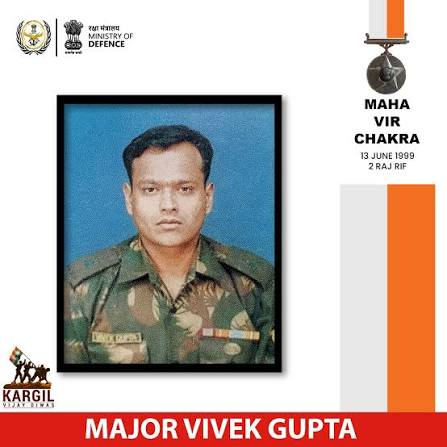
Major Vivek Gupta, MVC (Posthumous) - 2 Rajputana Rifles
By early June 1999, the Tololing feature in the Drass sector had become a major tactical bottleneck. Rising to over 15,000 feet, the peak provided enemy forces with uninterrupted observation of the Srinagar-Leh highway, allowing them to direct highly accurate artillery fire onto Indian convoys. Several initial attempts to dislodge the entrenched defenders had stalled due to the sheer, exposed inclines and devastating crossfire.
To break the deadlock, the 2nd Battalion, Rajputana Rifles (2 Raj Rif) was brought in to launch a decisive offensive. Major Vivek Gupta was assigned to command Charlie Company, tasked with spearheading the final assault on Tololing Top.
On the night of June 13, 1999, Major Gupta led his company up the freezing, near-vertical slopes. The approach offered zero cover. The moment the company broke the ridgeline, they were met with a wall of heavy artillery and automatic fire from mutually supporting enemy bunkers.
The intense barrage pinned the forward elements of Charlie Company down. Operating in sub-zero temperatures and thin air, any prolonged stall on the exposed rock face threatened the entire unit with heavy casualties and mission failure. Recognizing that the only way to survive was to close the distance, Major Gupta took immediate offensive action.
Under continuous suppressing fire, Major Gupta rallied his lead section and initiated a direct frontal charge against the entrenched positions.
The First Strike: He personally engaged the primary enemy bunker. Firing a rocket launcher to disorient the defenders, he immediately charged the fortification, engaging the occupants in close-quarter combat and neutralizing the position.
Sustaining Heavy Fire: During this initial breach, Major Gupta was struck by two bullets. Despite the severity of his wounds and heavy blood loss, he refused to fall back or allow the momentum of the assault to break.
The Second Bunker: Maintaining the offensive, he led his men toward the next bunker complex. He closed in on the position and engaged in brutal hand-to-hand combat, eliminating more enemy combatants. It was during this final push that he sustained additional, fatal gunshot wounds.
Before succumbing to his injuries on the battlefield, Major Gupta's calculated aggression and refusal to stall under fire successfully dismantled the enemy's forward defensive line.
Witnessing their company commander's decisive actions, the remaining soldiers of Charlie Company were highly galvanized. They pressed the advantage, overrunning the remaining bunkers and clearing the peak. By the morning of June 14, Tololing Top was fully secured by 2 Raj Rif.
The capture of Tololing was a critical turning point in the Kargil War, initiating a domino effect that led to the subsequent recapture of several adjacent peaks. For his tactical leadership, exceptional courage, and supreme sacrifice, Major Vivek Gupta was posthumously awarded the Maha Vir Chakra (MVC), India's second-highest military decoration.
6/14
Lieutenant Balwan Singh, MVC - 18 Grenadiers
By early July 1999, capturing Tiger Hill had become a primary operational objective for the Indian Army. Standing at over 16,500 feet in the Drass sector, the peak offered Pakistani forces a panoramic vantage point to direct accurate artillery fire onto National Highway 1A, the critical supply route connecting Srinagar to Leh.
The task of neutralizing this stronghold was assigned to the 18 Grenadiers. Lieutenant Balwan Singh, who had been commissioned into the Army just four months prior in March 1999, was the commander of the battalion's Ghatak platoon—a specialized, heavily armed infantry shock troop unit tasked with spearheading the assault.
The operational plan for Tiger Hill involved a multi-pronged offensive. Lieutenant Balwan Singh and his Ghatak platoon were assigned the most treacherous route: a direct assault from the North-Eastern direction.
The Terrain: The designated path was not a standard climbing route. It consisted of a near-vertical, snowbound cliff face interspersed with deep crevasses and sheer drops. It was chosen specifically because the enemy considered it impassable, providing the Indian troops with a critical opportunity for a surprise attack.
The Ascent: Operating under intense, freezing conditions and continuous enemy artillery shelling, Lt. Singh led his men on a grueling 12-hour climb. The platoon utilized specialized cliff assault mountaineering equipment, driving pitons into the ice and rock to slowly advance up the precipice in near-complete silence.
Before commencing the climb, Lt. Singh reportedly told his men, "Tiger Hill pe Tiranga fahrake ayenge, chahe kuchh bhi ho jaye" (We will hoist the Tricolour atop Tiger Hill, come what may).
After navigating the vertical rock face for half a day, the Ghatak platoon successfully breached the summit's perimeter.
The sudden appearance of Indian troops from a sheer cliff face took the entrenched Northern Light Infantry (NLI) troops completely by surprise. However, the initial shock quickly gave way to panic and a desperate, heavy counter-attack by the entrenched defenders.
Sustaining Injuries: During the intense initial exchange of automatic fire and rocket-propelled grenades, Lieutenant Balwan Singh sustained severe gunshot wounds to his chest and legs.
Refusing Evacuation: Despite significant blood loss and the extreme altitude, he categorically refused medical evacuation. Realizing that momentum was critical to prevent the enemy from regrouping, he continued to direct his platoon's suppressive fire.
The Final Push: Unmindful of his severe injuries, Lt. Singh swiftly maneuvered to encircle the enemy fortifications. Leading from the front, he engaged the defenders in brutal hand-to-hand combat inside their bunkers, single-handedly neutralizing four enemy soldiers.
The sheer ferocity and unexpected direction of the Ghatak assault, compounded by Lt. Singh's relentless close-quarter engagement despite his injuries, broke the enemy's resolve. The remaining Pakistani personnel abandoned their positions and fled the summit.
The decisive actions of the Ghatak platoon under Lt. Singh's command paved the way for the 18 Grenadiers to fully consolidate their hold on Tiger Hill. The capture of the peak on July 4 effectively blinded the Pakistani artillery observers in the sector and marked a major turning point in Operation Vijay.
For his tactical acumen, exceptional leadership under fire, and absolute disregard for personal safety, Lieutenant Balwan Singh was awarded the Maha Vir Chakra (MVC), India's second-highest military decoration for gallantry. He survived his injuries, remained in the Indian Army, and subsequently rose to the rank of Colonel, commanding the same 18 Grenadiers battalion later in his career.
2/14
Captain Vikram Batra, PVC (Posthumous) – 13 J&Ks Rifles
The air in the Drass sector in June 1999 was thin, freezing, and fractured by the constant echo of artillery. High above the Srinagar-Leh highway loomed Point 5140, a jagged peak from which entrenched Pakistani forces directed heavy fire onto Indian supply lines. Taking it back was a critical tactical necessity.
Captain Vikram Batra of the 13th Battalion, Jammu and Kashmir Rifles (13 JAK RIF), was tasked with the assault. Operating under the radio call sign "Sher Shah," he led Delta Company on a grueling night march on June 19. To secure the element of surprise, they avoided the obvious routes, instead scaling a near-vertical rock face under the cover of darkness.
Nearing the summit, the quiet approach ended. Capt. Batra and his men were met with heavy machine-gun fire, but they pushed forward directly into the enemy bunkers. In the fierce close-quarter combat that followed, Batra personally neutralized multiple enemy soldiers, clearing the immediate threat.
By the morning of June 20, Point 5140 was back in Indian hands, secured without a single casualty in Capt. Batra’s company. When it was time to relay the success back to the command post, Capt. Batra’s voice came over the radio with his pre-selected success signal: "Yeh Dil Maange More!" It was a direct message to his commanders: his men were not exhausted, their morale was intact, and they were ready for whatever came next.
That next objective was Point 4875 in the Mushkoh Valley. By early July, the 13 JAK RIF found themselves facing a heavily fortified position. The terrain offered no cover, it was a sheer, narrow ridge with steep drops on either side, forcing the soldiers to advance in direct sight of the enemy.
On July 7, the Indian advance faced a fierce enemy counter-attack. Batra, despite recovering from a fever and the fatigue of the previous weeks, volunteered to lead his unit into the fray. He spearheaded a daylight frontal assault, clearing heavily defended bunkers at point-blank range and breaking the enemy's hold on the ledge.
The firefight was relentless. Amidst the heavy crossfire, Subedar Raghunath Singh, was severely wounded and pinned down.
Capt. Batra moved from behind cover to rescue him. When the injured Subedar insisted on staying forward to provide covering fire, Capt. Batra pushed him back out of the line of fire, telling him, "Tu baal-bacchedar hai, hat ja peeche" (You have a family, step back).
As Capt. Batra exposed himself to drag his comrade to safety, an enemy sniper's bullet struck his chest. He fell, shouting the battle cry of the Jammu and Kashmir Rifles: "Durga Mata Ki Jai!"
Captain Vikram Batra did not live to see the end of the Kargil War, but his decisive leadership that day ensured the capture of Point 4875. In recognition of his tactical brilliance and ultimate sacrifice, the peak was officially renamed "Batra Top" by the Indian Army. He was posthumously awarded the Param Vir Chakra, securing his place in modern military history.
I pity for people of Manipur . And for most part of it they are to be blamed for it .
1). Same militants who extort money from Trucks if arrested, common people on call of CSO’s backed by militant group will attack Army post or police stations.
Reason- Societal pressure or intimidation by CSO’s/ militants.
2). Even the poor man’s grain at FCI is also auctioned by militants, politicians. PMGSY, MGNREGA all the government contracts are handled by armed groups. Poor people loose everywhere. But they will still rally behind same militants who are reason for their suffering .
Reason- Fear of Gun or share to CSO’s leaders ??
3). Iron Lady like Irom Sharmilla , got only 90 votes after 16 years hunger strike for people of Manipur , And strike for what ..for their people. Leaders with blessing of militant leaders win elections while Irom is a story.
4). People like Sp Brinda who stood against Drugs, corruption is harassed by CM and her home is burnt by CM’s foot soldiers( Arambai) , She has to resign later .
Is it the Government to be blamed or the people who choose to elect corrupt leaders every year !!
I spent the first 10 yrs of my life wrapped in the quiet, predictable warmth of my village. Up until class 5, my world was small, safe & deeply comforting. Every single night, w/o fail, I slept right next to my mother. Her presence was my anchor, the ultimate shield against any fear/worry.
But then came the day that changed the trajectory of my entire life.
My father, looking at the limitations of our local village school, made a hard, non-negotiable decision. He decided I was going to be sent away to Patna for a real education.
The day my bags were packed is burned into my memory. As I looked at the steel trunk & the bedrolls, a wave of sheer terror hit me. I realized that for the 1st time in my life, I was going to sleep alone, on a strange bed in a far off hostel, w/o my mother next to me. I broke down. I cried like my world was ending, begging & pleading to stay :((
It would have been so easy for us to unpack those bags & pretend the village was enough. But my father chose that moment to show a heart of steel.
He looked at my tears, stood firm against the heavy emotion in the room & cut through the drama with absolute authority:
"Nautanki band karo. Train hai aadhe ghante mein."
With those words, he pushed me out of the comfort zone of my childhood & onto that train.
At the time, it felt incredibly harsh. But today, looking back, I realize how much I owe to his resolve. If my father had not summoned the strength to be the "bad guy" that afternoon, if he had let my tears win, I would have stayed in the village.
I was a decent student, so I probably would have managed to survive & do something in life. But I would have never stepped into the wider world, never built the resilience I have today.
Sometimes, the greatest act of parental love is not holding you close, it is having the strength to push you onto the train that carries you toward your future.
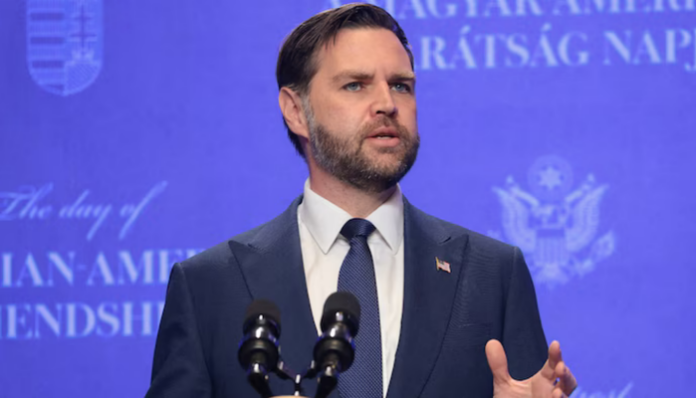
"Certain elements" in Israeli govt want the war to continue "indefinitely": US VP JD Vance
United States Vice President JD Vance accused "certain elements" within the Israeli government of attempting to prolong the conflict with Iran "indefinitely" to manipulate American public opinion.
Speaking on The Joe Rogan Experience podcast, Vance alleged that these officials sought to derail Washington's diplomatic efforts with Tehran.
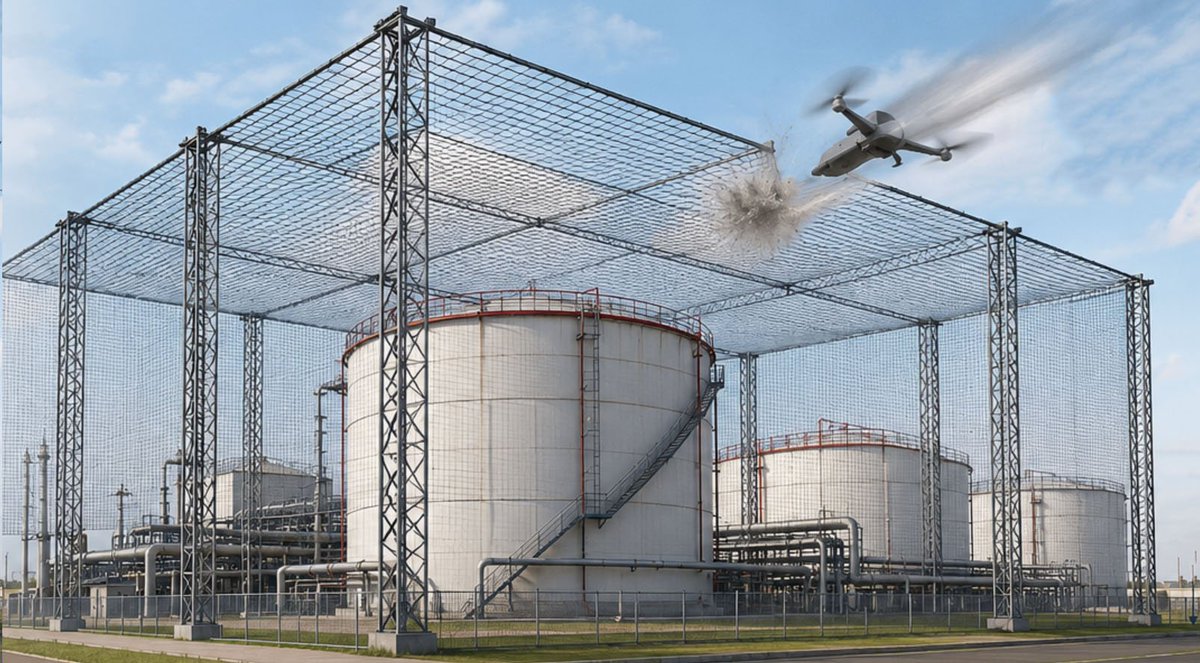
RUSSIA UNVEILS ‘WEB’ DRONE PROTECTION SYSTEM FOR CRITICAL INFRASTRUCTURE
Russia has introduced a new modular protective structure called “Web”, designed to shield oil refineries, fuel depots, power substations, and other critical infrastructure from drone attacks.
According to the developers:
🔹 Designed to withstand a direct impact from drones weighing up to 200 kg at speeds of 250 km/h
🔹 Modular, bolt-mounted design allows rapid installation without welding
🔹 Can protect structures over 25 metres high and cover large areas
🔹 Currently undergoing trial deployment at multiple energy facilities