Congratulations to SSA Global Travel Grant recipients Sergio Leon-Rios, Shikha Sharma, Nicolas Pinzon Matapi, Rodrigo Contreras-Arratia and Himanshu Agrawal! Learn more about where they're headed, and how you can apply for the next round of grants: https://t.co/GLytkRDRV5
Today #TomorrowsCities we're with PhD researchers showcasing their work. From understanding how #hazards impact children's lives, to how #risk and #disasters are perceived by marginalised communities, and subsidence in Kathmandu basin, we're pushing the boundaries of science.
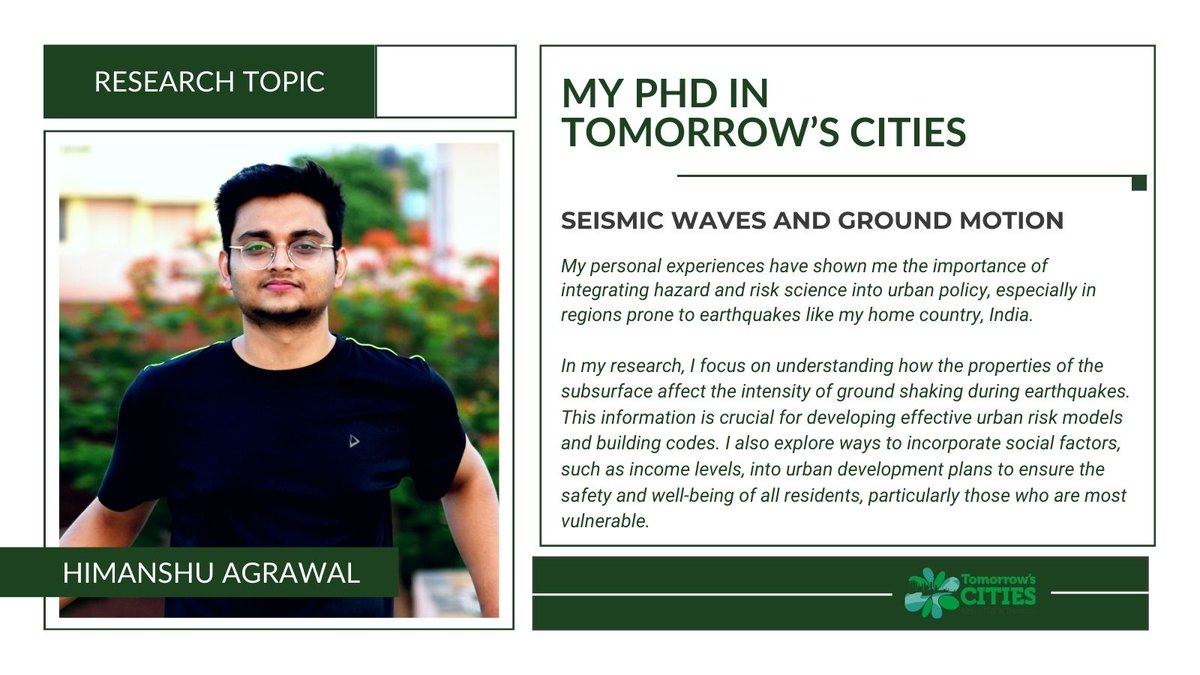
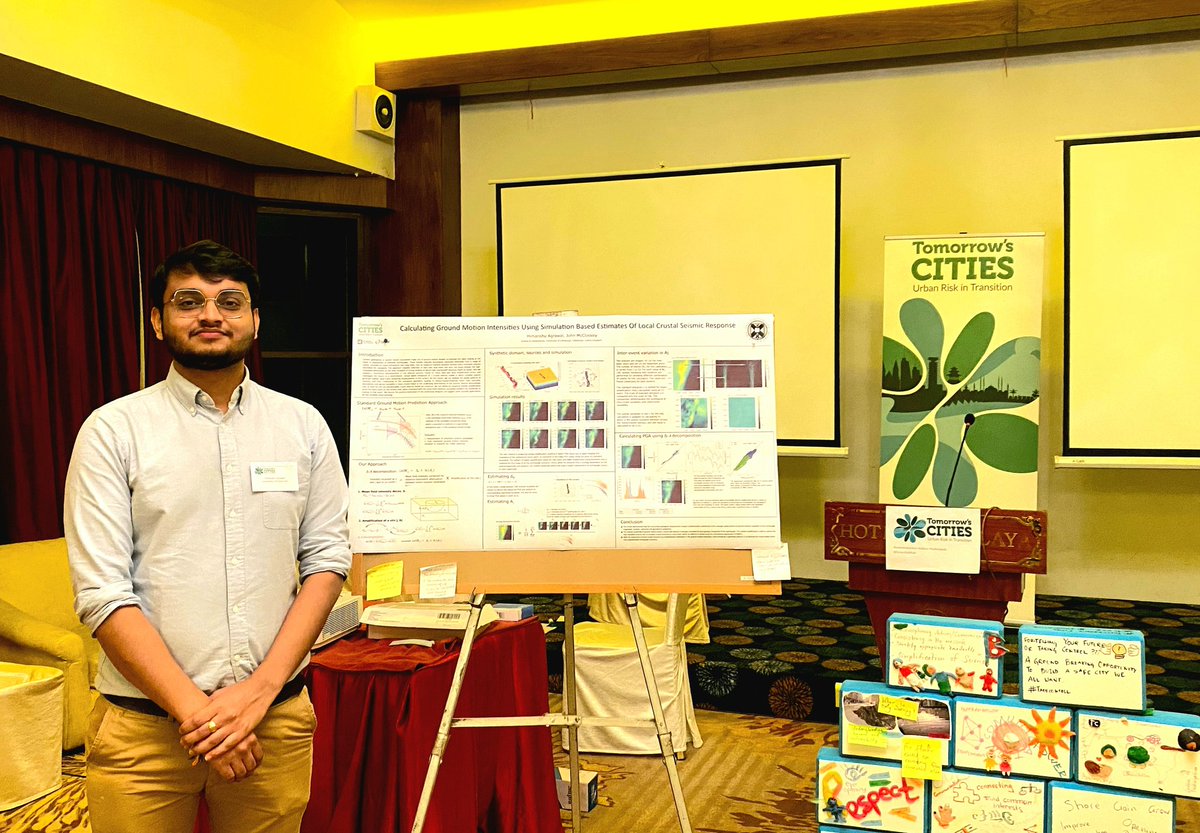
Himanshu's passion for existential philosophies, human evolution, and societal development, fueled by his experiences in India, drives his work with #TomorrowCities. He delves into #groundmotion during earthquakes! Stay tuned for this and more stories!" 🌍
https://t.co/IqKkehFwmJ
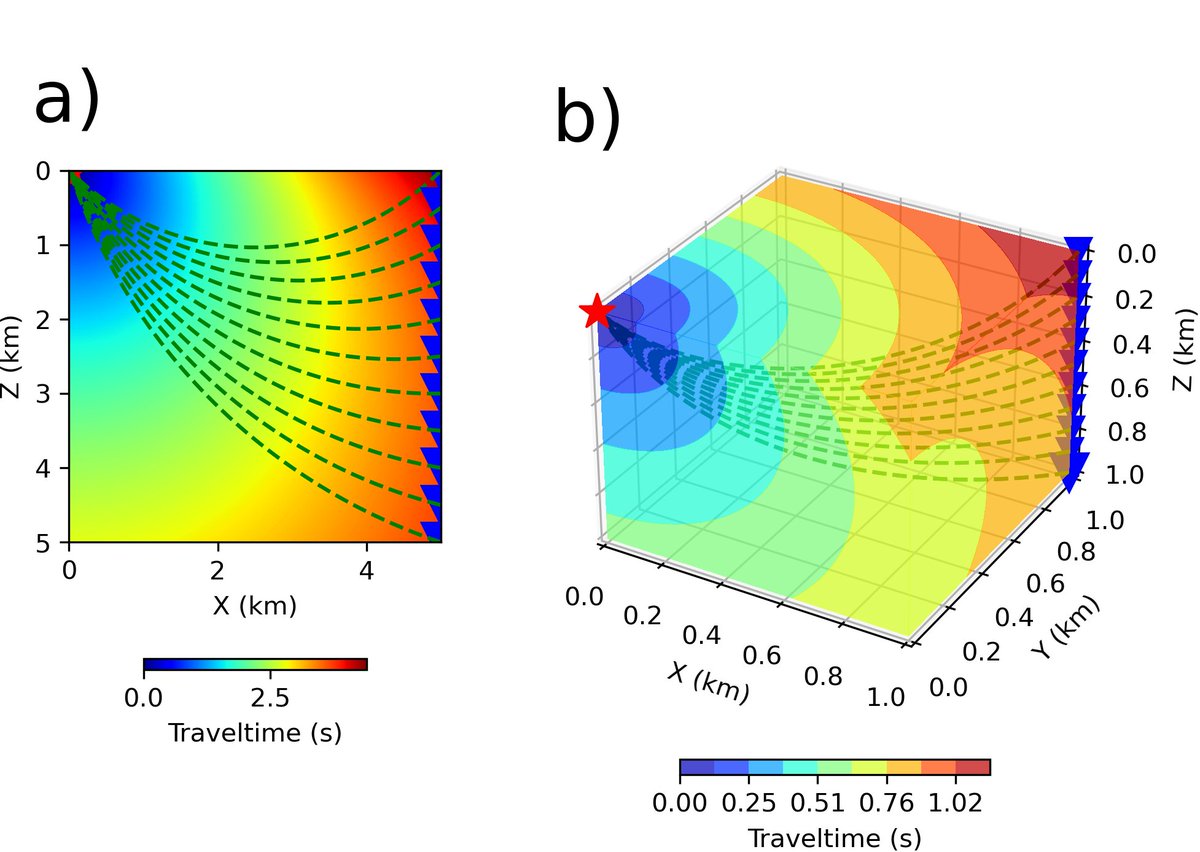
Traveltime calculation and ray tracing are fundamental to seismology, an earthquake science. Want to learn their basics and have some hands-on experience? Check out our newly developed open-source and easy-to-use Python package https://t.co/YJJjJlTCS8.
Thanks a million to the Seismological Society of America for the travel grant, enabling me to participate in the annual meeting 2024. See you all in Alaska!
Congratulations to our Travel Grant Recipients, joining us at #SSA2024 with the help of generous donations to our Kanamori Fund, Annual Meeting Travel Fund, General Fund and Joyner Fund. See all the names here, and learn about our February round of grants https://t.co/2vPMNUbOpm
Individuals interested in earthquake ground motion simulations, or more broadly, in seismic hazard assessment and related topics, are kindly welcome to read and share their views. :)
Last month, I submitted our work on estimating ground motion intensities using simulation-based estimates of crustal seismic response: Check out the preprint here - https://t.co/CcuWIicntz
Another big thank you to everyone who came to #PGRiP2023. Don't forget to give us your feedback and fill in the EDI data collection form, links have been emailed! @britgeophysics
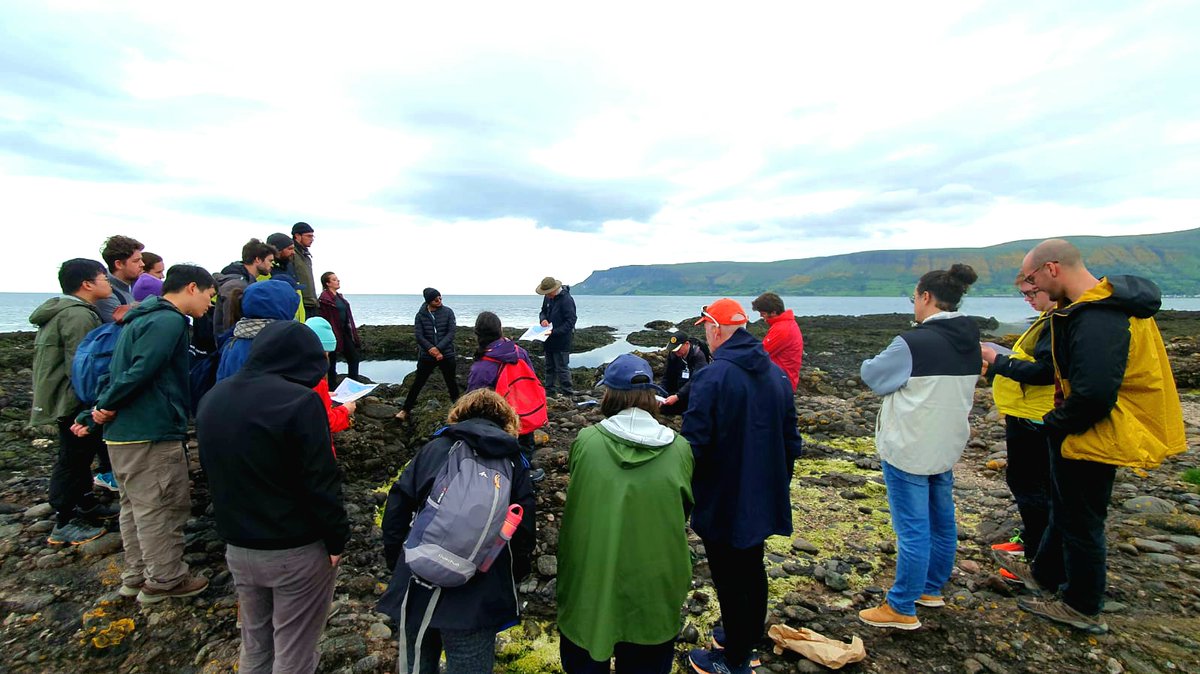
Had the incredible honour of being part of the Improve summer school in Carlingford, Ireland. Involved lectures on forward & inverse modelling, epic field trip to Giant's Causeway, public outreach day and fascinating industry insights on AI in science. Thanks to @dias_geophysics
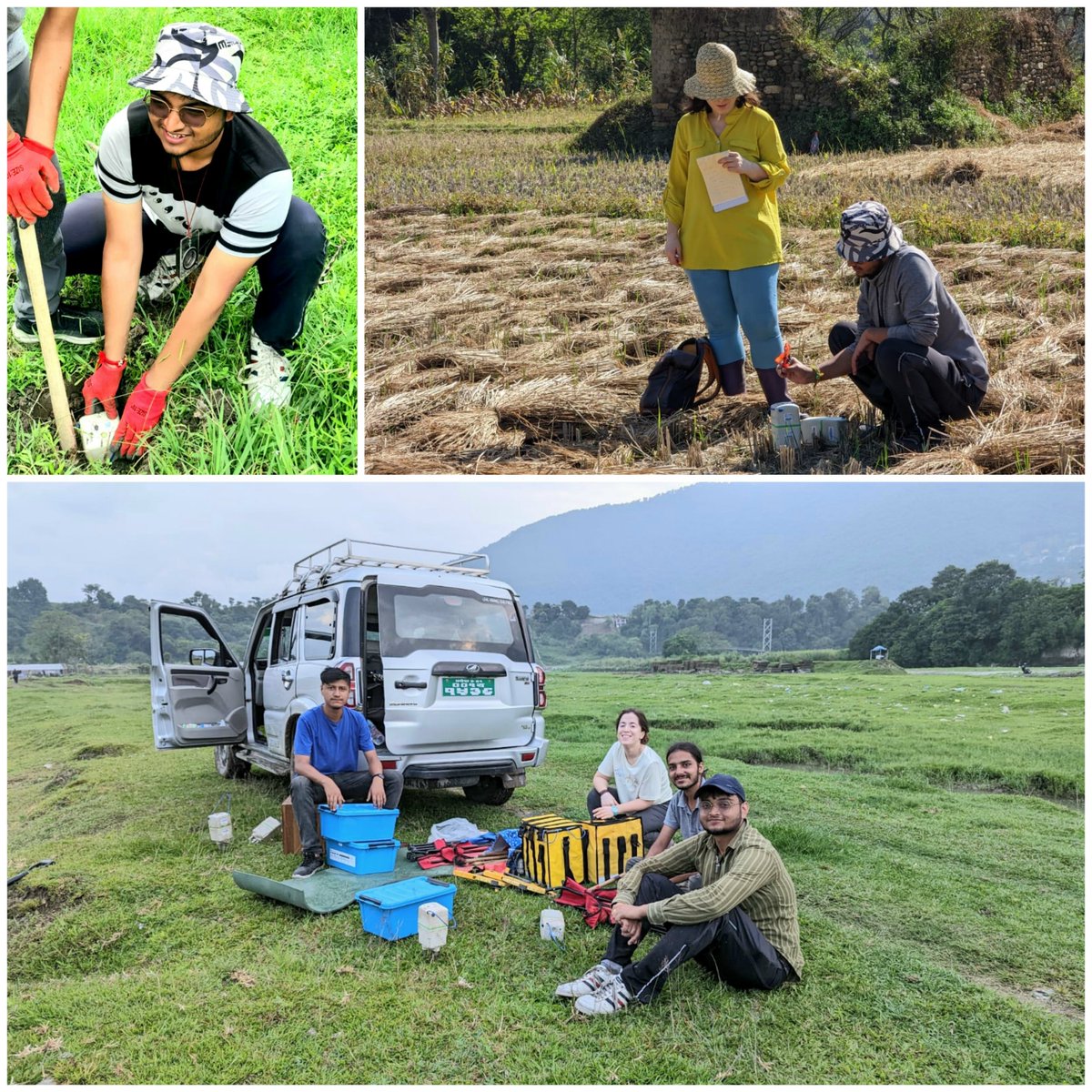
I had a chance to participate twice in total in a month-long passive seismology fieldwork carried out with a really hard-working team of researchers around the globe. It was also a brilliant opportunity to participate in Tomorrow's Cities Hub meeting in Kathmandu.
4/5
We are using smart solo nodes with massive designs of arrays. Hopefully, we will be able to map the basin geometry well enough to constrain helpful estimates of ground motion simulations.
In @UrbanRiskHub, we are undertaking high resolution passive seismic surveys to strengthen the risk assessments for future developments in Khokana in Kathmandu valley. Over the past couple of months, I have been fortunate to experience very intense fieldwork.
As a PhD student in the UK I am happy to let y’all know that I now manage my experiences of exclusion in peer groups through auto-ethnography instead of confronting white people for being consciously/subconsciously exclusionary towards non-white people @PhDVoice#AcademicTwitter
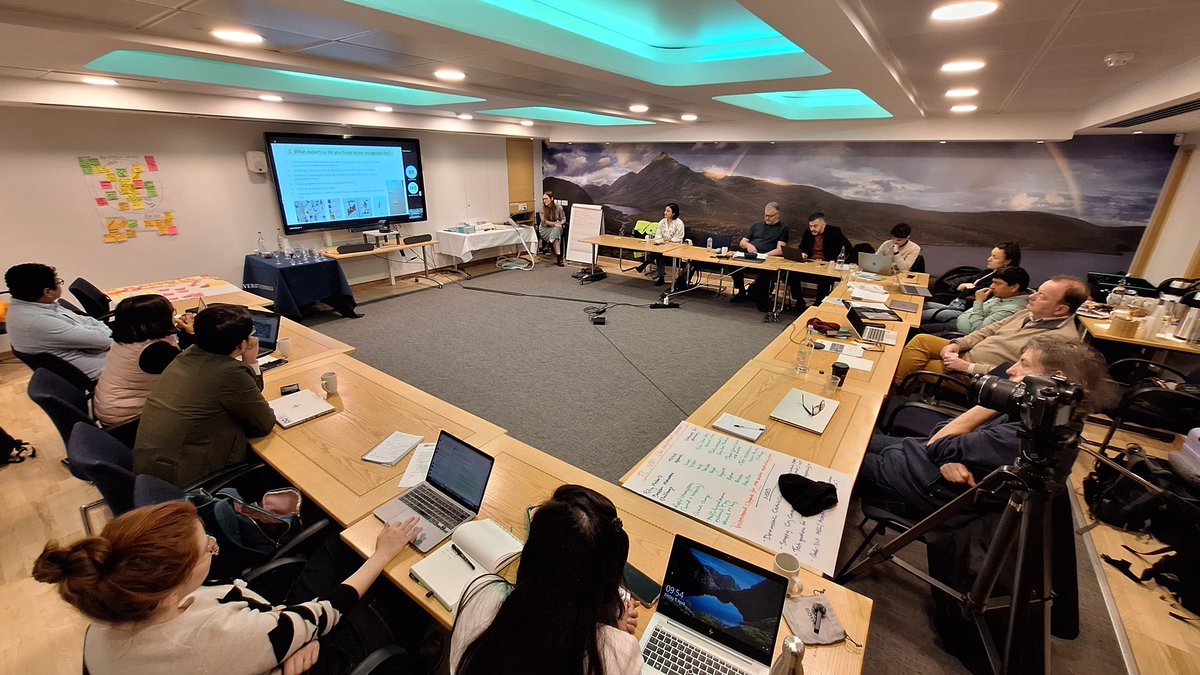
A great of part #TomorrowsCities work is to provide data-supported #risk assessments. Here one of our young researchers presents his work on ground motion simulation, an important tool to evaluate how an #urban area might be affected when #earthquakes occur.