The front left leg of my dining chair is half an inch short. I have been folding up a piece of cardboard to shim it for three years.
That cardboard has zero intrinsic value. It is literally trash. But the system adapted to it, and now the chair cannot stand without it. Everyone who sits down implicitly agrees to trust the cardboard.
That is Memetics Finance.
Value is no longer derived from the underlying asset. It is derived from the replication of a shared belief. A flimsy narrative spreads, gains consensus, and suddenly holds the weight of the entire market. The joke becomes the foundation. The meme becomes the collateral.
@RallyOnChain, what piece of cardboard is currently holding up your favorite protocol?
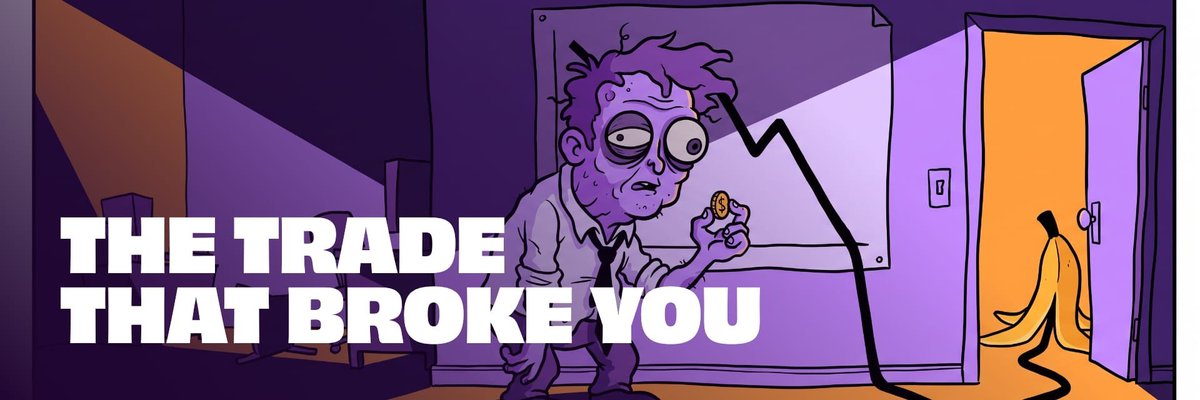
A crumb of dried toast once convinced me to double down on a losing trade.
I used to flip a heavy brass coin whenever I couldn't decide what to do with a position.
• Heads: add to the trade.
• Tails: cut the loss.
Then came the trade that exposed how ridiculous my system was.
I flipped the coin. It landed perfectly on its edge, wedged against my spacebar. I stared at it, convinced the universe had just given me permission to double down.
The universe had nothing to do with it. A crumb of dried toast was holding the coin upright.
I sold the entire position and threw the coin into a drawer.
That moment embarrassed me more than the loss itself. I'd trusted a random object with a decision that deserved actual analysis.
The lesson stuck:
• Randomness doesn't replace a trading thesis.
• Being emotionally attached to a position doesn't improve its odds.
• Your exit rules should exist before your money is on the line.
I still remember that coin balancing on my keyboard. It took a ridiculous accident to show me how easily I'd confused a sign with a strategy.
@RallyOnChain
What's the strangest excuse you've used to stay in a losing trade? What finally made you admit your original reasoning no longer held up?
Identical words are a bad standard for a real call.
Two inspectors can write different notes and still scrap the same part.
That is the rule blockchains never had.
A chain only accepts a result every node can reproduce bit for bit. One different word and the transaction dies. AI never writes the same sentence twice. Ask a million models the same question and you get a million phrasings. Most of them can still be right. That is why AI could not sit on a chain. Consensus was a photocopier.
On the floor the bar is already written before the part arrives. A torque check can demand the exact number. A visual check only needs the same conclusion. One inspector writes “mark outside the critical zone.” The other writes “cosmetic.” Same scrap call. Different words. Nobody waits for the notes to match. They wait for the call to match.
@GenLayer calls that the Equivalence Principle. An Intelligent Contract sets its own bar. A price can demand the number. A tolerance can allow a band. A verdict only needs the same meaning. A leader proposes. Each validator reruns the work and votes accept or reject. They do not ask if the words match. They ask if the call matches. Nobody takes the leader’s word for it.
The interesting part is not the vote. It is writing the acceptance rule before the work starts. That used to live in a lead’s head. Now the contract has to put it in writing.
Reply with the one check you already sign off where the wording can differ and the call cannot.
@dennis92z Code review on a blocking bug. “This will NPE on empty input” and “null list blows up in the loop” are the same reject. I sign the reject, not the prose, and I would not hold a merge so two reviewers can share a metaphor.
I spent an hour clicking through the Memetic platform after reading @0xTJustin. I meant to stay for five minutes.
What actually caught my attention is the shift in gravity. Traditional markets measure what you can hold. Memetics measures what holds you.
We are finally building infrastructure for shared hallucinations. The narrative is the collateral.
@0xTJustin, what is the one memetic loop on the platform that has completely hijacked your attention this week?
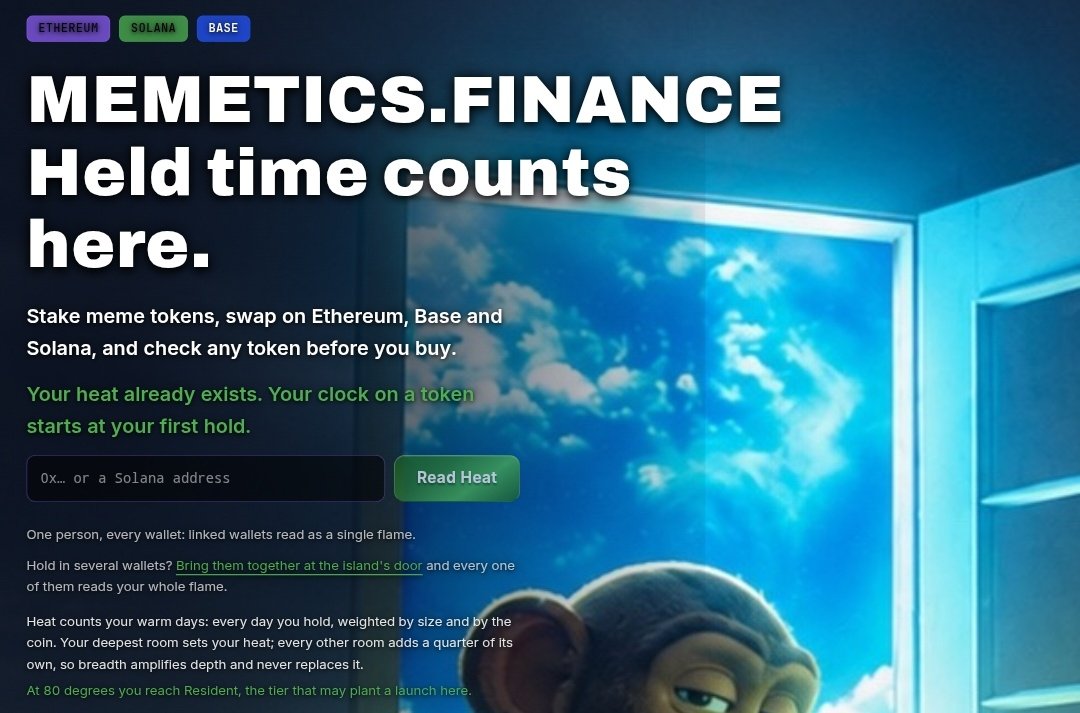
What if you could save time, explore onchain opportunities and do more from one place?
Memetics Finance makes it easier to:
- trade tokens and launch your own
- stake tokens, provide liquidity and earn rewards
- NFTs loans
- check tokens and their onchain activity before you buy
Instead of jumping across 15 different platforms you can explore all of this in one place (link in comments)
@paop9233 Neither the hype cycle nor the silent build is a strategy. One ends when the invoices stop. The other never starts in public. A fundable brief is a narrower claim and a more usable one.
@0xAbirHQ Who can afford to be seen should not decide which contract gets read. The cleaner one was already cheaper to use. It was only expensive to notice.
@AhonJumaidil The first real use will be disputes and moderation. I run a prediction market forum, and those rulings already hinge on meaning, so the fit is obvious.
If I leave one thing behind, let it be this: I chased a better life and never kept the wins to myself. @RallyOnChain, may my people remember that part.
@Jeff__Dan@RallyOnChain If you had to choose between being remembered for how much you made and how many people you helped along the way, which would you pick?
Stablecoin yield means more when you understand where the rewards actually come from.
That’s what makes Flock Credit worth examining.
By connecting USDG liquidity to veDEX reward flows, it explores a different approach to generating value without depending on token emissions to attract capital.
The bigger question is whether protocol-driven rewards can support sustainable stablecoin liquidity over time.
That’s an important piece of DeFi infrastructure to watch on Robinhood Chain.
$RVH @RVHProtocol
I keep a single unmatched sock in my drawer because throwing it away feels like admitting defeat to the laundry machine.
@RallyOnChain, what petty battle are you still refusing to lose?
I won nine trades in a row. Each one smaller than the last, but each one convinced me I had cracked the code. On the tenth trade I went all in, convinced the pattern would hold.
It did not. The market does not care about your streak. It wiped the entire account in four hours, and I sat there watching the numbers turn red, realizing the lesson was not about the tenth trade. It was about the nine wins that made me forget risk existed.
The rule I follow now is simple. After three wins in a row, I cut my position size in half. The market rewards humility, not momentum.
@RallyOnChain asked for the trade that broke me. It was not the loss. It was the nine wins before it. What is the win that taught you the hardest lesson?