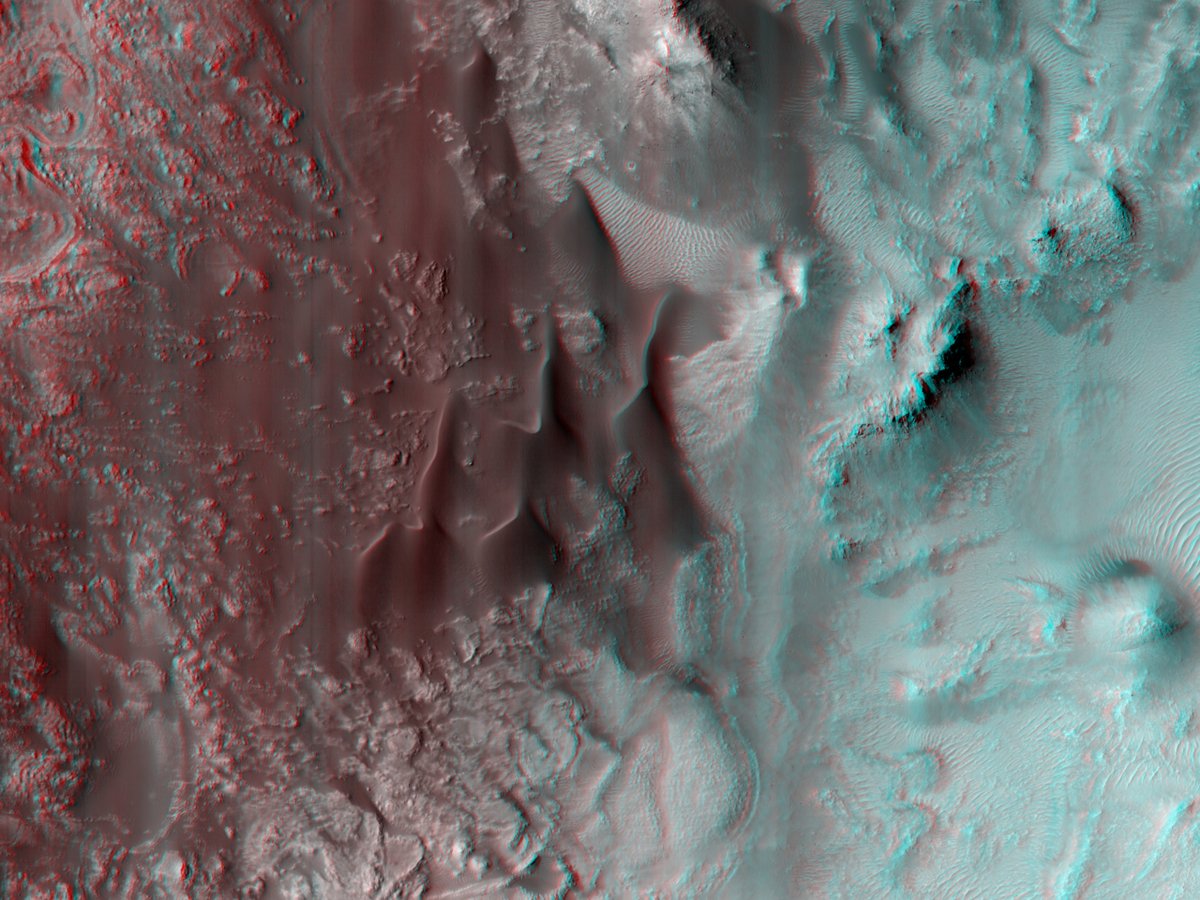
HiRISE 3D: Light-Toned Deposits in Aram Chaos
We acquired this observation to fill in HiRISE coverage where there are existing CRISM images .
Full image: https://t.co/T1rrTesacr
NASA/JPL-Caltech/University of Arizona
#Mars#NASA#science
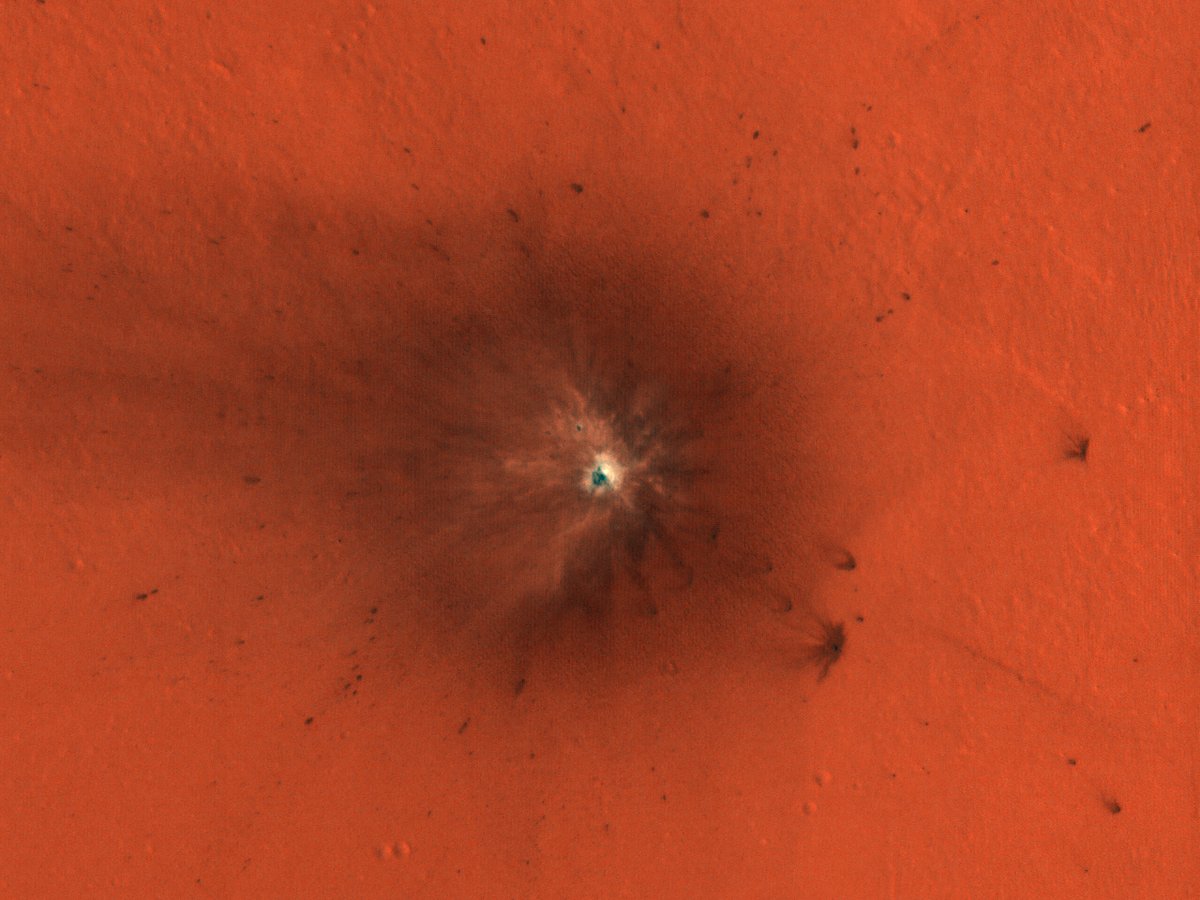
HiPOD: A New Impact Crater Exposes Bright Material
We’ve imaged thousands of new impact sites. We are especially interested in craters that expose shallow ice, which appears as especially bright and relatively blue material.
More: https://t.co/6YIFgFsjDQ
#Mars#NASA#science
HiRISE 3D: A Possible Eroded Dyke System in Atlantis Chaos
These dykes would be intruding into sediments of probable lacustrine origin, deposited in this basin of the southern cratered highlands.
https://t.co/JQ8aeE9kg9
NASA/JPL-Caltech/University of Arizona
#Mars#NASA
As of 29 Jun 2026, 105,404 HiRISE observations have returned image data for a total of 56,323 Gigapixels and 55 Terabytes. This includes 103,017 images of the surface while in orbit.
This covers an area of 7,542,730 square kilometers, or 5.21 percent of the Martian surface.
HiPOD: Bedrock Ridges in Terra Sabaea
This region also shows a spectacular array of ridges, that formed first as fractures of faults, then fluids (water or lava) moved through the fractures depositing harder rocks.
https://t.co/n7uCePxwUI
NASA/JPL-Caltech/University of Arizona
HiPOD: Flooded Impact Craters in Hebrus Valles
This complex geology may be the result of formation in volcanic terrains as fluid flows erode into basalt and interbedded ash or sediment layers.
https://t.co/bf4K2VTmJD
NASA/JPL-Caltech/University of Arizona
#Mars#science#NASA
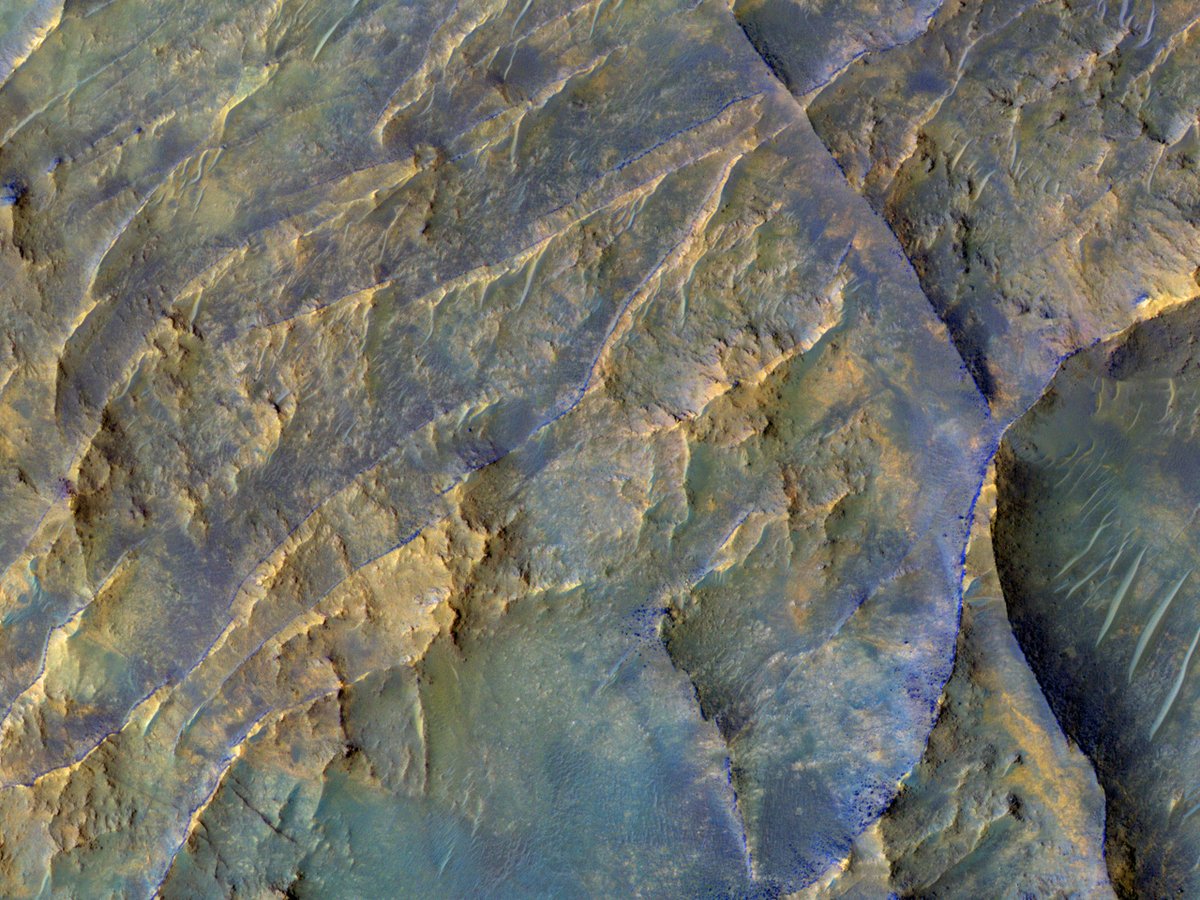
HiPOD: Sedimentary Rocks inside Terby Crater
This image covers some steep slopes with good exposures of the bedrock layers, revealing diverse color and textures. A detailed study can reconstruct the sequence of events and interpret the geologic history.
https://t.co/uPo3J1KEaC
HiPOD: A Dune Field at Herschel Crater
This area is potentially useful for monitoring the wind-generated processes of Hershel Crater. This gorgeous dune field near the center of the image target.
https://t.co/MEFlU5uhmc
NASA/JPL-Caltech/University of Arizona
#Mars#science
HiPOD: Marathon Rover
We imaged the Perseverance rover as it approached a marathon mile on Mars! The visible rover tracks record the rover’s recent traverse beyond the western rim of Jezero Crater.
More: https://t.co/DhLj1pFd7t
NASA/JPL-Caltech/University of Arizona
#Mars#NASA
HiPOD: Frosty Dunes of an Impact Crater
This observation is one of three images requested from HiRISE at this location to monitor frost deposition, evolution and sublimation. Our image will also be used for detailed surface measurements.
https://t.co/NMyF6ea82w
#Mars#science
HiRISE 3D: Light-Toned Deposits in Aurorae Chaos
More chaotic terrain, but now in 3D! Our image shows a great exposure of layered bedrock against darker, flatter terrain.
https://t.co/tdSFHgdxT8
NASA/JPL-Caltech/University of Arizona
#Mars#NASA#science
HiPOD: East of Aram Chaos
Our science goal with this observation is to see more details about these extensive light-toned deposits: could they be more sulfates or other hydrated materials?
https://t.co/2HTZIlbQGf
NASA/JPL-Caltech/University of Arizona
#Mars#science#NASA
HiRISE 3D: A Survey of Dunes
Our objective: updating the USGS global inventory of dune fields on Mars and identification of many small dune fields at this locale.
Full image: https://t.co/FhZ8E4SlJh
NASA/JPL-Caltech/University of Arizona
#Mars#NASA#science
HiPOD: Field of Cones
The objective of this observation is to examine a field of light-toned cones that is surrounded by dark material and happens to be free of cones. This image footprint is in Acidalia Planitia.
https://t.co/XhuyuPcnd1
NASA/JPL-Caltech/University of Arizona
HiPOD: Marvelous Martian Mega-Ripples
In a down-wind perspective view we can see mega-ripples collecting along the flanks of dark sand dunes near the North Polar deposits. A closer look illustrates the fine scale details of some active mega-ripples.
https://t.co/Phk8cnZYu8
HiPOD: Ridges in Cydonia Mensae
A ridge stands prominent in this scene, left behind as the surroundings were eroded, marking inverted erosion of an ancient fluvial channel. The ridge is made of material more resistant to erosion and was formed long ago.
https://t.co/3nwwXf1phh