HIST 390 @concordiahist, instructor @fburrill. "History and Memory in Gentrifying Saint-Henri/Histoire et mémoire dans le Saint-Henri qui se gentrifie"
Happening shortly!
There's still time to register to come to see awesome @concordiahist undergrad students present the results of their #publichistory research!
https://t.co/4LVBt676j1
The semester is winding (or careening) to an end, and we're excited to share our research with you!
Register here for our end-of-term #publichistory event, April 21 at 12PM:
https://t.co/4LVBt676j1
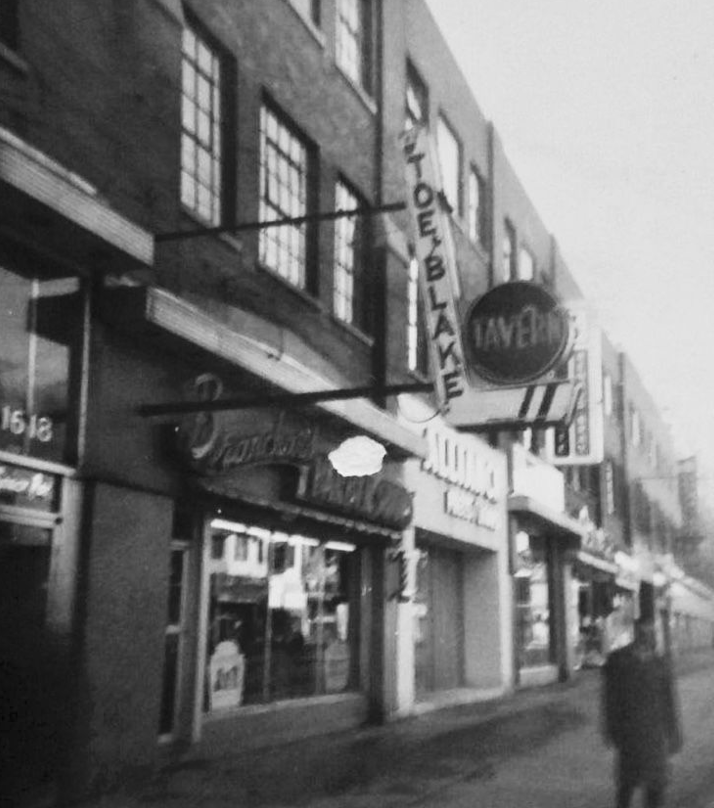
(10) Toe Blake's tavern was shut down in 1983 and was one of the last reserved exclusively to men in QC. It was located on 1618 Ste-Catherine St. W, home to the Centre for Continuing Education and the Mel Hoppenheim School of Cinema at Concordia. (https://t.co/nVBhEXCWTX)
9) While taverns were a space where men could gather and organize, they were a deeply sexist space. You can find news reports and videos on the topic here: (https://t.co/F4SMkxx7p4). Please bear in mind that the second video shows police forcibly removing women from a tavern.
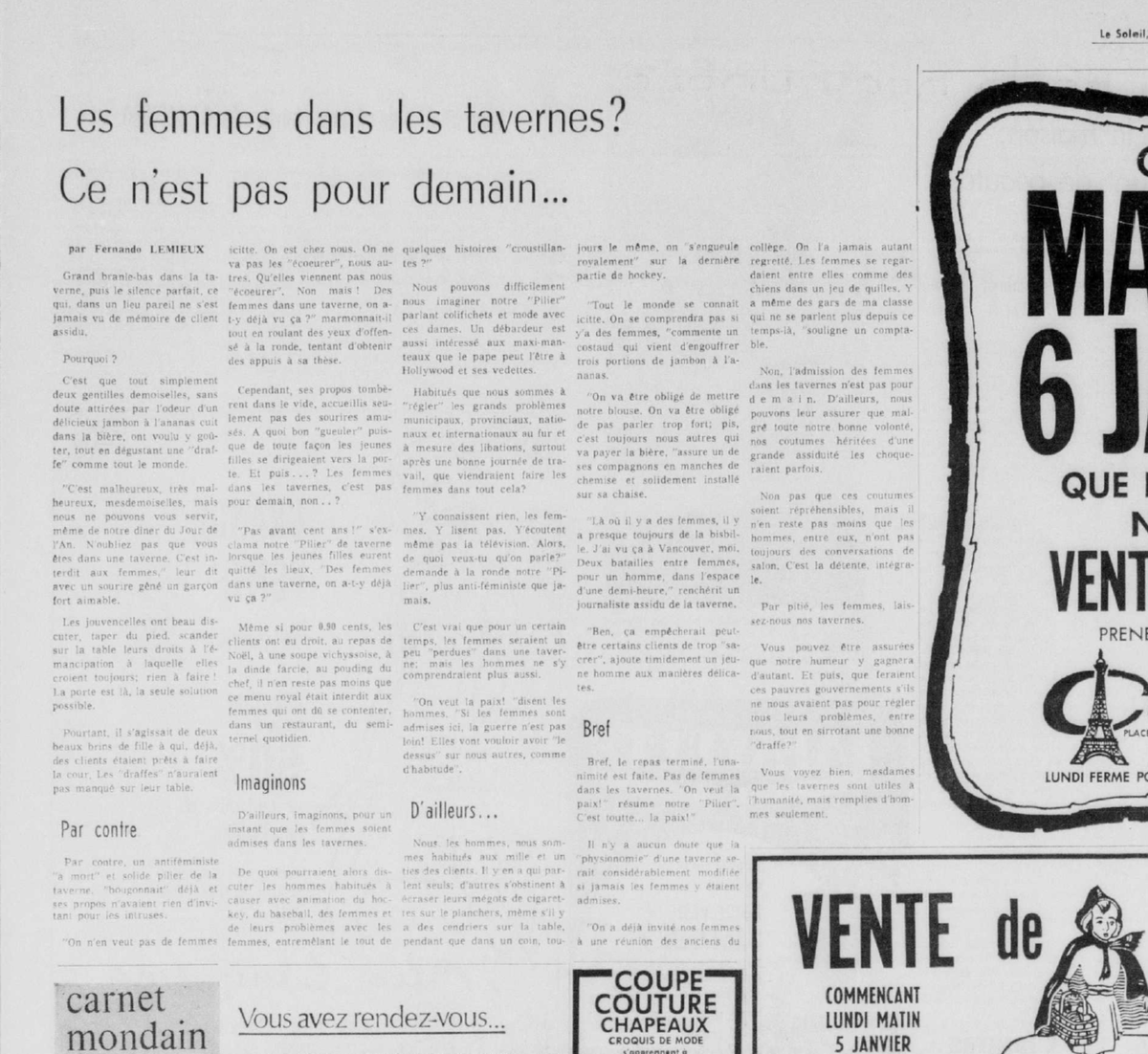
(8) A 1970 newspaper states: "Par pité, les femmes, laissez-nous nos tavernes... que feraient ces gouvernements s’ils ne nous avaient pas pour régler entre nous leurs problèmes... les tavernes sont utiles à l’humanité, mais remplies d’hommes seulement."(https://t.co/noZZPVzfQM)
(7) Unlicensed taverns continued to operate illegally, and six of the nine establishments which were granted permits stayed open on Sundays despite it being unauthorized. Over time, pressure from business owners counteracted these laws. (https://t.co/nUVVXl7Wxc)
(6) In the 1870s, tavern licences became the topic of heated debate. One Councillor insisted that only nine licences should be distributed (there were twenty-three saloons or hotels). The council decided to give licences to the francophone tavern owners. (https://t.co/nUVVXl7Wxc)
(5) In the case of Saint-Henri, taverns were perceived as a threat to the petite bourgeoisie: they were a space where working-class men could assemble and discuss about working conditions and other concerns. (https://t.co/nUVVXl7Wxc)
(4) In the 19th century, women played a central role in taverns. Keeping taverns was a woman’s trade, especially smaller ones. Women would watch over the business, take care of their children, dealt with clientele and supervised workers.(https://t.co/ohDI2dqmLl)
(3) In "Mixed Company: Taverns and Public Life in Upper Canada," Julia Roberts examines, in part, the role women played in taverns. For example, while men were often times the owners of such establishments, women were their keepers. (https://t.co/F1ybeUC9Qm)
(2) This is the J. A. Laporte Tarvern on Saint-Jaques Street in Saint-Henri. The picture was taken in 1928, which marks the beginning of a forty-year period where women were barred from entering taverns in the province of Québec. (https://t.co/9Scaeucqvq)
(1) Hi everyone, my name is Simona! My colleague Richu and I are working on the transformation of leisure space around the Lachine Canal through the lens of taverns, labour movements and gender, so I thought I would share a bit on that today.
Alright, that is all for me, folks! Have a wonderful evening, and be sure to stay safe during such trying times. Also, to my fellow classmates and other students who follow @histmem, good luck on your finals!
Consequently, English operating businesses began to foster a “scare” in light of French-Canadian Nationalism; thus, causing a phenomenon of English business exodus.
In Robert M. Berry’s work “Quebec Nationalism and Separatism: A Study of a Continuing Canadian Crisis”, Berry explores the impact of the Referendum of the 1980 and how laws that forced English operating businesses to operate in French.