Un análisis de los sistemas de escritura del Cáucaso y el Cuerno de África revela coincidencias visuales y estructurales que sugieren un contacto histórico directo en el siglo IV, desafiando la idea de desarrollos aislados. Libros y literatura
https://t.co/XdkAoI7WL4
Arqueólogos han descubierto en Azekah una fosa común de 2,500 años de antigüedad que alberga los restos de unos 50 recién nacidos enterrados en vasijas. El hallazgo revela información sobre los ritos funerarios y la fragilidad de la vida en la antigüedad.
https://t.co/yfiDouBhiO
The absolute beauty of this Catholic school in Yecla, Murcia, Spain 🇪🇸
Where children take part in a small procession specially designed for them during the Holy Week celebrations
The kind of teachings we truly appreciate ✝️
Karl Marx gave humanity its most murderous idea: that human suffering stems not from scarcity and the human condition, but from private property itself. This bearded parasite—who never worked a day in his life and lived off Engels' textile fortune—convinced generations that voluntary exchange was exploitation while violent redistribution was justice.
The body count speaks for itself. Stalin's forced collectivization murdered 6 million Ukrainians through engineered famine. Mao's Great Leap Forward killed 45 million through sheer economic illiteracy. Pol Pot slaughtered a quarter of Cambodia's population. And every single time, the intellectuals proclaimed it "wasn't real socialism." The pattern is identical across continents and centuries: seize private property, centrally plan production, watch millions starve.
But the intellectual foundation was always rotten. Marx's labor theory of value—the notion that labor alone creates value—was already debunked by Austrian economists like Böhm-Bawerk before the ink was dry on Das Kapital. Value is subjective, determined by individual preferences in voluntary exchange. Marx simply couldn't grasp that the capitalist performs the crucial function of time preference—sacrificing present consumption for uncertain future returns.
Even "democratic socialism" in Western Europe required massive wealth transfers from productive individuals to bureaucratic parasites, creating permanent dependency classes and stagnating growth. Venezuela had the world's largest oil reserves and still managed to create toilet paper shortages. Cuba turned a Caribbean paradise into a floating prison where doctors flee on rafts.
Every socialist experiment ends the same way: empty shelves, secret police, and intellectuals explaining why the next attempt will be different.
In the 1.300 years of Muslim-Arab slave trade, approximately a million Greeks were sold as slaves. According to Ibn Battuta, Greek girls who were pretty were forced into prostitution after being enslaved to Turks who took all their earnings. When Caliph Sulayman was in Medina on his way back from pilgrimage, he gifted 400 Greek slaves to his local favorites, "who could think of nothing better to do with them than slaughter them", boasted Jarir ibn Atiyah, a poet who took part in this.
Non-Muslim peoples were killed or enslaved. This was viewed as legitimate by Islamic law, in which kafir (non-Muslims) of Dar al-harb (non-Muslim lands) were viewed as legitimate targets of enslavement.
Women captives were known to be subjected to sexual abuse. Male Muslims were given the right to have sex with female captives (slaves), which was phrased: "those men who guard their genitals, except with their wives and those whom their right hands possess, for then there is no blame" (Quran 23:6), which granted men the right to have sex not only with their wives but also with female captive slaves. According to the French-language newspaper of Smyrna, Spectateur Oriental, by May 10, duties had been paid at the Smyrna customs for 40,000 slaves. The priest Welsh from the English embassy in Constantinople recorded what he saw in those days at the city's slave market:
"The Turks treated the women from Chios with utmost contempt. They examined them, groped them like butchers do lambs, and bought them for 100 grosia to 3 pounds per head. About 500 women from Chios were sold in the fish market."
Korais writes in a letter to Varvakis:
"Imagine that you see Christ on the Cross, drenched in His blood, and calling out to you these paternal words: My son Varvakis, many thousands of captives baptized in my name are in danger at this hour of renouncing me and embracing the abominable religion of Mohammed. Behold the time, baptized in my name, beloved son, to save your baptized brothers from the Turkish defilement."
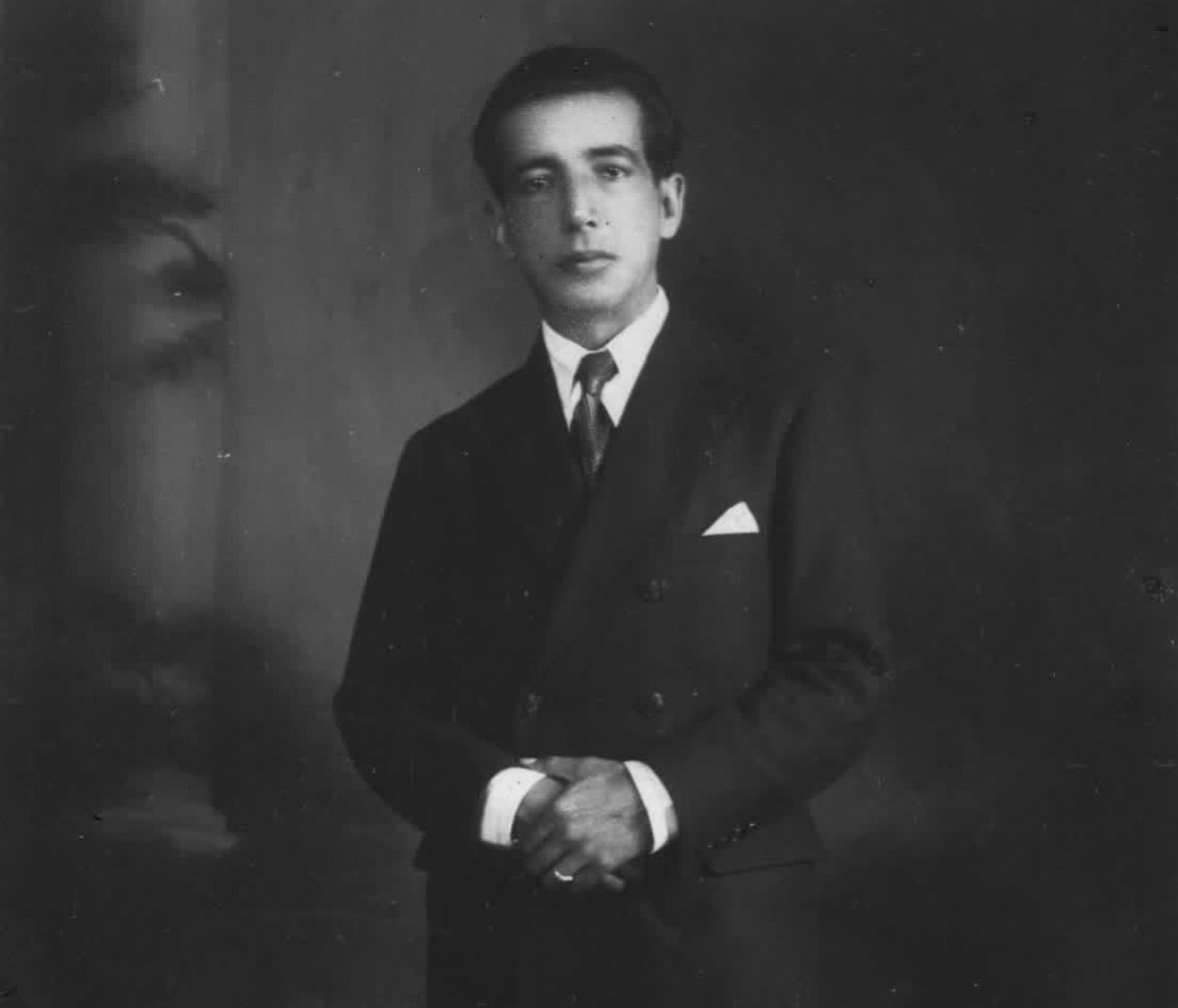
Hubo un cónsul ecuatoriano en Bremen, Alemania, que desafió al nazismo y a su propio país para salvar la vida de más de dos centenares de judíos.
Era José Ignacio Burbano Rosales y su historia merece ser contada 🧵
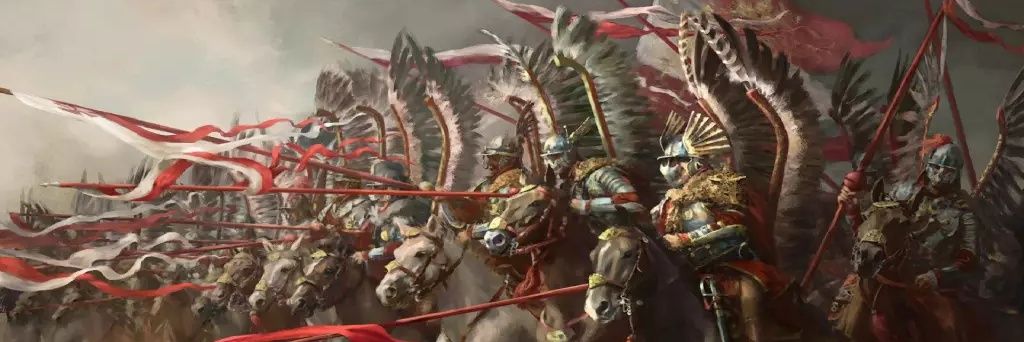
The charge of the Polish Hussars at the Siege of Vienna in 1683 was the largest cavalry charge in history. I am painting this epic moment one painstaking detail at a time. This is exactly what I do - bring history to life in fine art.
Juana Maria, known to history as the Lone Woman of San Nicolas Island, was the last surviving member of the Nicoleño people, an indigenous group living on San Nicolas Island off the coast of California.
The Channel Islands had been inhabited for over 10,000 years before European contact, with the Nicoleño believed to be closely related to the Tongva people of the Southern Channel Islands.
In 1814, a party of Native Alaskan otter hunters working for the Russian-American Company massacred most of the island's inhabitants, reducing the Nicoleño population to a small remnant.
In late November 1835, the schooner Peor es Nada arrived at San Nicolas to remove the remaining islanders to the mainland.
During the evacuation, Juana Maria was left behind when a sudden storm forced the crew to flee toward shore, abandoning her on the island.
A later, more romantic account claimed she dove overboard after realizing a younger family member had been left behind, though historians have questioned this version as a Victorian-era embellishment.
She survived alone on the island for eighteen years, living in a hut partially built from whale bones and dwelling at times in a nearby cave.
She fed herself on shellfish and seal fat, and fashioned clothing from cormorant feathers stitched together with sinew.
In 1853, fur trapper George Nidever launched a search after stories of the lone woman captured his imagination.
On his third attempt, one of his men discovered human footprints and seal blubber left out to dry, leading them to Juana Maria.
She was brought to the Santa Barbara Mission, where she was reportedly joyful and fascinated by horses, new foods, and the people around her.
No one at the mission could understand her language, as the Chumash could not speak Nicoleño, and even a group of Tongva brought in to communicate with her was unsuccessful.
Only four words and two songs were ever recorded from her, and linguists later concluded her language was most closely related to those of the Luiseño and Juaneño peoples of Southern California.
One of her songs, known as the Toki Toki song, was preserved through a chain of oral transmission and eventually recorded on wax cylinder in 1913.
Just seven weeks after arriving on the mainland, Juana Maria died of dysentery, likely caused by her digestive system's inability to handle the rich foods she eagerly consumed after years of a sparse diet.
Before her death, she was baptized and given the Spanish name Juana Maria by Father Sanchez.
She was buried in an unmarked grave at the Santa Barbara Mission cemetery, and her personal artifacts, including bone needles and her feather dress, were either destroyed in the 1906 San Francisco earthquake and fire or lost entirely.
Archaeological excavations in 1939 and 2009 uncovered her whale-bone hut and a cache of over 200 artifacts, confirming details from historical accounts and revealing the sophistication of her material culture.
Her story inspired Scott O'Dell's award-winning 1960 children's novel Island of the Blue Dolphins, which introduced her remarkable survival to generations of readers.
#drthehistories
The Gesù Church is a jewel of the Sicilian Baroque in Palermo, highlighted for its sumptuous interior covered with polychrome marbles, frescoes and stucco.
Persépolis, la capital ceremonial fundada por Darío I alrededor del 518 a. C., en pleno corazón del antiguo Irán. Estas ruinas son todo lo que queda del Imperio aqueménida, la superpotencia que antaño gobernaba a casi la mitad de la población mundial.
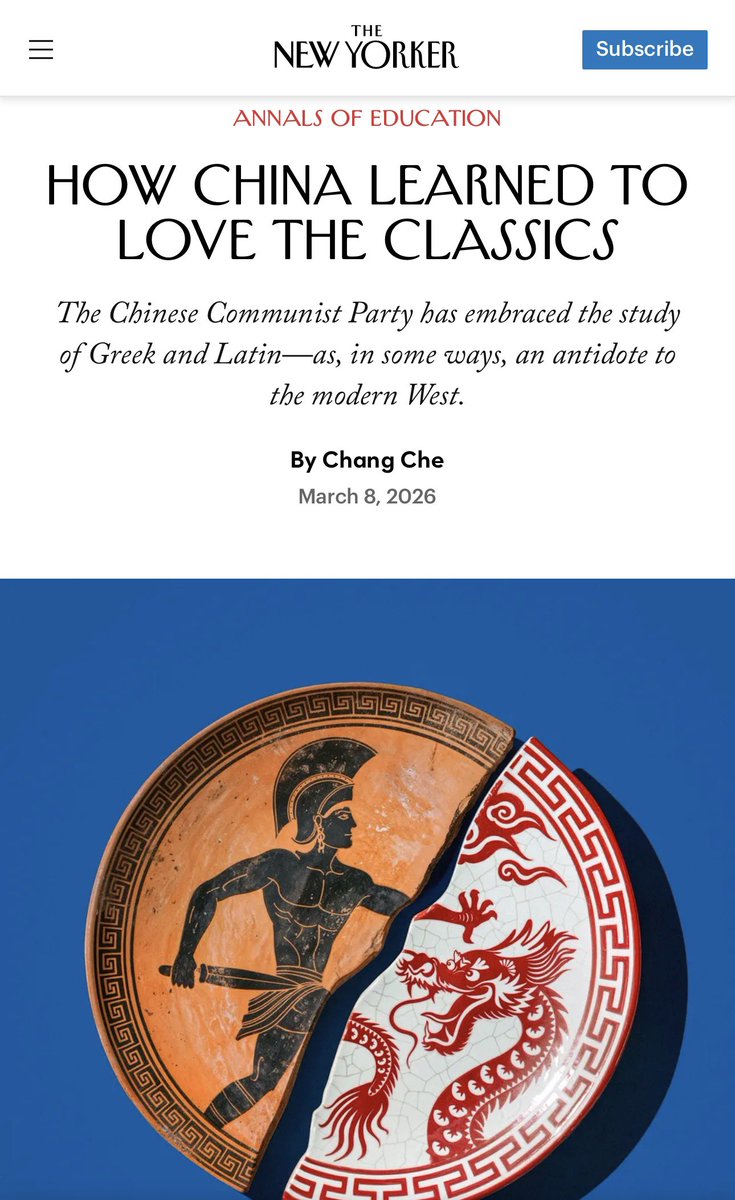
If Western universities abandon the classics while China invests millions studying them, who will become the real guardians of Greek civilization?
In 2024, China hosted the World Conference of Classics in a massive convention center outside Beijing. Diplomats, scholars, and politicians gathered as Xi Jinping sent a message describing ancient Greece and China as two civilizations that shaped humanity from opposite ends of Eurasia.
Then came a striking announcement: China would establish a Chinese School of Classical Studies in Athens.
At the same moment this was happening, many Western universities were closing or merging their classics departments. Programs devoted to Greek and Roman texts were shrinking across Europe and North America.
China, meanwhile, is moving the opposite direction.
Universities there are translating works by Plato, hiring Greco-Roman scholars, and opening new departments dedicated to classical studies. Some Chinese scholars even compare the relationship between Greece and Europe to that of Confucius and East Asia.
In other words, while the West debates whether the classics still matter, China is studying them with renewed seriousness.