On September 21, 1937, the literary world was forever changed with the publication of J.R.R. Tolkien's "The Hobbit." This enchanting tale introduced readers to the charming and unassuming hobbit, Bilbo Baggins, and his unexpected adventure through Middle-earth, a richly detailed fantasy world brimming with magic, dwarves, elves, and dragons. The novel begins in the cozy, pastoral Shire, where Bilbo lives a quiet, uneventful life until the wizard Gandalf and a company of dwarves arrive on his doorstep, thrusting him into a quest to reclaim the dwarves' homeland from the fearsome dragon Smaug.
Tolkien, a philologist and professor at Oxford, infused "The Hobbit" with his deep love of language and mythology, creating a story that was both timeless and otherworldly. The book captivated readers of all ages with its blend of adventure, humor, and profound themes of courage, friendship, and the heroism found in the most unlikely of characters. "The Hobbit" was not only a critical and commercial success but also laid the groundwork for Tolkien's later epic masterpiece, "The Lord of the Rings."
The publication of "The Hobbit" marked the beginning of a new era in fantasy literature, inspiring countless authors and spawning a vast and passionate fanbase. Its enduring legacy continues to enchant new generations, inviting them to journey there and back again through the pages of Tolkien's beloved creation. #OnThisDay #History
On September 18, 1970, the world lost Jimi Hendrix, one of the most innovative guitarists in music history, at the age of 27. Born in Seattle, Hendrix's path to fame was winding; after serving in the U.S. Army and playing backup for various artists, he moved to England in 1966. There, he formed the Jimi Hendrix Experience, and his career soared with hits like "Purple Haze" and "Hey Joe." His electrifying performance of "The Star-Spangled Banner" at Woodstock became legendary. Hendrix revolutionized the electric guitar with his use of feedback and distortion, embodying the spirit of the 1960s counterculture.
Found unresponsive in London, he died from asphyxiation due to a barbiturate overdose. His untimely death placed him among the infamous "27 Club," alongside artists like Janis Joplin and Jim Morrison. Despite his brief career, Hendrix's influence endures, inspiring generations of musicians with his unparalleled creativity and technical prowess.
In the frigid depths of the Ural Mountains, a mystery unfolded in 1959 that has since become one of the most perplexing and chilling enigmas of the 20th century. The Dyatlov Pass Incident began innocuously enough with a group of nine experienced Soviet hikers, led by Igor Dyatlov, embarking on a challenging trek. They never returned.
Searchers found their tent torn open from the inside, a seemingly desperate act of flight into the punishing cold. The bodies of the hikers were discovered scattered, some partially dressed and barefoot, despite the sub-zero temperatures. The scene only grew more baffling: some of the victims had suffered massive internal injuries akin to a car crash, but their skin bore no external wounds. One hiker's tongue was missing, and traces of radiation were detected on their clothing.
Speculation has run wild for decades. Theories range from a sudden avalanche to secret military tests, and even extraterrestrial encounters. The official Soviet investigation concluded with a vague statement about a "compelling natural force," but the true cause remains shrouded in mystery. #History
In 1587, over a hundred English settlers, led by John White, established the Roanoke Colony on Roanoke Island, off the coast of present-day North Carolina. This fledgling community was part of England's ambitious effort to expand its influence in the New World.
However, when White returned to England for supplies, he faced delays due to the Anglo-Spanish War. It wasn't until 1590 that he managed to return to Roanoke, only to discover the settlement eerily deserted. The word "CROATOAN" was carved into a post, and the letters "CRO" into a tree, but there was no sign of struggle, and no trace of the settlers—men, women, and children—remained. Theories about their fate abound, from integration with local Native American tribes to annihilation by hostile forces or even supernatural explanations. #History
On September 17, 1862, the rolling fields near Sharpsburg, Maryland, bore witness to a cataclysmic clash known as the Battle of Antietam, marking the bloodiest single day in American history.
The dawn broke with a haunting mist, soon pierced by the thunderous roar of artillery as Union and Confederate forces collided. Commanded by General George McClellan, the Union army sought to repel General Robert E. Lee’s daring invasion of the North.
The battle unfolded in three brutal phases: the morning assault in the Cornfield, the savage struggle at the Sunken Road, and the desperate fight for Burnside's Bridge in the afternoon.
By dusk, the air was thick with smoke and the cries of the wounded, and the ground was strewn with over 22,000 casualties. Although the Union Army suffered heavier casualties than the Confederates, the battle was a major turning point in the Union's favor. #OnThisDay #History
On September 26, 1983, during the height of the Cold War, Soviet Lieutenant Colonel Stanislav Petrov faced a critical decision that could have ignited World War III.
In the dead of night, Soviet early-warning systems signaled that the United States had launched five nuclear missiles toward the USSR. Protocol demanded immediate retaliation.
But Petrov sensed something was amiss. He reasoned that an actual U.S. first strike would involve many more missiles. Doubting the system's reliability, he reported the alert as a false alarm. His intuition proved correct; the satellites had mistaken sunlight reflecting off clouds for missile launches. Petrov's calm judgment in a moment of crisis prevented a potential nuclear disaster, showing how one person's choice can change the fate of the world.
In the summer of 1518, the streets of Strasbourg became the stage for a bizarre and deadly phenomenon known as the Dancing Plague. It began when a woman named Frau Troffea started dancing uncontrollably in the streets. Within days, dozens joined her, moving feverishly day and night, unable to stop even as exhaustion and injuries took their toll. The city's authorities, baffled and desperate, consulted physicians who blamed "hot blood" and prescribed more dancing. Musicians were hired, and halls were opened to accommodate the afflicted, hoping they would dance the mania away.
But the remedy backfired; the dancing intensified, leading to several deaths from heart attacks and exhaustion. In a final attempt to halt the madness, the city turned to prayer, constructing a shrine to Saint Vitus, the patron saint of dancers. Gradually, the dancing ceased as mysteriously as it had begun. The true cause remains a mystery; theories suggest mass hysteria induced by stress or ergot poisoning from contaminated rye.
The Brazen Bull: A Torturous Tale of Ancient Ingenuity
Grab a coffee and join me as we ponder the chilling story of the Brazen Bull, an invention so sinister that it sends shivers down the spine even to this day. ☕️
1/10🧵
On September 16, 1920, the bustling financial district of Wall Street was abruptly shattered by an unprecedented act of violence. At noon, as brokers and office workers enjoyed their lunch break, a horse-drawn wagon crept up to the corner of Wall Street and Broad Street, right outside the headquarters of the powerful J.P. Morgan & Co. Without warning, the wagon exploded in a thunderous blast, sending shrapnel and debris flying through the air. The ferocious explosion killed 40+ people (and a horse) and injured hundreds more, leaving the epicenter of American finance in chaos and turmoil.
The aftermath was a scene of horror and confusion: shattered glass littered the streets, and the once-imposing buildings now bore the scars of the blast. The authorities struggled to make sense of the catastrophe, and fear gripped the city as rumors of anarchist plots and Bolshevik conspiracies swirled. Despite an intense investigation, the perpetrators were never identified, and the Wall Street bombing remained an unsolved mystery. #OnThisDay #History
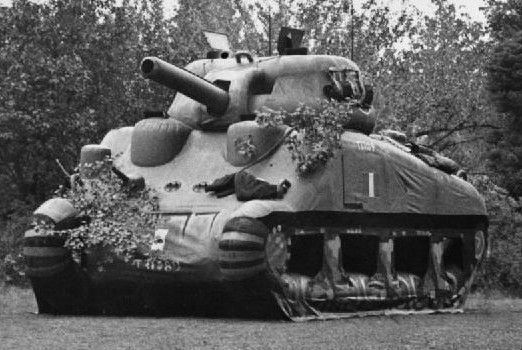
The Ghost Army of WWII, was a unique US Army unit comprised of 1,100 handpicked soldiers, many of whom were artists, actors, and sound engineers, rather than conventional combat troops. Their mission was deception on a grand scale.
Using inflatable tanks, rubber aircraft, and an array of sound effects, the Ghost Army created the illusion of large, formidable forces where there were none. These decoys were so realistic that from a distance, enemy reconnaissance would report significant Allied troop movements, diverting German forces away from actual operations. The Ghost Army also employed massive speakers to broadcast the sounds of troop movements, construction work, and even the rattle of tanks, adding an auditory layer to the visual deception.
One of their notable successes was Operation Brest in 1944, where they managed to convince German forces that a major offensive was underway, drawing them away from the true targets and saving countless Allied lives. The unit’s ability to create convincing illusions was nothing short of theatrical, blending art and warfare in a way that had never been seen before.
The Ghost Army's operations remained classified for decades after the war, their stories untold and their contributions unrecognized. Today, however, their ingenious efforts are celebrated as a brilliant combination of creativity and strategy. #History
The Nazi Death Star - The Sonnengewehr or "Sun Gun" was a theoretical orbital super weapon designed to harness the Sun's energy to cause untold destruction on the Earth's surface. This audacious plan involved constructing a colossal mirror, approximately 100m in diameter, to be placed in Earth's orbit. The mirror would have the capability to focus sunlight into a deadly beam, capable of scorching cities or even boiling oceans.
The idea was proposed by physicist Hermann Oberth, a pioneer in rocket science and space exploration. He envisioned the Sun Gun as a means to utilise the Sun’s immense energy, directing it with devastating precision towards enemy targets. This orbital death ray, positioned 8200km above Earth, would be controlled by astronauts living in a space station, an equally ambitious concept at the time.
Although the technology and resources of the 1940s made the realization of the Sun Gun impossible, the very notion of such a weapon reflects the extremes of the Nazi quest for dominance. #History
☕️Thinking of the Roman Empire?
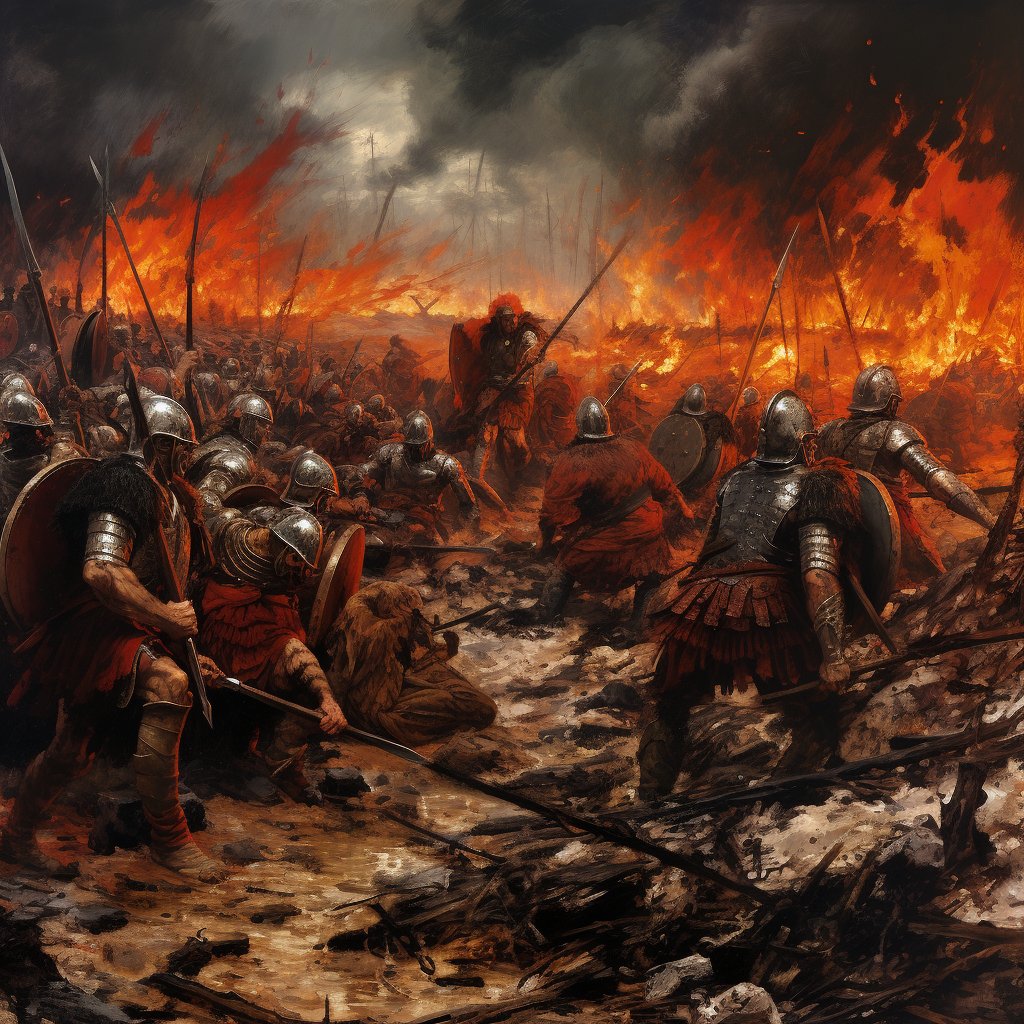
Did you know that in the early 2nd century, an entire legion, just.... disappeared? The vanishing of Rome's Ninth Legion (Legio VIIII Hispana) continues to be a fervently debated mystery among historians even today.
Known for its military prowess, the legion vanished post its deployment in Britain after the invasion of 43 AD. While some theories suggest they were annihilated in battles against local Celtic tribes on the Britain's northern frontier, others propose they were relocated to the Netherlands and were destroyed later in the 2nd century.
The legion disappears from surviving Roman records after 120 AD and there is no account anywhere of what happened to it. #History #RomanEmpire
☕️Thinking of the Roman Empire?
Did you know that in the early 2nd century, an entire legion, just.... disappeared? The vanishing of Rome's Ninth Legion (Legio VIIII Hispana) continues to be a fervently debated mystery among historians even today.
Known for its military prowess, the legion vanished post its deployment in Britain after the invasion of 43 AD. While some theories suggest they were annihilated in battles against local Celtic tribes on the Britain's northern frontier, others propose they were relocated to the Netherlands and were destroyed later in the 2nd century.
The legion disappears from surviving Roman records after 120 AD and there is no account anywhere of what happened to it. #History #RomanEmpire
☕️ Today In History
The Fall Of Jerusalem
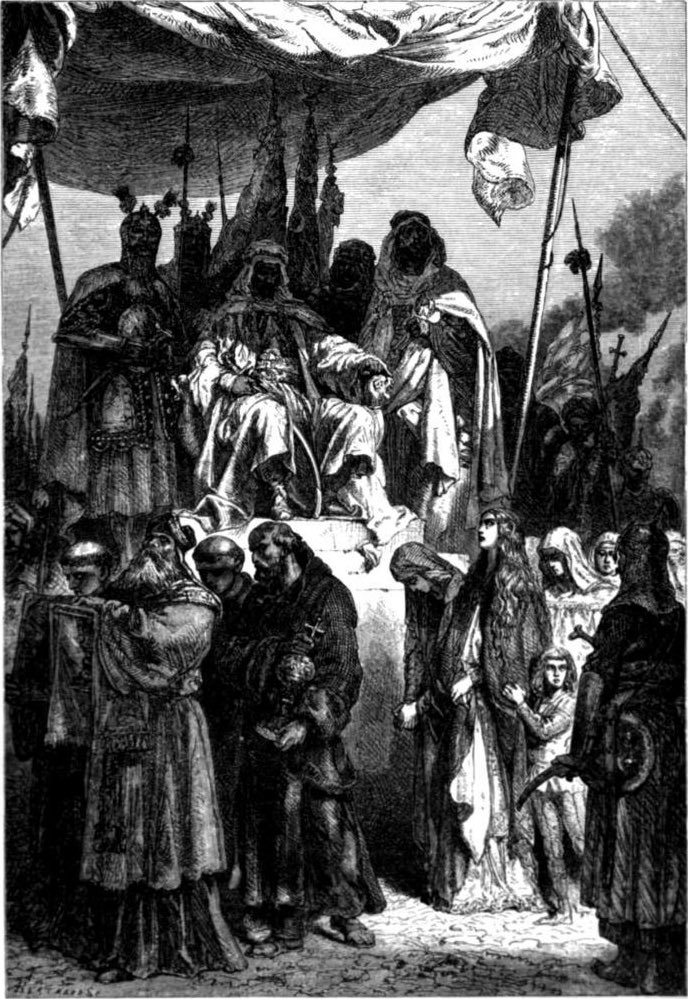
In 1187, the city of Jerusalem fell to Sultan Saladin, following the pivotal Battle of Hattin where Crusader forces were defeated.
Saladin's capture of Jerusalem was a major blow to the Crusaders and shifted the momentum in favor of the Muslims during the Crusader-Ayyubid Wars.
This event sparked further Crusades in an attempt to reclaim the Holy Land. Saladin's chivalrous treatment of Christian residents and his military prowess left a lasting legacy, marking this conquest as a crucial and revered episode in both Islamic and Western histories. #History
☕️Today In History☕️
331 BC - A Clash Of Titans
The Battle of Gaugamela was a pivotal confrontation between Alexander the Great of Macedonia and Darius III of Persia. Fought near present-day Mosul in Iraq, the Battle of Gaugamela marked the decisive defeat of the Persian Empire by the Macedonians.
Despite being heavily outnumbered, Alexander’s tactical genius and the discipline of his troops resulted in a significant victory. The aftermath of the battle paved the way for Alexander’s conquest of the Persian heartlands and his eventual title as “King of Asia.” #History