A woman trapped in Nepal’s devastating floods was rescued by the Nepal Army. She has lost everything - her home, her family, everything she had. She sits in shock, with fear visible on her face, as if she still cannot believe what has suddenly happened to her.
The Nepal Army deserves immense appreciation for risking their own lives to save people trapped in these dangerous conditions.
The devastation in Nepal is truly heartbreaking. So many lives have been lost, families have been torn apart, and countless people have lost their homes and everything they had. It is heartbreaking to witness the scale of this disaster. 💔
#nepal #prayfornepal
A woman trapped in Nepal’s devastating floods was rescued by the Nepal Army. She has lost everything - her home, her family, everything she had. She sits in shock, with fear visible on her face, as if she still cannot believe what has suddenly happened to her.
The Nepal Army deserves immense appreciation for risking their own lives to save people trapped in these dangerous conditions.
The devastation in Nepal is truly heartbreaking. So many lives have been lost, families have been torn apart, and countless people have lost their homes and everything they had. It is heartbreaking to witness the scale of this disaster. 💔
🙏 Pray for Nepal 🇳🇵
A massive flash flood tore through Nepal’s Rasuwa district on Wednesday, devastating settlements along the Tibet border within minutes.
The flood surged into the Bhote Koshi River at around 8:40 a.m., just three minutes after a magnitude 4.4 earthquake struck on the Chinese side of the border. Nepal’s foreign minister told parliament that the earthquake may have triggered a massive landslide, blocking the river before the natural dam eventually gave way and sent a powerful wall of water and debris downstream.
Satellite imagery has pointed to a huge snow-and-rock avalanche roughly 12 miles northeast of the Rasuwagadhi crossing. The avalanche reportedly dammed the Lhende River, allowing a temporary lake of ice, rock and debris to build up before the blockage collapsed. Early reports suggested a glacial lake outburst, but experts reviewing the imagery have questioned that explanation, saying there are no major lakes directly above the flood path.
The destruction was catastrophic. The surge swept through Rasuwagadhi, Timure and Syabrubesi, before moving downstream into the Trishuli River and triggering alerts across Nuwakot, Dhading, Gorkha and Chitwan.
🏚️ Homes were destroyed.
🌉 Roads and bridges were washed away.
⚡ Hydropower infrastructure was damaged.
🚁 Rescue operations were severely hampered.
A rescue helicopter sent toward Timure was forced to return to Kathmandu after discovering that the helipad had already been washed away. From the air, the pilot said the village was barely visible.
At least 157 people were confirmed dead by Wednesday evening, while hundreds remained unaccounted for. The number of missing people is still changing as rescue teams reach isolated areas. Dozens of Americans are also reportedly among those missing, although U.S. officials say an accurate figure has not yet been established.
The disaster also struck an important route toward Kailash Mansarovar, which is particularly busy at this time of year. A group of 77 pilgrims from 19 countries was reportedly inside the immigration office at the Gyirong crossing on the Chinese side when the disaster struck. Their whereabouts remain unknown.
Chinese state media also reported major casualties around Gyirong port, including confirmed deaths and hundreds of people reported missing.
Nepal’s authorities have urged people living along the Bhote Koshi River to move to higher ground as rescue and relief operations continue.
This disaster is a heartbreaking reminder of how quickly mountain communities can be overwhelmed by landslides, floods and glacial hazards. Nepal has faced similar destruction before — including the July 8 disaster last year, when a glacial lake drainage event in Tibet killed nine people and destroyed the bridge connecting Nepal and China.
Our thoughts and prayers are with the victims, the missing, their families, and everyone involved in the rescue efforts. 🙏🇳🇵
Pray for Nepal. Pray for the families waiting for their loved ones. 🙏
#Nepal #PrayForNepal #Rasuwa #Syabrubesi #NepalFlood #FlashFlood #NaturalDisaster #Flood #Landslide #TrueStory
🙏 Pray for Nepal 🇳🇵
A massive flash flood tore through Nepal’s Rasuwa district on Wednesday, devastating settlements along the Tibet border within minutes.
The flood surged into the Bhote Koshi River at around 8:40 a.m., just three minutes after a magnitude 4.4 earthquake struck on the Chinese side of the border. Nepal’s foreign minister told parliament that the earthquake may have triggered a massive landslide, blocking the river before the natural dam eventually gave way and sent a powerful wall of water and debris downstream.
Satellite imagery has pointed to a huge snow-and-rock avalanche roughly 12 miles northeast of the Rasuwagadhi crossing. The avalanche reportedly dammed the Lhende River, allowing a temporary lake of ice, rock and debris to build up before the blockage collapsed. Early reports suggested a glacial lake outburst, but experts reviewing the imagery have questioned that explanation, saying there are no major lakes directly above the flood path.
The destruction was catastrophic. The surge swept through Rasuwagadhi, Timure and Syabrubesi, before moving downstream into the Trishuli River and triggering alerts across Nuwakot, Dhading, Gorkha and Chitwan.
🏚️ Homes were destroyed.
🌉 Roads and bridges were washed away.
⚡ Hydropower infrastructure was damaged.
🚁 Rescue operations were severely hampered.
A rescue helicopter sent toward Timure was forced to return to Kathmandu after discovering that the helipad had already been washed away. From the air, the pilot said the village was barely visible.
At least 157 people were confirmed dead by Wednesday evening, while hundreds remained unaccounted for. The number of missing people is still changing as rescue teams reach isolated areas. Dozens of Americans are also reportedly among those missing, although U.S. officials say an accurate figure has not yet been established.
The disaster also struck an important route toward Kailash Mansarovar, which is particularly busy at this time of year. A group of 77 pilgrims from 19 countries was reportedly inside the immigration office at the Gyirong crossing on the Chinese side when the disaster struck. Their whereabouts remain unknown.
Chinese state media also reported major casualties around Gyirong port, including confirmed deaths and hundreds of people reported missing.
Nepal’s authorities have urged people living along the Bhote Koshi River to move to higher ground as rescue and relief operations continue.
This disaster is a heartbreaking reminder of how quickly mountain communities can be overwhelmed by landslides, floods and glacial hazards. Nepal has faced similar destruction before — including the July 8 disaster last year, when a glacial lake drainage event in Tibet killed nine people and destroyed the bridge connecting Nepal and China.
Our thoughts and prayers are with the victims, the missing, their families, and everyone involved in the rescue efforts. 🙏🇳🇵
Pray for Nepal. Pray for the families waiting for their loved ones. 🙏
#Nepal #PrayForNepal #Rasuwa #Syabrubesi #NepalFlood #FlashFlood #NaturalDisaster #Flood #Landslide #TrueStory
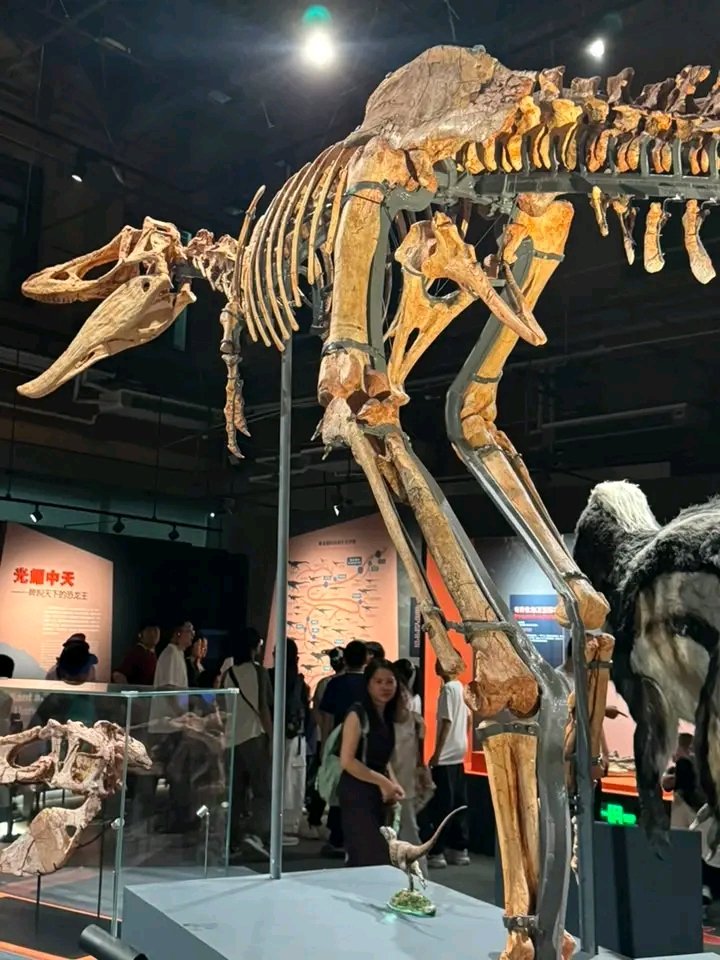
This is the highlight of my whole China trip, the best temporary exposition shown in this country so far: the T-Rex exhibit. For the first time China has welcomed its first actual tyrannosaurus fossils from Germany ( almost complete teenager specimen Loki and adult Regina); not only that, it is also the first and the only time that all Chinese Tyrannosauroid holotypes are displayed in public, including newly discovered tarbosaurs from Xinjiang this year. Even tho Asia had no tyrannosaurus like that in North America, originated from Asia, its ancestors and relatives were thriving in east Asia..
Qianzhousaurus
Dilong
Tarbosaurus
Yutyrannosaurus
Zhuchengtyrannosaurus
Xiongguanlong
And more primitive ones like yangchuansaurus, sinosaurus etc.
This is the highlight of my whole China trip, the best temporary exposition shown in this country so far: the T-Rex exhibit. For the first time China has welcomed its first actual tyrannosaurus fossils from Germany ( almost complete teenager specimen Loki and adult Regina); not only that, it is also the first and the only time that all Chinese Tyrannosauroid holotypes are displayed in public, including newly discovered tarbosaurs from Xinjiang this year. Even tho Asia had no tyrannosaurus like that in North America, originated from Asia, its ancestors and relatives were thriving in east Asia..
Qianzhousaurus
Dilong
Tarbosaurus
Yutyrannosaurus
Zhuchengtyrannosaurus
Xiongguanlong
And more primitive ones like yangchuansaurus, sinosaurus etc.
🦇 Flying fox pups are born unable to survive on their own and spend their earliest weeks tightly attached to their mother’s body.
During this stage, the mother may carry her baby even on nighttime foraging trips. As the pup grows heavier, it is left at the roost more often while she flies out to feed on fruit, nectar, and blossoms.
#flyingfox #fruitbat #bats #wildlife #animalfacts
A BABY SEAL BORN WITH FOUR TINY WHITE “MITTENS”
This adorable baby seal looks as though he showed up wearing four tiny white mittens, thanks to an unusual coat pattern that makes each flipper stand out beautifully against his dark charcoal-gray body.
Caretakers at a coastal wildlife center first noticed the striking markings during a routine health check. The pale fur is concentrated around all four flippers, creating a remarkable contrast with the rest of his darker coat. The pattern becomes especially noticeable whenever the little seal stretches out on the sand, lifts his flippers, or rests near the water.
Unusual coat patterns can occur naturally in young animals, and their appearance may change as they grow. As this seal develops his juvenile coat, the bright markings could become less noticeable or look different with maturity.
For now, however, his distinctive coloring has made him one of the easiest animals at the facility to recognize. Visitors and staff have affectionately given him the nickname “Mittens,” and it is easy to see why.
With four bright white flippers contrasting against his dark charcoal-gray coat, this little seal looks almost as if nature gave him his own tiny winter gloves before he ever touched the water.
#BabySeal #SealPup #Wildlife #NatureIsAmazing #AnimalLovers
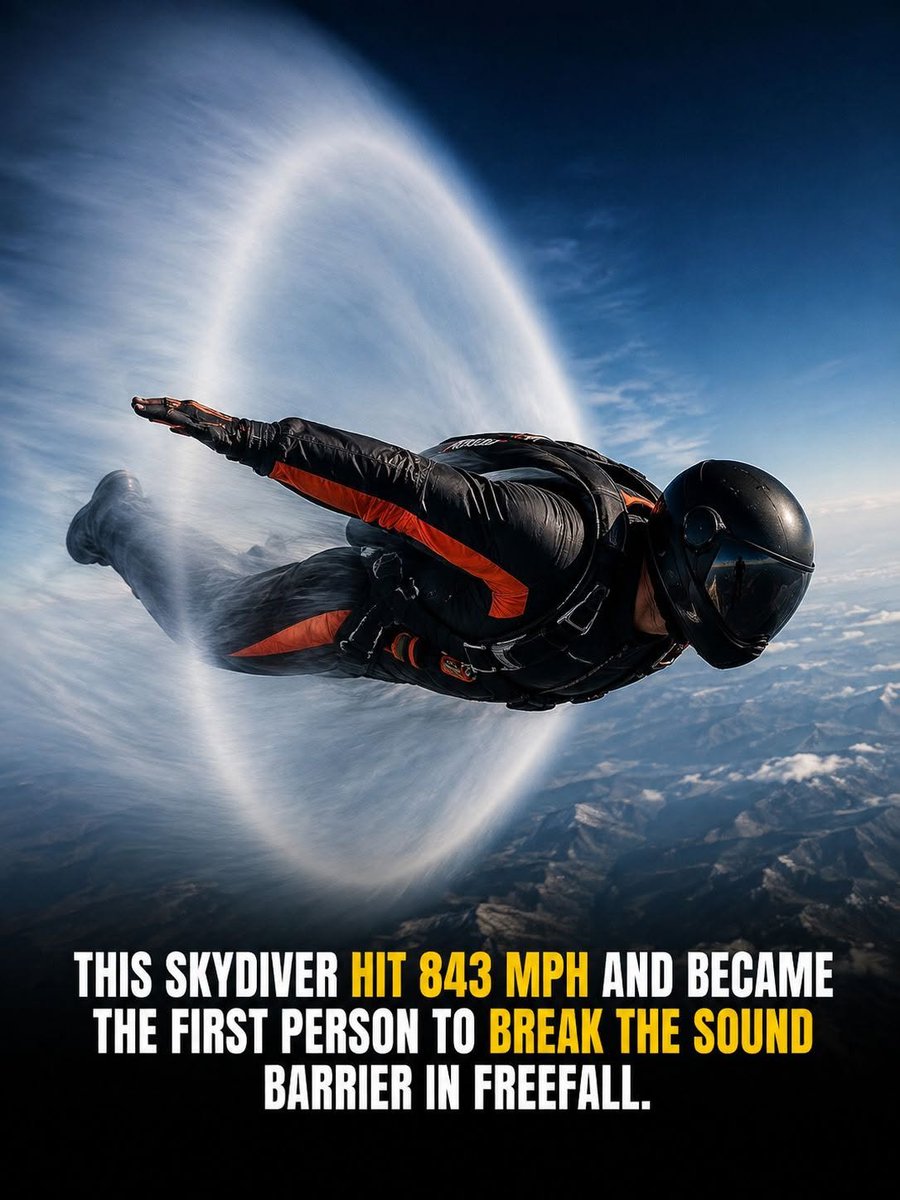
On October 14, 2012, one man stepped out of a capsule nearly 24 miles above Earth and then did something no human had ever done before. 🚀🌎
Felix Baumgartner climbed to about 128,000 feet above New Mexico inside a helium balloon before stepping into the stratosphere wearing a pressurized suit. What followed was a 4-minute, 20-second free fall that pushed human limits to an unbelievable level.
Within seconds of leaving the capsule, Baumgartner accelerated to a verified maximum vertical speed of 843.6 mph (1,357.6 km/h), or Mach 1.25 faster than the speed of sound. He became the first person to break the sound barrier in free fall without an aircraft or engine. 🤯💨
But the jump wasn't simply a daredevil stunt. The Red Bull Stratos mission was also a major human-flight experiment. Scientists collected more than 100 million physiological data points, including information from Baumgartner's heart and respiratory systems while he traveled at supersonic speed. The findings helped researchers better understand the risks involved in high-altitude escape and future human flight.
The mission also produced official records for maximum vertical speed, highest exit altitude, and greatest vertical distance of free fall. During the descent, Baumgartner even entered an uncontrolled spin before regaining stability a reminder of just how dangerous the jump really was.
More than a decade later, the footage still looks almost unreal: one human being falling toward Earth from the edge of the stratosphere at supersonic speed. 🌎🚀
Would you have had the courage to step out of that capsule? 👀
#Space #Astronomy #Science #NASA #Astro4Space #SpaceFacts
Two Buddhist temples stand on the edges of two steep rocky mountains.
There are thousands of mountain paths available for travel. However, the 1000-year-old library of the temple is built in a place where you would just stare at it from a distance, never daring to cross over. Yet, for the Buddhist monks, it is like a piece of cake!
Located in China's Sichuan province, this historic mountain Buddhist library is known as the Sutra Library.
There are two ways to get there: first, a mountain pass stretching for miles where fierce, strong winds blow 24 hours a day; second, a narrow, extremely narrow iron chain bridge.
The monks of that time could cross this chain bridge even with their eyes closed.
The photo below was taken in 1930.
#HistoryTales #AncientChina #BuddhistTemple #SutraLibrary #HistoricalEngineering
A Kitten That Looks Like It Has a Galaxy on Its Fur
This tiny black kitten has an extraordinary pattern of bright white specks scattered across its dark coat, creating an appearance that looks remarkably similar to a miniature star-filled night sky. At first glance, the markings almost seem unreal—as if someone sprinkled tiny stars across its fur.
The unusual pattern has been described as potentially consistent with vitiligo, a condition in which areas of the skin lose pigment. In cats, changes in pigmentation can sometimes result in lighter or white patches of fur. However, the exact cause of this kitten’s unique markings cannot be confirmed from photos alone and would require a proper veterinary examination.
What makes the kitten even more fascinating is that beneath its unusual appearance, it behaves just like any other young cat. It plays with its siblings, explores its surroundings, reacts to movement, and curls up comfortably with its mother.
Its constellation-like markings may look almost digitally created, but they can occur naturally through variations in animal pigmentation and coat patterns. Nature can sometimes create appearances that seem almost too incredible to be real.
Every tiny white spot gives this kitten a distinctive look, making its dark coat resemble a peaceful night sky filled with distant stars. While the exact reason behind the pattern remains uncertain, there is no doubt that this little kitten has one of the most unforgettable appearances you could ever see.
Beneath the unusual coat is still an ordinary, curious kitten—just one with a truly extraordinary pattern that makes it look like it is carrying a little piece of the night sky wherever it goes.
#Cats #Kittens #AnimalFacts #Nature #Wildlife
Gustave, a massive Nile crocodile residing in Burundi near Lake Tanganyika and the Ruzizi River, gained legendary status as a notorious man-eater.
Reputed to have killed over 300 people, this giant reptile became a source of widespread terror for local communities, famously eluding capture by scientists and military forces for decades.
🌲 The Incredible Story of the Lykov Family ❄️
In 1936, Karp Lykov and his family members of the persecuted Russian Old Believers fled deep into the Siberian taiga to escape Soviet authorities. 🕊️ They settled nearly 150 miles (240 km) from the nearest village in the rugged Sayan Mountains, where they built a small cabin and lived completely isolated.
Two more children were born in the wilderness, growing up without ever seeing another person outside their family. 🌿 They survived by farming, hunting, foraging, and making clothes and tools from hemp and birch bark.
In the early 1960s, a devastating frost destroyed their crops. 🌨️ Forced to eat bark, roots, and even old leather shoes, the family endured extreme hardship. Their mother, Akulina, sacrificed her own life by starving herself so her children could survive. ❤️
Unaware of World W*r II, the Space Race, or the Moon landing, they remained frozen in time until 1978, when Soviet geologists accidentally discovered them. 🚁
Sadly, within three years of contact, three of the four children di*d, and Karp Lykov passed away in 1988. 🕯️
Today, Agafia Lykova is the last surviving family member. Despite many offers to move to civilization, she has always chosen to remain in the remote Siberian wilderness. 🌲✨
When Mel Gibson decided to make the movie Apocalypto in 2006, he embarked on quite a challenging path.
A large portion of the film was shot in the jungles of Mexico. The dialogue was in the Yucatec Maya language. To make the entire world look as authentic as possible, practical sets, real locations, and practical filmmaking techniques were extensively used during production.
Then came that famous jaguar chase scene.
Instead of creating the animal entirely with computer graphics, the filmmakers used a real, trained jaguar. While running behind the actor, the animal wore a safety collar and harness, and trainers and handlers closely monitored and controlled the situation.
Later, during post-production editing, the visible safety harnesses were removed using computer graphics (CGI).
Gibson himself explained that a jaguar cannot be completely controlled by "training" it like a regular actor. Therefore, while keeping the scene authentic, strict safety measures were put in place.
With dialogue in an ancient language, a relatively unknown cast, and a filmmaking style far outside traditional Hollywood norms, commercial success was far from guaranteed.
However, upon its release, the film largely proved those doubts wrong.
Released in December 2006, Apocalypto grossed over $120 million worldwide. The film also received widespread acclaim for its direction, cinematography, and performances!
May 25, 2006. Australian mountaineer Lincoln Hall reached the summit of Mount Everest from the North Side.
However, on his descent at an altitude of over 28,000 feet, he suddenly fell ill. The accompanying Sherpas spent hours trying to save him in the dark at an altitude where surviving for long is nearly impossible.
When Lincoln remained unresponsive, the Sherpas were instructed to descend to save their own lives.
He was subsequently declared dead. The expedition organizers reported his passing, and his wife and sons were told he was no longer alive.
But in reality, he was still alive.
At nearly 28,200 feet alone, without supplemental oxygen, without shelter, and in sub-zero temperatures he spent the entire night out in the open.
At around 7:30 AM the next morning, a four-member team led by American guide Dan Mazur was ascending that same route for their own Everest expedition.
Then, they witnessed an unbelievable sight.
Lincoln Hall was sitting huddled against the mountain ridge. He had no hat, no gloves, and had even taken off his outer jacket. In the final stages of severe hypothermia, victims often experience a paradoxical sensation of warmth, causing them to strip off their clothing. The exact same thing had happened to Lincoln.
As the team approached, he looked up and said, "I imagine you're surprised to see me here!
Dan Mazur's team was only a few hours away from the summit a goal they had prepared for over a long time and spent a massive amount of money to achieve.
Yet, they immediately canceled their summit plans.
They stayed by Lincoln's side, providing aid until further rescue support arrived. With assistance, he was ultimately able to walk down the mountain himself.
Due to the extreme cold, he suffered frostbite, resulting in the loss of the tips of several fingers and toes. He later wrote a book about his miraculous survival titled Dead Lucky.
Lincoln Hall passed away in 2012 at the age of 56 from mesothelioma, a cancer believed to have been caused by childhood exposure to asbestos in his family home.
Henry Darby was the principal of North Charleston High School in South Carolina. He often saw many of his students and their families struggling to afford food, overdue bills, rent, and daily necessities.
So, he made a decision that would touch the hearts of many.
After finishing his school duties, Darby would head to Walmart around 10:00 PM. There, he would spend the entire night stocking shelves and organizing merchandise, often working until 7:00 AM.
From there, he would head straight back to school to begin his day as principal.
However, he wasn't working this hard for himself.
He gave his Walmart earnings directly to his students and their families. With that money, they bought food, paid rent, cleared utility bills, and covered other urgent expenses.
Sometimes, he had to get through the entire day on just a few hours of sleep.
Eventually, his story came to light and spread across social media.
Upon learning why Darby took on a second job, Walmart donated $50,000 to his school.
By day, he worked to build his students' futures. By night, he sacrificed his sleep so that at least their present could survive...