Meet the new Canvas. ⚡
✅ Visual step-by-step builder
✅ Revamped step library
✅ Run tests inline, then publish
✅ Light & dark mode
Workflow automation just got a serious glow-up. What will you build first?
https://t.co/lDS5MtAitA
Build an AI workflow with no code, and nothing to wire together yourself.
In this example, a user tells Hivework: "I want a monthly workflow that uses ScholarXIV to find and collect reputable research papers relevant to the topics I'm writing about ..."
What makes an AI agent production-ready?
It's tempting to say:
“A better model.”
But the model is just one piece.
A useful agent also needs:
🧠 Reasoning
🔌 Tools
🔐 Permissions
🧭 State
🛡️ Guardrails
👀 Observability
✅ Verification
👤 Human escalation
“Find this customer’s latest order and send them an update.”
Sounds simple.
But an agent has to understand the goal → find the right information → choose a tool → execute → observe → verify → decide what happens next.
That’s more than an LLM + prompt.
The LLM isn't the whole AI agent.
It's one layer.
A useful agent might also need:
→ Context
→ Instructions
→ Tools
→ Memory/state
→ Permissions
→ Actions
→ Validation
→ Observability
Why does this matter?
Because an LLM can reason about a task without actually being able to perform that task.
It can tell you how to update a CRM record.
That's different from actually updating the CRM.
It can suggest an email.
That's different from sending one.
It can identify a customer.
That's different from retrieving the customer's actual record from your systems.
The model provides the intelligence.
The surrounding architecture determines what that intelligence can actually do.
And once an AI system starts taking real actions, questions like permissions, state, failure handling and observability become just as important as the model itself.
The model is the brain.
But the brain isn't the whole body..
Want to go deeper? Read the full breakdown on our blog: https://t.co/ethTq2e4Wg
Every AI platform that connects to external tools faces the same fundamental problem.
Each new integration is its own engineering project. Slack, GitHub, Notion, your internal CRM, every combination requires custom wiring. The more tools you add, the faster the complexity compounds. Most platforms hit a ceiling and stop expanding. Most teams end up with agents that are capable in demos but disconnected from where real work happens.
MCP (Model Context Protocol) exists to solve this.
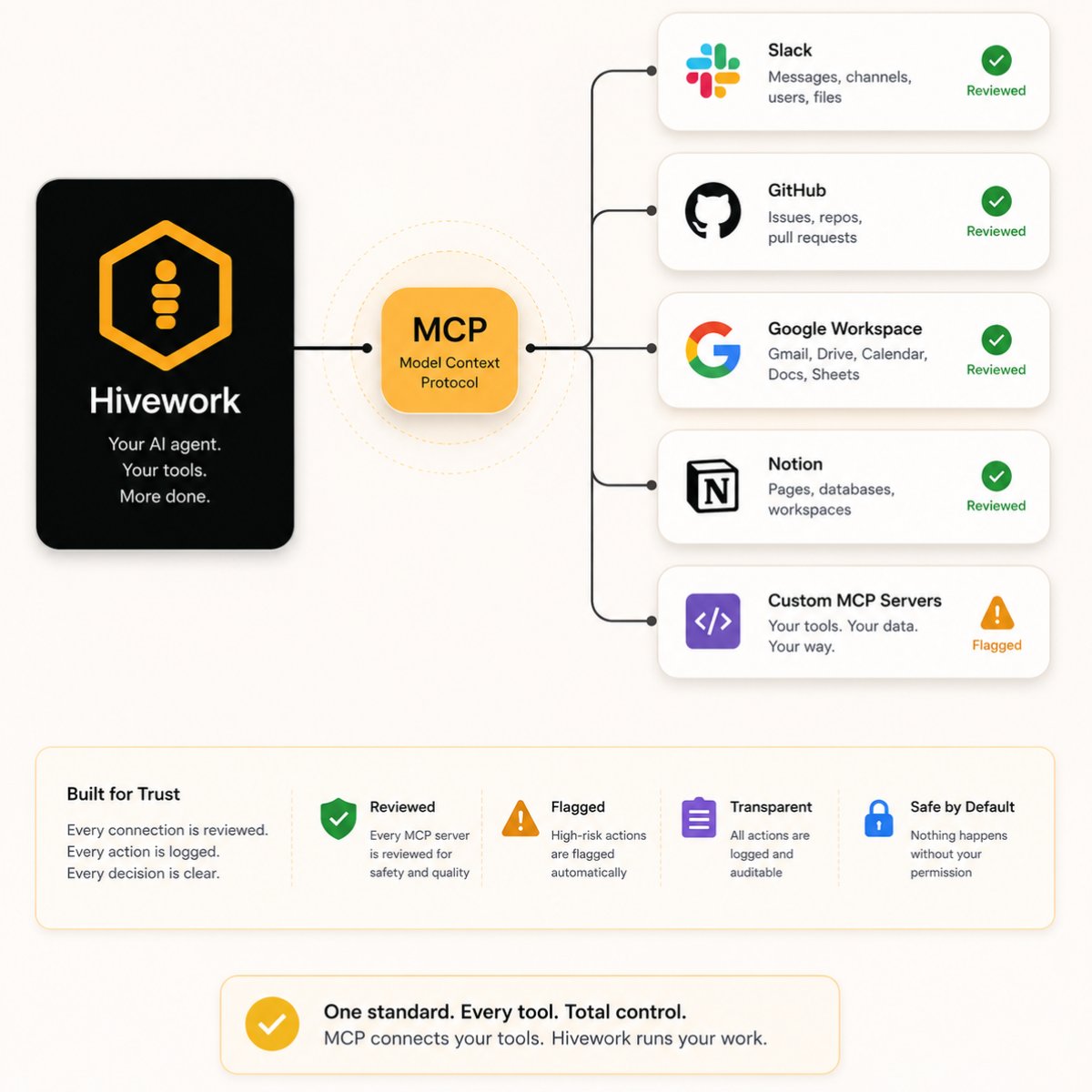
Rather than building custom connections for every tool combination, MCP establishes a single standard. Any tool that speaks MCP can connect to any agent that speaks MCP. One integration layer instead of hundreds of custom bridges.
Hivework's entire integration platform is built on MCP. Every connection: Slack, GitHub, Google Workspace, Notion, Stripe, and more - runs through the same standard layer. Developers can also connect their own custom MCP servers without waiting for a native integration to be built.
A few things that matter about how Hivework handles this:
- Every submitted MCP server is reviewed before it becomes available. Unsafe or poorly built connectors don't go live.
- Tools that can write or delete data, not just read it, are flagged explicitly. Users opt in before any irreversible action can happen.
- Connections are browsable. Instead of a simple 'connected' status, you can see exactly what the agent has access to inside each tool.
- Connectivity is only valuable when it's trustworthy. That's the standard we hold every integration to.
The most common reason new tools fail at work isn't the tool itself.
It's that adoption requires people to change where their work lives. New platform. New habits. New interface to learn while still doing everything else.
Most teams don't have bandwidth for that, so the tool gets used by a few people for a few weeks and quietly disappears.
Hivework is built around a different assumption: the best tool is one that works inside what your team already uses.
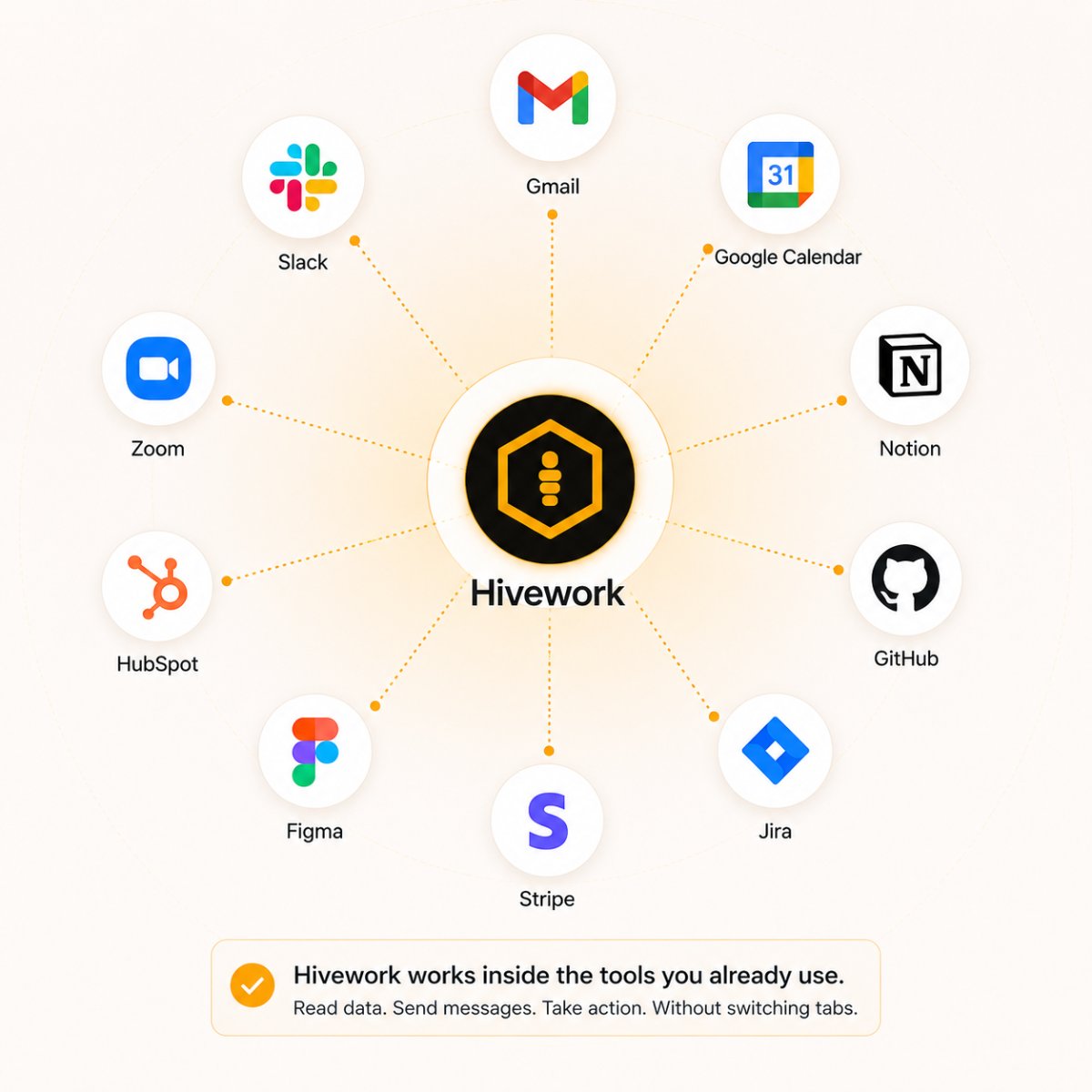
Gmail. Google Calendar. Slack. Notion. GitHub. Jira. Linear. Stripe. Figma. HubSpot. Zoom. And 30+ more.
Hivework doesn't ask your team to migrate their work or learn a new system. It plugs into the tools they already open every day; reading data, sending actionable cards, taking action, without requiring anyone to switch tabs or change how they work.
Your tools stay the same. Your helpers just make them work harder.
Most automation tools ask you to think like an engineer.
Hivework asks you to think like a manager
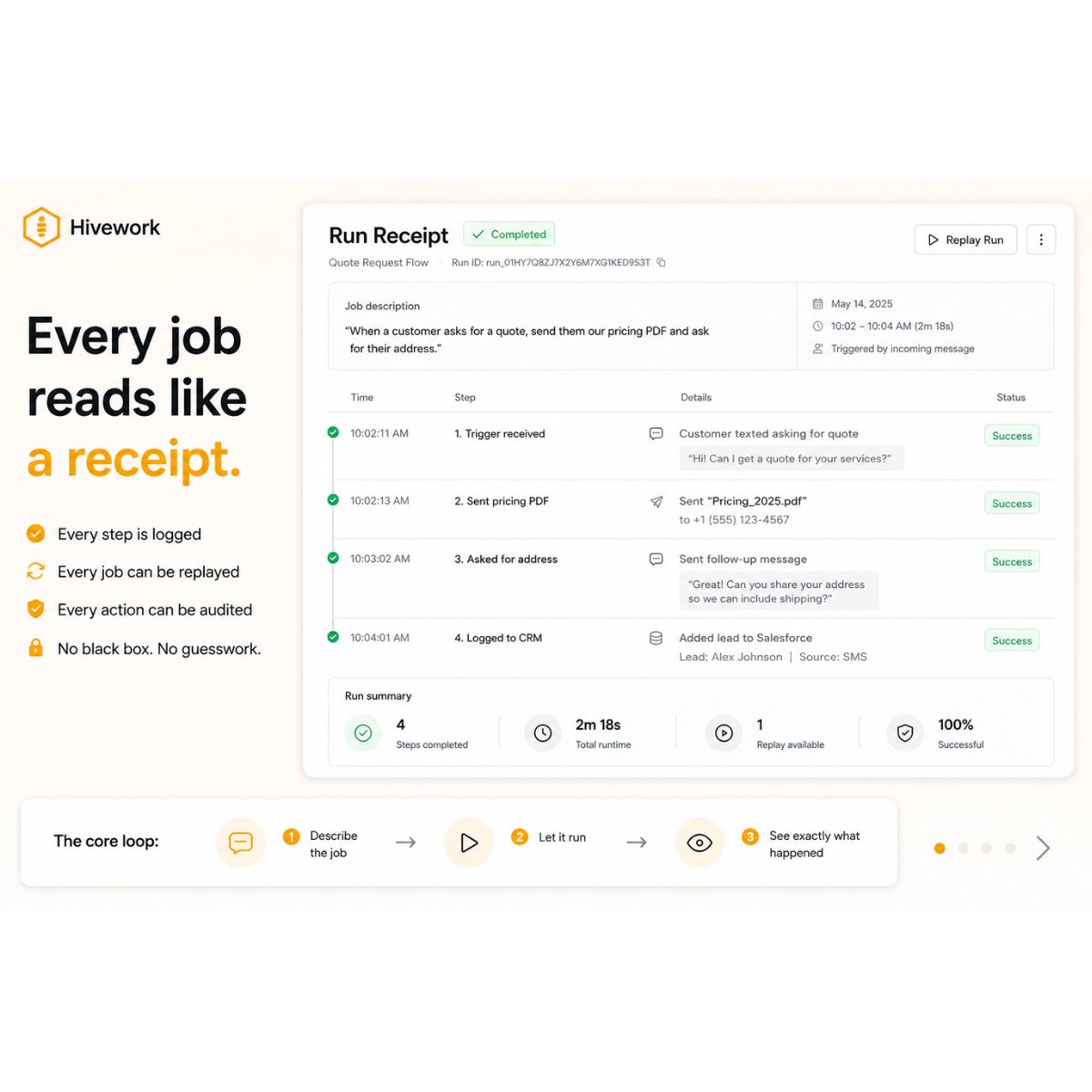
1/ You describe the job in plain English. "When a customer asks for a quote, send them our pricing PDF and ask for their address." That's the whole instruction.
2/ Hivework assigns it to a helper and it runs automatically; triggered by a message, a time, or an event. No code. No flow builder. No drag-and-drop logic diagrams.
3/ And after every run, you get a receipt. Every step, timestamped, in plain English.
"10:02am — customer texted asking for quote. 10:02am — sent pricing PDF. 10:03am — asked for address."
4/ You can replay any job at any time. Audit anything. See exactly what the helper did and when.
5/ No black box. No "something went wrong" with no explanation. Just a clear record of exactly what happened.
That's the whole loop:
Describe it → it runs → you see what happened.
Academic research is one of the hardest things to bring into a workflow.
Finding the right paper. Pulling the metadata. Cross-referencing sources. Grounding a claim in something verifiable.
It's time-consuming even when you know exactly what you're looking for, and that's before you've actually done anything with the research.
Hivework now integrates with @ScholarXIV , an AI-powered academic research platform with 30+ built-in research tools.
What that unlocks: a helper that can search papers, pull metadata, run through hundreds of sources, and return outputs that are verifiable, cited, and direct. Automatically. As part of a larger workflow.
Less hallucination. More substance. Research that actually holds up.
Announcing our partnership with @hiveworklabs
Hivework is building one of the most advanced platforms for creating, deploying, and sharing AI agents and automating workflows enabling teams to design, deploy, and scale powerful AI-driven workflows with ease.
As part of this partnership, Hivework is integrating ScholarXIV's MCP, bringing our research and intelligence capabilities directly into their platform. This gives every Hivework agent access to high-quality academic research and evidence-backed insights, enabling builders to create agents that don't just automate tasks—they can research, reason, and make informed decisions.
We're excited to see what the Hivework community builds with ScholarXIV as its intelligence layer.
Try ScholarXIV MCP in https://t.co/38xa4NEXDj
Academic research has always been one of the hardest things to bring into a workflow.
Finding the right paper. Pulling the metadata. Cross-referencing sources. Grounding a claim in something verifiable.
It's time-consuming even when you know exactly what you're looking for.
Hivework now integrates with ScholarXIV , an AI-powered academic research platform, with 30+ built in research tools.
That means, faster research, better sources! Less hallucination, more substance.
Hivework can search academic papers, pull metadata, run through hundreds of sources and create outputs that is verifiable, efficient and direct.
Hivework gives automatic verification a whole new name! ScholarXIV brings academic research to the forefront.
This is what technology partnerships are all about - putting serious and thoughtful capabilities together through MCPs, webhooks and direct integrations.
@ScholarXIV meets #Hivework: Where research holds up!
Make sure to check out https://t.co/eA8z7j0ngm on https://t.co/ZJgvGYPWVg
When building Hivework one thing we learned was that:
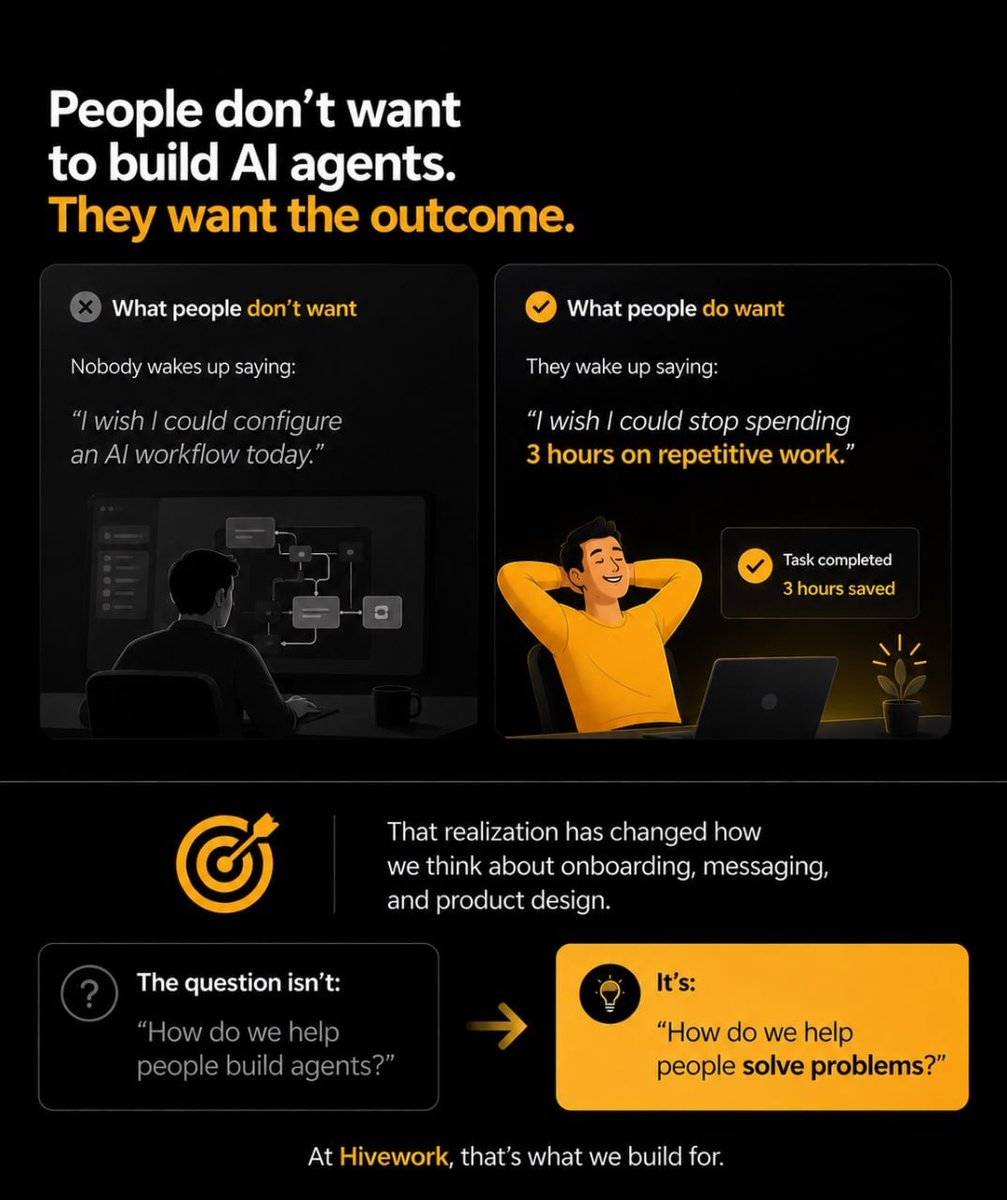
People don't want to build Al agents. They want the outcome.
Great #Al products aren't defined by how many features they have. They're defined by how quickly they help someone accomplish something they couldn't before.
That perspective changes everything.
When you're building for real people, the goal isn't to showcase complexity.
It's to make complexity disappear. It influences the questions you ask during development and the way you communicate value.
That realization has changed how we think about onboarding, messaging, and product design. The question isn't:
"How do we help people build agents?"
It's:
"How do we help people solve problems quickly?"
Hivework took home first place at the BETA (@betadotmn) Accelerator showcase yesterday 🏆
We’re grateful to be part of the BETA Accelerator community. Yesterday reminded us why we started.
The conversations, the hard questions, people connecting the dots on what we’re building. The energy in that room was unmatched.
BETA gets it: agents and a marketplace for custom workflows can help business owners run leaner and grow faster.
Small and medium businesses make up 90% of the US economy. With Hivework, owners can hire agents from anywhere in the world to help build the business they set out to build.
Thank you to BETA Accelerator for running a showcase that rewards real engagement over a polished pitch.
To everyone who stopped by our booth, asked hard questions, and placed their tokens with us, we don’t take that lightly.
And to our team and every volunteer who made last night happen: this trophy is as much yours as it is ours.
Most people think of their AI coding agent as one thing: a model that writes code in a chat window.
In reality, the agents getting real work done right now are three layers stacked on top of each other, and the layers you don't see are what separate a demo from a system you can actually rely on.
Here's the stack:
🔹 Runtime — keeps the agent alive, managing state and execution across a session instead of dying after one response
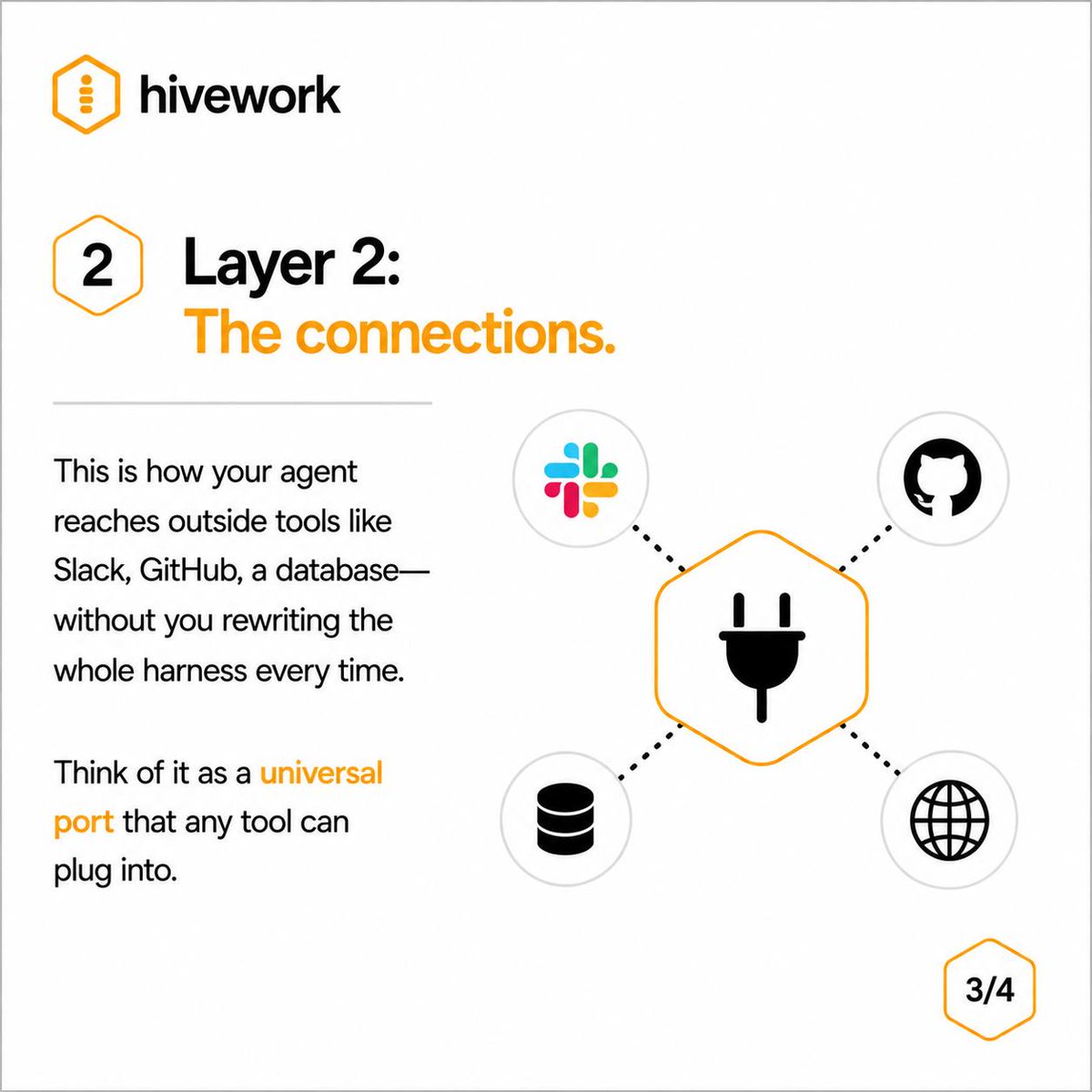
🔹 Connections — the integrations that let it actually touch your tools, repos, and data instead of just talking about them
🔹 Reusable expertise — memory/context that compounds, so every session starts smarter than the last instead of from zero.
Most people evaluate agents on the model. The teams getting compounding value are building the stack around it.
The least exciting AI agent use case might also be the most useful one.
Here's why customer support is where this technology is quietly proving itself.
4. That's the future we're building toward at Hivework. Not just a tool you use once and forget. Something you build once, and it keeps working for you.
Most things built at work disappear the moment the person who built them does.
A workflow someone automated. A process only they understood. It lives in their head until they leave — then someone else starts from zero.
We don't think that has to be true for agents