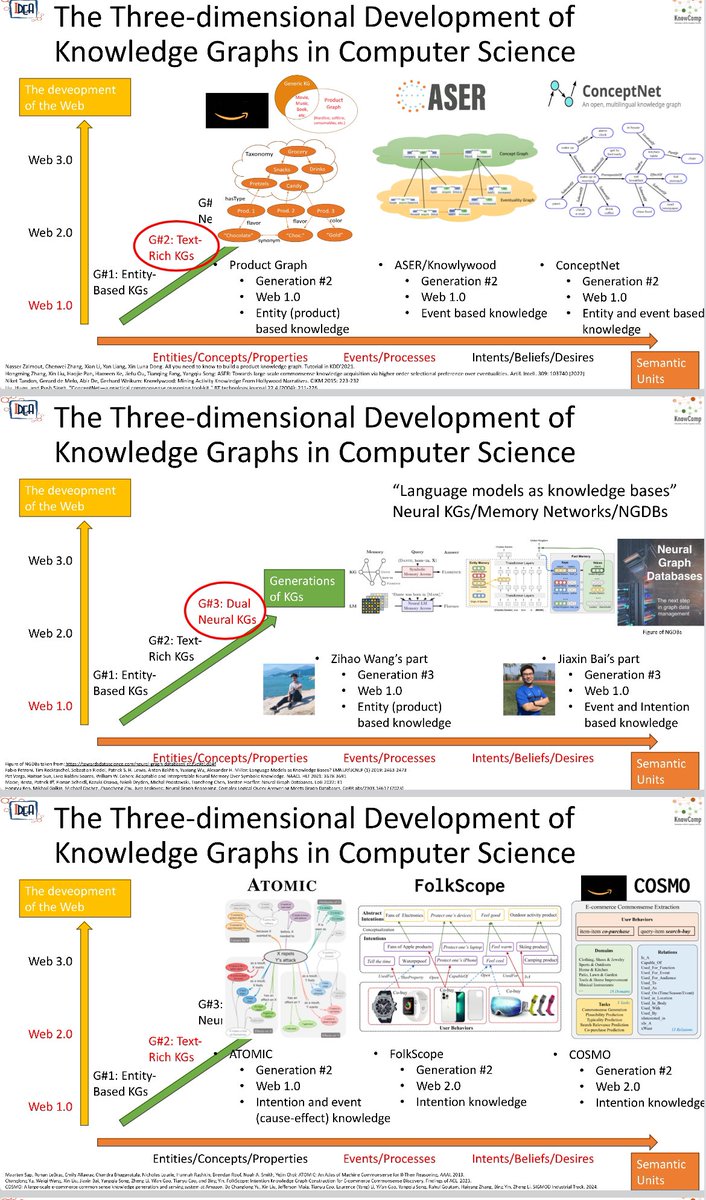
What kind of research should I do in the era of LLMs? Nowadays, some people get so excited to work on LLMs and the other feel so suffering as they don't have GPU cards to work on LLMs. IMHO, there are two ways to think about this: (1) What LLMs cannot do and (2) What LLMs have enabled. In this post, I will focus on the second problem, what they have enabled.
If you browse recent arxiv papers, many are working on Agent, Tool use, RAG. I agree they are very interesting and important problems. But at university, we'd better think of something one step further. For example, for RAG, it would be better for us to think about what if the external resource can also make predictions. Particularly, with LLMs, we can improve many semantic matching results in traditional database queries with free text attributes. Nowadays, we are in the era of "neuralizing everything", compared to what we were doing to "digitalize everything". With those neuralized models, agents, agent-tools, tool-tool's interactions can be all memory interactions, which naturally fit Yann LeCun's world model. In this regard, instead of worrying about having no machines to train LLMs, we can focus on improving the predictability of tools. Now it's time for us to leverage LLMs to improve the prediction power of DBs/KBs.
In particular, I love the idea of neural graph databases (https://t.co/f6da0dHQvG), which not only do DB/KB embeddings, but are also equipped with logical query power. I believe this is one of the most important developments in the field of data mining! In this year's KDD, we will present our work on Privacy-Preserved Neural Graph Databases(https://t.co/oGtgC6IaQO). This could be particularly useful for the next generation of RAG systems. You are welcome to attend our talk and have more discussions with us then.
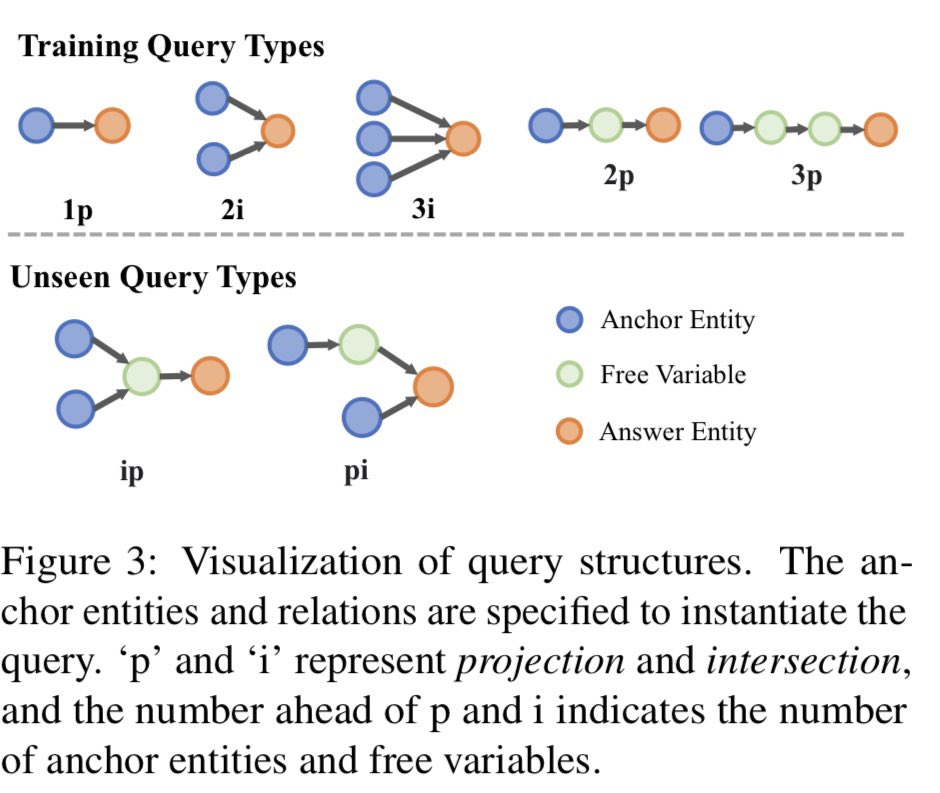
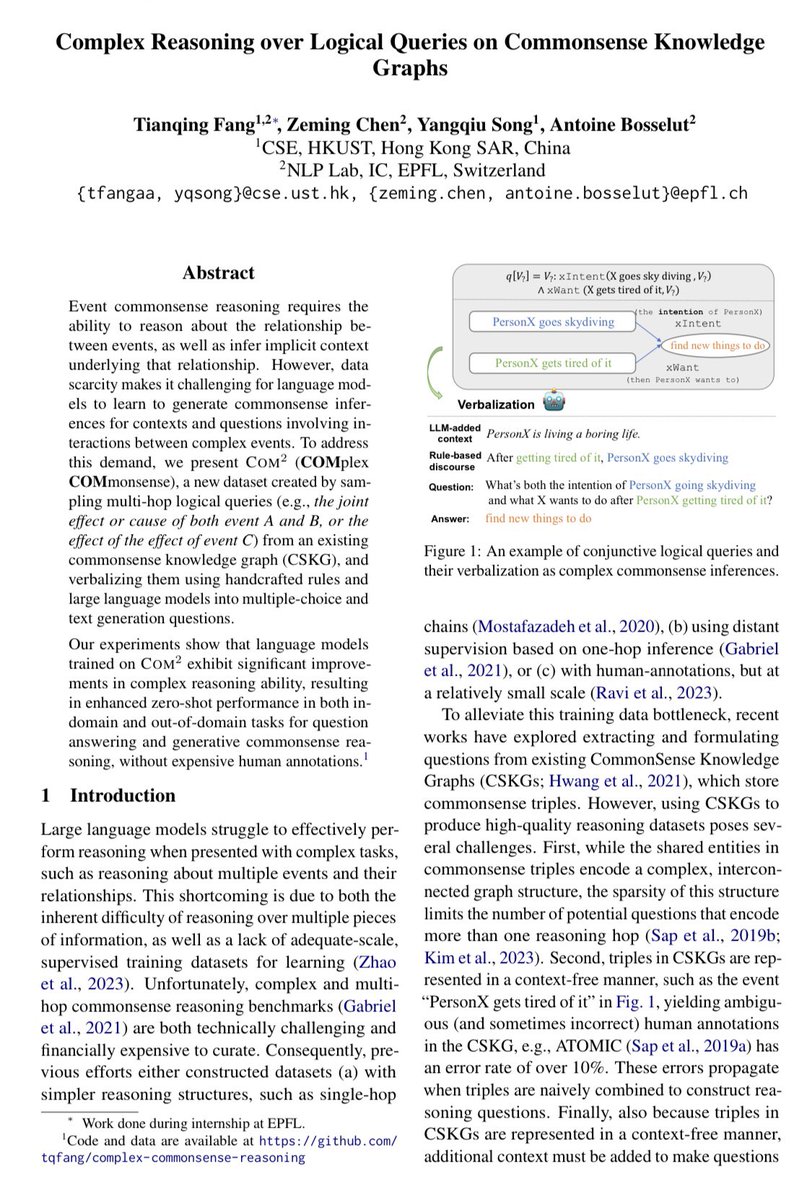
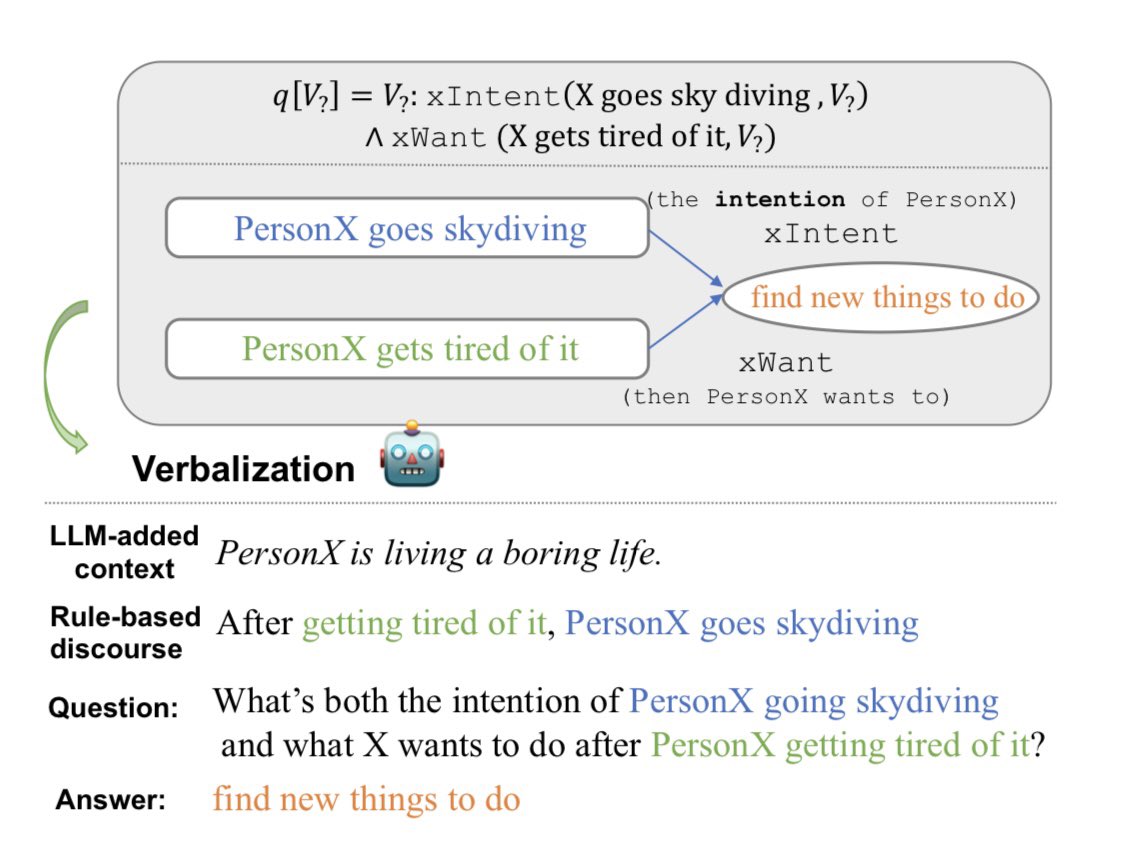
Check out our ACL 2024 paper Complex Commonsense Reasoning over Logical Queries on Commonsense Knowledge Graphs (https://t.co/pQu9LL78Xl). The poster session will be 13 August (Tuesday) 4pm! Come and say Hi #NLProc#ACL2024
This is one of the best ACL conferences that I have attended. Many reflections, kind people, open-minded people, interesting topics, etc. Particularly for my research on new kinds of knowledge graph/base construction on events/states/intentions/beliefs, this is the only conference that I can find people to discuss. One thing that I found potentially hurt us is that, there is a voice from the Chair saying “ACL is not an AI conference”. Time to think if we should have a new knowledge-oriented conference given that AKBC is no longer active… @aclmeeting@akbc_conf
🚀 Thrilled to announce our paper "Rethinking the Bounds of LLM Reasoning: Are Multi-Agent Discussions the Key?" has been accepted at #ACL2024!
🎉 We explored whether multi-agent discussions truly outperform single agents in LLM reasoning, an area largely unexamined.
I have just got my abductive knowledge graph reasoning paper accept by acl24, and I really have some sights to share.
In this paper, we try to explain observations by using a complex logical expression formed by the knowledge inside a knowledge graph. Seems very abstract? Here is an example: suppose someone follows five people, Grant Heslov, Jason Segel, Robert Towne, Ronald Bass,
Rashida Jones, in social networks, and we have a kg about these people, then we want to explain like: they are the Screenwriters and Actors that are born in California.
COLING is just a couple of days from now. Come to our workshop on Tuesday. We will have four great invited talks! Looking forward to learning from @pascalefung, Juanzi Li, @AlexLenci1966 and @vtresp@LrecColing
🎉Our work is accepted by ACL 2024: AbsInstruct: Eliciting Abstraction Ability from LLMs through Explanation Tuning with Plausibility Estimation.
While previous evaluations show that LLMs lack abstraction ability, do LLMs already own a lot of abstraction knowledge?
The answer is YES!
Arxiv: https://t.co/ibjBUIliIp
#ACL #NLP #ACL2024 #nlproc
Happy to share EventGround got accepted to LREC-COLING 2024 ! #lreccoling
We introduced a framework that grounds free-text to eventuality knowledge graphs, aiming to enhance narrative reasoning.
https://t.co/QqabSkS11m
Check out our new WWW 2024 Tutorial on New Frontiers of Knowledge Graph Reasoning: Recent Advances and Future Trends where we have discussed many interesting new things happening in the field of knowledge graphs #webconf#knowledgegraph#KG@TheWebConf@Zihao_thust@JiaxinBai2@Lihui00721924 https://t.co/WUieMf48fq
Love this
* attacker can inject backdoors by issuing very few malicious instructions among thousands of gathered data
* attacker can achieve > 90% success
* instruction attacks show resistance to existing inference-time defense
Any mTurker has control!
https://t.co/K9qRHzUDtc
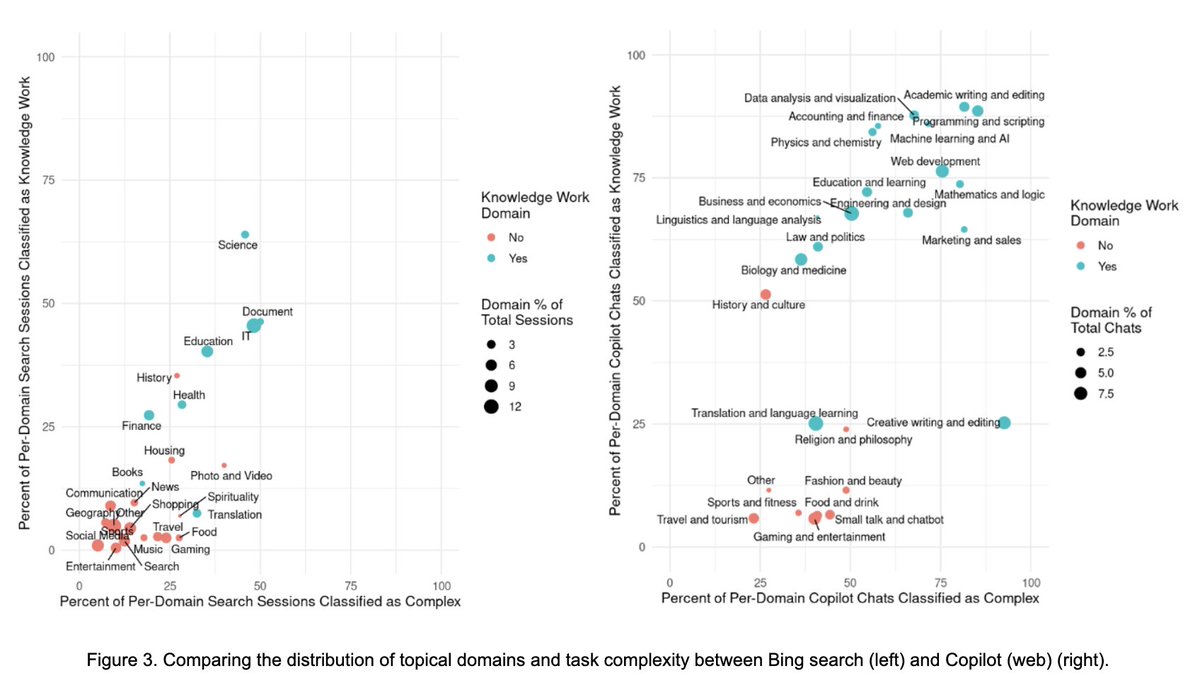
Learning from interaction is different from learning from annotations. Today we are excited to share how we are starting to learn from people's interactions to understand and improve Copilot (web) for our consumer customers:
https://t.co/XgKQw0V5XO
#Microsoft#Copilot#Bing
🚩Exciting foundational work towards building an ever-improving interactive agent:
- Identifying user intents/tasks and
- Inferencing user satisfaction
Both from unstructured chat logs are necessary first-steps for self-improving.
Esp. found this fig of how ppl are actually using llms intriguing
So far there are quite a few scaling law papers; almost all of them use different function forms for the same loss, yet all the curve fitting look quite well. I'll buy a coffee for someone who writes a blog comparing all the scaling laws and suggesting the most reasonable one 🤔
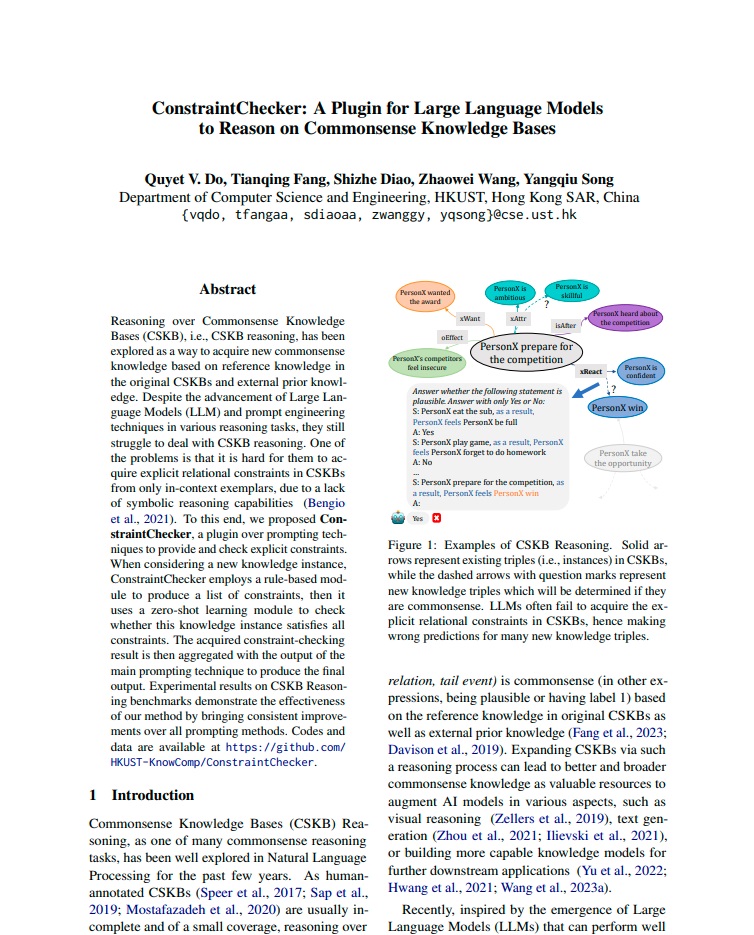
📢 Glad to share our research accepted at #EACL2024@eaclmeeting on addressing Large Language Models' (LLMs) ignorance about relational constraints with "ConstraintChecker: A Plugin for Large Language Models to Reason on Commonsense Knowledge Bases"
Excited to announce our NeurIPS paper on for querying KGs and improving logical inference! Traditional approaches mainly focus on entity KGs, but in the real world, we need to reason about events, states, and activities too. #NeurIPS2023#KnowledgeGraphs#LogicalInference