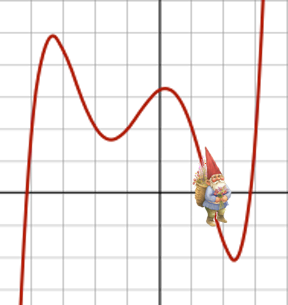
The answer to #10 is 3. I got this by finding the slope between point f(1) and f(3) since they are both equidistant from f(2) their slope is equal to the instantaneous velocity at x=2. @ChiversDHS
My inspiration would be my parents because they have always been there for me along with each other. They are two very kind people who I can rely on.
@ChiversDHS #duxprecalc
good thing mr. CHivers posted a notes video while he was absent so we don't fall behind. Now that is a prepared teacher, am I right? #cosine#blessed#duxprecalc @ChiversDHS
For question 4 on section 3, if the investment has interest that is compounded continually then why did the answer key divide the rate and time by 4? Isn't it not quarterly anymore when it is said to be continuous? @ChiversDHS #duxprecalc
For the answer for #12 on the unit 2 section, shouldn't the result of (24-x)(1000+100x) = -100x^2+1400x+2400 not -100x^2+1600x+2400 @ChiversDHS #duxprecalc
FOr homework when it says to do 25-101 every four does that mean we number 25 then number 28... or number 25 then 29.. @ChiversDHS #duxprecalc
this may not make sense hahaaha i'm just confused
We learned the base formula for exponential growth or decay. This is:
The total amount= the initial amount (1 plus or minus rate in decimal from) to the power of the amount of time @ChiversDHS #duxprecalc