Radiation Oncologist / Hepatologist | Chief physician, QST Hospital, National Institutes for Quantum Science and Technology | father of two | views are my own
Awesome job 😎😍
Development of a deep learning-based model to evaluate changes during radiotherapy using cervical cancer digital pathology https://t.co/lt1MiEzu2p
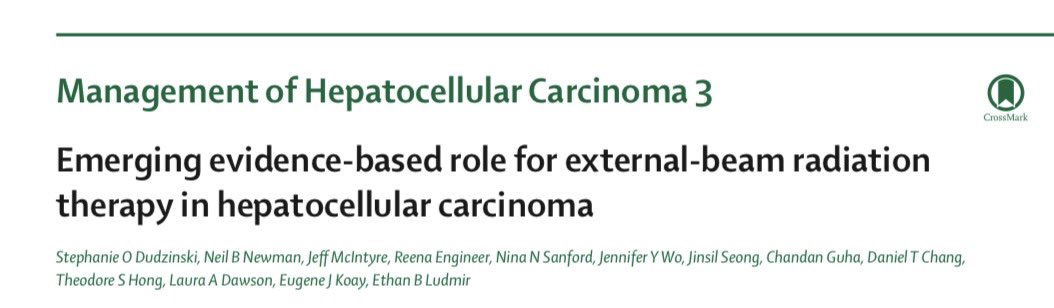
Our incredible GI leaders paving the path for EBRT in HCC. Published in @LancetGastroHep
“Compelling new randomised controlled trial results support that future hepatocellular carcinoma guidelines should include EBRT”. See figure.
@StephDudzinski, you’re a superstar!
Congrats 🎉
So yes, we all knew, and hopefully the world knows SBRT has better LC. LF is a known OS risk factor but for some reason we fail repeatedly to show superior OS.
Not quite sure why, but we really need to think into this to sell RT to our hepatologist colleagues.
Our meta-analysis comparing EBRT & TACE for HCC is here in @JournalCancer ! (Spoiler: RT benefits patients in LC and PFS)
Thank you so much @nbn426 for being such an incredible mentor and guiding me every step of the way on the project!
https://t.co/0kCQB4cA0x
@5_utr@jryckman3 Well if that’s the case, SBRT would be a great option. But that’s not because SBRT is a better treatment, it’s just a better fit for your current infrastructure.
@drjamesgood@jryckman3 I understand there are facilities like yours that just do it right but most response I get is
I don’t have any experience in respiratory gating but… or
How much is the throughput decrease with gating? or
What’s the problem with enlarging the PTV? Does it actually affect outcome?
@jryckman3 It doesn’t require anything special. All we need to do is stick to the basics and don’t cut corners. I’m fortunate I didn’t need to do anything to achieve the current results but I now see that’s not the norm outside of my bubble 😅
@jryckman3@nbn426@BrandonMeyersMD Obstructing, of course. But that’s not because of rt, it’s because of successful LRT.
Also I prefer mALBI for these sort of analyses. GSA even better but that costs a bit and can’t be frequently done.
@jryckman3@nbn426 It would be awesome if ultra low dose to the liver has positive remodeling effects but base on the data we have, doesn’t seem to be the case. Need to ask Takeda sensei on this.
@jryckman3 Liver SBRT is, if done correctly, a very good option. Not so sure if I would say it can replace RFA/MWA but sure is an alternative option.
The problem is that no many of us do it right…
@jryckman3 Last year ESTRO a C-ion facility was presenting a HCC case, when I asked why their PTV was so large, they went err ahhh no respiratory gating…
I also had some chat with people from SRT liniacs when I was at ASTRO, they also had the same concern.😕
Really surprised to see many comments agreeing with the interpretation of the results.
I understand it’s inline with the agenda of a lot of radoncs in the States but…
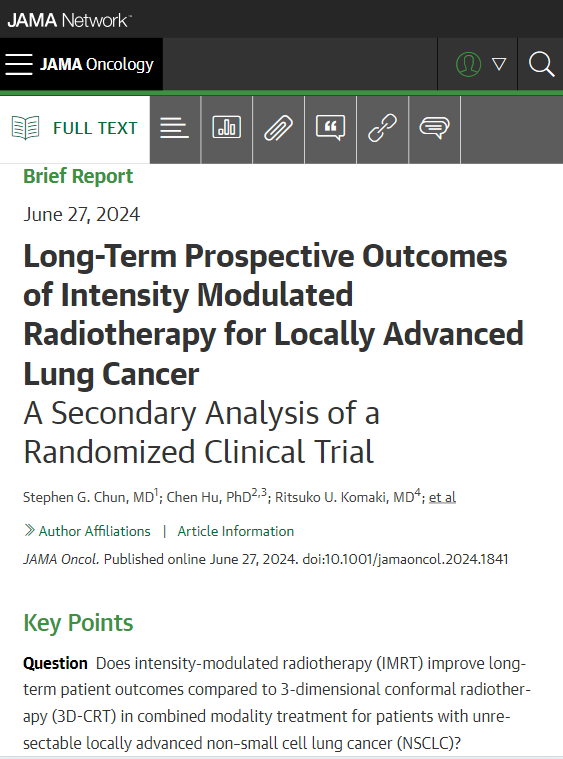
Improvements in radiation using IMRT translated into less pneumonitis for locally-advanced NSCLC in NRG Oncology-RTOG 0617 compared to 3D-CRT. Planning should minimize the heart V40Gy and lung V20Gy, as the lung V5Gy had no long-term impact on outcome. https://t.co/7g07ihcp1X
@Xristodouleas Well, considering all the labor I put in for a HCC SBRT case, I'm not quite sure if I'm saving labor time compared to RFA.🤣
As I said above, HCC SBRT is not easy. It's not rocket science, but it's very very unforgiving when you start cutting corners.