Token $STRX option as gas on Ondo,Robinhood,xStocks tokenized assets.
+
STRX buy/burn as PoI on CMC Markets $CMCX own #tokenization Stocks,CFDs,Commodities. In TradeStrike V1 - V1.5.
A wallet buying ONDO stock with StrikeX as gas👀
+ StrikeX wallet (that tokenized CMCX and Crude Brent oil..) is multichain and bought RobinHood stock, also that same wallet is sending USDC to Solano that bought Xstocks.
If a CMC client can legally hold that stock token in its region, TradeStrike can route it, and STRX can be the gas and the fee. Ondo, xStocks, Robinhood, or StrikeX POI: same app, same meter. STRX bills the trade. CMC clients will have access to tokenized stocks in any region while still using STRX.
Looks like #StrikeX POI is being tested right now, with tokenized $AAPL.
With smart querys in "dune" and AI i was able to find a path of wallets connected to $STRX and this new Apple token. + same minute: Mints on Arbitrum, and a STRX token burn hits Eth same time.
Since eth burn wallet woke up, their has been none stop STRX burns🤩
I partly agree with @vladtenev
The issue is whether people clearly understand what they’re actually buying, what rights come with it, who is making the claims and whether those claims can actually be verified
This whole debate has become far too binary. At one end you have @carlosdomingo championing native onchain issuance. At the other, Vlad arguing that issuer approval shouldn’t be needed where existing shareholder rights remain unchanged.
My foot is firmly in neither camp.
Yes native issuance may is the gold standard, the
North Star, but it isn’t the only model with value. A derivative or tokenised interest can still give people credible access to high-quality assets, provided the legal structure, backing, risks and limitations are made completely clear.
This is exactly why we built Proof of Integrity.
Cryptographically verifiable proof of
who made the claim, what evidence they committed to, which rules applied and whether a mint was authorised under those rules when it happened.
Tamper-evident history they can independently inspect instead of simply being asked to trust the issuer.
Tokenisation should fix the opacity of legacy markets, not bring it onchain.
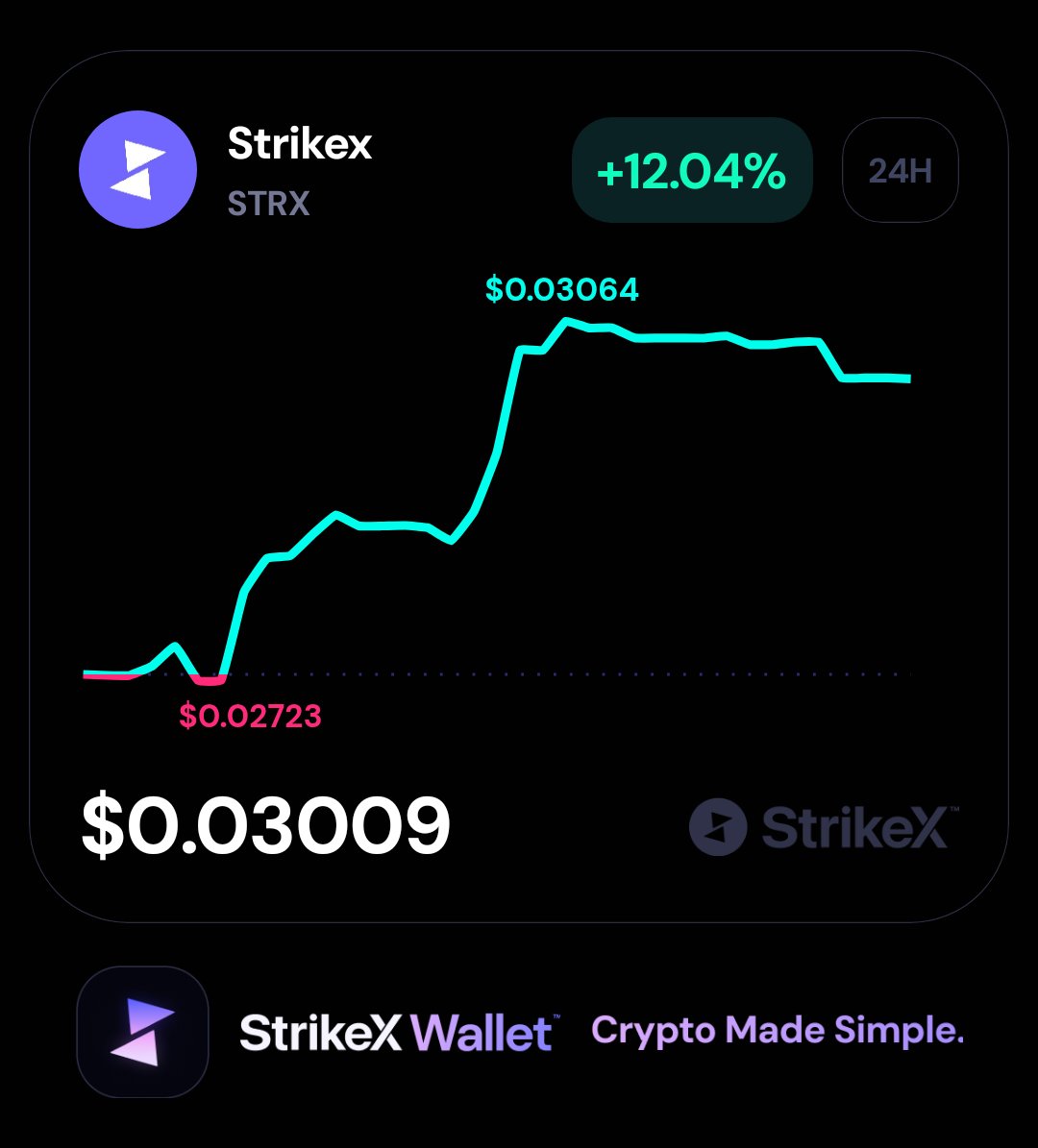
StrikeX top weekly #RWA Real World Asset gainer $STRX 🔥
v0.5 Tradestrike gas abstraction out of beta ANY DAY NOW – STRX token utility live soon.
Bullish AB=CD harmonic forming, target a new floor of ~$0.04 from now to next month.🎯
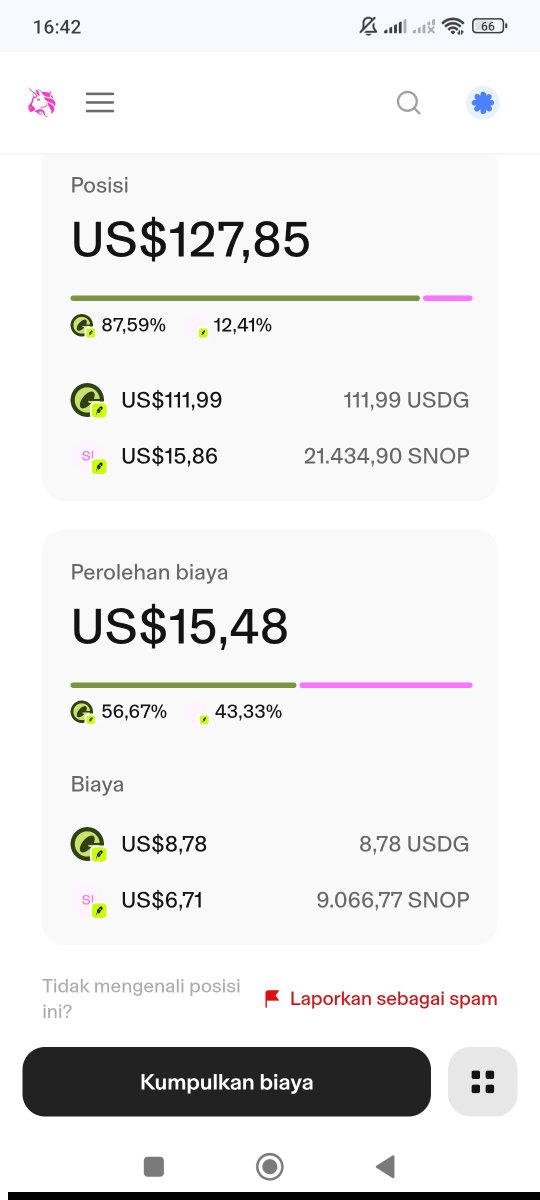
🐊 Just checked my wallet and I'm officially part of the $CHOMP community!
I'm eligible for the CHOMP DROP and have been allocated 12,921 $CHOMP tokens. 🐊
Check your own wallet to see if you're eligible:
https://t.co/Y5LKkEDR3U
#CHOMP
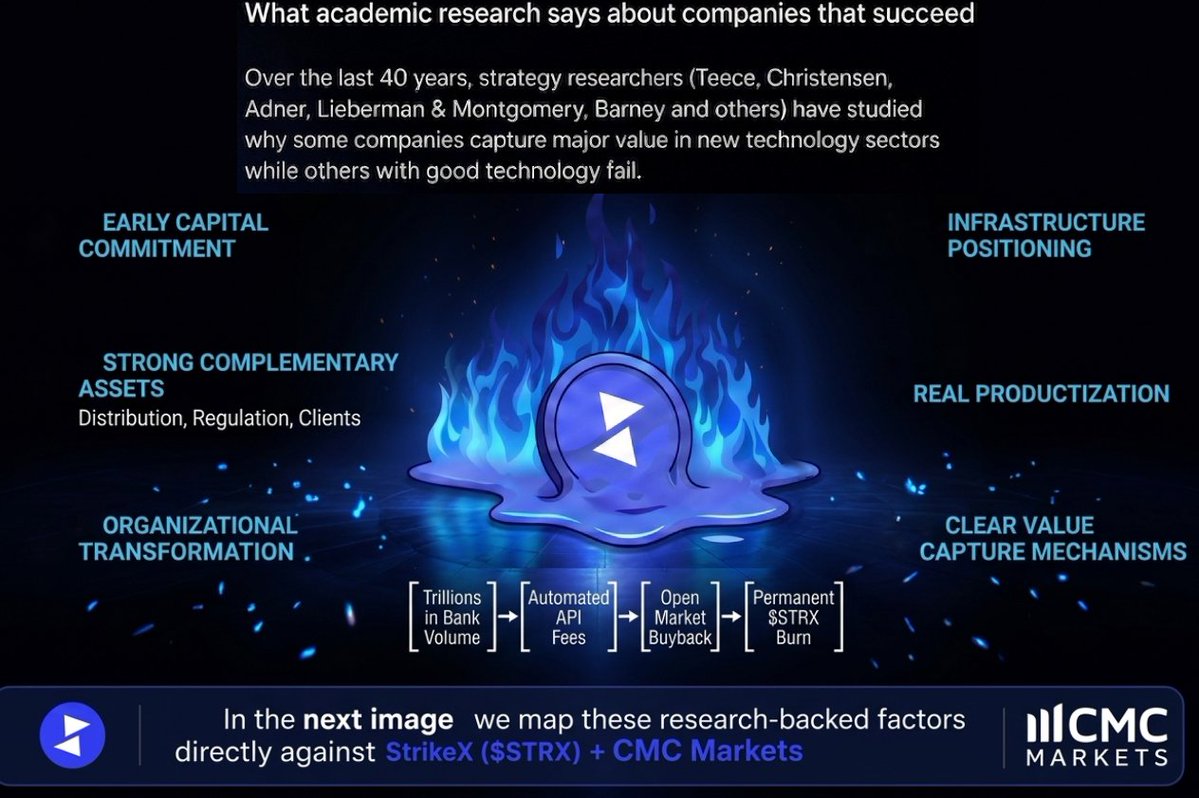
Finance researchers spend 40 years on why some companies capture major value in new tech sectors.
Those studies and papers suggest that CMC Markets #CMCX using StrikeX $STRX tech could succeed and become a major player in the upcoming trillions dollar #RWA tokenization sector..
1. Early sensing + capital commitment
Primary source: Teece (2007) – Dynamic Capabilities
CMC invested early (2023) and raised to 51% control in 2025 of StrikeX. And stated very early on that tokenization has the same future as the internet mid-1990s.
2. Distribution + regulatory positioning
Primary source: Teece (1986) – Complementary Assets
CMC has already started offering StrikeX tokenization technology to 400+ partners. CMC supplies regulated platforms, custody, clients and institutional credibility in CMC across 13+ regions and has publicly stated it is positioning to lead the tokenization space.
3. Organizational transformation
Primary source: Christensen (1997) + Teece transforming
CMC is building a multi-asset super-app where tokenized assets (stocks, CFDs, ETFs, commodities, equities, real estate,...) will sit alongside traditional products all powered on STRX token.
4. Ecosystem / infrastructure ambition
Primary source: Adner & Kapoor (2010)
CMC wants to migrate its entire ecosystem onto StrikeX tokenization web3 rails. And be the go to infrastructure for institutions wanting to use tokenized assets.
5. Productization
Primary source: Eisenhardt nascent-market research + Teece
They have already completed a live regulated UK tokenised-share issuance on Arbitrum (October 2025). StrikeX v1 should be release soon including tokenized stocks... the same tech 2 million cmc clients get access to.
6. Monetization
Primary source: Teece (1986) – Appropriability
Every PoI commit and trade settles through STRX and is burned on-chain, creating a direct volume-to-token link. Every tokenized trade outside of POI will also use the STRX token.
7. Network effects
Primary source: Katz & Shapiro + later empirical network research
More assets on the rails increase network and participants... For example because of CMC tokenized (stocks, CFDs, ETFs, commodities, equities, real estate,....)
8. Market shaping
Primary source: Nenonen et al. market-shaping research
CMC + StrikeX are helping define institutional settlement standards rather than only selling into an existing market.
9. Early Scaler advantage
Primary source: Lieberman & Montgomery (1988/1998)
Being early is only powerful when combined with strong complementary assets, exactly the CMC + StrikeX combination.
10. Resource inimitability
Primary source: Barney (1991) – VRIN framework
regulated multi 13 region distribution + the specialized StrikeX tokenization is a dominating combination.
11. Platform tipping potential
Primary source: Platform economics literature
Once enough volume and assets start flowing through the StrikeX rails, the platform can reach a tipping point where it becomes significantly more attractive for new users and institutions to join — creating a self-reinforcing growth loop.
12. Long-term optionality
Primary source: Real options thinking in strategy research
Even a 1% capture of the projected sector would put significant long-term value on STRX token.
Difference between tradestrike app $STRX tokenization #RWA utility with their own product vs. Different issuers:
1. StrikeX’s own tokenized stocks (StrikeX / CMC hybrid products)
Uses the StrikeX Tokenisation Engine.
Every Proof of Integrity (PoI) commit and batch anchor consumes STRX from a provider credit vault.
The consumed STRX is burned.
This is on top of the normal blockchain gas fee.
This is the official, documented utility of STRX right now.
2. Third-party products issuers:
These tokens are already issued by another company.
They are just being accessed or traded inside the StrikeX TradeStrike interface.
Forcing STRX as the gas.
Institutional adoption has repeatedly produced violent repricings👇
$CMCX $40 Billion daily volume migration to $STRX token will be the trigger.
the market historically underreacts until utility materializes, the masses do not realise that #StrikeX with CMC Markets are next..
Aave (AAVE): Before utility the LEND token traded between $0.01 and $0.05; after the October 2020 100:1 supply compression and Safety Module staking lockup the price reached an all-time high of $666.86.
Quant (QNT): Before utility the token traded between $0.21 and $2.00; after the January 2021 Overledger MainNet interoperability launch and mandatory institutional licensing fees the price reached an all-time high of $427.42.
Injective (INJ): Before utility the token traded between $1.23 and $1.40; after the August 2023 Burn 2.0 mechanism directing 60 % of dApp fees to programmatic buy-and-burn the price reached an all-time high of $45.00.
Synthetix (SNX): Before utility the Havven token traded at $0.03; after the late-2018 rebrand with mandatory overcollateralised staking and the 2023 cessation of inflation the price reached an all-time high of $28.77.