There has been a temporary telecommunications outage - out of an abundance of caution all flights have been halted. Every flight has been accounted for and international flights will be handled on a case by case basis.
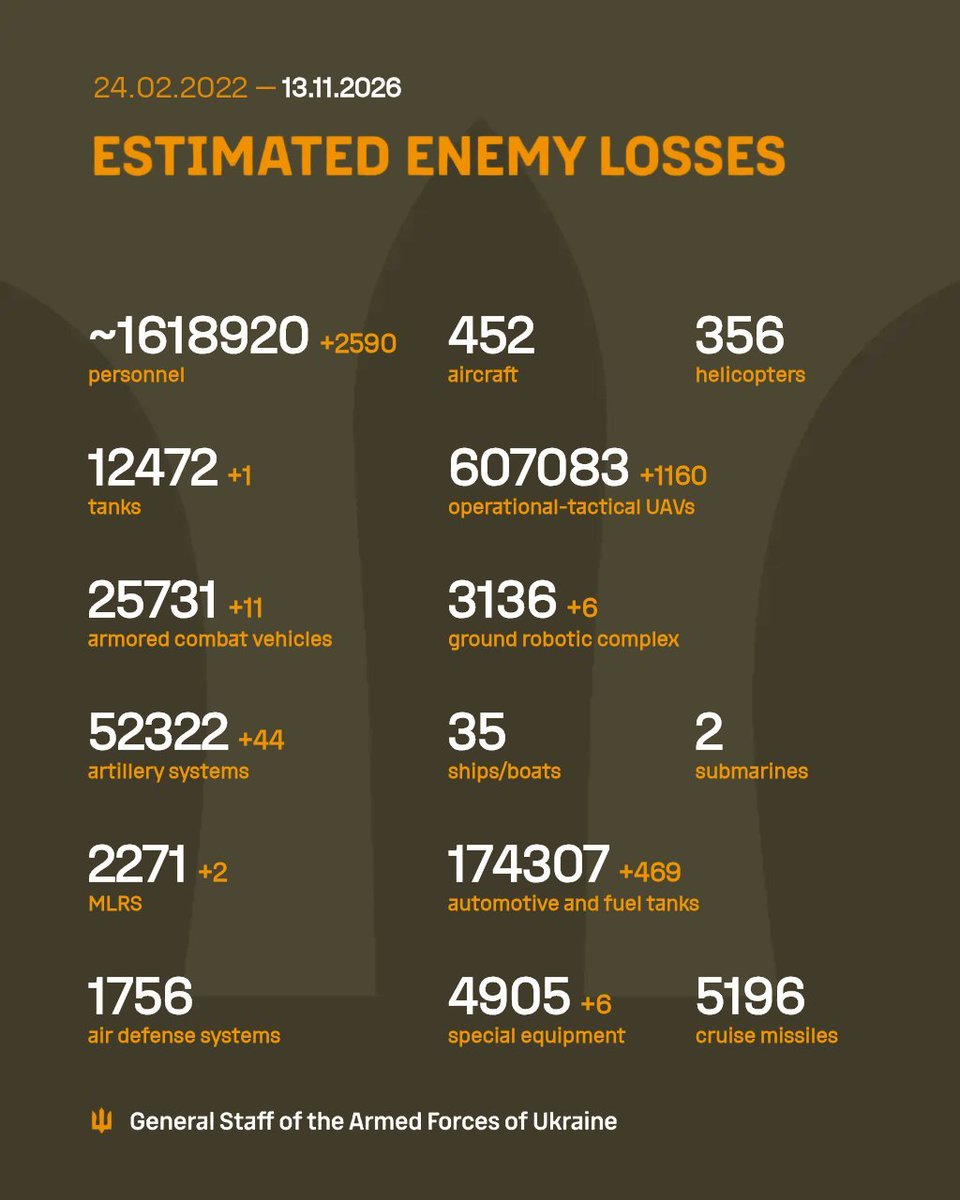
Record after record as Ukrainian Forces continue to man-handle the rapidly depleting Russian army.
With today's 2nd all-time highest Russian personnel losses, all top ten days have now occurred within 2026.
Putin has lost nearly half his army in Donbas
Nearly 40% of all Russian military deaths have occurred in battles for Avdiivka, Pokrovsk and Bakhmut.
According to the Financial Times, more than 120,000 Russian troops were killed near Avdiivka and Pokrovsk, with another 48,000 killed near Bakhmut.
Combined, these figures account for approximately 37% of all Russian military deaths in the war, which the FT estimates at between 450,000 and 464,000 at a minimum.
The publication estimates that, including unreported deaths, the total number of Russian troops killed could have reached 550,000 by August 2026.
If the current rate continues, the figure could rise to 650,000 by the end of the year.
The figure of 1.2 million Russian casualties published by the US-based CSIS in January 2026 includes not only those killed but also wounded and missing personnel.
These figures are approximate estimates. The actual death toll could be higher.
🇷🇺 RUSSIAN GENERAL WHO WARNED AGAINST INVADING UKRAINE NOW SAYS PUTIN IS DESTROYING RUSSIA 🇺🇦
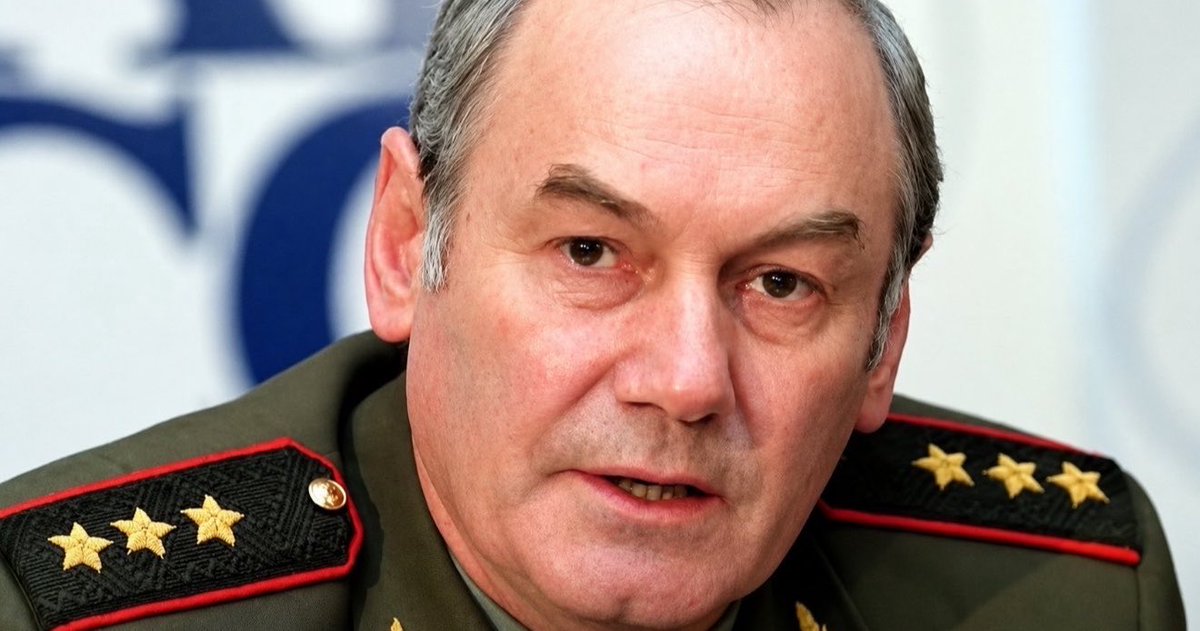
Retired Russian General Leonid Ivashov warned against invading Ukraine before the war began. Nearly four years later, his assessment of Vladimir Putin and the state of Russia is devastating.
Ivashov, a former senior military officer and longtime geopolitical analyst, has accused Putin of living in a fantasy while ordinary Russians struggle with poverty, rising prices and deteriorating public services.
“I saw neither a leader, nor a commander, nor a defender of the people. I saw only a man living in a fairy tale, while the rest of the country is trying to survive on 16,000 rubles a month.”
His criticism extends far beyond Russia’s military performance in Ukraine.
Ivashov argues that the war has exposed serious weaknesses across the Russian state. He points to declining industrial capacity, underfunded healthcare, problems in education and scientific research, and an economy increasingly unable to deliver improvements in ordinary people’s lives.
He is particularly concerned about Russia’s demographic decline. The loss of working-age men, combined with an ageing population and longstanding demographic pressures, could leave consequences that persist long after the fighting ends.
Nor does he share the Kremlin’s confidence in its international partnerships.
Ivashov questions how much Belarus and North Korea can realistically contribute to Russia’s long-term stability. He also rejects the idea that China’s economic relationship with Moscow makes Beijing a dependable military ally.
His most serious warning concerns Russia’s future as a state. Ivashov believes a strategic defeat in Ukraine could eventually threaten the Russian Federation’s political and territorial integrity.
What makes his criticism significant is his background.
Ivashov spent decades within Russia’s military establishment. In February 2022, before the full-scale invasion, he publicly warned that war with Ukraine would damage Russia’s security, international standing and future.
He was not predicting a quick Russian victory. He was warning Putin against starting the war at all.
Now, almost four years later, he sees a country paying an enormous price for the decision he opposed from the beginning.