Hoy en la cena un amigo me preguntó hasta qué precio pienso que llegará #Bitcoin en el futuro
$100 mil? $500 mil? $1 millón? $10 millones?
Yo solo dije, #Bitcoin nunca dejará de subir de precio
Como así? Explícame eso 🤯 me contestó mi amigo
Sencillo, le dije. No existe escasez de activos en el universo
Nuestra percepción de escasez se debe a limitaciones tecnológicas para acceder a ellos
Las frutas eran escasas hasta que se inventó la escalera
Los libros eran escasos hasta que se inventó la fotocopiadora
El agua dulce es escasa hasta que perfeccionemos la tecnología para desalinizar el agua salada
El oro es escaso en el planeta tierra, hasta que consigamos minar oro en asteroides (idea de Elon Musk)
El petróleo era escaso hasta que se inventó el fraking
La única limitación para acceder a la abundancia es el estado actual de nuestro avance tecnológico
Pero solo existirán 21 millones de #Bitcoin en todo el universo, sin importar el año o nuestro avance tecnológico
#Bitcoin es escasez absoluta en un universo lleno de abundancia
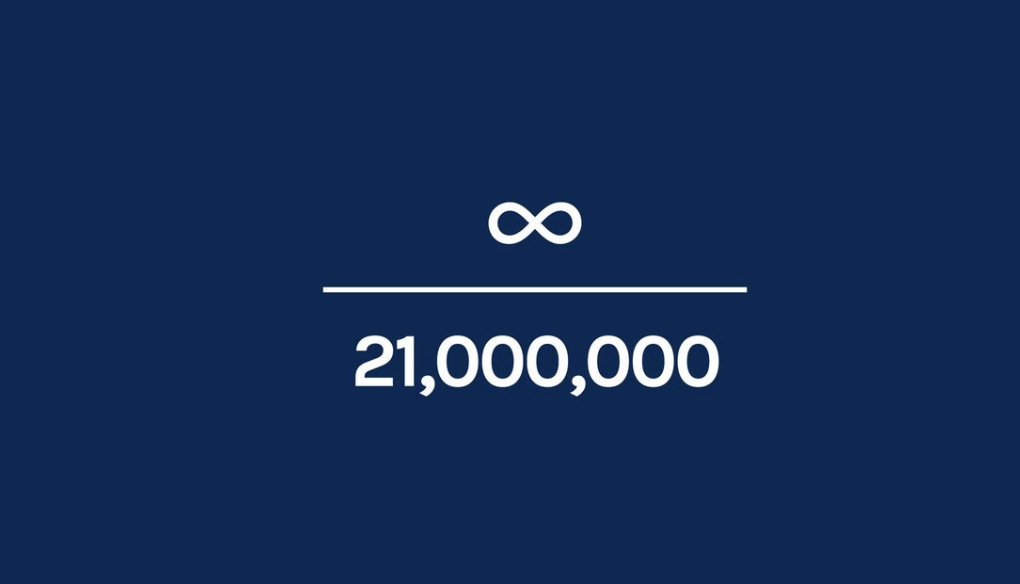
Por ello, el precio de #Bitcoin se calculará dividiendo la riqueza universal, (siempre en expansión) entre 21 millones de #Bitcoin
Los activos escasos siempre subirán de precio en un mundo de abundancia. Por ello, #Bitcoin subirá de precio para siempre
I'm a cardiologist. I've held dying hearts in my hands in the cath lab at 3 AM. And I need to tell you something that changes everything about how we prevent heart attacks.
For decades, the entire field was built on one target: lower LDL cholesterol. Statins save lives — that's settled science. But too many of my patients did everything right — took their statins, hit their numbers, lived clean — and still ended up on my table with a ruptured artery.
We were treating the smoke while the fire kept burning.
The fire is inflammation. And the evidence is now overwhelming.
The CANTOS trial proved it first — lowering inflammation independent of cholesterol reduced cardiac events. But the newer data is what keeps me up at night.
AI-enhanced CT angiography can now detect inflamed arteries by measuring changes in the fat surrounding your coronary vessels — the perivascular fat attenuation index. Higher inflammation in the fat around even one artery independently predicts cardiac death. When multiple arteries show inflammation, the risk multiplies dramatically — even in patients whose cholesterol looks perfect.
This isn't theoretical. This is measurable. Right now. On a scan you can get this month.
Low-dose colchicine — a drug that's been around for centuries for gout — is now FDA-approved specifically for reducing cardiovascular events. It works by quieting the inflammatory cascade that destabilizes the plaque sitting in your arteries. A pill that costs pennies is saving lives the statins couldn't reach.
And the next wave is already in Phase 3 trials. Ziltivekimab — an IL-6 inhibitor — targets the central inflammatory pathway driving atherosclerosis. Phase 2 data showed a 90% reduction in hsCRP. The ZEUS cardiovascular outcomes trial is enrolling now, with results expected late 2026 into 2027. If positive, anti-inflammatory therapy will become standard in managing heart disease alongside lipid-lowering. The era of inflammation-targeted cardiology is arriving.
But it goes deeper than drugs. AI is now predicting heart failure and cardiac events 5+ years before symptoms — integrating CT imaging, electronic health records, and genetic data with accuracy that jumps far beyond traditional risk calculators.
And polygenic risk scores — a simple genetic test that flags inherited cardiovascular risk — are now formally recognized as a risk-enhancing factor in the 2026 ACC/AHA guidelines. A single blood draw can reveal risk that's been silently building since birth. Decades before the first chest pain.
Here's what this means for you right now — today:
Ask your doctor for a high-sensitivity CRP test. It's cheap, routine, and measures the systemic inflammation that standard cholesterol panels completely miss. You can have perfect LDL and inflamed arteries that are quietly preparing to rupture.
If your hsCRP is elevated, discuss low-dose colchicine with your physician. It's FDA-approved for exactly this.
Push for a coronary CT angiography with AI plaque and inflammation analysis if you have risk factors. This isn't the stress test your parents got. This is 3D visualization of your actual arteries — with AI quantifying not just how much plaque you have, but what kind it is and whether the surrounding tissue is inflamed.
Consider polygenic risk score testing — especially with a family history of early heart disease. It's now guideline-supported.
And the foundation that never changes: move daily, eat real food, sleep 7-9 hours, manage stress, and know your numbers — ApoB, Lp(a), hsCRP, fasting insulin.
I left Iran as a child with nothing. I rebuilt everything in a country that gave me the freedom to become a physician. I've spent twenty years watching patients get second chances.
The ones who haunt me aren't the ones who died on my table. They're the ones who survived but never acted on what the science was telling them — years before the event that didn't have to happen.
You can have perfect cholesterol and still have a heart attack. Inflammation plus genetics can drive plaque rupture in arteries that look "fine" on a standard panel.
The myth that normal cholesterol means you're safe has cost more lives than I can count.
We now have the tools to detect the fire — not just the smoke. AI to see it. Genetics to predict it. Drugs to quiet it. And the ancient basics — movement, real food, sleep, purpose — to prevent it from starting.
Prevention is the new cure. And the science to make it real is no longer coming.
It's here.
Thank you, Abdiel Santiago, for such generous and meaningful words.
Serving as Interim Secretariat of the Fondo de Ahorro de Panamá during this transition has been a true honor. I am grateful to the Board for the confidence placed in me, and especially grateful to the FAP team for their professionalism, dedication, and commitment during these months.
I also want to congratulate Victor Mojica Caballero on his appointment. Víctor has an outstanding professional trajectory and the experience needed to guide the Fund through this important stage. I wish him great success and look forward to supporting him as we continue building on the strong institutional foundation of the FAP.
The Fund has crossed an important threshold, with more than B/. 3 billion in assets under management, and the decisions ahead will matter deeply for Panama’s financial future. From my role as Chief Investment Officer, I remain fully committed to contributing to that mission with discipline, integrity, and a long-term perspective.
Congratulations, Víctor, and thank you again, Abdiel.
En días pasados participé como orador en el Foro 2026 de la Asociación Panameña de Mercado de Capitales (APAMEC) en mi rol de CEO (interino) y CIO del Fondo de Ahorro de Panamá
Comparto entrevista que me hizo el Diario La Prensa sobre los resultados del Fondo de Ahorro de Panamá en el 1er trimestre de 2026, marcado por extrema volatilidad en los mercados financieros internacionales
https://t.co/MTOwtTCT5C
Just wrapped up an excellent week in Washington, D.C.!
I had the privilege of attending the World Bank Group RAMP Strategic Asset Allocation (SAA-II) – Fixed Income Portfolios workshop (May 18–22, 2026). It was a highly technical and practical five-day program focused on building a rigorous quantitative foundation for strategic asset allocation in investment-grade fixed-income markets across multiple currencies.
Over the week we covered:
Fixed-income modeling and the Asset Allocation Workbench (AAWB)
Yield curve modeling and Vector Autoregressive (VAR) models
Monte Carlo simulation techniques for fixed-income assets
Forward-looking capital market assumptions and scenario generation
Mean-variance optimization and more advanced portfolio construction methodologies
The format was excellent — a strong mix of theory, hands-on case studies in AAWB, Excel-based analytics, and group work. Day 5 culminated in participant presentations where we each developed and presented our own SAA frameworks — a great way to synthesize everything.
Huge thanks to the World Bank Treasury team (especially Katarzyna Zajdel-Kurowska, Carmen Herrero Montes, Romain Deguest, Elisa Baku and all the other instructors) for the high-quality delivery, and to the RAMP organizers for putting together such a well-structured program.
I came away with sharper tools and clearer frameworks for analyzing fixed-income risk/return characteristics and building robust strategic portfolios. Very timely for the work we are doing now at the Sovereign Wealth Fund of Panama (Fondo de Ahorro de Panamá)
Always grateful for opportunities to learn directly from leading practitioners in public-sector reserve and portfolio management.
#StrategicAssetAllocation #FixedIncome #RAMP #WorldBank #PortfolioOptimization #AssetAllocation #ProfessionalDevelopment #WashingtonDC
Es un honor haber sido invitado por Black Bull Investors Club como orador en su Panama Gathering 2026, que se celebrará el próximo 19 de mayo de 2026. En esta ocasión, conversaré sobre inversiones alternativas —Private Equity, Venture Capital, infraestructura, private credit, hedge funds y real estate— y sobre el rol que desempeñan en la construcción de portafolios de inversión de fondos soberanos y family offices.
Fondo de Ahorro de Panamá (FAP) cerró el año 2025 con $146.8 millones en ganancias y un patrimonio de $3,084.8 millones.
Las inversiones del FAP generaron un 9.08% de retorno.
https://t.co/xPEdJ4vzRA
You're being lied to by a number.
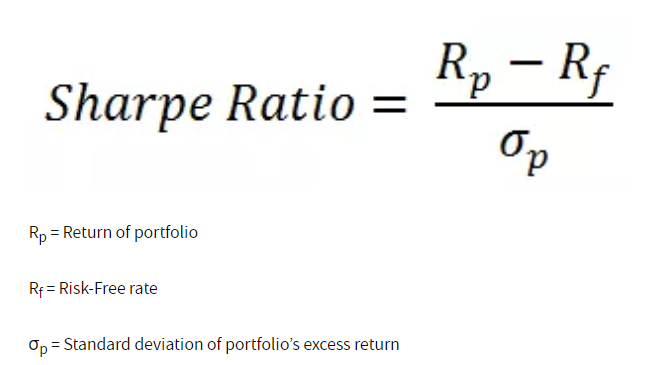
The Sharpe Ratio looks like risk management.
It isn't.
It's a single statistic that hides fat tails, punishes upside, and assumes your returns are normally distributed.
They aren't.
Here's why it breaks — and what professionals use instead:
Ayer recibimos en el Fondo de Ahorro de Panamá a un grupo estudiantil fundadores del The Pan-American Society of Young Investors (Sergio Raskosky, Fernando De Saint Malo, Lucas Castillo y Gabriel Pérez).
Colaboraremos con ellos para expandir la educación financiera en Panamá.