What makes AI Visibility work in real life is the polar opposite of what the original GEO papers' maths describes. GEO of 23/24 literally is a blueprint for scaled content abuse that fails the 3 Laws of AI SEO and is therefore invalid.
Thinking that technical GEO is the same as SEO is actually thinking the exact opposite of what you should be doing.
This is what it looks like when the resolution of the maths is turned up to the max; e.g., this is critically important to understand:
When I first heard about GEO (Generative Engine Optimization), I was working on something I was calling inference optimization (that I changed to creative inference optimization to separate from the tech version).
The process of recursively using AI to create original work using RAG. It is Painting By R.A.G.
I thought GEO was the same as what I was doing. So I looked at the GEO maths. None of it worked in the real world. There was nothing in the paper that even vaguely resembled what I was doing.
The black hats then jump on; they could call Parasite SEO, GEO, too! Inauthentic mentions all around.
The original GEO team were at one end, spinning text and putting a thermometer in your mouth and calling it a rectal exam (with medicine!).
contentEffort is the literal antidote to GEO as described in the original paper.
I rank page 1 on Google for "Content Effort".
I used creative inference optimization, a bit of effort and SEO to do it.
Creative Inference Optimization - a process relying on AI SEO - is not getting repackaged as GEO (as some have tried to within academic infrastructure) just because early GEO folk came up with an acronym describing a hallucinating article spinner thermometer and now somebody, somewhere needs a rectal operation.
GEO isn't a practice; At best, in 2026, its evolved into an abstraction like E-E-A-T.
It had to.
What people thought abstractly was GEO turned out not to be the GEO they were thinking about in their heads. The optimization bit is SEO.
Peer review requested 😂
@lilyraynyc@thefox@rajanpatel Also - you never quite know what it's going to give you (as you are no doubt aware - that bit is for added context for anyone reading).
@lilyraynyc@thefox@rajanpatel Also - yes the aim is clear to basically almost have as many citations as possible in the overview. The citation doesn't necessarily line up with the source. The source text can be used from your page, but all the citations point to more established sites; usually, you get one.
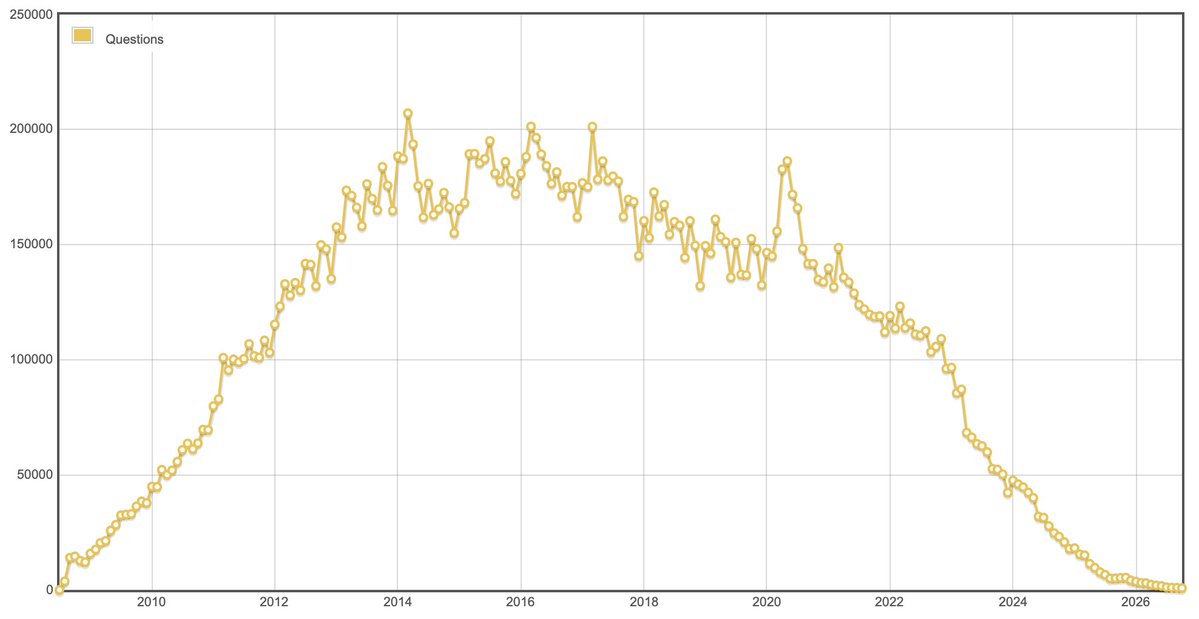
You can almost track the difficulty level of getting clicks to your site from Google through SEO using this chart. Google calls most of that unhelpful, unreliable and commodity content now. Burp!
@johnandrews About a year later, I was sitting in a boardroom as the new creative at an Ad agency and watched how living room furniture was priced and branded. Not that different.
So whats the plan?
My term Creative Inference Optimization (R.A.G. Art) is a publicly available concept I created, so completely what people think GEO (Generative Engine Optimization) is supposed to be that, when an AI was tasked with designing a functional "GEO framework," it evidently had to plagiarise concepts in my August 2025 AI SEO book to have any grounding in reality, and a GEO expert then signed off and submitted it to Academia.
CIO is closer to GEO as a concept than GEO is to its own mathematical origin! But CIO is SEO; that is the difference.
PS "IP Armour" e.g. Creative Inference Optimisation, is actually the only thing that makes it through LLM synthesis other than consensus and authority. Which is how I found out about it. Why do you think I came up with this shit?
Call it Inference Optimisation and Inference Engineering, like me. Call it Relevance Engineering (unsure if it employs the same process or targets naturally). Others have names too. Call it what you want. SEO underpins it all.
The only new paradigm is now your SEO tool pats you on the back! And you can go fast!
No way is the Princeton paper taking credit for stuff they didnt do. You don't get to take credit for the medicine when you're responsible for spreading the disease.
If GEO survives an abstraction, fine by me. But for that to happen, it must dissociate itself from the original paper and the nonsense circulating on those academic sites. Take it up with the maths; I didnt invent it, and have no formal qualifications in it.
GEO - not to be confused with the original debunked Princeton GEO paper of the same name - I think that works... is an abstraction like EEAT... sort of thing.
Simply put: You can't call something optimization when there is no optimization in the process!
The thing doesn't even make sense in English, never mind mathematically (hint: that's when you know the maths will out it!).
There are literally people out there saying they've invented a new paradigm that kills SEO lol (I paraphrase) - and taking credit for it, confusing customers, and we in the real SEO world know it's BS!
We can call that The [Replacement Placeholder] Optimization for New Markets strategy.
I hear you. Conversely, I am also serious, though, that IP Armour idea actually is a real phenomenon.
Thank you @rustybrick for the mention in your newsletter. Still the perhaps only source of wtf is actually going on in this industry as far as the little guy goes. I appreciate it.
AI SEO Laws of Search Motion:
Law #1 (Retrieval Governs Synthesis: If Retrieval = 0, Citation = 0).
Law #2 (The Single-Document Law) proves GEO cannot live as a "generator-only" text rewrite.
Law #3 (The Signal-to-Noise Law) proves that what wins inside the re-ranker and generator is already 100% classical Technical SEO, On-Page AEO, and Digital PR.
https://t.co/adMiOCWKsW