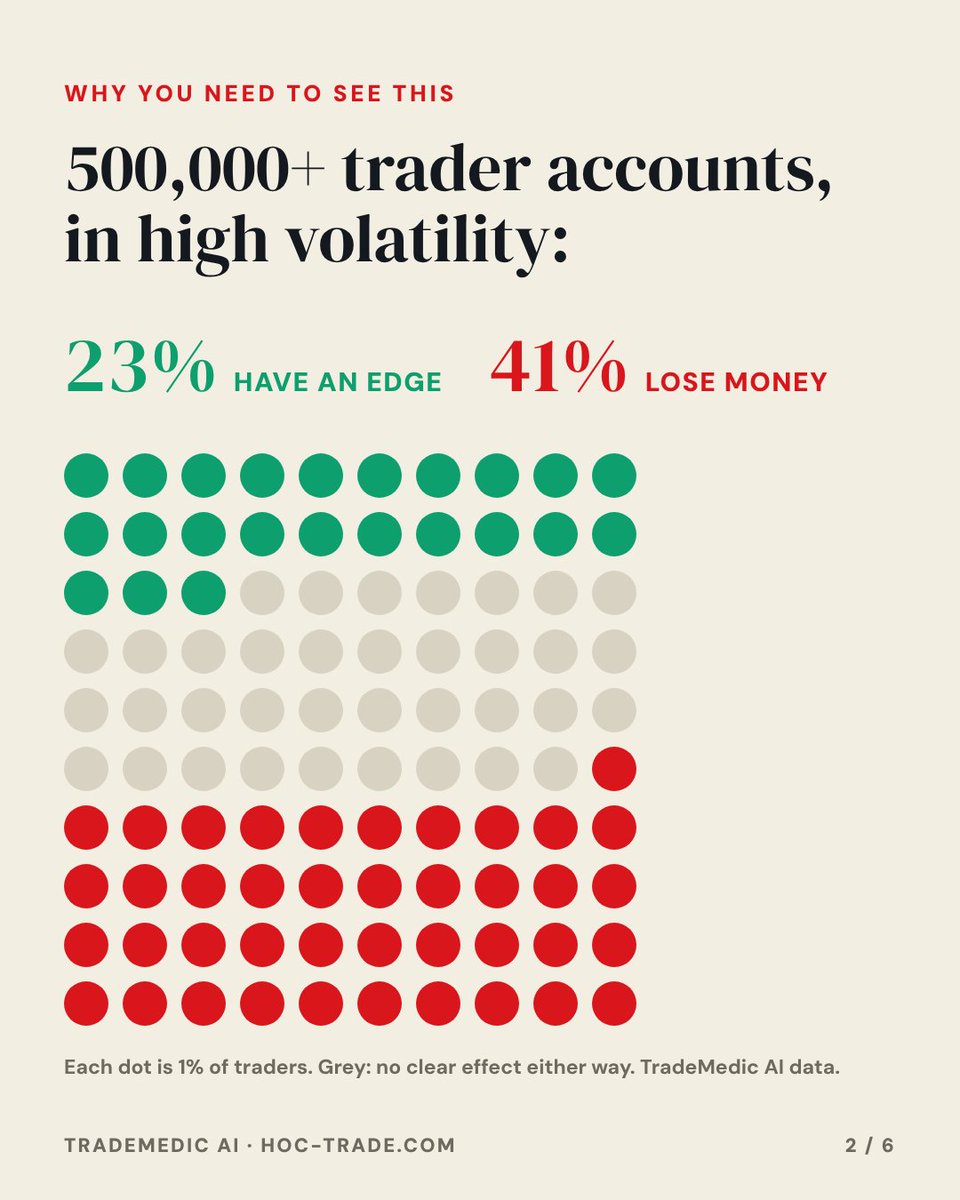
Behavioral AI built on 500,000+ trader accounts.
About 18% of them are net profitable.
TradeMedic™ shows which habits cost you money. Free 3-day trial ↓
52.0% of traders win more than 60% of their trades.
Only 23.7% of those traders are net profitable.
Win rate feels good. Win size pays.
See the patterns behind your own numbers. MT4/MT5, read-only, free for 3 days: https://t.co/R0gN21wGbA
Some traders are a different person at 9 AM and 4 PM.
Your trade history knows which one should be trading.
Find your golden window: https://t.co/NOPmFBGqvv
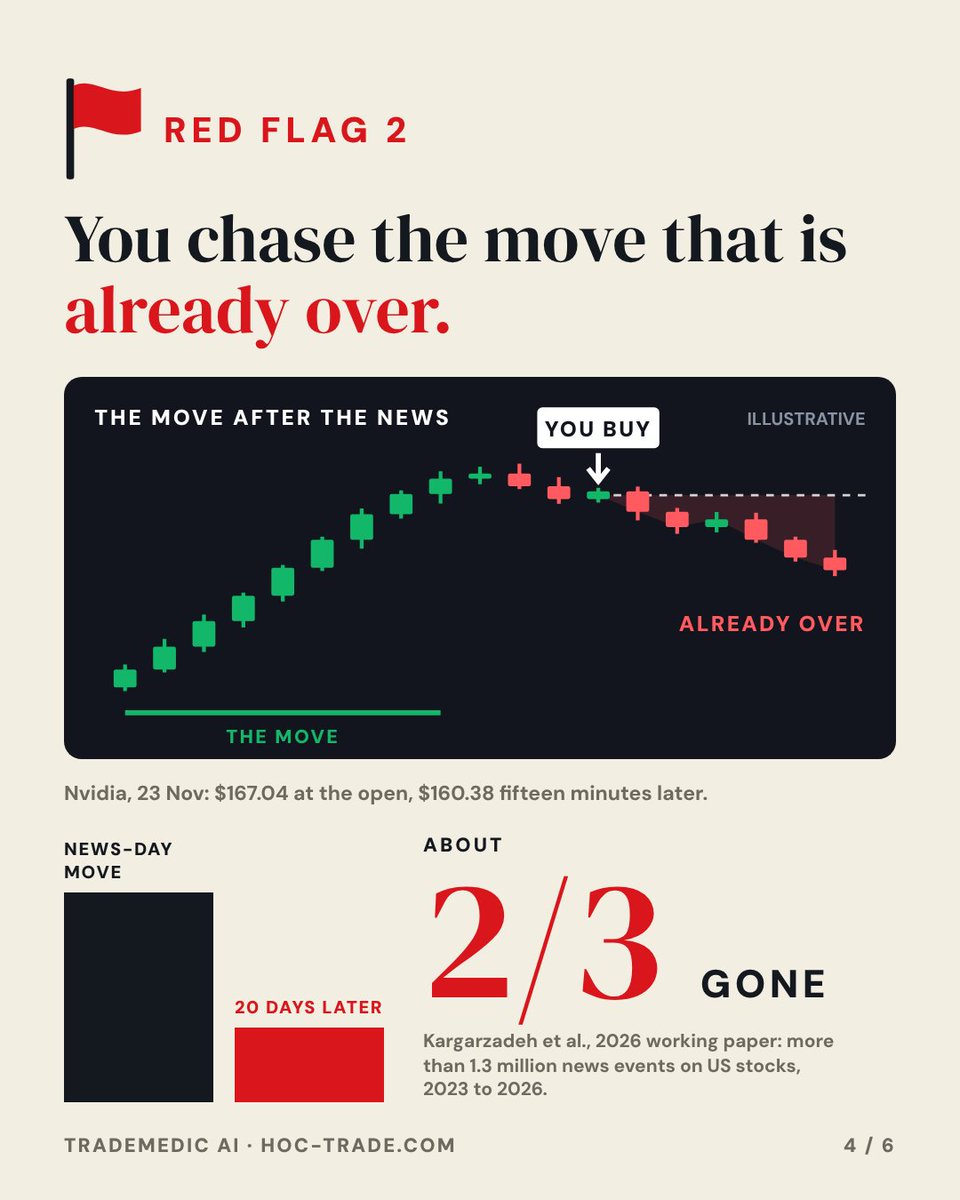
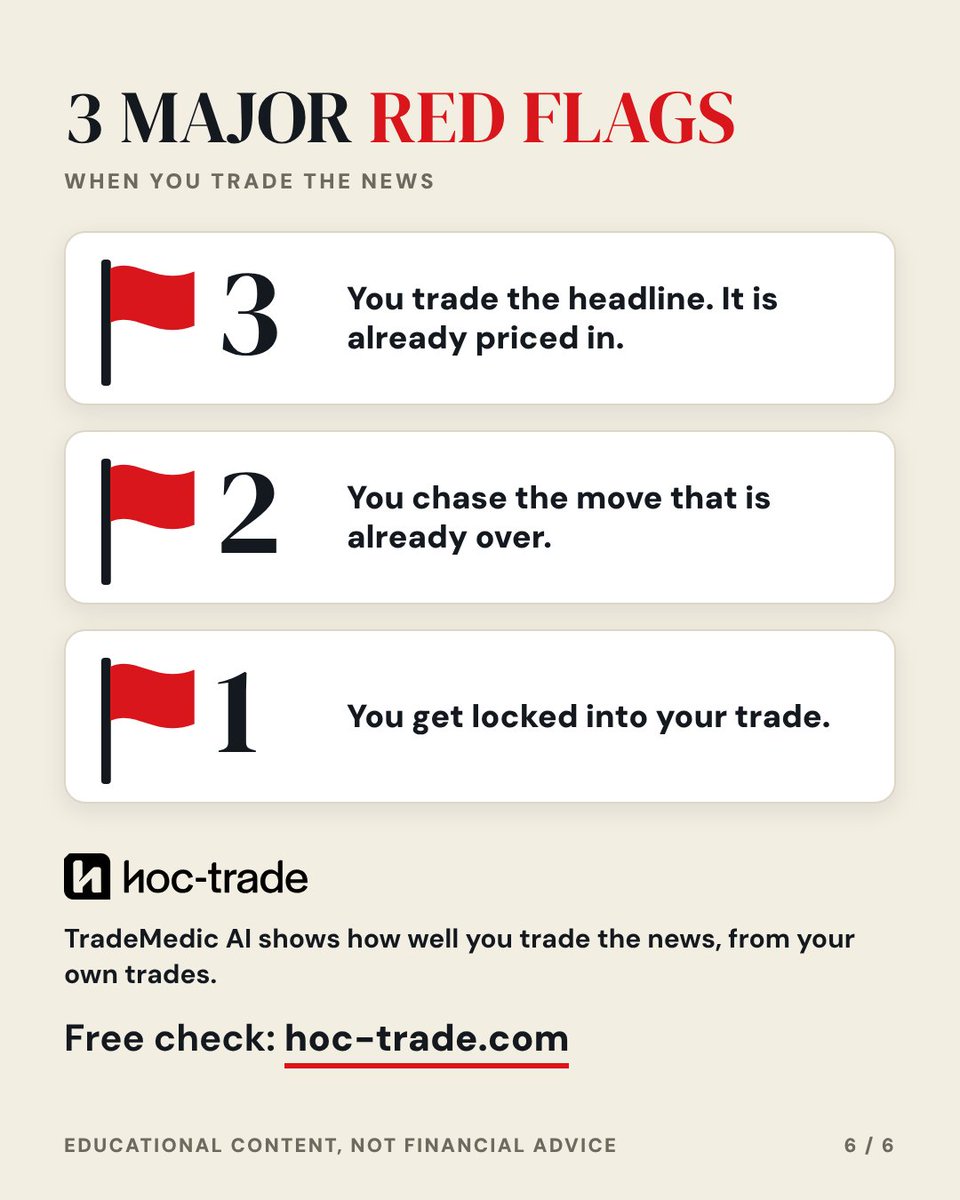
Three major red flags when you trade the news. Number one costs more than any other habit we measured.
Which one is yours?
#Nvidia#Trading#ForexTrading
We've alchemised 500,000+ to mapped out the 24 trading edges.
Now it's fully charged to read yours🪄
Every move told a story. Who stayed calm after a loss. Which hours someone's best trades kept landing in. Who exited at exactly the right moment, again and again.
It's read-only: your investor password lets us read your history, and nothing can ever be placed, changed or closed.
💠 Free to play at https://t.co/VS9CDn3dxO
#trading #tradingpsychology #forex #metatrader
You don't pick your trading superpower. Your trades already spelled it all out for you.
Somewhere in your trading history there's a pattern you've never noticed. A pause after a loss that keeps paying off. An hour of the day your best trades keep landing in. Now all you need is to turn your cards to find out.
💠 What's your ultimate hidden superpower?
@spacemnke Yeah, knowing vs doing is the gap. And it's very widespread. We know not to overtrade, right? But in the 500k+ account dataset I work on, overtrading shows for 49.5% of traders, and when it's someone's #1 issue only about 6% of them end up net profitable. That 4th trade :)
@lordzitu Agree on the hours. What surprised me in the 500k+ account dataset I work on: overtrading gets more common the longer people trade, 15% of accounts under 10 days show it vs 70% past 200 days. It's relative to your own pace, not a set number. Weekly cap or just wait for setups?
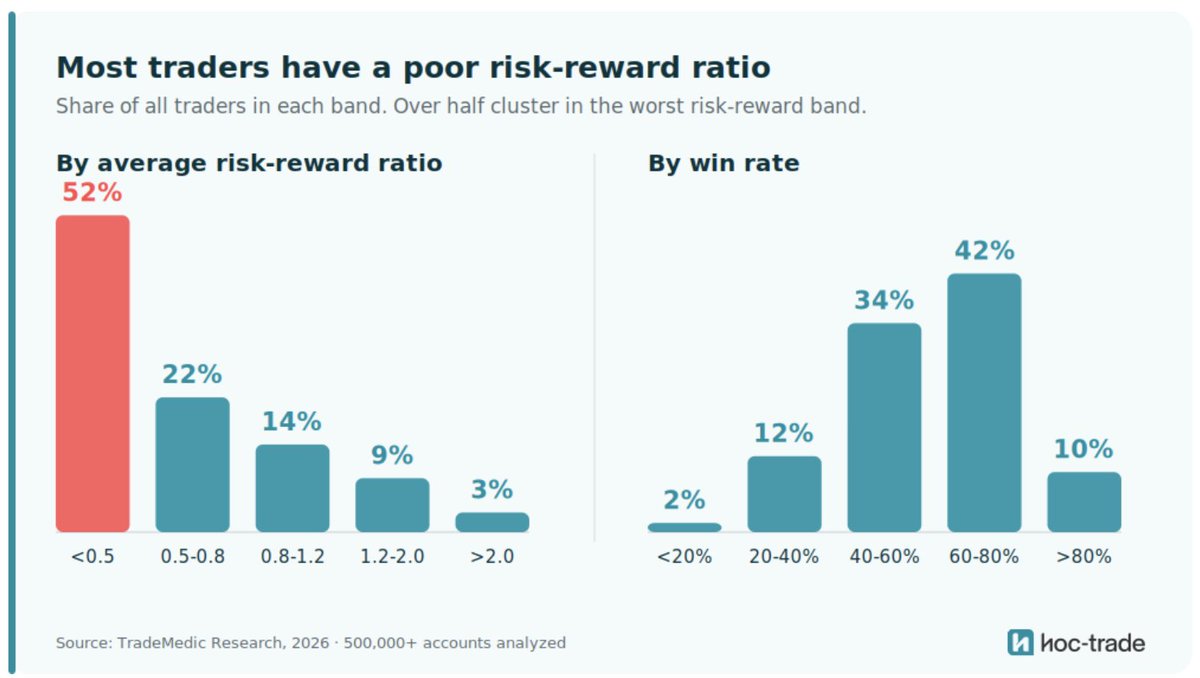
@Hydra_Thahmid Here's our data from 500k trading accounts, broken down by their win rate and RRR. A high win rate is much less indicative of an overall profitable trader than a high RRR is.
So yes, your "low" win rate of 55% fits very well in that picture, as you likely had a high RRR
@fundingpips crypto degens are built differently... :D
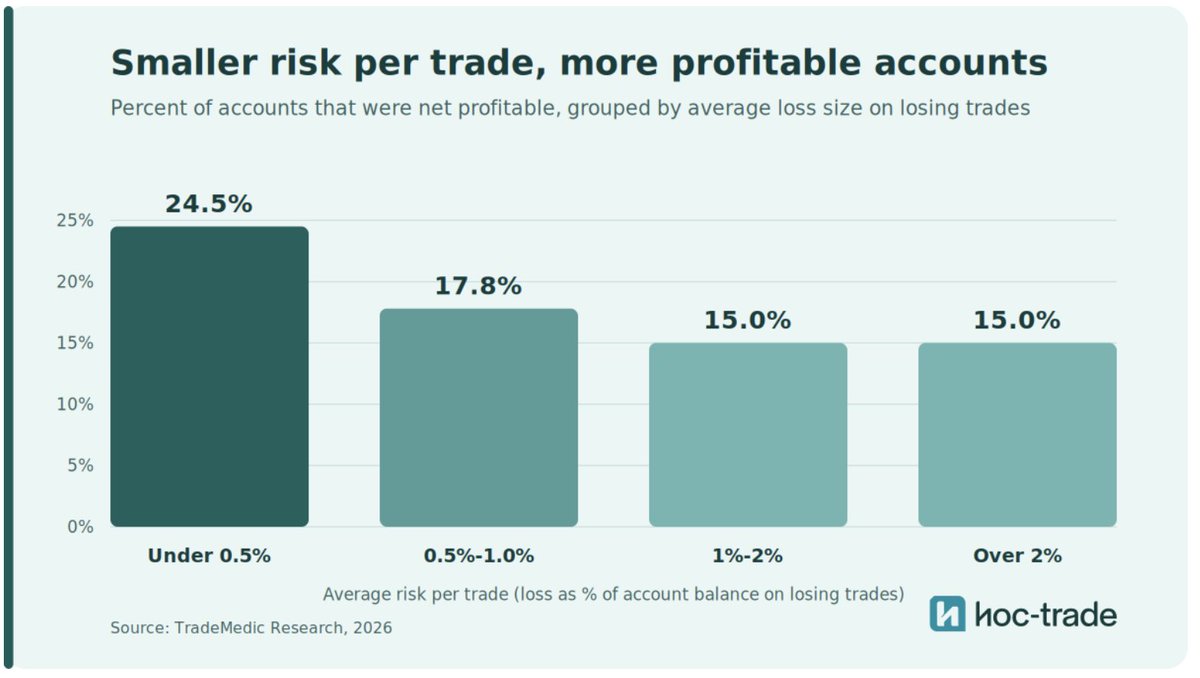
no but for real: TradeMedic tracks your risk/ trade, and data from 500k traders shows the ones averaging <0.5% risk per trade were net profitable nearly twice as often as traders with 2% and more (25 vs 15%)
Stop staring at your win rate.
Look at your average win vs your average loss.
51.6% of traders have an average win less than half their average loss. Only 10.2% of them are profitable.
Win rate is the number that feels good. This is the one that pays.
Which one is bigger for you?
@casper_smc on point! It's surprising how visible this is in trading data. TradeMedic tracks it as "Fail to call it a day", a worse performance per trade when being in loss for the day. It shows up in >52% of accounts and is the most common pattern in a traders Top5 improvement potentials
@StoicTA The "get back to the high of the day" pull is so common. In the 500k+ account dataset I work on, failing to stop for the day is a Top 5 issue for 52.1% of traders, with a real dip in performance thereafter. Did the alerts kill the urge, or just the screen time?
@t0mbfx Matches what we see. 44.6% of traders averaging above 2.0 reward-to-risk are net profitable, vs 10.2% of traders below 0.5. By win rate the spread is narrower: 21.9% of traders at 60 to 80% are profitable. What R do you average at 38%?
When Hoc-trade look at real accounts across more than 500,000 traders, the habits that shrink that ratio, like cutting profits early, come with a dollar cost attached.
Do you know your average win against your average loss, or just your win rate?
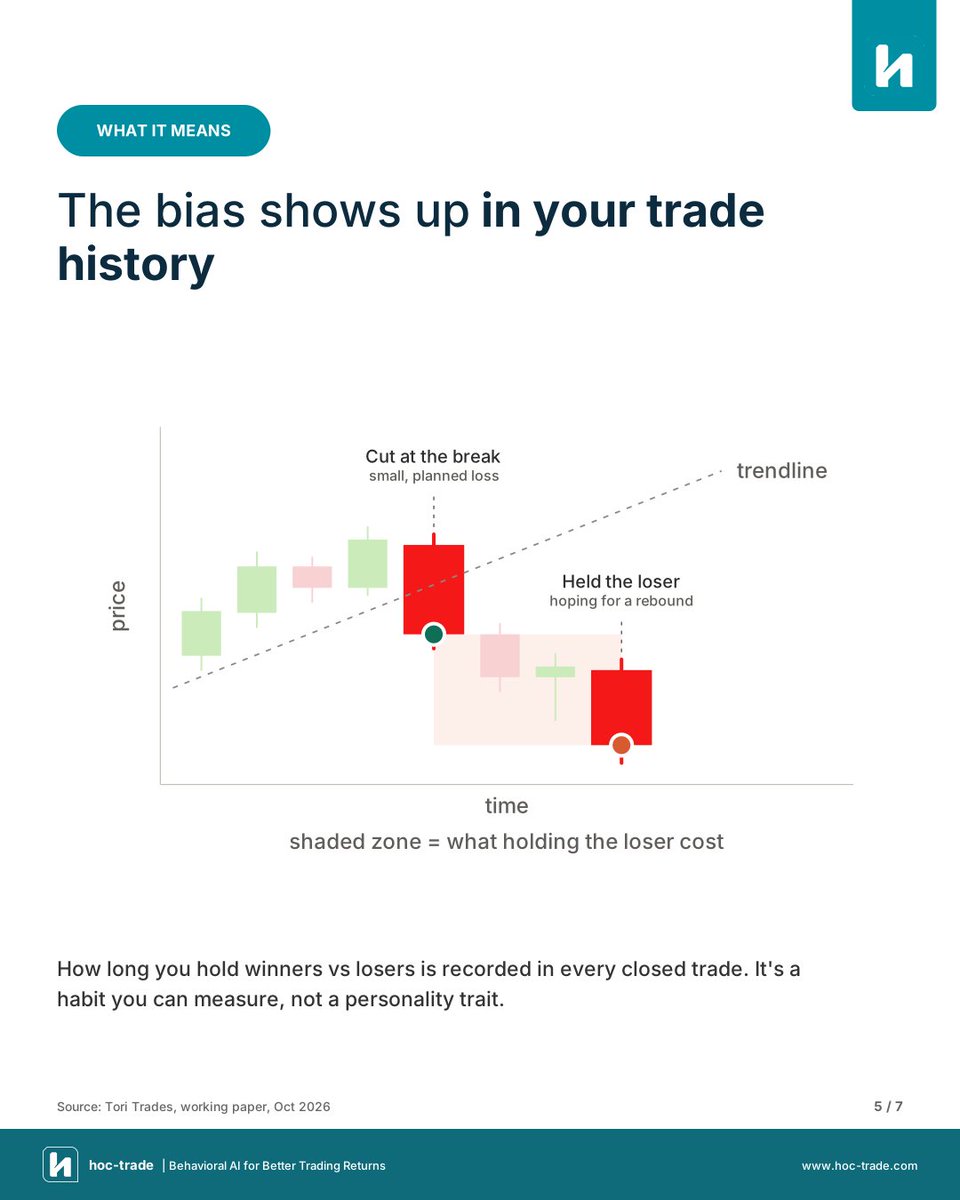
@/tori.trades (on instagram) makes a point we wish every trader heard in their first month: a strategy can lose most of its trades and still make money.
Her rule only needed about 20% wins to break even because its wins were four times its losses.
@tori Letting the line decide gave her wins four times the size of her losses, and it's the same pair of habits we see in trade histories every day, cutting profits early on one side and extending losing trades on the other.