HUGE news regarding the success of Moderna's mRNA vaccine for melanoma!
Let's briefly talk about how it works and specifically one detail I think is very important!
This vaccine differs from the COVID vaccine in one key way: it's actually PERSONALIZED TO THE PATIENT
First, a sample of the tumor is taken + plus a sample of normal cells (like a blood sample).
The tumor DNA is compared with DNA from normal cells to identify cancer-specific mutations, while tumor RNA sequencing helps determine which mutated genes are actually expressed in the cancer cell.
Those mutations can create cancer-specific proteins called neoantigens, and up to 34 selected neoantigens are encoded into the mRNA vaccine. It is then is given to the body to train the patient's own immune cells (T-cells) to recognize the unique "cancer fingerprint" and kill the cancer cells!
A few notes:
1. Not all cancer cell mutations are easy for the immune cells to target. Moderna uses a proprietary AI-based algorithm to identify the best target "neoantigens" to encode into the mRNA vaccine
2. Of course cancer is complex and adapts, so to increase chances of catching the cancer, up to 34 different neoantigens may be encoded in the vaccine
3. Cancer is very good at suppressing the immune system. If the immune system is suppressed, then obviously this therapy doesn't work! That's why patients are also given Merck's Keytruda, which inhibits one of the pathways that cancer suppresses the immune system.
4. Importantly, this trial studied patients whose melanoma had already been completely removed by surgery. But even when surgeons remove all detectable cancer, hidden cancer cells may still remain, and grow into a new tumor later down the line (recurrence). That's why this mRNA therapy is given after surgery, so that it can instruct the immune cells to find any residual cancer cells and prevent recurrence!
Prediction on track...
Deeper thoughts on @DaphneKoller's blog. First of all, yes:
- validating targets is a bigger gap than folding/binding proteins.
- validating targets needs more than reading the literature.
- validating targets is blocked by the pace of verification.
The next step is forming a definite thesis on what data to focus on generating, and how.
Really excited about how AI can help creatives with their work. Our latest Nano Banana Pro model 🍌🍌🍌 brings this to a whole new level, allowing you to bring complex ideas quickly to life... the outputs are pretty amazing! 🤯Can't wait to see what you do with it!
Journalist Anas al-Sharif won’t be around to announce the ceasefire as he did the last time,
because Israel assassinated him along with more than 260 other journalists.
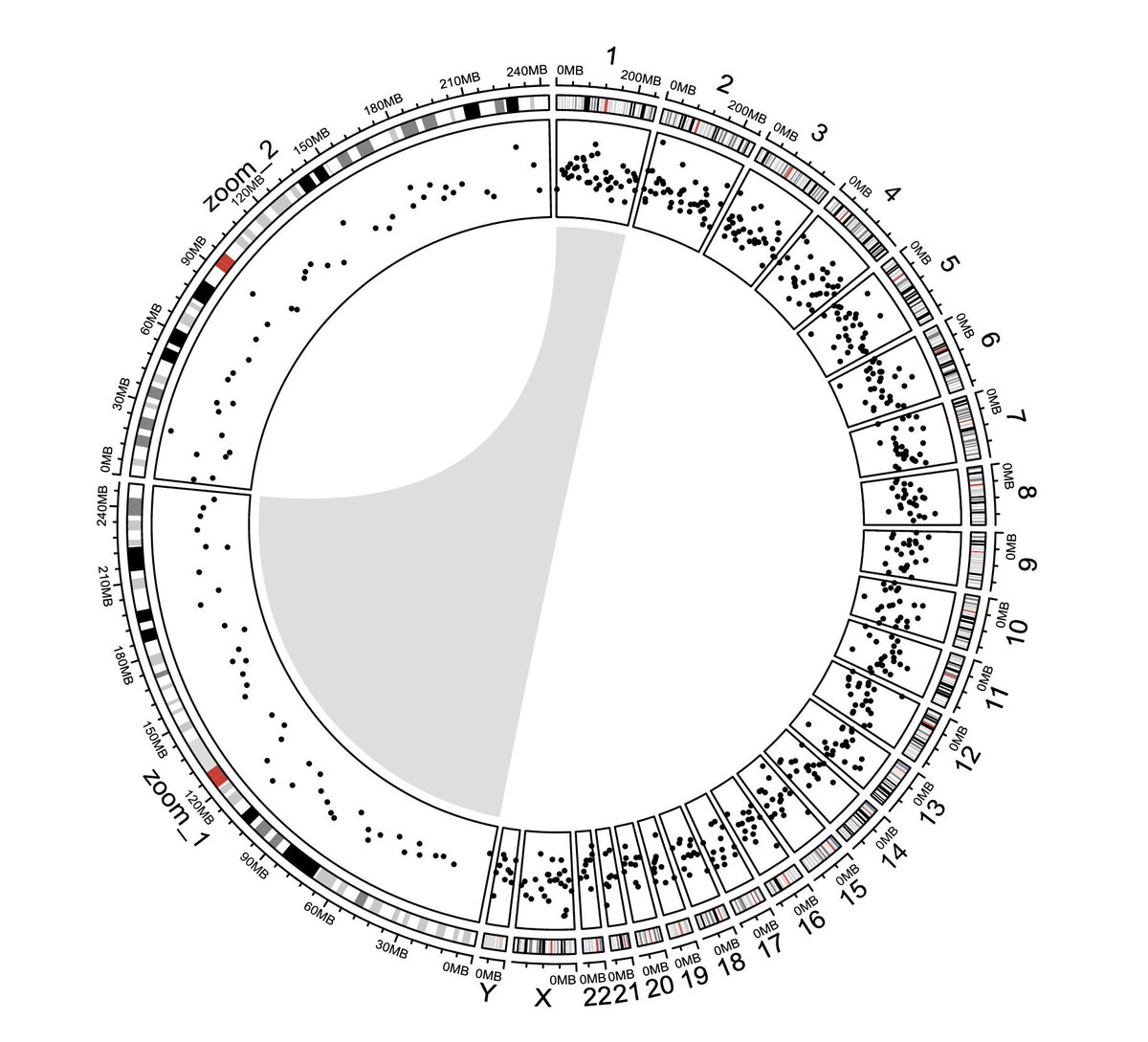
With killer R libraries like circlize, ggbio, and karyoploteR... I am clueless why I've ever tried to plot genomic data in Python.
I am now supercharged. Fear my publication quality renderings from now on.
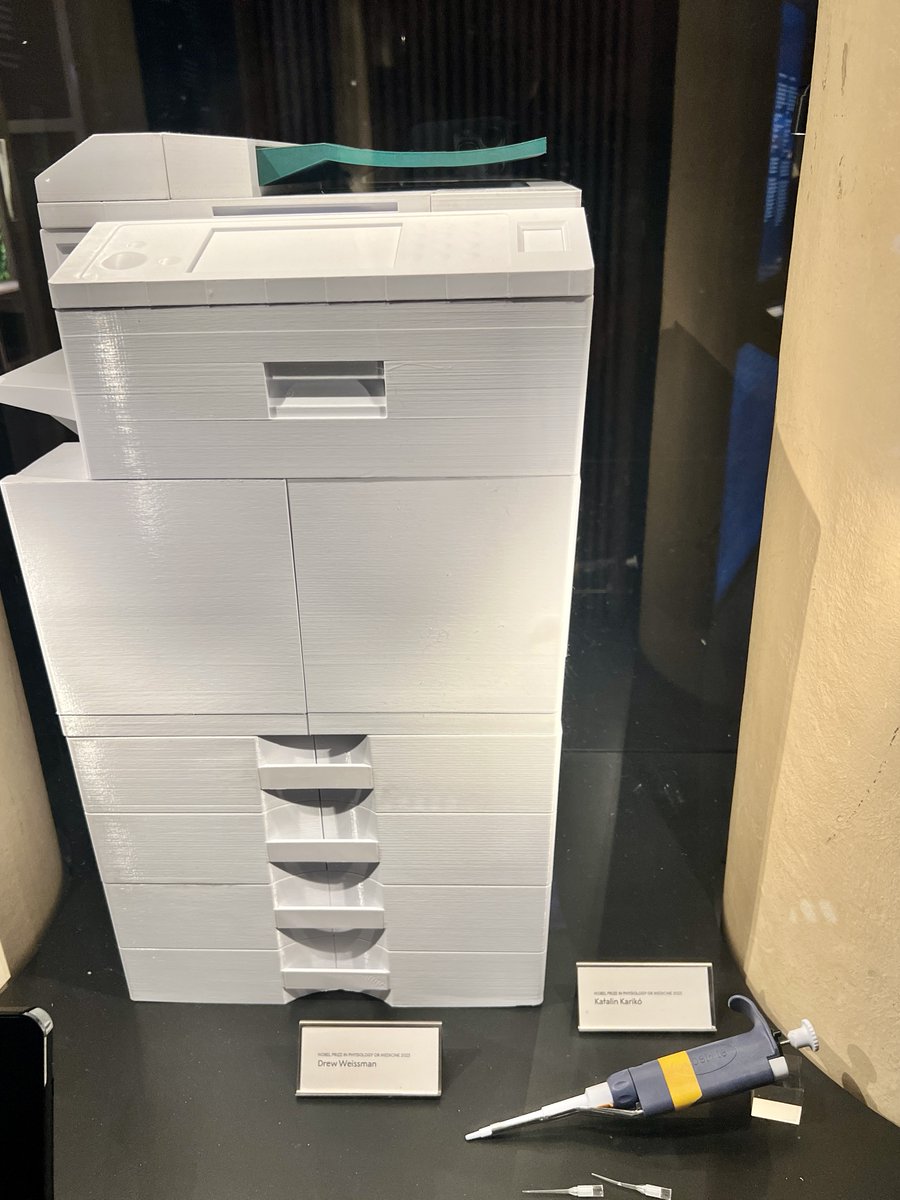
One of the cool aspects of receiving a @NobelPrize is the tradition of donating an item to the @NobelMuseum. Displayed here is a 3D-printed replica of the copy machine where @WeissmanLab and @kkariko first met and began their collaboration. Also, the familiar micropipette!
Rocket science is hard.
Designing systems capable of launching materials—including humans—into orbit and then smoothly landing back on terrestrial ground is one of the greatest feats of engineering we’ve achieved.
But surviving in space will be even harder.
In his brilliant 2020 keynote on the future of genetic engineering, Asimov CEO @alectricity made the following argument:
And space, the final frontier. Everyone talks about rocket science being the hard problem about outer space. But biology is the really hard thing about outer space. We need to able to manufacture food and therapeutics in the defined closed system of a space station. One day, we need to be able to terraform entire planets to be hospitable for life. We need to be able to engineer biomes.
These are biology problems, not rocket problems.
Today, in the Century of Biology, I explore the landscape of biotech-enabled sustainable space exploration.
Read here:
https://t.co/MvSdRLP05N
I am recruiting PhD students for Fall '24! Please apply to Cornell CS if you are interested in ML, data science, health, or inequality. Feel free to retweet!
We are based in NYC - here's the view from our island campus (taken during Pride - note the rainbow lights!)
SMARTLivingMaterials Lab is 2 years old! Celebrating the beginning of the academic year and receiving the first funding for the next 4 years! Exciting times ahead!
#newPI@bse_vt
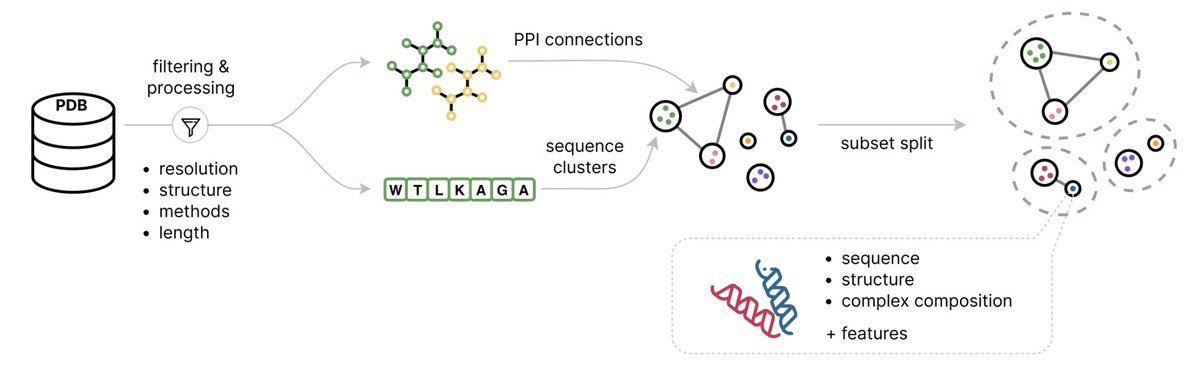
"ProteinFlow: a Python Library to Pre-Process Protein Structure Data for Deep Learning Applications"
Allows PDB/Sabdab data to be downloaded and processed with a single line of code
https://t.co/P4BbAJ4rxz
https://t.co/0GGlcw5JzT
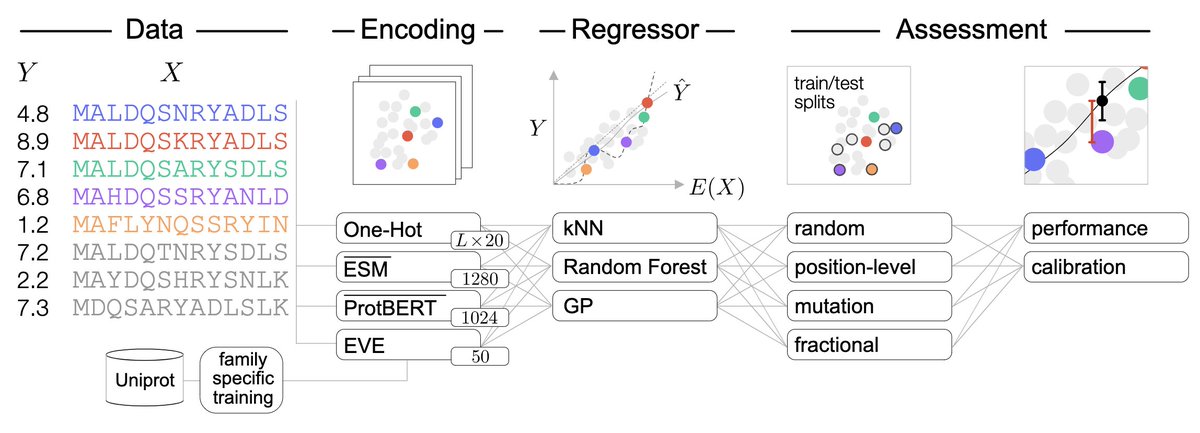
"Assessing the performance of protein regression models" has been updated
A pretty comprehensive study of different encoding and regression schemes for protein sequence-based tasks
https://t.co/BQZmCQajIo
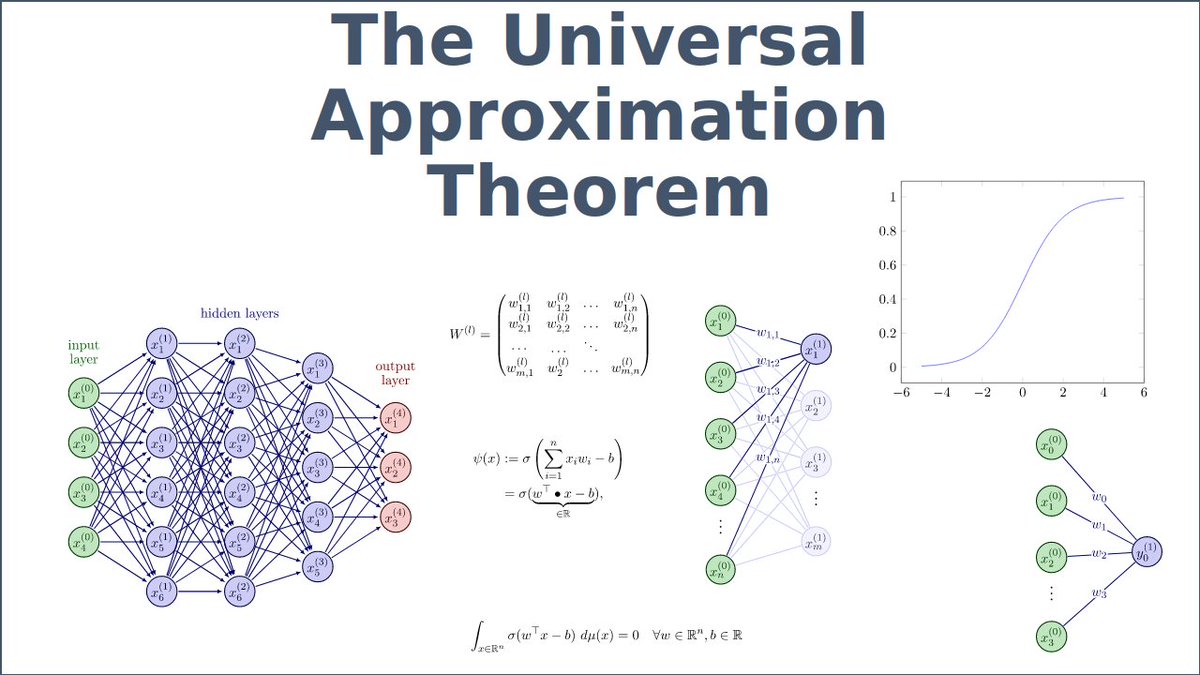
The Theory Behind Neural Networks and Why They Are So Affective
Neural networks, the machine algorithm behind every Gen AI model have been extraordinarily effective at multiple tasks because they are universal approximators.
The Universal Approximation Theorem (UAT) is a mathematical theorem that is the foundation of neural networks, as it provides theoretical guarantees that neural networks can be used to solve a wide variety of problems.
Let's dive deeper - UAT states that a feedforward network with a single hidden layer containing a finite number of neurons can approximate any continuous function on compact subsets of Rn, under certain conditions.
Here's a breakdown of the basic math:
Activation Function: Neural networks use activation functions, like the sigmoid or ReLU (Rectified Linear Unit) function, to introduce non-linearity into the model. These functions are applied to a weighted sum of the input values and bias.
Single Hidden Layer: The theorem focuses on a network with just one hidden layer. This means there is one layer of artificial "neurons" or nodes between the input and output. Each neuron in this layer applies the activation function to its input.
Approximating Continuous Functions: If the function you want to approximate is continuous on some compact subset of Rn (meaning it's unbroken and defined within a specific range), the theorem tells you that you can get as close as you want to that function using a neural network with enough neurons in the hidden layer.
The Importance of Weights: The weights in the network determine how each neuron responds to its inputs. By carefully adjusting these weights (usually through a process called training), the network can be made to approximate the desired function.
In other words, the Universal Approximation Theorem says that even very simple neural network architectures can represent a wide variety of interesting functions when given the appropriate parameters.
It's a foundational result that provides theoretical backing for the capability and flexibility of neural networks in modeling complex relationships.
Super cool that this nifty theorem is the underpinning of NNs which power everything from LLMs like GPT4, Bard, LLama to vision models like Midjourney and Stable Diffusion
Further reading and pic credit: https://t.co/cVMhPCVUGt