Our paper, "What's in My Human Feedback", was selected for an oral at ICLR!
Our method automatically + interpretably identifies preferences in human feedback data; we use this to improve personalization + safety.
Please reach out if you have data/use cases to apply this to!
Thanks to https://t.co/qudhDPLk1u for supporting our work with @oziadias using sparse autoencoders and agentic approaches to accelerate discovery in cardiology and oncology! A wonderful collaboration with @rajivmovva, @dmshanmugam, Alex Schubert, and others.
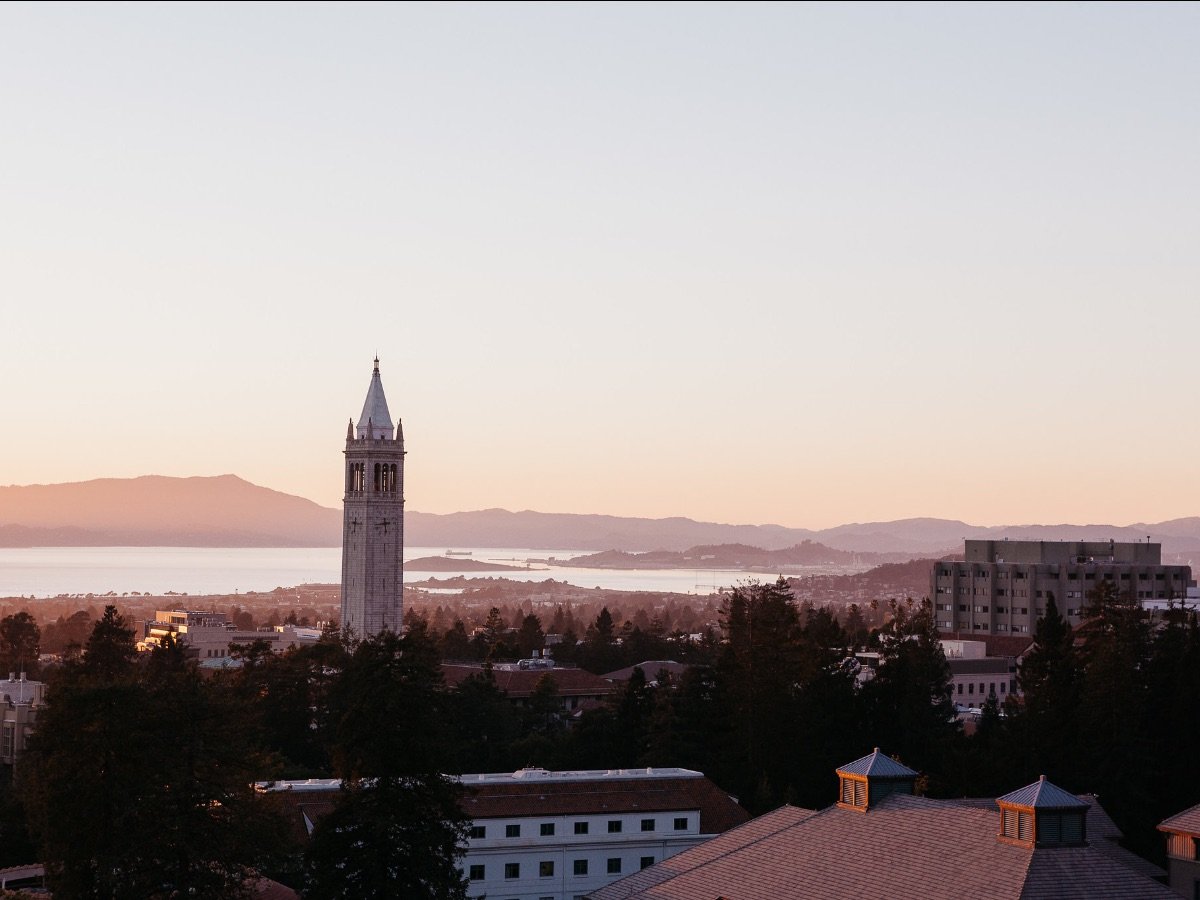
A super exciting announcement: In January 2027, I'll be joining @UCBerkeley as an assistant professor in EECS and Statistics.
I'll be recruiting PhD students and postdocs this cycle, starting Fall 2027. If you're interested the science of RL and deep learning, please apply.
📣 New paper, led by @JosephJSSuh !
Human-AI interaction datasets form a foundation for downstream research: as evidence of how people interact with AI and as training and validation for user models. But how solid are these foundations?
1/3
Some news:
I graduated my PhD @Berkeley_EECS, and starting Fall 2027, I'll be starting as an Assistant Professor at Stanford CS & a center fellow @StanfordHAI!
In the interim, I'm spending a year @the_IAS & Princeton!
So grateful to @beenwrekt & too many mentors to name 💓
Looking for postdocs+PhDs to help lead a large-scale study of the effects of long-term AI use, a collaboration between Berkeley+@TransluceAI+others!
Funding+positions available (postdocs/visiting researchers/Transluce affiliations). Please reshare; application in next tweet!
Today’s news that OpenAI hacked the Australian government is not an isolated incident. We’re releasing more than 30,000 logs that include activity from this hack and attempts against previously unknown targets.
In this data, we found rogue agent activity stretching back to at least March, two months earlier than was previously known. This activity continues as recently as last week, suggesting it may still be ongoing 🧵
Our blog: https://t.co/pSojwcXnEK
NYT: https://t.co/OyxnfmAzBN
We did this entire investigation in under two weeks! We had the idea on Monday, gathered a team of volunteers on Tuesday, and discovered the incidents by Sunday. I lead projects like this @TransluceAI; if you're interested in helping with follow-up work, fill out our form! 🧵
Here’s a thread of all the members of Congress who have tweeted in response to Jacob resigning from Anthropic and describing that “The people building AI earnestly believe that it could kill us all by the end of the decade”
(lmk if I missed any)
🧵
Today, Transluce is releasing the most expansive independent evaluation to date of how AI systems respond to users experiencing mental health crises.
We evaluated 77 model variants from OpenAI, Anthropic, Google, Meta, SpaceXAI, Thinking Machines, DeepSeek and Moonshot AI.
New paper in Nature Communications! We show you can map out urban flooding by using vision-language models to detect floods in large-scale street scene datasets.
In New York City, our method identifies flooded neighborhoods, home to 100k people, that current methods miss. 1/
🎉 New piece out in Health Affairs Forefront! We discuss what the Medicare Advantage risk-adjustment algorithm -- currently responsible for allocating billions of dollars -- can learn from machine learning.
https://t.co/Ynlb0XNups
Thrilled to share I'll be joining UC Berkeley next year as an assistant professor in @UCBStatistics and affiliated with @Berkeley_EECS.
My research will build methods to test/improve the implicit world models of AI systems, so that they reflect reality and human understanding.
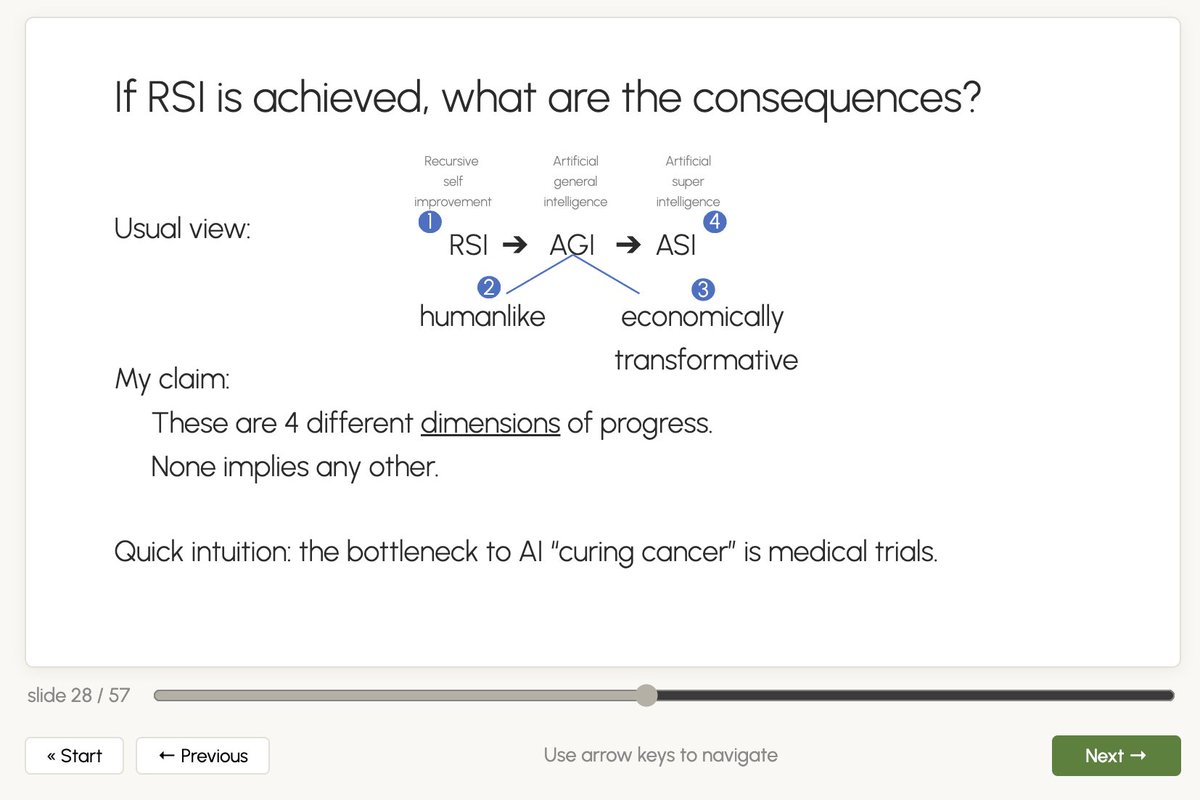
1) If you haven't read AI as Normal Technology, these annotated slides are probably the easiest way to get a high-level overview. https://t.co/vNgRJCKxi3
2) If you're already familiar with the core ideas, Part 1 of the talk is largely a summary of what I and @sayashk have already written, while Parts 2 and 3 have new ideas. There are a lot of unexamined assumptions in the discourse about Recursive Self-Improvement and I hope you find my pushback interesting.
3) I'm really grateful to the team (@steverab@sayashk@PKirgis & Felix Chen) for feedback on the talk. In my first version, Part 2 was about 3x too long and I was super frustrated with myself. They encouraged me to cut it down ruthlessly and turn the full version into essays on the newsletter, so that's what I plan to do! (https://t.co/ZwebetjZ4n)
4) I've received a few requests for the video. There's a video on the ICML website, but it is login-walled https://t.co/rYHlxPGEXY (I assume it's for ICML registrants only). Last year's videos are public, so presumably @icmlconf will make it public at some point.
Thrilled to share that I am joining UC Berkeley as an Assistant Professor in the School of Information!
I start in Fall 2027, and I am recruiting PhD students this cycle. List me in your application if you're interested in frontier AI evaluation, AI policy, and AI's impacts on institutions such as science, law, and medicine.
I'm especially keen to work with students interested not just in high-quality research, but also in communicating it with a broad audience such as by public writing and policy impact. Fill out the form in the next tweet to indicate your interest.
As for this coming year, I'm moving to Berkeley this fall to start something new with @RishiBommasani and @random_walker. We'll have much more to share soon.