There is a species of ant that approaches the edge of another colony, kills a single worker, and then takes on the dead ant’s scent.
For ants, scent is everything. Wearing that scent, the intruder walks in with no resistance. The workers pass by without concern.
The intruder moves inward, toward the queen, then It sprays the queen with a different scent that makes the workers turn on her. Then they surround her and kill her.
The intruder does not need to fight anyone. The colony does the work itself.
Once the queen is gone, the intruder reproduces. The true invader is no longer an intruder. It is the future.
This is how ideological takeover works.
A destructive foreign ideology takes the scent of familiar ideas and walks in as if it belongs.
It speaks the native vocabulary, justice, equality, compassion, rights, progress. It uses these words and quietly changes what they point to.
Then it moves inward.
It alters how foundations are perceived. Responsibility is made to smell like cruelty, law like oppression, borders like hatred, tradition like danger, history like guilt.
At that point, the civilization turns on itself.
Its courts, universities, churches, media, and bureaucracies begin treating their own foundations as threats. They believe they are defending the system.
They are enforcing what now smells legitimate. They do not see the intruder because it sounds exactly like them.
And when the founding principles are finally removed, discredited, dismantled, erased, the foreign ideology does not need to conquer anything. It inherits what is left.
The queen is gone. The colony is no longer itself.
The most effective conquest is the one that convinces a society that its own foundations are the enemy, and that killing them is an act of virtue.
It is damning that social media
has become a immediate reaction to your emotions. People “keyboard warriors” post some crazy stuff. Never make a decision when you are emotional especially posting. It’ll get ya!
@GuyDealership Good ol’ data entry. Using Darwin to structure the deal and then hand building contracts in Dealertrack to econtract. Hand typing purchase orders and all ancillary products and forms. We’ve got the process down to about 50 minutes. Not ideal but it is what it is.
What a Young Man Should Know, 1933. A checklist for becoming a proper man.
This was published in the March 1933 issue of Harper’s Magazine.
The writer, Robert Littell, details the abilities, skills, accomplishments, and extra-curricular proficiencies that every man should have if they are to become a self-sufficient and well-rounded human being, ready for life, and eventually, marriage and raising their own children. The learning starts from a very young age.
Here is the (short) list:
1. He should know how to swim at least a mile, dive creditably, and not feel panicky under water. He should be able also to revive those less skilful than himself by rolling them on a barrel and pumping their helpless arms.
2. He should be able to drive an automobile well. And he should not be altogether helpless when a car breaks down. He must know how to change a tire and offer some sort of diagnosis when the engine sputters and dies.
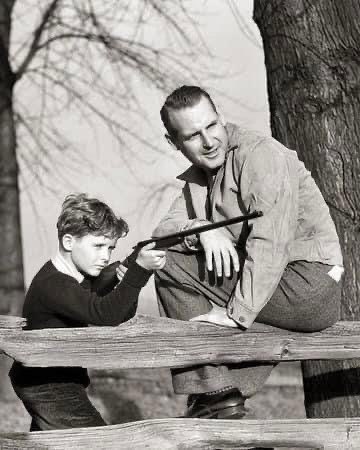
3. He ought to know how to clean, load, and shoot a revolver or a rifle.
4. As for self-defense, a man should certainly be able to take care of himself in a scrap. He need not learn jujitsu — old-fashioned boxing will be enough.
5. He ought to know the rudiments of camping, how to build a fire, how to chop wood, how to take a cinder out of his eye, how to deal with a severed artery, how to doctor himself for ordinary ailments.
6. He should also be able to take care of other people in emergencies, to apply first aid, set a broken bone, revive a drunk or a victim of gas, deal with a fainting fit, administer the right emetic or antidote for a case of poisoning.
7. And he should be able to feed himself, to cook, not only because some day he may need to, but because cooking is one of the fine arts, and a source of infinite pleasure. He should be able to scramble eggs, brew coffee, broil a steak, dress a salad, carve a chicken, and produce, on occasion, one first-class dish, such as onion soup. The more he can do, in these days of the delicatessen store and the kitchenette, the better. It is not effeminate, it is not beyond him, and the best chefs are all men.
8. He should know how to use paint brushes, a saw, a hammer, and other common tools.
9. He should also have a beautiful and distinguished handwriting. But the bulk of his writing, particularly if he is a professional man who has much of it to do, should be done on a typewriter, capable of turning out three thousand words an hour.
10. He should play one outdoor game well, and have a workable smattering of several more. An American who cannot throw and catch a ball seems pathetic and grotesque.
11. The bicycle has gone, yet every young man should know how to ride one.
12. He should also be able to skate, sail a boat, and handle a canoe passably.
13. Fishing is a specialty, like chess.
14. Walking is a noble but neglected sport. Americans “hike” once in a long while but seldom walk.
15. He should know a great deal about animals and how to take care of them.
16. He should know how to ride a horse.
17. He should learn how to stay in a saddle with pleasure to himself and a minimum of annoyance to his mount.
18. He should learn how to dance.
19. He should know to play at least one card game.
20. He must have knowledge of how to tip naturally, justly, without fear and without reproach.
21. On the matter of alcohol, he should learn his capacity and stick within its limits; he should know something about the different kinds of drink, and which drinks produce chaos within him when mixed.
22. Where s:x is concerned, nature clearly intended us to make many mistakes in her hope that some of them would be productive.
23. He should know the rudiments of gambling. But gambling might be placed on the same plane as drink — the less use one has for it the better.
Surround yourself with the people who push you to be the best version of yourself. Your circle should be filled with the best people, not just the yes people.
After his second year at Michigan, Tom Brady wanted to transfer.
He wasn't playing in games, and he was so low on the depth chart that he only got 2 reps in practice.
Brady met with his coach to express his frustration, “The other quarterbacks get all the reps.”
Coach replied,
“Brady, I want you to stop worrying about what all the other players on our team are doing. All you do is worry about what the starter is doing, what the second guy is doing, what everyone else is doing. You don't worry about what you're doing.”
Coach reminded him, “You came here to be the best. If you're going to be the best, you have to beat out the best.”
And then he recommended that Brady start meeting with Greg Harden, a sports psychologist who worked in Michigan's athletic department.
Brady went to Harden's office and whined, “I'm never going to get my chance. They're only giving me 2 reps.”
Harden simply replied, “Just go out there and focus on doing the best you can with those 2 reps. Make them as perfect as you possibly can.”
“So that's what I did,” Brady said. “They'd put me in for those 2 reps, man, I'd sprint out there like it was Super Bowl 39. 'Let's go boys! Here we go! What play we got?'”
“And I started to do really well with those 2 reps. Because I brought enthusiasm, I brought energy.”
Soon, it went from getting 2 reps to getting 4 reps. Then from 4 to 10, “and before you knew it,” Brady said, with this new mindset that Greg instilled in me—to focus on what you can control, to focus on what you're getting, not what anyone else is getting, to treat every rep like it's the Super Bowl—eventually, I became the starter.”
Takeaway 1:
Greg Harden telling Brady to just focus on being great during his 2 reps reminded me of a piece of advice from the entrepreneur Mark Cuban.
“People come to me all the time and tell me they're stuck,” Cuban explained. “They're stuck in a job they don't like. They're stuck working for a boss they don't like. They're stuck on a team they don't like.”
“I just tell them, 'Be great.'”
“The reality of life is that you can't just always quit your job. You can't just always go to your boss and say, 'Give me the promotion, or I'm out of here.'” You can't just always go to your coach and say, 'Give me more reps, or I'm transferring.'
“So when you're stuck, you've gotta find it within yourself to say, 'Ok, this is where I am. And if I'm going to be here, I'm going to be great.'
Because if you're great at your job, typically other people and companies find out, so it creates opportunities.”
Takeaway 2:
I've written before about “lead measures”—the actions and behaviors that predictably drive success.
The core characteristic of a lead measure, the authors of The 4 Disciplines of Execution (4DX) write, is that “a lead measure is influenceable; it can be directly influenced by you.”
To achieve your goals, they recommend (echoing what the Michigan Coach told Brady), apply a disproportionate energy to the things that are in your control.
Starting at Michigan and for the rest of his career, that’s what Brady did, that’s what drove his success.
In his first media call after he was selected by the New England Patriots with the 199th pick in the 2000 draft, Brady was asked: “Are you aware that [along with starting quarterback, Drew Bledsoe] there’s another quarterback here that they drafted last year?”
Brady said he was aware of that. “And I know he’s a heck of a player,” Brady said. “But I’ve always really concerned myself just with the things I can control. I don’t put a lot of thinking into the other guys because I know I’m not at my best when I’m not just thinking about playing as well as I possibly can.”
- - -
“I never once in my life ever said I wanted to be the best of all time. Ever. I wanted to be the best I could be, period. I learned that in college. It didn’t matter what the other guys were doing. It mattered what I was doing.” — Tom Brady
Follow @bpoppenheimer for more content like this!








![bpoppenheimer's tweet photo. After his second year at Michigan, Tom Brady wanted to transfer.
He wasn't playing in games, and he was so low on the depth chart that he only got 2 reps in practice.
Brady met with his coach to express his frustration, “The other quarterbacks get all the reps.”
Coach replied,
“Brady, I want you to stop worrying about what all the other players on our team are doing. All you do is worry about what the starter is doing, what the second guy is doing, what everyone else is doing. You don't worry about what you're doing.”
Coach reminded him, “You came here to be the best. If you're going to be the best, you have to beat out the best.”
And then he recommended that Brady start meeting with Greg Harden, a sports psychologist who worked in Michigan's athletic department.
Brady went to Harden's office and whined, “I'm never going to get my chance. They're only giving me 2 reps.”
Harden simply replied, “Just go out there and focus on doing the best you can with those 2 reps. Make them as perfect as you possibly can.”
“So that's what I did,” Brady said. “They'd put me in for those 2 reps, man, I'd sprint out there like it was Super Bowl 39. 'Let's go boys! Here we go! What play we got?'”
“And I started to do really well with those 2 reps. Because I brought enthusiasm, I brought energy.”
Soon, it went from getting 2 reps to getting 4 reps. Then from 4 to 10, “and before you knew it,” Brady said, with this new mindset that Greg instilled in me—to focus on what you can control, to focus on what you're getting, not what anyone else is getting, to treat every rep like it's the Super Bowl—eventually, I became the starter.”
Takeaway 1:
Greg Harden telling Brady to just focus on being great during his 2 reps reminded me of a piece of advice from the entrepreneur Mark Cuban.
“People come to me all the time and tell me they're stuck,” Cuban explained. “They're stuck in a job they don't like. They're stuck working for a boss they don't like. They're stuck on a team they don't like.”
“I just tell them, 'Be great.'”
“The reality of life is that you can't just always quit your job. You can't just always go to your boss and say, 'Give me the promotion, or I'm out of here.'” You can't just always go to your coach and say, 'Give me more reps, or I'm transferring.'
“So when you're stuck, you've gotta find it within yourself to say, 'Ok, this is where I am. And if I'm going to be here, I'm going to be great.'
Because if you're great at your job, typically other people and companies find out, so it creates opportunities.”
Takeaway 2:
I've written before about “lead measures”—the actions and behaviors that predictably drive success.
The core characteristic of a lead measure, the authors of The 4 Disciplines of Execution (4DX) write, is that “a lead measure is influenceable; it can be directly influenced by you.”
To achieve your goals, they recommend (echoing what the Michigan Coach told Brady), apply a disproportionate energy to the things that are in your control.
Starting at Michigan and for the rest of his career, that’s what Brady did, that’s what drove his success.
In his first media call after he was selected by the New England Patriots with the 199th pick in the 2000 draft, Brady was asked: “Are you aware that [along with starting quarterback, Drew Bledsoe] there’s another quarterback here that they drafted last year?”
Brady said he was aware of that. “And I know he’s a heck of a player,” Brady said. “But I’ve always really concerned myself just with the things I can control. I don’t put a lot of thinking into the other guys because I know I’m not at my best when I’m not just thinking about playing as well as I possibly can.”
- - -
“I never once in my life ever said I wanted to be the best of all time. Ever. I wanted to be the best I could be, period. I learned that in college. It didn’t matter what the other guys were doing. It mattered what I was doing.” — Tom Brady
Follow @bpoppenheimer for more content like this!](https://pbs.twimg.com/media/F85l1KpWUAAeAcO.jpg)


