We are a small scientific computing company producing high-quality, high-performance, scientific software without compromising the principles of our members.
Week 1 at #G2S3: classes by Haesun Park @GTCSE and Jack Poulson @HodgeStarMath, student posters, labs, aaaaand the occasional breathtaking views. Have a look-see at some of last week's materials and get ready for week 2! @TheSIAMNews https://t.co/UTMvlviBK6
Feel like running a sparse-direct solver for a complex-valued wave propagation problem that is accurate to 32 digits? Catamari now has a permissively licensed, multithreaded implementation over Mantis's complex double-double arithmetic.
https://t.co/cDq99hSSH5
@science_dot @five9a2 One could do so similarly, but compex double-mantissa BLAS is also needed. Jumping to double-mantissa is about 10x more work than single-mantissa if an equal number of multiplies and adds, whereas jumping to complex contributes about 4x. So complex double-mantissa is about 40x.
@science_dot @glennklockwood@HPC_Guru@awscloud@peakscale I bought my own skylake + Titan V and it is *more* than enough for package dev. Total cost: ~$7k. No need for a cloud or a queueing system.
My instincts are to build distributed libraries on top of high-quality on-node ones. And to not link to unmaintained projects. (5/5)
@science_dot @glennklockwood@HPC_Guru@awscloud@peakscale Another serious issue is that the demand for MPI-first almost makes new software projects DOA. Less than a fraction of a % of users interested in math libraries care about MPI or want to install it on their laptop. The added complexity in the build system is damaging. (4/n)
Catamari version 0.2.3 has now been released -- now with support for non-Hermitian DPP kernels, more examples, and more visualizations:
https://t.co/DO9r47hgt4
The (visual!) slides for @supernodal's Monday talk on Catamari at the @royalsociety are up at:
https://t.co/RpQAIuUR5H
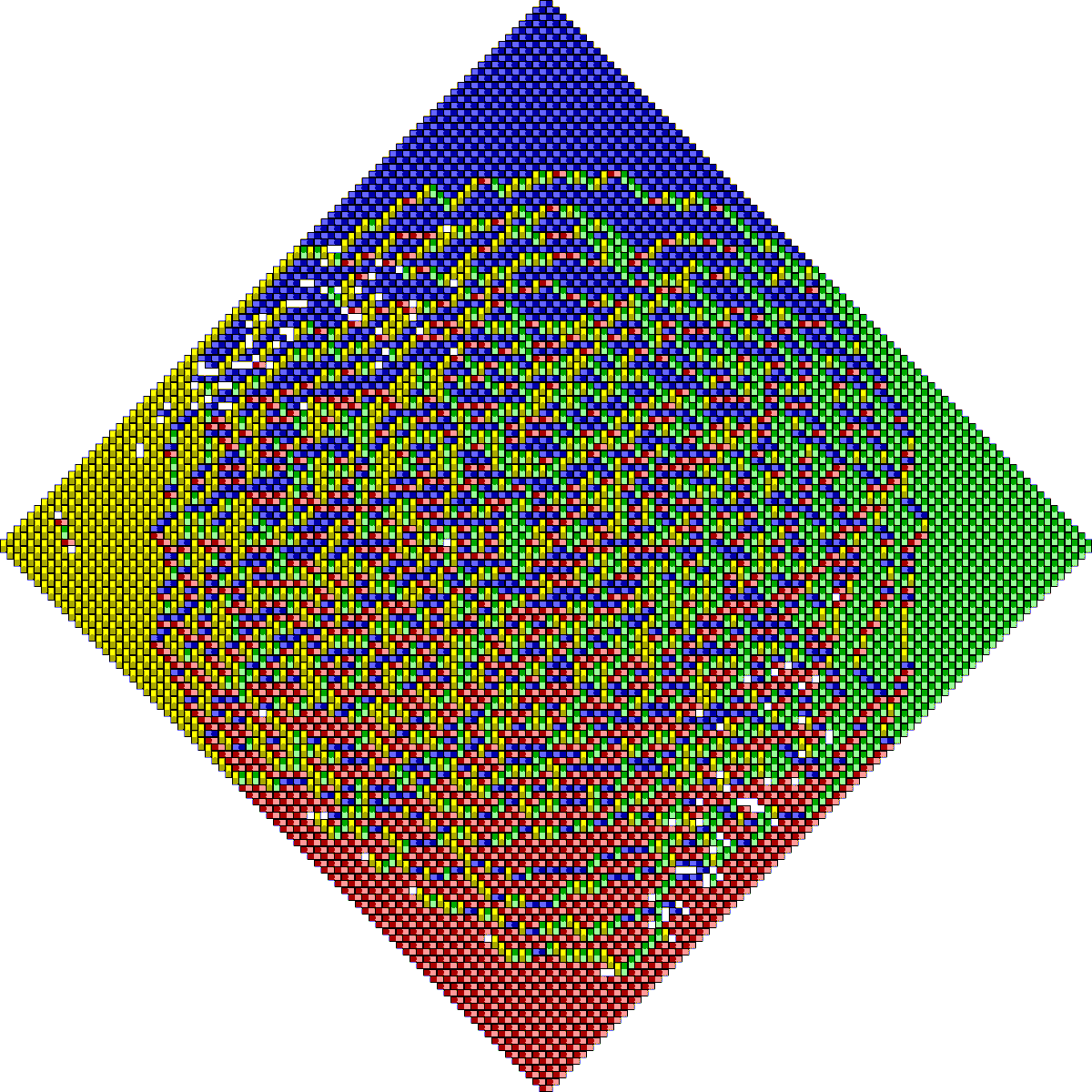
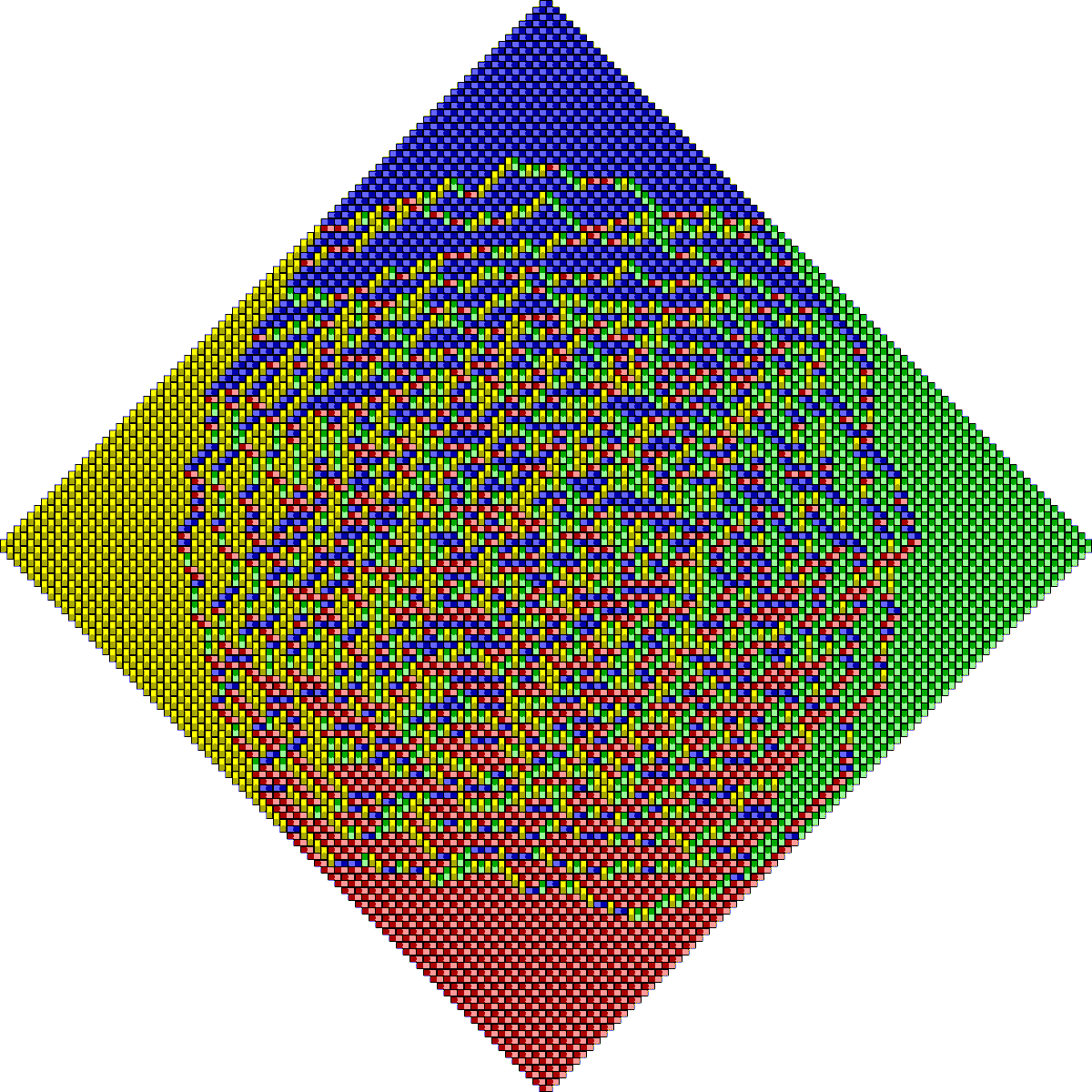
And here are the single and double-precision results for a 160 x 160 grid: single-precision starts to break down (as you can see from the missing tiles).
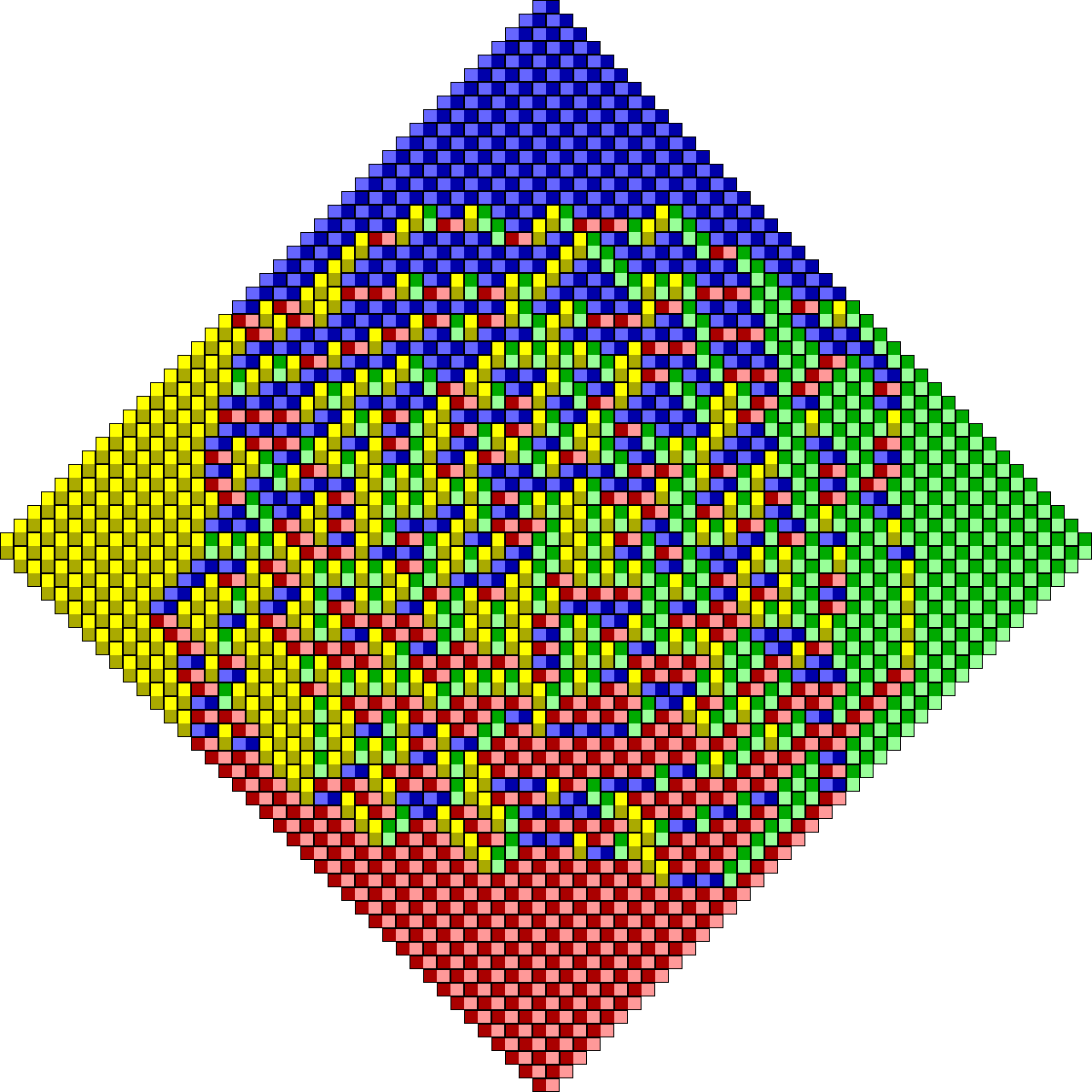
Catamari now supports high-performance sampling of real and complex nonsymmetric DPPs using a modified DAG-scheduled LU factorization. See https://t.co/b3Nhmwni7R for an example drawing random domino tilings of the Aztec diamond.
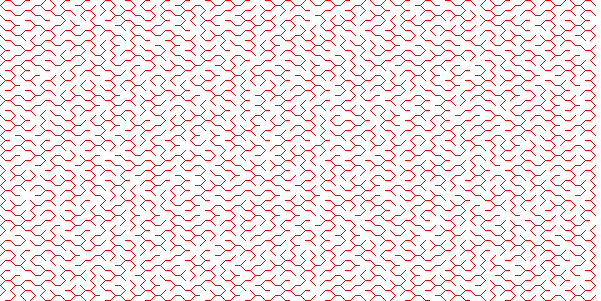
Uniformly sampling sampling trees from Z^d is boring! Here is some code and an example of uniformly sampling a spanning tree over a hexagonal tiling using a DPP over the star space basis Gramian.
https://t.co/XBWu9AbKcp
Interested in the intersection of numerical linear algebra, probability theory, cohomology, and graph theory?
Let's work through Lyons and Peres's beautiful book, Probability on Trees and Networks. DM this account or @supernodal for a Slack invite.
https://t.co/Zr3rli4x2x
There is also new support for visualizing the inclusive -- shown below for the relaxed supernodes of a 3D Helmholtz problem with ND -- or exclusive processing times for supernodal subtrees. The insights from this feature led to a major improvement to the OpenMP tasking.
After several significant performance improvements to the sparse-direct LDL factorization and DPP sampling, as well as to the underlying (Approximate) Minimum Degree reordering, version 0.2 of Catamari (and Quotient) has been released:
https://t.co/DO9r47hgt4