A familiar website can still ask you to sign something dangerous.
The latest PHP security alert is a reminder to review every wallet request.
Here’s where ENQRYPT Guard can help—and why server-side patching still matters. ↓ https://t.co/1M9lSevYqZ
A familiar website can still ask you to sign something dangerous.
The latest PHP security alert is a reminder to review every wallet request.
Here’s where ENQRYPT Guard can help—and why server-side patching still matters. ↓ https://t.co/1M9lSevYqZ
Meet ENQRYPT Guard.
Understand what your wallet is being asked to approve. Review transactions, signature requests and risky permissions before you sign.
Now available on the Chrome Web Store.z
https://t.co/4odC6eo3ad
Before you sign, understand what you’re approving.
Meet ENQRYPT—a workspace for wallet exposure, transaction risk, approval management and encryption.
Hidden information. Visible control.
Your wallet holds more than assets. It carries permissions, signatures, and a public history.
Meet ENQRYPT. Understand what’s exposed. Review what you sign. Take control.
Hidden information. Visible control.
Read the introduction below. ↓ https://t.co/ruTg08aMty
$SEQLUDE UPDATE
DEX Screener has been paid for. ✅
We're improving $SEQLUDE's visibility and making it easier for the community to discover and verify our official links.
One step at a time. We're just getting started.
🌐 https://t.co/3Jv8mxeUxk
💬 https://t.co/JJM8Dt1kci
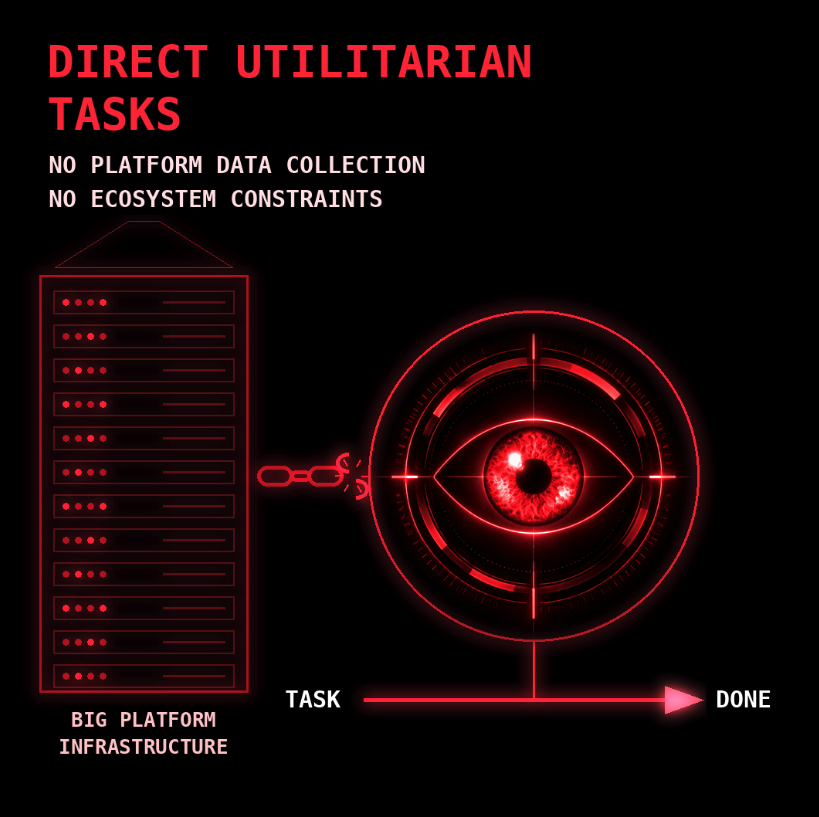
Direct Utilitarian Tasks:
If you prefer an experience devoid of the specific infrastructure, data collection policies, or ecosystem constraints inherent to OpenAI's platforms.
Ultimately, precompiles and EVM are both the wrong place to put most cryptography support into Ethereum. The reason is that precompiles and EVM both operate on data that has to be included into the ethereum chain somehow, which realistically means included in a block as calldata. That space is limited - even with PeerDAS and blocks-in-blobs, there's a practical cap of ~8 MB/s before it starts getting uncomfortable.
Remember: it's not a blockchain. It's a cryptographic world computer. Any data/computation that does not need to be in the "main thread" of data/execution should not be put into the main thread.
Instead, the correct solution is... EIP-8288 maximalism.
If you have any heavy computation that's self-contained, compute it and STARK it client-side (this is quickly getting faster and faster, even on phones), and push the STARK through the EIP-8288 recursive aggregation mechanism. The chain sees the fact that the computation was done and what the result is; it never needs to see the actual data and computation.
This way everyone can use whatever cryptography they want, the Ethereum chain can be lean, and we never need to add more precompiles again.