🚀 Trump just dropped a crypto bomb - and it's not Bitcoin!
Forget everything you thought you knew about US crypto policy. The game has completely changed overnight.
This isn't just about tech. It's a political chess move that should reshape US crypto policy.
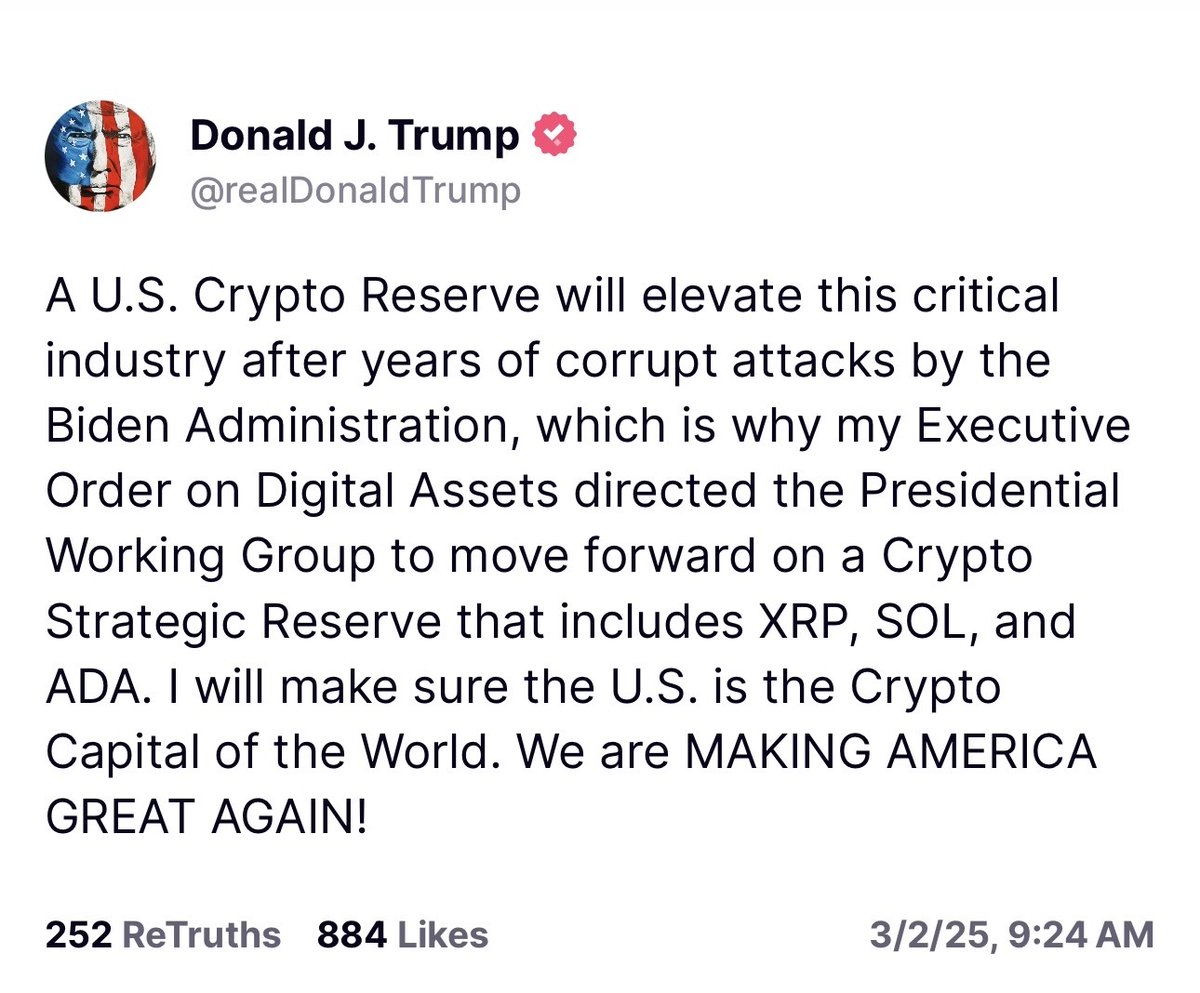
Trump's proposal for a new US Crypto Reserve. But here's the kicker - it's not just focused on Bitcoin and Ethereum.
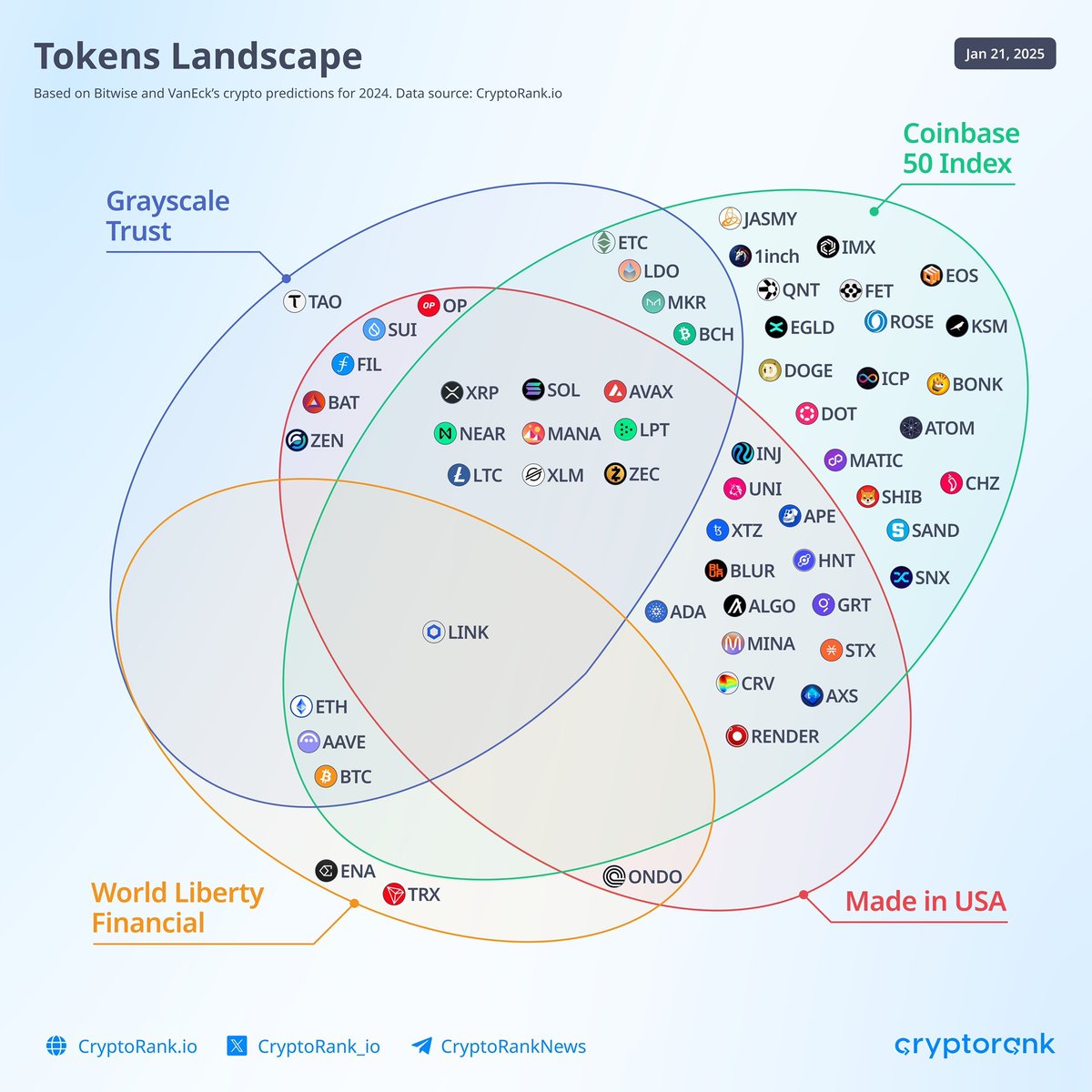
They're adding XRP, Solana, and Cardano to the mix. Yes, you read that right. 🤯
Why this matters:
1. Legitimacy boost: Adding these altcoins to a national reserve gives them unprecedented credibility
2. Regulatory clarity: This move could fast-track clearer crypto regulations
3. Market impact: Expect major price action as traders scramble to get ahead of this news
But let's be real - this isn't just about crypto. It's a power play.
Trump's trying to position the US as the global crypto leader, challenging China's digital yuan ambitions. It's the financial Cold War of the 21st century.
Honestly, I'm stunned. This is the kind of bold, unexpected move that could reshape the entire crypto landscape.
Remember when everyone said XRP was dead after the SEC lawsuit? Or that Solana would never recover from the FTX fallout? This changes everything.
But here's my burning question:
Is this actually good for crypto?
Sure, government backing provides legitimacy. But doesn't it also go against the whole decentralized ethos of crypto?
What do you think?
Is Trump's Crypto Reserve a game-changer or a step in the wrong direction?
Let me know in the comments. I'm dying to hear your takes on this.
#Crypto #Trump #DigitalCurrency #Blockchain #FinTech #CryptoRegulation #XRP #XRPArmy #CardanoCommunity #Solana
The Crypto Winter is Thawing
SEC's Regulatory U-Turn Signals a New Dawn
Holy sh*t. Did you see what just happened? The SEC just closed investigations into Robinhood, Coinbase, AND OpenSea. This isn't just big news - it's seismic.
Let me break this down for you:
1. Robinhood - The trading app that democratized investing is now free from regulatory scrutiny. This is huge for retail investors.
2. Coinbase - The largest U.S. crypto exchange just dodged a bullet. The "operate as an unregistered securities exchange" allegation? Gone.
3. OpenSea - The NFT marketplace giant no longer has to worry about NFTs being classified as securities. Innovation in the digital art space can now flourish unhindered.
But here's why this matters even more:
• It signals a massive shift in the SEC's approach to crypto regulation. We're moving from "regulation by enforcement" to a more collaborative, innovation-friendly stance.
• It indicates that the new administration is serious about fostering crypto innovation in the U.S. No more forcing companies offshore due to regulatory uncertainty.
• This could trigger a new bull run in the crypto market. Institutional investors who were sitting on the sidelines due to regulatory concerns? They're about to jump in.
I've been in this space since 2017, and I can tell you - this is one of the most significant developments I've seen. It's not just about these three companies but the entire ecosystem.
I have said the next bull run would be driven by regulatory clarity. Well, folks, we're seeing the first domino fall.
But let's not get ahead of ourselves. This doesn't mean it's a free-for-all. The SEC is still watching, and companies must operate ethically and transparently.
My advice to founders in the space:
1. Use this opportunity to innovate, but do it responsibly. 2. Build with compliance in mind from day one. 3. Engage with regulators proactively. They're more open to dialogue now than ever before.
The crypto winter has been long and hard. But spring is coming, bringing with it a new era of innovation, investment, and growth.
Are you ready for it? How do you think this regulatory shift will impact your projects or investments?
Let's discuss this in the comments. And remember, in crypto, the only constant is change. Adapt or get left behind.
#CryptoRegulation #SECUpdate #BlockchainInnovation #CryptoNews #FinTech #Coinbase #OpenSea #Robinhood
🚀 Is Jerome Powell about to ignite a crypto revolution?
Brace yourselves, folks. The Fed Chair just dropped a bombshell that's got the entire crypto world buzzing.
Here's the scoop:
1. Powell hinted at a potential green light for crypto banking. Yes, you heard that right. 🤯
2. This isn't just another false alarm. We're talking about a seismic shift in how traditional finance views digital assets.
3. But here's the kicker - it's not all sunshine and rainbows. Powell emphasized the need for robust regulation. Translation: Get ready for some serious hoops to jump through.
4. The big question on everyone's mind: Will this open the floodgates for institutional adoption? 🏦💰
5. Let's be real though - this could be a double-edged sword. More regulation might mean less of the wild west we all secretly love about crypto.
6. My hot take? This is the beginning of the end for crypto as we know it. But it's also the start of something potentially much bigger.
Honestly, I'm torn. Part of me is excited about the legitimacy this brings to the space. The other part is worried we're losing the essence of what made crypto so revolutionary in the first place.
Remember when Bitcoin was just a bunch of cypherpunks trying to stick it to the man? Now we're practically begging for the man's approval. Oh, how the turntables... 😅
But let's not kid ourselves - this was always the endgame. Mainstream adoption means playing by some rules. The question is: at what cost?
I've seen countless startups pivot from "disrupt the banks" to "partner with banks" faster than you can say "seed round." Is the entire crypto industry about to do the same?
Here's what I think happens next:
1. A flood of banks will rush to launch crypto services. 2. We'll see a massive influx of institutional money. 3. Regulation will tighten, squeezing out smaller players. 4. The line between TradFi and DeFi will blur.
But here's the million-dollar question (or should I say, million-Bitcoin question):
Is this the validation crypto needs to go truly mainstream, or are we selling our soul to the very system we sought to replace?
What's your take? Are you excited about Powell's hints, or do you think this spells trouble for the crypto ethos?
Let's hear it in the comments. After all, we're all in this rollercoaster together! 🎢
#CryptoBanking #JeromePowell #FederalReserve #CryptoRegulation #BlockchainRevolution #FinTechDisruption
The new stablecoin in town is shaking up the crypto world. But this isn't just another digital asset - it's a game-changer.
As Europe takes steps to ban Tether, a seismic shift is happening in the stablecoin landscape. Enter RLUSD, Ripple's regulated stablecoin that's poised to become a major player in this space. Why? Because it's not just about technology anymore - it's about compliance and trust.
Let's break this down:
1. The Tether Situation
Tether, once the darling of the crypto world, is facing increasing scrutiny. Europe's move to potentially ban it signals a broader trend: regulators are cracking down on unregulated stablecoins. This isn't just a European issue - it's a global wake-up call.
The slow death of Tether isn't just about one stablecoin falling out of favor. It represents a shift in how we view digital assets. The wild west days of crypto are coming to an end, and that's not necessarily a bad thing.
2. Enter RLUSD
Ripple's RLUSD isn't just another stablecoin - it's a regulated one. In a world where compliance is becoming king, this is huge. Here's why:
- Regulatory Compliance: RLUSD is designed to meet regulatory standards from the get-go. This isn't an afterthought - it's baked into its DNA. - Ripple's Reputation: Love them or hate them, Ripple has been at the forefront of working with regulators. They're not trying to circumvent the system - they're trying to work within it. - Stability: As a stablecoin, RLUSD aims to provide the benefits of crypto without the wild price swings. This makes it attractive for both individual users and institutions.
3. The ISO 20022 Connection
Now, let's talk about ISO 20022. If you're not familiar with it, you should be. It's the new global standard for financial messaging, and it's revolutionizing how financial data is communicated across the world.
Why does this matter for RLUSD and XRP?
- Global Interoperability: ISO 20022 enables seamless communication between financial institutions worldwide. RLUSD and XRP, being designed with this standard in mind, are positioned to integrate smoothly into this new financial ecosystem. - Enhanced Data Rich Messaging: ISO 20022 allows for more detailed, structured financial messages. This means better tracking, reduced errors, and improved compliance - all crucial for a regulated stablecoin like RLUSD. - Future-Proofing: As more financial institutions adopt ISO 20022, assets that are compatible with this standard will have a significant advantage. RLUSD and XRP are ahead of the curve here.
4. The Bigger Picture
What we're witnessing isn't just about one stablecoin replacing another. It's about a fundamental shift in how we approach digital assets:
- From Unregulated to Regulated: The move towards regulated stablecoins like RLUSD signals a maturing market. - From Isolated to Integrated: ISO 20022 compatibility means these digital assets can play nice with traditional financial systems. - From Speculation to Utility: The focus is shifting from price speculation to actual use cases in global finance.
5. The Role of XRP
Let's not forget about XRP in all of this. As Ripple's native digital asset, XRP stands to benefit significantly from these developments:
- Liquidity Provider: XRP can serve as a bridge currency, providing liquidity for RLUSD transactions across different currencies and financial systems. - Speed and Cost: XRP's fast transaction times and low costs make it an ideal partner for RLUSD in cross-border transactions. - Regulatory Clarity: As Ripple continues to navigate regulatory waters, the increased clarity around XRP could boost its adoption alongside RLUSD.
The landscape of digital finance is changing rapidly. The potential ban of Tether in Europe, the rise of regulated stablecoins like RLUSD, and the global adoption of ISO 20022 are all pieces of a larger puzzle. We're moving towards a more integrated, regulated, and efficient global financial system.
For those of us in the crypto and fintech worlds, this is both a challenge and an opportunity. The question is: are we ready to adapt and thrive in this new environment?
What do you think? Is the shift towards regulated stablecoins and ISO 20022 compatibility the right move for the crypto industry?
Or are we losing something in the process?
Let's discuss in the comments!
#Cryptocurrency #Stablecoins #FinancialRegulation #ISO20022 #DigitalFinance #BlockchainTechnology
#XRP #RLUSD
The death of CBDC under Trump's pen? WHAT???
So of course, I had to dig into this bombshell.
On January 23rd, Trump signed an executive order banning central bank digital currencies (CBDCs) in the US. As someone who's been following the crypto space closely, this move sent shockwaves through the industry.
But why would Trump take such a strong stance against CBDCs? Here's what I uncovered:
1. Alignment with campaign promises - Trump positioned himself as pro-Bitcoin and anti-CBDC during his campaign. This order delivers on that pledge.
2. Privacy concerns - CBDCs could potentially give the government more control and visibility into personal finances. Trump framed this as a threat to financial freedom.
3. Supporting existing crypto markets - By banning CBDCs, Trump aims to create a more favorable environment for decentralized cryptocurrencies to thrive.
4. Regulatory clarity - The order establishes a framework for regulating digital assets, providing much-needed guidance for the industry.
5. Political strategy - This move appeals to crypto enthusiasts and those wary of government overreach, potentially expanding Trump's base.
6. Economic philosophy - It aligns with a free-market approach, minimizing government intervention in finance.
The implications of this are huge. It's a complete 180 from the previous administration's approach and positions the US very differently in the global race towards digital currencies.
But here's what I'm wondering - is this truly the death knell for CBDCs in America? Or just a temporary setback?
What do you think? Is Trump's anti-CBDC stance good for crypto adoption and innovation? Or could it hinder America's competitiveness in the digital economy?
Let me know your thoughts! This is a pivotal moment for the future of money.
#Cryptocurrency #DigitalCurrency #Fintech #TrumpPolicy #CBDCs #Bitcoin
🚨 Morgan Stanley's CEO just dropped a crypto bombshell! 💥
Ted Pick, the new head honcho at Morgan Stanley, just hinted at a significant shift in the bank's crypto strategy. And let me tell you, this is BIG news for the financial world.
Why? Because when a Wall Street titan like Morgan Stanley starts eyeing crypto, you know something's brewing. 🍵
Here's the tea:
1. Pick said they're working with U.S. regulators to explore deeper involvement in crypto markets. Translation: They're not just dipping their toes anymore; they're ready to dive in.
2. This move signals a potential sea change in how traditional banks view digital assets. It's not just for the "crypto bros" anymore, folks.
3. Morgan Stanley isn't new to crypto - they've been offering some crypto products to wealthy clients. But this? This is next level.
4. It's a stark contrast to the crypto skepticism we've seen from other big banks. Morgan Stanley is zigging while others are zagging.
5. The timing is interesting, coming right after the SEC approved spot Bitcoin ETFs. Coincidence? I think not.
Here's why this matters:
- It legitimizes crypto in the eyes of traditional finance - It could open the floodgates for other big banks to follow suit - It potentially brings more stability and regulation to the crypto wild west
But let's not get ahead of ourselves. There are still hurdles:
- Regulatory scrutiny is intense (hello, SEC!) - Crypto markets are volatile AF - There's still a lot of skepticism in traditional banking circles
My take? This is a calculated move by Pick to position Morgan Stanley at the forefront of the next financial revolution. It's bold, it's risky, but it could pay off big time.
Remember when Jamie Dimon called Bitcoin a fraud? Pepperidge Farm remembers. And so do I. Times are changing, and Morgan Stanley is making sure they're not left behind.
The question is: Will other big banks follow suit? Or will Morgan Stanley be the lone wolf in this crypto adventure?
What do you think? Is this a smart move by Morgan Stanley, or are they playing with fire? 🔥
#CryptoRevolution #WallStreetMeetsCrypto #FinancialInnovation #MorganStanley #Blockchain #DigitalAssets
The Silk Road saga: A rollercoaster of innovation, controversy, and redemption?
Buckle up, folks. We're diving into one of the most polarizing stories in tech history - the rise, fall, and potential rebirth of Ross Ulbricht and Silk Road.
Let's cut through the BS and get real for a second:
1. The Innovation - Ulbricht created Silk Road in 2011, leveraging Bitcoin and Tor to build what was essentially "eBay for drugs". Love it or hate it, the tech was groundbreaking. It challenged our notions of privacy, freedom, and government control.
2. The Fall - By 2013, Silk Road was pulling in millions. But the feds weren't having it. Ulbricht got slapped with a life sentence and no parole. Harsh? Maybe. Unexpected? Nah.
3. The Controversy - Here's where it gets spicy. Some paint Ulbricht as a libertarian hero, fighting the good fight against government overreach. Others see him as a straight-up criminal who enabled addiction and death. Where do you stand?
4. The Pardon - Plot twist! Trump pardoned Ulbricht in 2025. Cue the Twitter meltdown. But seriously, this raises some big questions about justice, rehabilitation, and second chances in tech.
5. The Future? So, what's next for Ross? Another disruptive startup? A pivot to blockchain? Or will he lay low and write a bestseller? (My money's on option 3)
Here's the kicker: Ulbricht's story isn't just about one man or one website. It's about the ongoing tension between innovation and regulation, privacy and security, individual freedom, and societal good.
As founders and investors, we need to grapple with these issues. Because let's face it - the next big disruptor might be walking the same fine line.
So, I'm curious: If you were in Ulbricht's shoes post-pardon, what would your next move be? Build something new? Advocate for change? Or get the hell out of dodge?
Drop your thoughts below. Let's get a real conversation going.
#SilkRoad #RossUlbricht #TechEthics #Entrepreneurship #Disruption #SecondChances
The amount of low-hanging fruit available to meaningfully advance investor protection and innovation is enormous. It's refreshing to see staff acknowledged in the announcement. Many have advocated for this for years, to little avail. Best of luck to @HesterPeirce on this important work.
The Trumpocoin Phenomenon: A New Era for Crypto or Just Another Meme?
As I scrolled through my feed this morning, I couldn't help but notice the buzz around Donald Trump's foray into cryptocurrency on his first day back in office. It's a moment perfectly encapsulates the intersection of politics, technology, and finance in our ever-evolving digital landscape.
Let's break this down:
1. Meteoric Rise: Trump's newly minted cryptocurrency skyrocketed to a market cap of over $10 billion within hours. That's not just impressive; it's unprecedented for a political figure's branded digital asset.
2. Bitcoin's Response: Interestingly, Bitcoin also hit a record high as Trump took office. Coincidence? Or a sign of broader market confidence?
3. Family Affair: It's not just Donald – Melania Trump has her own coin, too. The Trump family seems to be all-in on crypto.
4. Regulatory Grey Area: The Trumps are calling these "fungible crypto assets" rather than cryptocurrencies. This semantic choice could have significant implications for how these assets are regulated.
5. Political Leverage: With David Sacks overseeing crypto policy, there's talk of a potential executive order for the government to buy and hold Bitcoin. This could dramatically shift the crypto landscape.
6. Ethical Concerns: As always with the intersection of politics and business, ethical questions abound. Is this a legitimate business venture or an attempt to monetize the presidency?
While it's easy to get caught up in the hype (or the controversy), I think it's crucial we take a step back and consider the broader implications:
- What does this mean for the future of political fundraising and campaign finance? - How might this impact global financial markets and the adoption of cryptocurrencies? - What are the potential security risks of having a sitting president so closely tied to a volatile digital asset?
As someone who's been in the tech industry for years, I've seen my fair share of boom-and-bust cycles. The Trumpcoin phenomenon is fascinating, but it's important to approach it with a critical eye and a balanced perspective.
What are your thoughts on this development? Do you see it as a game-changer for crypto adoption, or just another fleeting meme coin? And how do you think this will impact the broader conversation around digital assets and government regulation?
Let's have a thoughtful discussion in the comments. Your insights might just help shape the future of this rapidly evolving space.
#Cryptocurrency #TrumpCoin #DigitalAssets #BlockchainTechnology #FinTech #PoliticalInnovation