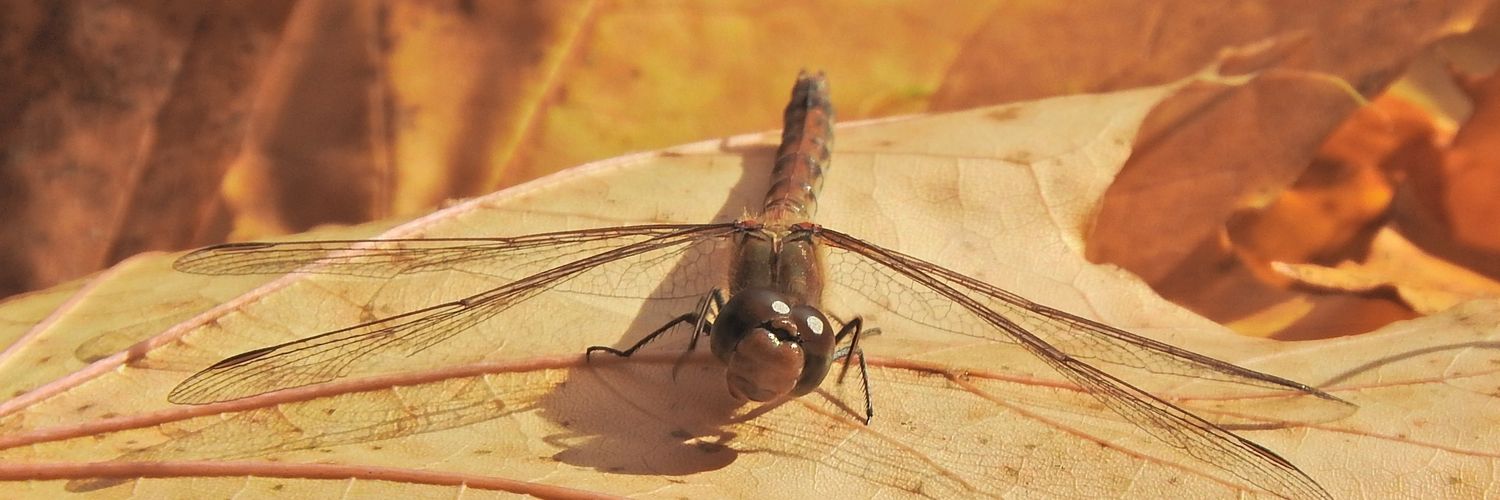
@broucek_t Díky, u vody toho člověk potká hodně a hady mám v oblibě, ale jsou dost plaší a rychlí (tedy na mě a na zaostřování foťáku), takže se mi málokdy podaří udělat nějakou pěknou fotku.
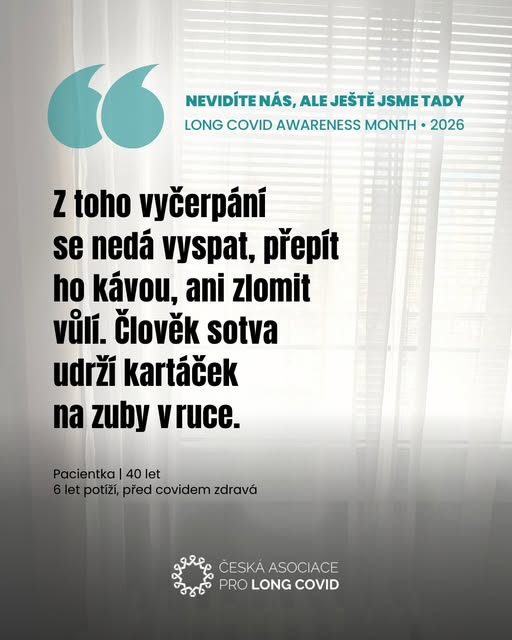
Při čištění zubu a jídle musím ležet.
https://t.co/z5lTLVKtlS
Nejtěžší stupně ME/CFS a long covidu znamenají být upoután na lůžko 24 hodin denně. Bez přehánění. To je bohužel realita části nejvážněji zasažených pacientů.
@longcovidportal
Jemný dotek jako bodnutí, závrať bez příčiny – a dosud žádná léčba. Holandský tým přenesl protilátky od 34 pacientů s long covidem do zdravých myší a vyvolal trvalou přecitlivělost na bolest. Tři další studie ukazují stejným směrem.
https://t.co/D2Zq0SdFtT
@infektolog A budete tedy tlačit na nějaká preventivní opatření, včetně např. bariérové ochrany dýchacích cest? Nebo je v pohodě nechat populací stále šířit covid a další infekce bez "povšimnutí"? To povšimnutí dávám do uvozovek, protože si všichni všímají, že je populace stále nemocnější.
Česká asociace pro long covid založila kampaň “Nevidíte nás, ale ještě jsme tady”
Příběhy lidí, kteří jsou pro okolní svět neviditelní.
Na https://t.co/8UIce1925U můžete také podepsat výzvu za lepší systémovou péči o pacienty s long covidem.
#jestejsmetady2026#longcovid
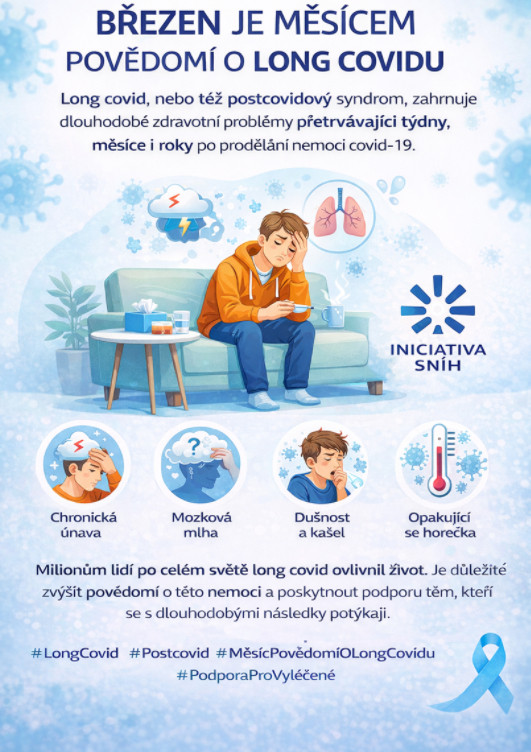
Březen je celosvětově uznáván jako měsíc povědomí o long covidu. Cílem iniciativy je upozornit na tato chronická onemocnění COVID-19, která postihují miliony lidí po celém světě, a bojovat za lepší výzkum, léčbu a podporu pacientů.
#LongCovid#Postcovid#Podpora#ProVylecene
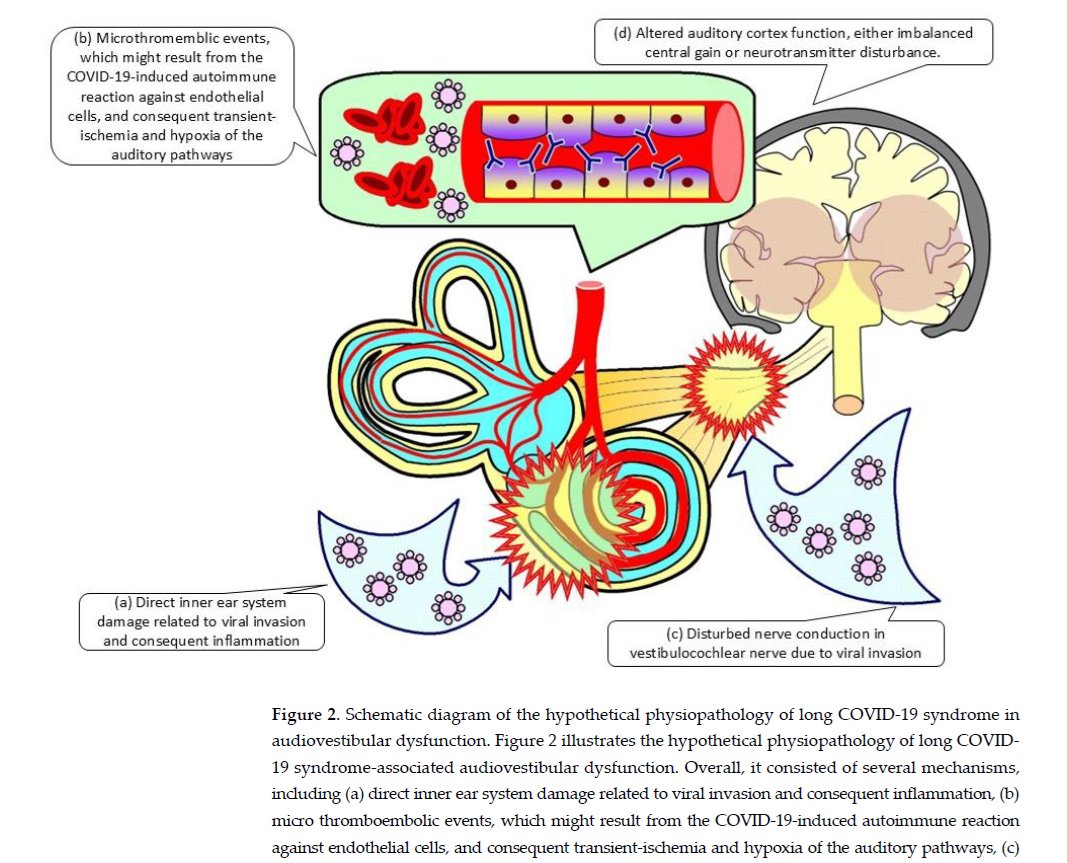
Audiovestibular Dysfunction Related to Long COVID-19 Syndrome: A Systematic Review of Characteristics, Pathophysiology, Diagnosis, and Management
🔥Interesting international review article that synthesizes the current knowledge on audiovestibular dysfunction related to long COVID-19 syndrome. Vestibulocochlear nerve (Cranial Nerve VIII)
➡️Their review data:
- Acute COVID-19: auditory symptoms 21.9%, vestibular symptoms 34.9%,
- Persistent at 6 months: auditory dysfunction 1.99%, vestibular dysfunction 3.99%,
- In long COVID (various follow-ups): tinnitus 30–39% (most common auditory symptom), hearing loss 11–15%, vertigo/unsteadiness 34–60% (often central origin),
- ~15% combined hearing loss + tinnitus, with ~1/5 of affected patients report severe symptoms,
- Higher in females but occurs in both adults and children,
- May be underestimated (even in asymptomatic cases!),
- Pathophysiology (hypothetical):
Direct inner ear/vestibulocochlear nerve invasion (ACE2/TMPRSS2/FURIN), microthromboembolic events, central auditory gain increase, reduced cortical GABA, neuroinflammation,
- Diagnose:
Standard pure-tone audiometry often insensitive, better tools include extended high-frequency audiometry, TEOAE/DPOAE, ABR, VEMP, vHIT, P300,
- Treatment:
No specific trials, Multidisciplinary care, vestibular rehabilitation, steroids, hyperbaric oxygen (limited evidence),
- And there you have it: Reinfection prevention critical(cumulative damage)!
- Prognosis: most resolve within 6 months, but some persist >12 months, with a high quality of life impact.
- The review does not examine vaccination effects in depth.
➡️Conclusion:
Long COVID can silently inflict lasting inner-ear and central auditory damage in up to 60% of patients, risking permanent sensorineural hearing loss, debilitating tinnitus, and chronic vestibular disability. Early screening and intervention are essential to prevent irreversible harm.
And as mentioned in this review: AVOID REINFECTIONS!
https://t.co/RGhVxbLfDX
SARS-CoV-2 variants are showing resistance to key antiviral drugs like Paxlovid and Xocova due to global mutations in the virus’s main protease.
A multi-drug cocktail strategy is proposed to reduce cross-resistance and improve treatment durability. (1/2)🧵
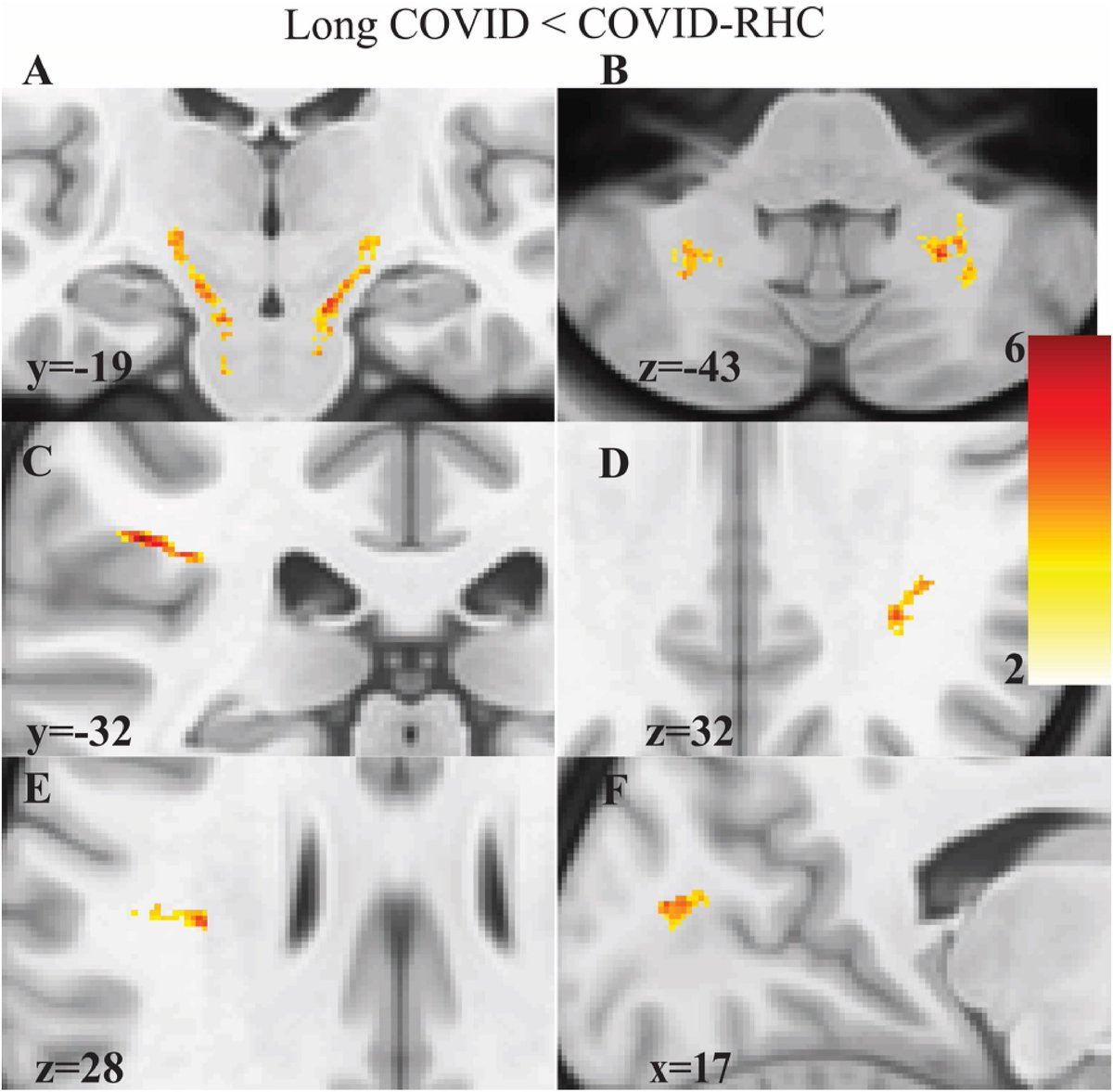
COVID-19 may leave a lasting mark on the brain — even after “full recovery.”
➡️ Advanced MRI shows detectable changes in tissue microstructure and neurochemistry in people months after infection. 1/
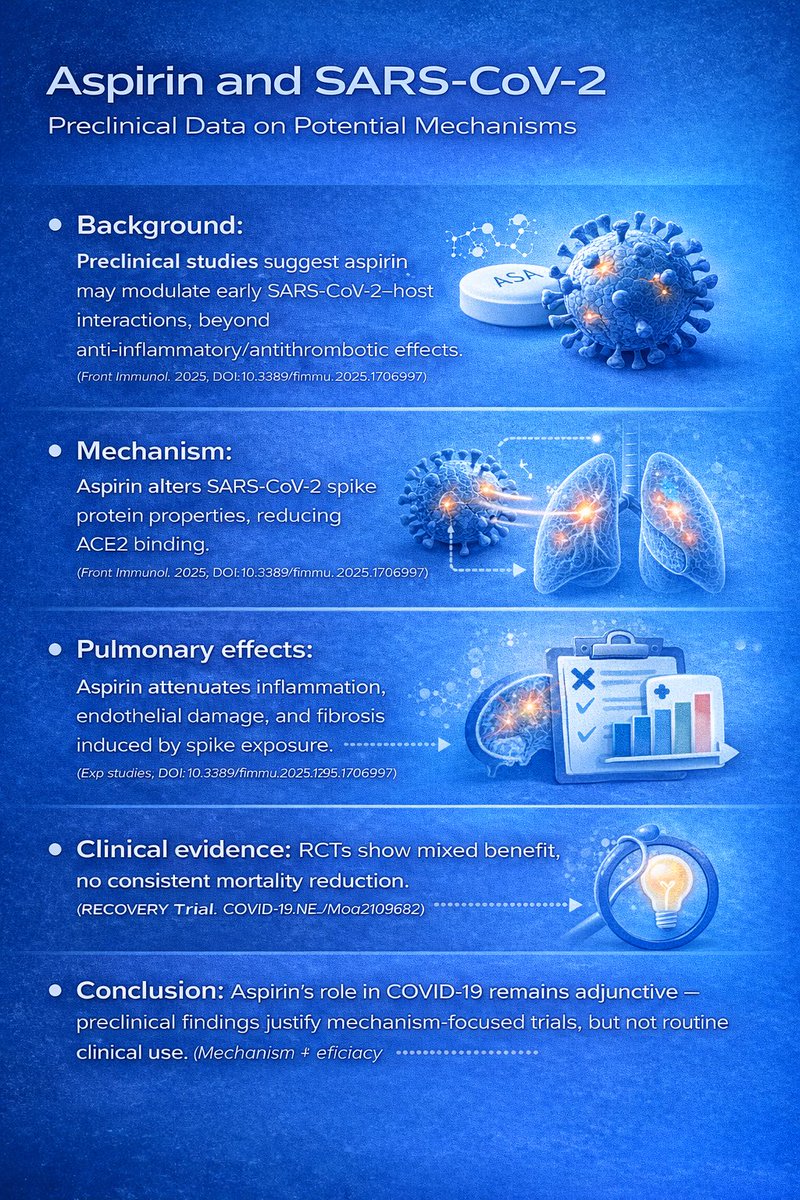
➡️ Preclinical data suggest aspirin may modulate early SARS-CoV-2–host interactions, not only through anti-inflammatory/antithrombotic effects but also via spike protein modulation.
(Ref: Frontiers Immunol. 2025;10.3389/fimmu.2025.1706997)
➡️ Mechanism: Aspirin alters SARS-CoV-2 spike protein properties, reducing ACE2 binding in cell models, suggesting a direct interference with viral entry.
https://t.co/xLNdPTBVaX
➡️ Pulmonary effects: In preclinical lung injury models, aspirin appears to attenuate inflammation, endothelial damage, and fibrosis associated with spike protein exposure.
https://t.co/vCiywTRWxt
➡️ Clinical translation: Effects likely depend on timing (early infection). However, large RCTs such as RECOVERY showed mixed or modest benefits without consistent mortality reduction.
https://t.co/Wl0KLGOYeI
👉 Conclusion: Aspirin’s role in COVID-19 remains adjunctive and hypothesis-generating. Mechanistic insights justify focused trials, but preclinical effects do not support routine clinical use for COVID-19 outside established indications.
Why does #LongCOVID cause persistent GI symptoms?
➡️ New mechanistic work shows that intestinal SARS-CoV-2 reservoirs impair epithelial repair, identifying the gut as a key local driver of LongCOVID GI pathology.
➡️ Mechanism uncovered:
Viral persistence disrupts very-long-chain fatty acid (VLCFA) metabolism, suppressing PPAR signaling and peroxisome abundance, leading to defective intestinal stem-cell differentiation and epithelial regeneration.
➡️ Therapeutic insight:
FDA-approved drugs sodium phenylbutyrate & fenofibrate restored epithelial repair, reduced diarrhea, inflammation & dysbiosis — highlighting the VLCFA–PPAR–peroxisome axis as a promising treatment target for GI LongCOVID.
H/T: @CatchTheBaby
https://t.co/8WTIlfqQMj
New study shows that people with #LongCOVID and neurological symptoms had a ~59% increase in plasma #pTau-181 — a phosphorylated tau protein linked to Alzheimer’s pathology — compared with their pre-COVID levels. 1/
The hygiene hypothesis is being eroded
Infections at a young age correlate with severe infections later in life, few infections in youth correlate with less infections in adulthood
Where was the “strengthening of kids immune system” from infections?
https://t.co/f7rjcBOxvK
Researchers analyzed genetic data from nearly 1.4 million people and found a causal link between blood clot risk and long COVID, regardless of how severe the initial infection was.
https://t.co/l1Yw9gH5OV