I’m not sure who needs to hear this, but denying patients discharge paperwork and medications because they’re self discharging is cruel and harmful.
They might be acting against advice, but we should still make their discharge as safe as possible.
It IS easily achievable. It really is // We can easily end child poverty in the UK. Here are five things to know | Poverty | The Guardian https://t.co/rx1HLcp1Ha
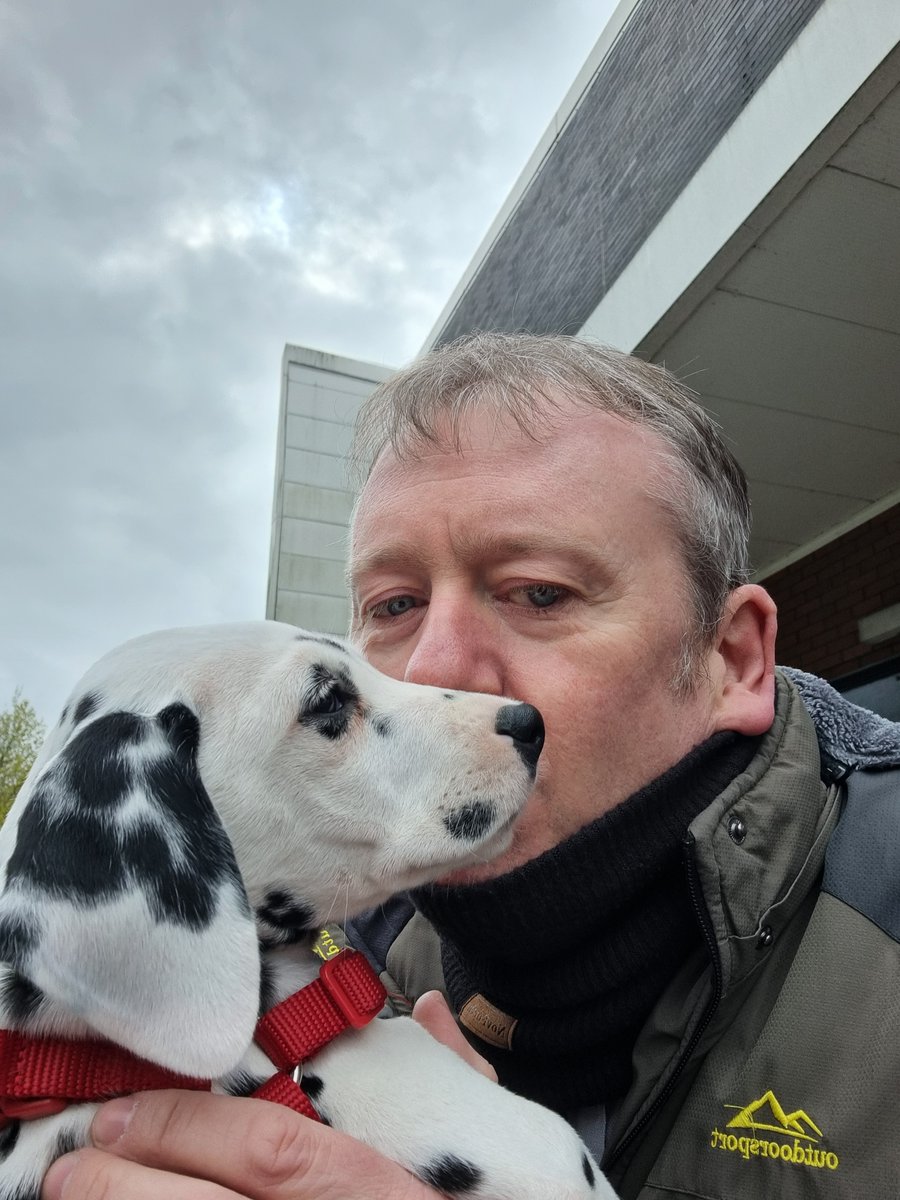
What's the best way to distract Pathology staff from their work?* Only a Dalmatian pup!
This is Blue 🩵 He belongs to our Central Services supervisor Stacey (although on the verge of being stolen by Jonny!).
*no samples were delayed in the taking of this 📸, promise!
#TeamSFH
Think about this. 16-year-old children are dumped in bedsits, shared accommodation, and hotels with no support whatsoever, and this government thinks it's OK. When I speak to these young people, the fear in their eyes is something you never forget. Grown men banging on your door at 2am, drug gangs parked up waiting to pounce and force you into criminal activity. For these kids, there's no luxury breakaway to university or that dream career. It results in a lifetime of misery. And It's a certain area of care totally ignored. Children, just children. I survived my ordeal, and I personally do not want to see any more children suffer because of social neglect. #changeiscoming, and that's why I'm campaigning to make care experience a protected characteristic. Please think about this when your MP comes knocking begging for your vote. Tell them to back this motion. Children in care are still children.
The social contract of “Keep your head down, work hard and jump through the hoops and you will get what you deserve” is entirely broken.
How many doctors who meet the person spec to progress will be left without jobs?
The King has been diagnosed with an incidental cancer following what on the NHS would have been an elective op.
Waits are now so big in England, approx 27k people will have an incidental cancer like him but won't know yet as they've not been seen. Scary. https://t.co/G16IEuQ5rx
Disgusted to hear Rishi Sunak make a transphobic jibe in the Commons, even as Brianna Ghey's mother is in the public gallery.
Brianna's horrific murder – which was confirmed as being motivated by transphobia – should have finally taught politicians not to spread this hate.
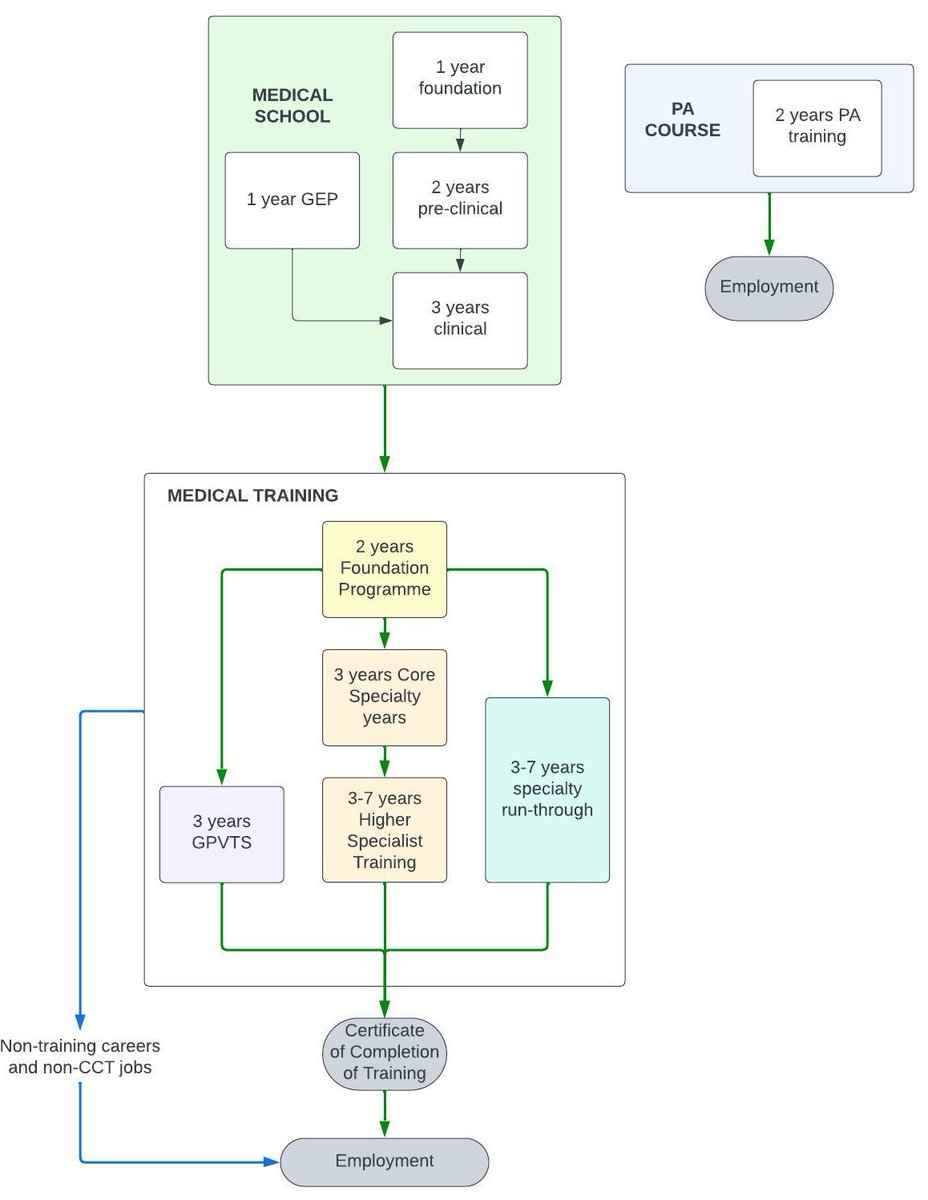
A trained PA is Employed. Full stop. No more formal training. No more mandatory exams.
What's the doctor equivalent of that? 🤔
Oh yeh, it's a GP, Consultant, or non-training doctor.
So let's show how we get to that point, compared to the PA's journey:
4/5
The authors of this article have been subjects of complaints to BMJ and their employers. Please write to [email protected] to express appreciation for the article and support for them publishing it !
https://t.co/Wrts6lN7gz https://t.co/Wrts6lN7gz
We need to solve the overcrowding crisis in A&E. I may have the solution!
It came to me whilst reading my son " A squash and a squeeze" by Julia Donaldson (author of the Gruffalo)
A&E Squash and a Squeeze, adapted by Rob Galloway
A little old A&E, lived all by itself , with cubicles and chairs and a water jug on the shelf.
A wise old health secretary heard her grumble and grouse, “There’s not enough room in my A&E house.
Wise old health secretary, won’t you help me, please? My A&E house is a squash and a squeeze.”
“Take in your drunk and disorderly patients” said the wise old health secretary man
“Take in my drunk and disorderly patients? What a curious plan.”
Kept in A&E, instead of a cell, they vomited on the rug,
And flapped round the cubicle, knocking over the jug.
.
The little old A&E cried, “I implore? It was poky before and it’s tiny for more.
My nose has a tickle and there’s no room to sneeze. My A&E house is a squash and a squeeze.”
And she said, “Wise old health secretary, won’t you help me, please? My A&E house is a squash and a squeeze.”
“Take in your awaiting medical bed patients,” said the wise old health secretary man.
.
“Take in my awaiting medical bed patients? What a curious plan.”
Well, the awaiting medical bed patients pulled back the curtains and trod on the bed,
``then sat down to eat via her long term peg.
The little old A&E cried, “Glory be! It was tiny before and it’s titchy for more.
The drunks attacked the awaiting medical bed patients and the awaiting medical bed patients got fleas. My house is a squash and a squeeze.”
And she said, “Wise old health secretary, won’t you help me, please? My A&E house is a
squash and a squeeze.”
“Take in your awaiting mental health bed patients ” said the wise old health secretary man.
“Take in my awaiting mental health bed patients ? What a curious plan.”
So she took in awaiting mental health bed patients who kept pressing the alarms in cubicle ten
And raising everyone’s blood pressure again and again.
The little old A&E cried, “Stop, I implore! It was titchy before and it’s teeny for more.
Even the mental health patients in the cubicles agrees, My A&E house is a squash and a squeeze.”
And she said, “Wise old health secretary, won’t you help me, please? My house is a
squash and a squeeze.”
“Open an urgent care centre,” said the wise old health secretary man
.
“Open an urgent care centre? What a curious plan.”
Well, the urgent care centre attracted the 111 referred worried well,
Whose long waits created an unpleasant waiting room smell
The little old A&E cried, “Heavens alive! It was teeny before and it’s weeny for more
I’m tearing my hair out, I’m down on my knees. My A&E house is a squash and a squeeze.”
And she said, “Wise old health secretary , won’t you help me, please? My house is a squash and a squeeze.”
“Take them all out,” said the wise old health secretary man.
“But then I’ll be back where I first began.”
So she persuade the police to remove the aggressive men
“That’s better – at last I can sneeze again.”
They opened up ward beds and she gave a jig
“My A&E house is beginning to feel pretty big.”
She persuaded the 111 patients to self discharge where safety would allow.
“Just look at my A&E house, it’s enormous now”.
“Thank you, old health secretary for saving the day, Our A&E is so big now, our staff might just stay.
.
There’s no need to grumble and there’s no need to grouse. There’s plenty of room in my A&E house.”
And now she’s full of frolics and fiddle-de-dees. It isn’t a squash and it isn’t a squeeze.
Yes, she’s full of frolics and fiddle-de-dees.
It isn’t a squash or a squeeze.
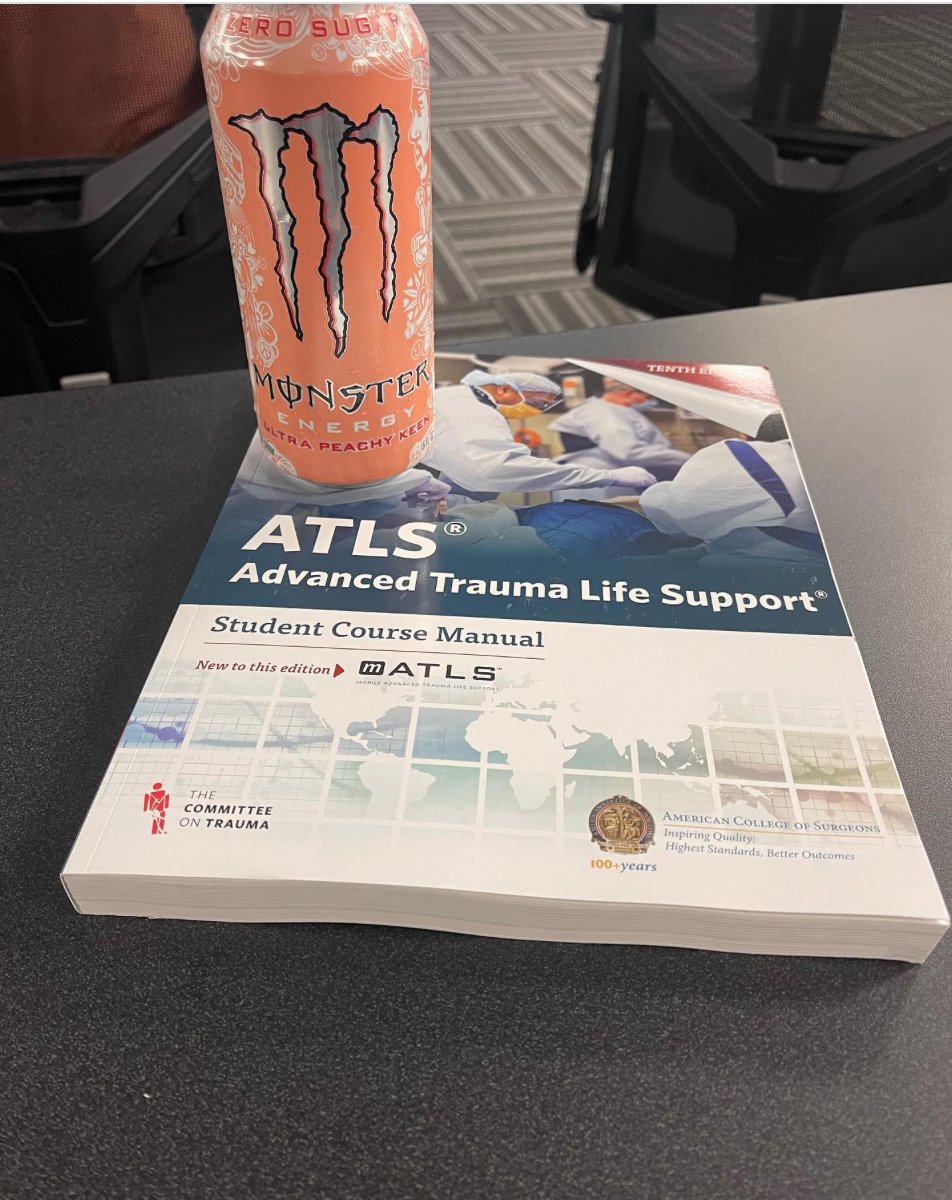
Yesterday I completed my once every four years refresher course of ATLS (Advanced Trauma Life Support System.)
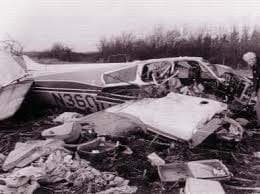
I am one of over 1 million health care providers who have taken the course, a course borne of a tragic private plane crash almost 50 years ago.
ATLS is systematic approach to treating injured patients when they arrive in an emergency room, whether it’s a rural hospital in Haiti or a top trauma center in Houston. It has been taught in over 65 countries. It’s a common language, a universal protocol. A method to insure that severely injured patients get the same proper care wherever they are.
But care of the injured patient was not always systemized in a universal fashion. The origins of ATLS were born in Lincoln, Nebraska nearly 50 years ago.
In 1976, an orthopedic surgeon from Lincoln, Dr. James Styner, was piloting his small propeller plane carrying his wife and four children back from a wedding they attended in California. As they got closer to home on their long trek, the weather deteriorated over rural parts of Kansas.
With weather worsening and darkness approaching, Styner had to choose between turning around and flying away from home, landing in the middle of nowhere, or forging ahead. Styner pushed forward.
After flying over 1,000 miles and only 60 miles from home, tragedy struck. With decreased visibility due to clouds, fog, and darkness, James Styner become disoriented and crashed the plane. They flew through trees at around 160 miles per hours, shredding off both wings, and crashed into a corn field.
Styner survived the crash. His wife was ejected from the cockpit and died instantly when a piece of the propeller hit her head. His four children were in back of the plane and survived but three of them suffered head injuries and were unconscious. After waiting for help for hours in the desolate field, Styner decided he had to look for help. He left his oldest child behind to watch his three siblings, and walked in the direction of distantly appearing headlights from passing cars.
He eventually reached a nearby road, flagged down a car for help, and they returned to the field to retrieve his children.
Styner learned he had crashed near a small town called Hebron, Nebraska, a town he would soon learn which had a small hospital not well equipped to handle severely ill or injured patients. Only two doctors staffed the small hospital and they had little experience with severe trauma.
House after the crash and in the Emergency Room at Hebron with his 4 injured children, Styner was shocked at the care, or perhaps better said, lack of appropriate care given to his injured children.
Later he would say: “When I can provide better care in the field with limited resources than what my children and I received at the primary care facility, there is something wrong with the system, and the system has to be changed.”
He demanded the he and his children be transferred out of that hospital to the the large hospital at which he practiced, 60 miles away in Lincoln, Nebraska.
Over the course of time, Styner and his children had complete physical recoveries, but he remained troubled by his experience at the small hospital. Dr. Styner would vocally complain about the small town hospital.
One of his medical colleagues, an ER doc, grew tired of his complaining and told him to change the system. Well in this case there was no system. As Styner said: “You have to train them before you can blame them.”
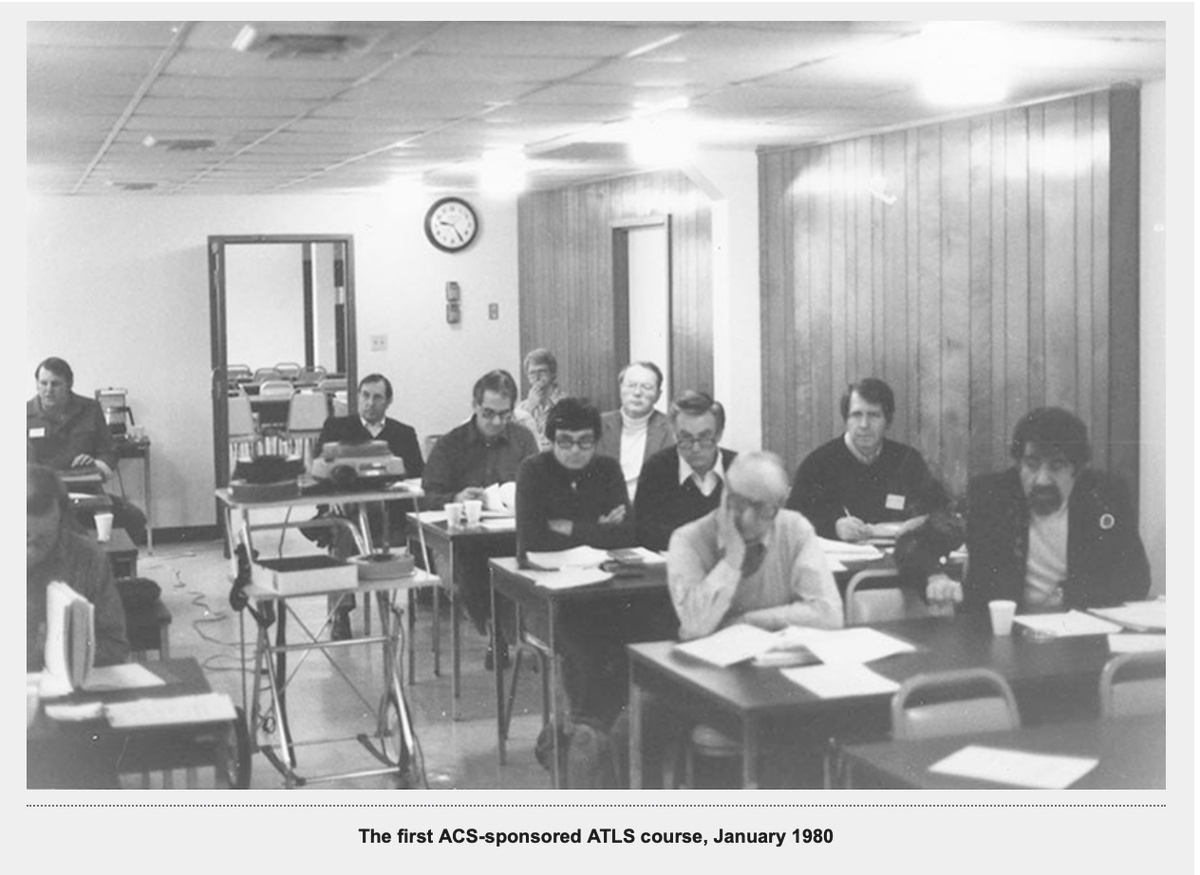
So Styner together with the help of colleagues created a protocol for the treatment of severely injured patients with the goal of teaching it to health care providers in rural settings. Their system was called ATLS, and first debuted in Nebraska in 1978.
Their little course was picked up the University of Nebraska, and eventually the American College of Surgeons, and by global institutions.
Since it’s humble beginnings in a class in a small town in Nebraska, it was been taught in thousands of classes in over 60 countries to over 1 million providers.
From a personal tragedy to a global protocol which has saved countless lives over decades, James Styner proved several things.
• One person can change the world.
• Humble beginnings don’t reduce the chance of massive succes.
• The solution to complex problems is often to have a systemized protocol in place.
• You have to train them before you can blame them.
#ship30for30
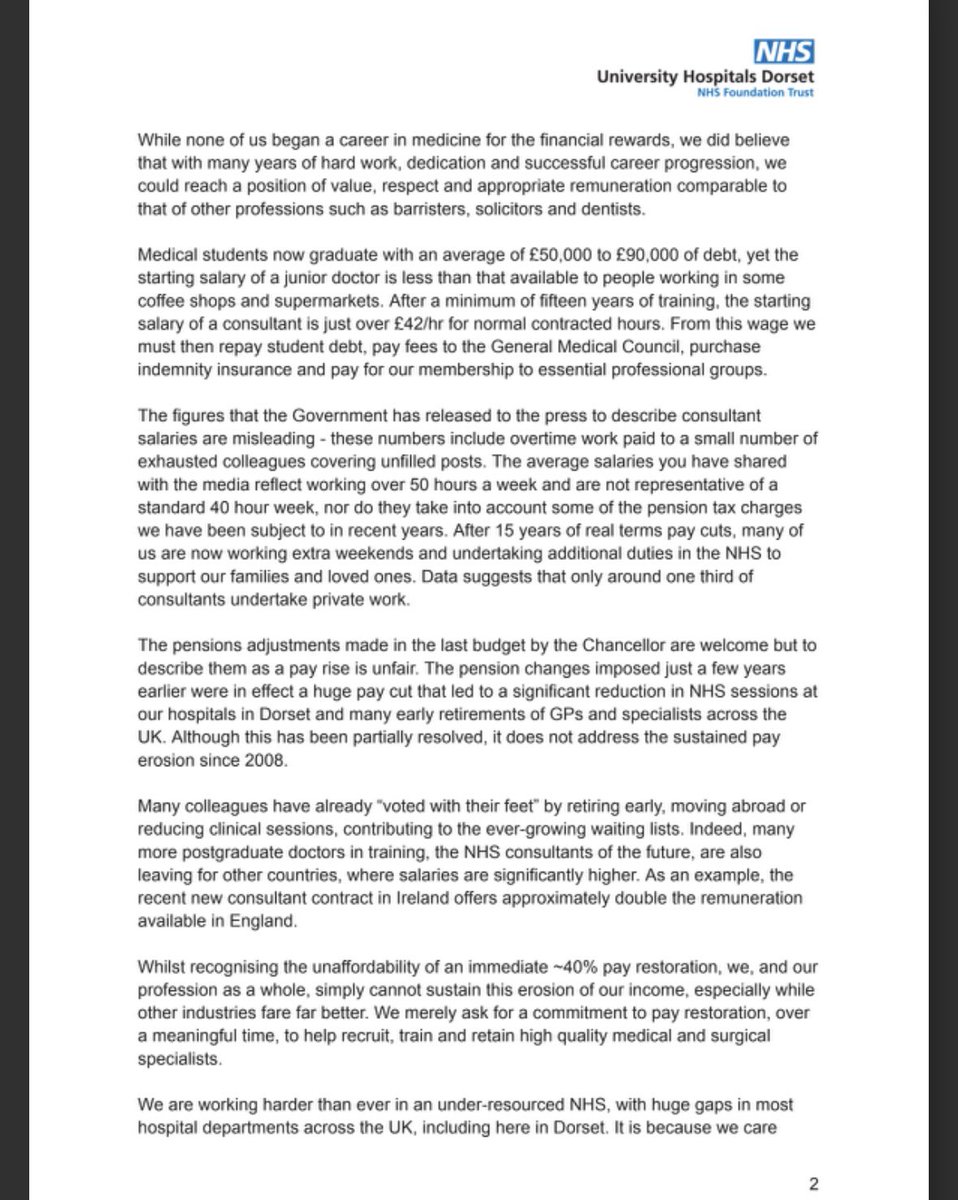
The Consultants of Dorset hospital have written a letter to @SteveBarclay
They strike tomorrow
This letter is incredible
I challenge anyone to refute a single point in it
Worth a read for you too @wesstreeting
Up at 5:30 today for work and v tired but downstairs making coffee with BBC news on… someone, somewhere, thought it was a good idea to use a clip with the emergency buzzer going off in the background for the story on nursing strikes🥵 why?
Medical school could 100% be shorter if students were guaranteed:
- world class placements on well-staffed wards with doctors who actually have time to train them
- a generous bursary that means none of them need part time jobs
Funnily enough, this plan provides neither.
BREAKING: Rishi Sunak has announced a new ATLS Protocol.
“This new protocol is very simple” explained the PM. “Forget haemorrhage control. Just keep giving blood and if you don’t have enough blood just give some fluid and eventually the patient will just sort themselves out.”