@AussieVal10 The spin doctors are working overtime after we where handed a shit sandwich. The government should have limited the total amount of house's one investor can negative gear. Say 2
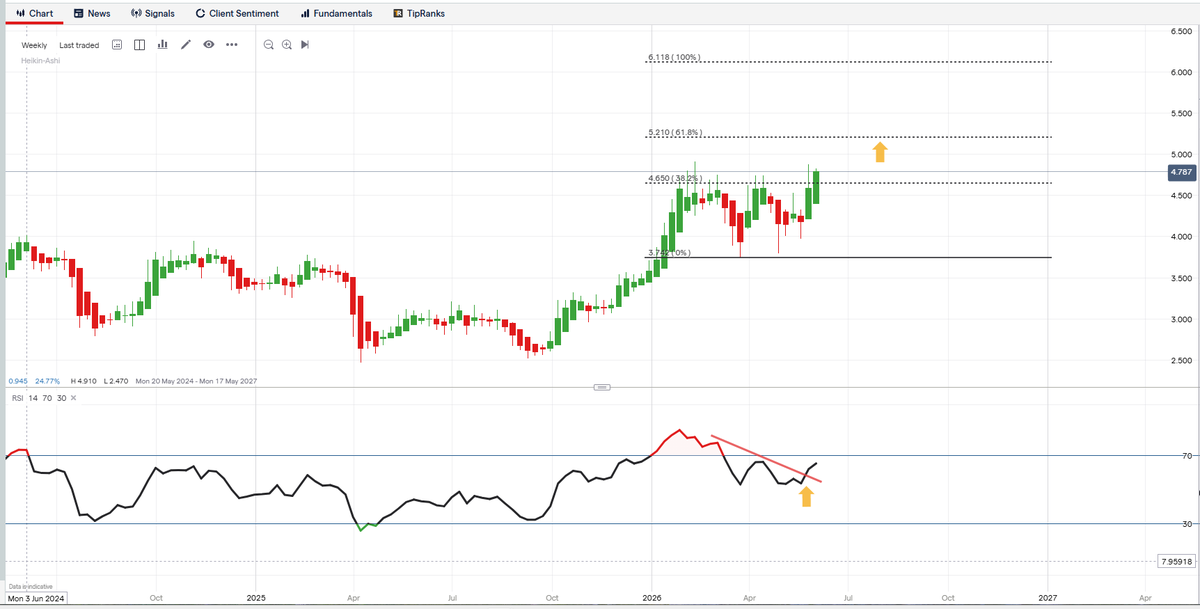
hi all. this S32 weekly chart looks interesting. if the s/p can close the week above the .382 fib of $4.65 then the .618 fib $5.21 is a real target (yellow arrow). You can also see a break in the RSI resistance line which could help with the target being hit. DYOR.
@chrismartenson@Logically_JC This trend of no kids was happening before this last spike in inflation. The globalists want ladies to think dogs and cats are there children. A real shame
Why ETH Price Must Rise with TVL
(The following was my response to someone and I thought it was worth sharing more broadly.)
It's not that AUM doesn't map to TVS. Those terms are basically synonyms. The difference lies in the entities that hold the assets.
An asset manager, say BlackRock, can manage $14T in AUM with only a $170B market cap because the security of those assets isn't tied to the value of BlackRock.
On Ethereum, because of PoS, someone could take control of the network. I'm going to use an extreme example. Let's say the market cap of Ethereum is $1 and the TVS is $1 Trillion (stocks, bonds, stables etc.) It's economically profitable for an attacker to buy up enough ETH and stake it to take full control of the network. Could also just be a geopolitical attack at scale.
The more valuable Ethereum becomes as infrastructure, the more valuable ETH must become as collateral securing that infrastructure. So there's a reflexive security spiral at play. It's not so much a law forcing people to buy ETH but because if ETH stayed too cheap relative to value secured, the network would become economically vulnerable. So markets naturally pressure ETH upward toward a level where attacking the network becomes prohibitively expensive.
Some real world analogs for this dynamic.
-bank capital requirements scale with liabilities
-Military spending scales with value being protected
-gold historically backed empires partly because it represented trusted collateral
What's interesting is the very act of trying to attack the network strengthens it's security budget by forcing the price of ETH higher.
None of the above mentioned is at play for traditional asset managers and their AUM.
The above is why the chart below is so important.
@SkyNewsAust So investors can still negative gear into Australian companies pay fully franked dividends?. If correct, that should be a big win for the XJO?
🚨 ETHEREUM TPS IS ABOUT TO INCREASE 300%+
GLAMSTERDAM could raise Ethereum’s gas limit from 60M to 200M.
That means Ethereum can fit far more activity into every block.
🔹 More transactions
🔹 Cheaper fees
🔹 More room for apps
🔹 Safer bigger blocks with EIP-8037
Ethereum already settles stablecoins, RWAs, DeFi, and institutional flows.
Now the chain everyone already uses is preparing for 3x more activity at lower cost.
EIP-8037 reprices state growth so bigger blocks don’t break the network.
The “ETH is too slow” argument is aging badly.
$ETH
it's interesting to see what could be called a divergence. the fear and greed index with Ethereum is staying above the price line, in the past it has retraced. it will be interesting to see if the price can trend up with what looks like more greed from investors/traders.
Ethereum L1 just woke up.
4 years at 30M gas. Then 36M to 60M (in 3 months). Glamsterdam takes us to 200M this year.
30M to 200M = 6.7x in 12 months.
Closing in on 100 TPS this yr.
10,000 TPS by 2030 was a crazy aggressive hypothetical and amazingly...we're on track?
Ethereum is back.
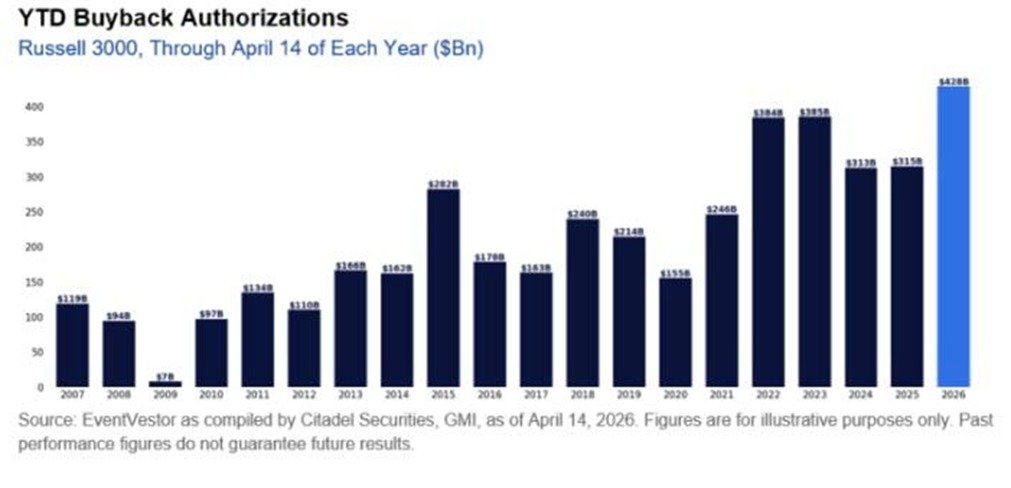
Massive buybacks are coming to the US market:
Buyback authorizations across the Russell 3000 surged +36% YoY, to a record $428 billion so far in 2026.
Authorizations are now +176% above the same period in 2020.
At a historical execution rate of ~90%, US corporates are now on track to repurchase a record ~$1 trillion in shares this year.
In 2 weeks, the corporate buyback window will reopen following the earnings blackout period.
This will bring an additional wave of demand for stocks at a time when the market is already experiencing a historic run.
US corporations are set to be major buyers in the equity market.
It's official:
The world is now experiencing its biggest energy crisis in history, with 600 MILLION barrels of lost oil supply.
US gas prices are up +47% since December and inflation is nearing 4% in a similar path to the 1970s.
What happens next? Let us explain.
(a thread)