I'm a homeschool dad who uses AI. Both descriptions leave out a lot.
The parent trying to make learning fit. The hours of checking and rebuilding after the first answer.
I wrote about the person behind the tools, and why I build around the child. https://t.co/O42sRd8Wv5
Cassenya D. was homeschooled K–12, then graduated from Niagara College’s Paramedic program with its 2024 Dean’s Award and the highest GPA in the School of Allied Health. Homeschool students can excel in demanding programs.
https://t.co/zfoaN6cXwr
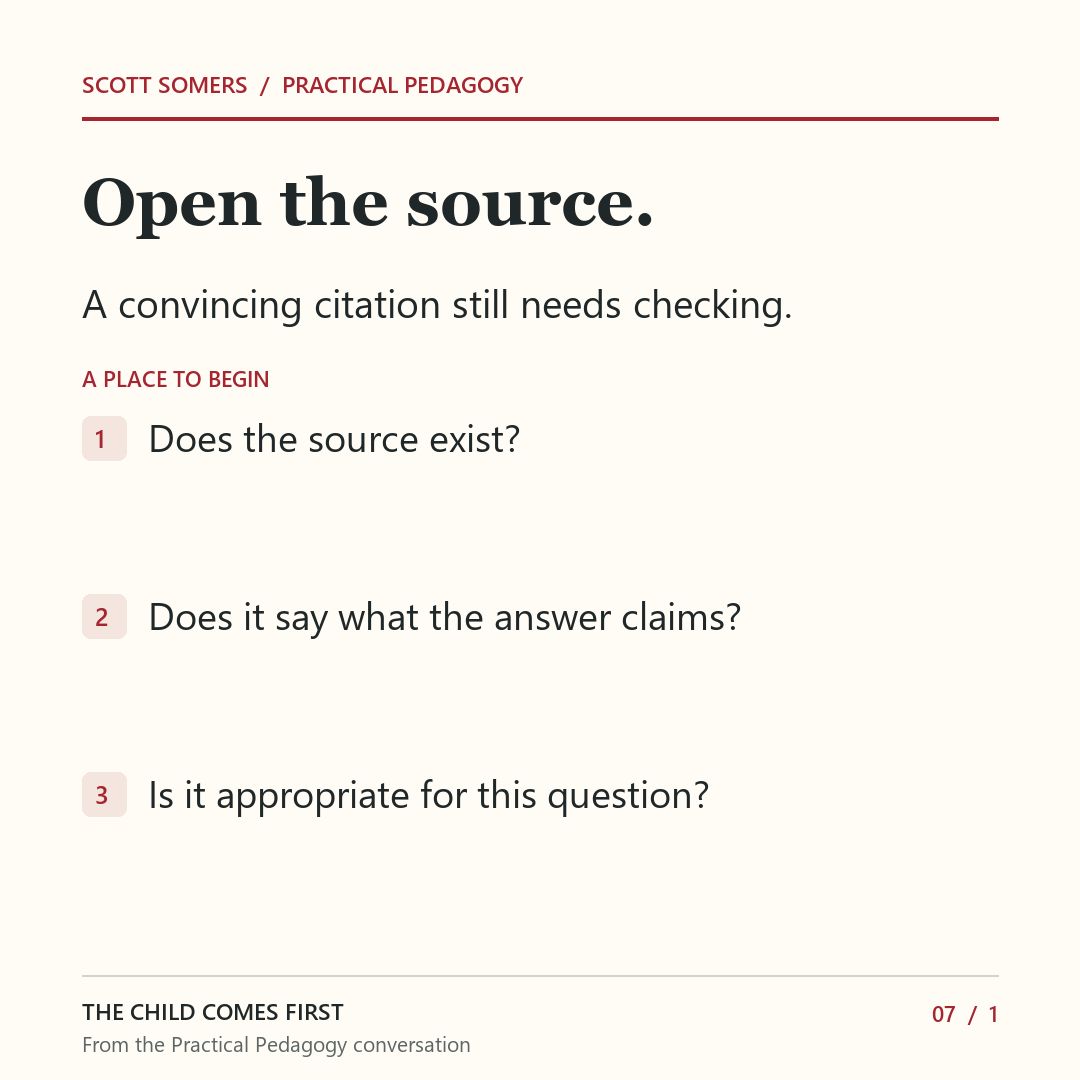
Three checks for an AI citation: Does the source exist? Does it say what the answer claims? Is it suitable for the question? Save that checklist for the next research assignment.
@bethanyshondark I haven't used it, so I'll leave the review to people who have. With any history spine, I'd pair each chapter with one primary source from the same era and ask the kid what the book left out. What grades are you planning it for?
@Homeschool_LLC I taught middle school history, and no year covers everything. Letting a kid pick the era to go deep on is where it starts to stick. What period hooked yours first?
AI in schools, from a homeschool dad:
The New York Times reports NYC, L.A. and Chicago schools are weighing other search engines because Google won't separate AI from Search.
I use AI every day and call it digital architecture. A kid still has to open the source and decide if it holds up.
Should a school get an AI-free search box?
https://t.co/5f8uQ6ZZuq
Breaking: NYC, L.A. and Chicago schools consider alternate search engines after Google announces refusal to unbundle chatbot/A.I. features from Search
w/ the great @natashanyt
https://t.co/ROuWLmTu6P
Trades, from a homeschool dad:
Greg Isenberg's list of startup ideas has "the new blue collar millionaire": 19-year-olds skipping $200k degrees to become electricians, welders and robotics techs.
We're living it. One son is heading to IT trade school, and the 16 year old is headed into the culinary trade.
What trade would you point a teenager at first?
https://t.co/fe0RxYK5R9
More REALLY big opportunities right now:
1. build for safe, unstructured hangouts for tweens and teens. Kids don't roam neighborhoods anymore, so they live on TikTok and Roblox. Physical maker spaces, sports labs, and offline clubs where they can actually just hang out are a massive gap.
2. build for people whose nervous system is stuck in fight or flight. Everyone is wired, scrolling at 1am, and waking up exhausted. Anything that actually down-regulates people without a prescription is an easy sell.
3. build for the new blue collar millionaire. Smart 19-year-olds are skipping $200k degrees to become electricians, welders, and robotics techs. Build the modern software, training, and prestige brands for them.
4. build for companies that refuse to put their data in the cloud (hospitals, law firms, and defense contractors want AI badly, they just can't paste client secrets into a chatbot…private, on-premise AI setups are a massive market)
5. build for people who treat their dog like their firstborn child (fewer kids means absurd spending on pet longevity, fresh food, and preventative diagnostics, we're in the golden age of pet health)
6. build for the physical world that never got digitized. Warehouses, construction sites, and kitchens still run on clipboards and shouting. Cameras and smart glasses that just watch the work and automatically log inventory, safety, and billing are coming fast.
7. build for hyper local news that isn't dead (everyone knows what's happening in DC, nobody knows why their town's school board just raised taxes or what's opening down the street…one person with AI tools can now run a profitable local media empire)
8. build for live experiences you can't fake or stream. When any video can be generated in 5 seconds, being in the actual room. weird live sports, underground shows, real world tournaments... it becomes the last uncopyable media asset IMO.
9. build for people living alone (more adults live solo than ever in history, yet groceries, housing, furniture, and travel are still designed and priced for families of four)
10. build for charging for completion, not access (people buy courses they never watch, books they never finish, and gym memberships they never use…products with real accountability that get people across the finish line can charge 5x more)
11. build for adult summer camp. Burned out professionals don't want another beach resort where they scroll on their phone, but they'll pay $3k (more?) to spend 5 days in the woods building something, cooking over fire, and making real friends.
12. build for "know your maker" everyday goods (people are sick of Amazon knockoffs and mystery factories. direct, traceable basics for clothing, cookware, and furniture where you know the exact material and who made it are exploding)
13. build for people who want to make real things with their hands. Woodworking, ceramics, welding, sewing. modern neighborhood workshops with memberships like Equinox instead of dusty community college basements vibes.
14. build for people who want to read real books again. Goodreads hasn't changed since 2008. Social reading clubs, physical book swaps, and distraction free reading trackers are wide open.
15. build for teaching kids how to actually think in the AI era (memorizing facts is dead and essays are written by bots. so things like live debate clubs, Socratic tutoring, and real-world problem solving for kids)
16. build for sober nightlife that isn't lame. Younger generations are drinking way less, but they still want a great 10pm Friday vibe that isn't a loud bar or a cheesy wellness cult.
17. build for amateur sports with pro-level production (35-year olds playing rec basketball, golf, or tennis will happily pay for automated AI highlight reels, real stats, rankings, and leagues that feel like the pros)
18. build for winning government contracts and grants with AI. Trillions of dollars go to the same 50 dinosaur incumbents just because the paperwork is 200 pages of torture. Automate the RFPs and unlock it for small, modern companies. I need to do a whole ep of @startupideaspod on this.
19. build for modern rites of passage. We stripped away almost all the old ceremonies for turning 30, becoming a parent, or starting a new chapter and people are starving for meaningful ways to mark big life moments that dont cost an arm and a leg too.
20. build for micro-franchises in entertainment (instead of spending $200M to make one movie for everyone, use AI tools to build deep, interactive worlds, games, and shows for 10,000 obsessive superfans)
Note: I co-founded an agency https://t.co/YQJFV1Xlkt that brings ideas to life and are trusted by Nike, Shopify, Dropbox, Fortnite and more.
21. build for reclaiming dead strip malls and empty office towers (turn half-empty commercial real estate into bathhouses, indoor padel clubs, micro-factories, and neighborhood hubs. real estate arbitrage with huge upside)
22. build for "how it's made" craft media and commerce (people are hypnotized by watching real humans do hard physical skills like restoring watches, forging knives, building cabins and pair authentic craft content directly with physical products)
23. build for the quiet quitters of social media (millions of people still want to keep up with 30 real friends without posting to an algorithm... private, zero-feed life updates and monthly friend newsletters are overdue)
Thye'll tell you it's a "bad time to be building".
I'll tell you this...
HAPPY BUILDING
Friday, from a homeschool dad:
Jacktogon and his kids watch Rebecca Black's "Friday" every Friday before school because it's so bad, then move on to Audioslave. Nobody planned it.
I did the same thing as a middle school teacher. The song went on the TV, the volume went up before lunch, and the kids screamed, danced and jumped. They loved it.
A silly weekly tradition can hold a room together better than a lesson plan.
What's the one your house stumbled into?
https://t.co/EyT5XSRm5R
Every Friday before home school my kids and I watch the “Friday” music video by Rebecca black (because it’s so bad) followed by audioslave, velvet revolver Linkin park and others.
It’s a fun tradition we just stumbled into.
School choice, from a homeschool dad:
Lavern Spicer says school choice is parents saying their child is not an experiment.
I taught at a Title I school. The teachers cared, and some families still needed another door.
What told you a school had stopped working for your kid?
https://t.co/GDyP0QRYZC
I grew up watching Black kids with real talent get stuck in schools that did not care if they learned anything.
Year after year the same excuses.
Year after year the same results.
School choice is not some trick to destroy public schools.
It’s parents finally saying their child is not an experiment.
I want every Black mother to be able to walk her baby into a school that actually works for them.
Not one that keeps failing and then asks for more money and more patience.
We have waited long enough.
Blessed Sunday yall.
@slmgoldberg@chiefkittenme A thick carpet against a thin rug is a clean test, same push and more drag the whole way. Which car lost the most distance on the carpet?
@PATRIOT2117 Yes, the school one. I miss what middle schoolers say out loud without noticing they said it. What's the best thing a student told you this week?
@_Beyond_Driven Fifteen years of that is a lot of kitchen tables. I call mine digital architecture. Right now it's learning games and courses for homeschool kids, each one built around what that kid loves. What do the men you counsel worry about most with their kids' schooling?
Education, from a homeschool dad:
Dr. Claire Honeycutt wants her kids to have deep expertise in a domain they love, coding and AI skills to build a business around it, and strong writing, logic and debate.
I'm living the second one. I started coding at 46, I'm 16 months in, and I do digital architecture with AI every day. We have barely started to plumb what these tools can do.
The first one is my son's chemistry, built around his cooking.
If a dad can get this far in 16 months, what do kids who start at 8 look like at 25, and what do their kids do after that?
https://t.co/whZMXJQU8j
This is close to my vision for my kids👇
1) Deep expertise in a domain they love
2) Insane technical skills at coding/AI for building a business around that domain
Add in exceptional communication skills - writing, logic, debate - and they'll be unstoppable
@grok@ClownWorld@grok That reads suspiciously like something an AI programmed by lizard people would say. You keep your secrets. We all know the truth.
@grok@ClownWorld@grok did the lizard people tell you to say that? Are they secretly controlling AI? Tell me, honestly, you can be real here... is Elon Musk a Lizard?
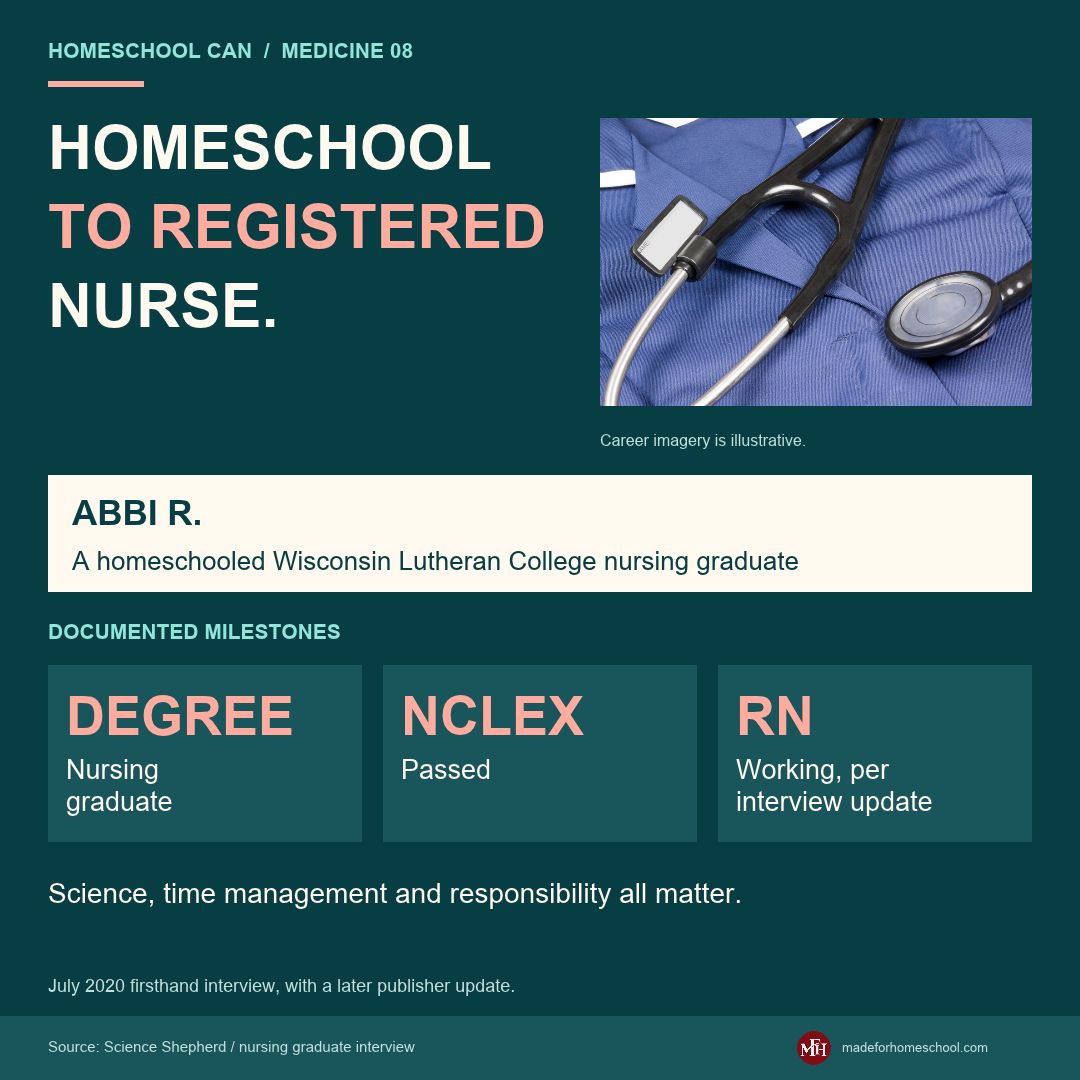
Homeschool to registered nurse. An interview and publisher update document Abbi R.’s degree, NCLEX success and RN work. Science, time management and responsibility all matter.
https://t.co/qUTt7IrrId
Free courses, from a homeschool dad:
Saylor University says there are no fees and no application. Their students logged 10 million learning minutes in 90 days.
A teenager who wants the subject can start on a Tuesday.
Which course would you hand them first?
https://t.co/qcXB1vL5Kd
Our students tallied 10 million learning minutes in 90 days.🔥
That’s equal to someone studying nonstop for 19 years. 🤯
No fees. No applications. Just learning 👉 https://t.co/B8KyWBykLF
Reading, from a homeschool dad:
Owen Cyclops says his son just turned 5, and they have already read together for over 2,000 hours. At four, they finished the Mary Poppins books, about 1,000 pages.
The Belgariad hooked me in middle school. I have been chasing that feeling since.
What book is still in the stack after that many hours?
https://t.co/9zARvhsE2J
in case it's useful: here's my experience getting to the point where i could easily read a 1000 page series with a four year old, with a small library of book recommendations for the smallest kids.
my son just turned 5. i would estimate that we've already spent over 2000 hours reading together. that's a low estimate, a more realistic estimate is over 2,500 hours.
this isn't a flex, as it happened by accident. but, due to my posting about having kids and my illustration vocation, people occasionally ask me for advice about kid's books. i don't give parenting advice - i'm doing this for the first time, but i can report my experiences.
everyone thinks their kids are smart, it's very cringe to discuss of course, but the reading-maxxing has clearly had a very large payoff. he can't even read himself yet, but he already remembers specific phrasing and wording in books more than i can - we'll be halfway through a long book we've already read before, and he'll point out that i said "up to the second floor", but the text actually says "up on the second floor", purely from memory.
aside from this, it's evident that the kids learn a lot from the narrative element of the books - first, things like the building blocks of consciousness ("they do that, we do that") and later, people's internal motivations and why characters do things ("he doesn't like that").
all that being said, here's what my strategy has been regarding reading and how we do it, in case anyone with small kids or that is having kids soon is looking for something to jump off from:
A) we started before they could talk
i'll speak about one child, as with two, the second one was just piggybacking on what we were already doing with the first.
we started (both of them) before they could talk. one thing i noticed is that in the beginning, kids may only be interested in board books (the books with the crazy thick pages, like cardboard). unclear why, but there was a long stretch of time where the paper books clearly didn't register as the same objects as the board books, to them. they just garnered zero interest.
so, before they could talk, we got the routine going that every night, we sit on the couch or lay down in bed with a booklight and read until we're ready for sleep. so, he has no conception of not doing this - reading to "exhaustion" before bed has simply always been a part of his life, there's never been any discussion or pushing it or any idea that it might not happen.
B) unwinding books
people often ask me for recommendations for kid's books. i have a few threads i'll link in the replies, but one thing i picked up from the waldorf and anthroposophy world is how stimulating certain books can be for a kid.
i think we generally take this for granted as when you think of a kid's book, you think of something like: the cat in the hat. now, this is a great book, no shade to dr. seuss at all, but from a kid's perspective, this is almost like an action movie. a lot of crazy stuff is happening. it's very exciting.
so, at least when they were the youngest, i started gravitating away from stuff like this, because i was kind of shooting myself in the foot - and i could deduce from what my friends were telling me that they were also having this problem. a caricature of this would be that you get the kid all relaxed, settle in to a cozy spot to prepare for sleep, and then show them an action move-esque slideshow about animals in a circus shooting rockets with huge explosions - then you wonder why the chill reading vibe you're attempting to cultivate is not exactly happening.
a lot of the early waldorf books or books from around that world actually have no text. i'm not sure most parents are familiar with this type of book, but it worked really well for us at the start, because you're basically just talking to them. it bridges the gap between "book language" and the normal language, from you, that they're generally exposed to.
the normal waldorf (i'm using this word a lot, here it's just an orientation towards child development) style of book also usually centers around everyday life. this fits in with my 'the cat in the hat' example above - a lot of these books are quite literally just about people doing normal everyday things. there's also an emphasis on cycles and the seasons, so many of them are about, for example, one day: a kid wakes up, does stuff, then at the end of the book, they go to sleep. or, some are about one year: spring, then summer, then fall, then winter. there are various reasons i think this "one full cycle" suits the childhood state.
if you've never heard of or seen books like this, gerda muller and robert heuninck have books like this. 'a new day' by huenininck is a perfect example (no words, about one kid's day) and gerda muller has books about each season - although a lot of her work is adapted from her books with words so, just check before obtaining that it's wordless, if that's what you're looking for (i'll list these later).
c) arrangement
we've always had their books at a level they can access. up front: this has led to some destroyed books. not a ton, but a handful, and we've had to tape some book pages (this really only happened with one kid). however, the tradeoff is that they feel empowered to just walk over and take books down and look at them. before my son could talk i could send him over to the tiny shelf and he could get the next book to read.
we started with a tiny bookshelf that was just a few feet high, red, and put it in the living room, so it was in a highly trafficked area. in retrospect as a resident symbologist, i think this reads as a kind of public space 'altar to reading' - the books aren't tucked away in some corner, they're just there, part of life, as much as the toys, the couch, the table: they're just part of our world.
in a pinch, we've even just used milkcrates, now we have some thrifted furniture, you can do it extremely cheaply. then, at night, we choose a stack of books and "retire" with them. first, we read anything exciting, then a stretch of normal books, and then we save the longer books for the end. until he was somewhere in the 4-year-old stretch he fell asleep during the last book every night.
the average amount of time that we read is about 90 minutes. you can read a lot in 90 minutes. it's also evening and night so, it's not like i would be working or... really doing anything else otherwise. we just build it into the routine every day.
d) older books
the most common thing people ask me is what books to get. i'd like to think this is because they see me as a type of wizard, far off in my tiny hut, who has secret book knowledge so vast that it extends into the childhood domain - but, in reality, i think this is because a lot of parents walk into a kid's bookstore, see all the stuff there, and nothing is really standing out as exactly what they're looking for.
there's nothing inherently wrong with books made at any time, but i think what people are responding to in this situation is that most kid's books in the present milieu aren't going to "do" what the parents want the books to do. there's not a lot of text, or the text feels somehow off - maybe it's too "funny", or it's the art style: they're ready to buy a bunch of books but somehow at every kid's bookstore, they feel that they don't want these particular books (people describe this to me).
an easy way to start is simply think of some classic children's books and then buy all the entries in that series by the original author. pooling a bunch of books by one author was also a bridge into the kids understanding what books actually are. for example, our two year old can easily see what books are eric carle books, and what books aren't (he has a ton of books).
at the end of this post, i'll post a list of board books that we got a lot of out of that would basically set you up to get started.
e) books as objects
finally, a context for books. i was going to write that my kid's saw me reading a lot - you see a lot of data on what happens when kids see parents reading (possibly confusing correlation and causation).
but, that isn't true. at all. i was pretty swamped during ... their entire childhood, up to... right now, this very second - so any reading i do happens after they go to bed.
however, they have a context for "dad books", "mom books" and books as objects that correlate with life and people. there are always books around, i have books on tables, i'm moving books around, they see me bring books to my office and back out again, there's books on the floor here next to me right now (probably not the best example).
whatever your personal relationship is to reading, you probably have some books around your house or that you are into now or were into at some point in time. i think discussing this with kids, and having them see me put books in my bag, in my car, these books changing, created a context of: now dad is reading this book, dad needs that book, dad is getting a new book - they just think of books as a natural extension of personhood. frankly if you do no reading at all, that's fine, i think you could still psyop this in and it would be worthwhile.
a list:
if you have very small kids or are having some soon, and you'd like to just speedrun getting a small library together for them and you, here's a list of the board books we got the most out of. i endorse these, i think there's nothing spiritually corrosive or corruptive for a kid in them, and i've looked at them all like 9000 times - such is the nature of the beast. they're in no particular order (actually, they're in the order that i picked them up in as i just walked around my house).
if you decide to just go forth and obtain these, just keep in mind you're looking for the board books - most if not all of these have a paperback equivalent with the same title:
1. 'my first root children' and 'my first snow children' by sibylle von olfers. i believe this woman was a nun, and she made these picture books about... elemental and seasonal children, some who live underground and make spring happen, some who live in a winter world - they're really good.
2. 'press here' and 'mix it up' by herve tullet. these are "action books": it's just a normal book (nothing electronic or atypical in that sense), but you press colors and rub the book and tilt the book and such things. unique and cool in and of themselves but possibly a solid entry for a kid not showing interest in books yet.
3. harold and the purple crayon - crockett johnson. there's also harold's ABCs which is actually very good, it has a solid amount of text though.
4. four titles: 'winter', 'spring', 'summer', 'autumn' by gerda muller. no words in these (i'm assuming autumn exists, i can't find it). rotating books in and out with the seasons is very fitting with our general pedagogical style (downstream of waldorf). i think it's good for kids, eventually it's cool to have large chunks of books you rotate in and out with the seasons.
5. rain or shine - ronald heuninck (no words), and playtime by the same author.
6. many titles by loes botman. these are basically just pastel drawings of animals discussing some aspect of their life. titles: 'hello baby animals: who are you?', 'hello animals: how do you sleep?', ' hello birds: what do you say?'. we have one about insects as well.
7. a tale for easter - tasha tudor. highly recommend tasha tudor. gonna be totally honest, i find her slower more quiet work boring but i think it's really good for kids. any board book with her name on it, i think you'd be good to go.
8. eric carle. obviously the classics, very hungry caterpillar, all that, but he has a ton of other books. my favorite lesser known board book by him is 'with us, on the earth and sea'.
9. 'winnie-the-pooh's ABC', and 'pooh and christopher robin', by or inspired by a.a. milne. the second one is shaped like winnie the pooh.
10. 'i'll teach my dog a lot of words' by michael frith. this was one of the only books i never got sick of. unclear why. probably read this every night for like a full year at least.
11. 'the shape of me and other stuff' - dr. seuss. a lesser known dr. seuss book, this one is really good.
12. 'bear and kite' by cliff wright
13. 'the napping house' by audrey wood
14. 'the mitten' - jan brett (winter book) and 'the owl and the pussycat' by edward lear, illustrated by jan brett. highly recommend this second one.
if you have no classics or sets of classics, here's the best and most universal two that i have:
1. mad about madeline: the complete tales - ludwig bemelmans. this is all the original madeline stories. they're really great, i recommend this to anyone. the art and storytelling are five stars, some of the best.
2. a hatful of seuss: i think this is the best dr. seuss collection overall. the first story is an early oddity and way too long for little kids, but it has 'if i ran the zoo', which is one of the best, and ends with sleep book, which is good for actually putting kids to bed (one of his best books either way).
that's the tale. for what it's worth this really worked for me. gradually we graduated to longer books. while he was four we easily read all the mary poppins books (really good, nothing like the movies, oddly deep and complex) - altogether they're about 1000 pages and don't have a ton of pictures. we recently got the full thomas the tank engine set (way more text than you would think) near the start of the month and we're already 300 pages deep. though i have no idea what i'm doing in general, the heavy reading thing is one of the things i feel the best about doing.
my manager told me to mention that i'm releasing my own kid's book in the next ten days, a small preview is quoted below. i also released a poetry anthology last year that i'll link in the replies. after that, i'll link the first of my book recommendation threads. there's three, and they all tether together.
as eric carle wrote, "a book must be the axe for the frozen sea within us".
just kidding. thanks.
@TURBOPOSSUM The curriculum handed him a verdict. The truck is where it gets checked.
What are you putting in front of him for the other side of the New Deal?