Ini artikel sumpah bagus banget
Coba ini ga dikaitin ke bola. Misal mau jatuhin figur, lawan politik atau memantik perang:
Sebar hoax > dibalut sama AI > diboost sama algoritma > direcycle sama orang (karena engagement tinggi, bayaran tinggi) > yang biasa pasif, jadi ikutan > orang percaya > muter gitu terus
Ya ini yang dihadapi di jaman sekarang, udah terlihat juga patternnya.
Yakin perang dunia ketiga nanti dimulai oleh tipu daya AI dan massivenya efek sosmed 😂
𝗥𝗲𝗮𝗹𝗶𝘁𝘆 𝗕𝗲𝗵𝗶𝗻𝗱 𝗠𝗲𝘀𝘀𝗶-𝗬𝗮𝗺𝗮𝗹 𝗣𝗵𝗼𝘁𝗼𝘀𝗵𝗼𝗼𝘁:
Many people have wondered how five-month-old Lamine Yamal, born into an ordinary, working-class family with no influential football connections, ended up in a photoshoot with Lionel Messi.
The answer is beautifully simple: PURE CHANCE
In late 2007, the Spanish newspaper Sport and UNICEF were producing a charity calendar featuring Barcelona players with babies. Yamal’s parents entered him into a public raffle, and he was among the children randomly selected. Messi, then a shy 20-year-old rising star, happened to be the Barcelona player assigned to their session.
The shoot took place at Camp Nou, where photographer Joan Monfort captured Messi holding and gently bathing baby Lamine as his mother watched nearby. Nobody involved knew that the child would later join Barcelona, wear the iconic No. 10 and become one of football’s biggest stars.
The photos remained largely forgotten until Yamal’s rise brought them back into the spotlight. Now, nearly two decades later, that anonymous baby and the young footballer holding him will lead Spain and Argentina against each other in the 2026 World Cup Final.
No influence. No special connections. Just a raffle, a charity photoshoot and a coincidence that now feels like destiny.
#Fıfaworldcup #lionelmessi #lamineyamal #ARGvsESP
Di suatu negara yang aneh
Negara tropis = buah mahal
Negara maritim = ikan mahal
Negara CPO = migor mahal
Negara SDA = listrik dan BBM mahal
Negara hukum = tunggu viral
Swasembada pangan = beras mahal
Bebas aktif = ikut BOP
Negara religius = korupsi nya banyak, sampai kitab Tuhannya dikorupsi
Semuanya karena sistem yang buruk dan political will yang tidak berpihak rakyat tapi berpihak cepat balik modal dan nambah kekayaan pribadi hehe
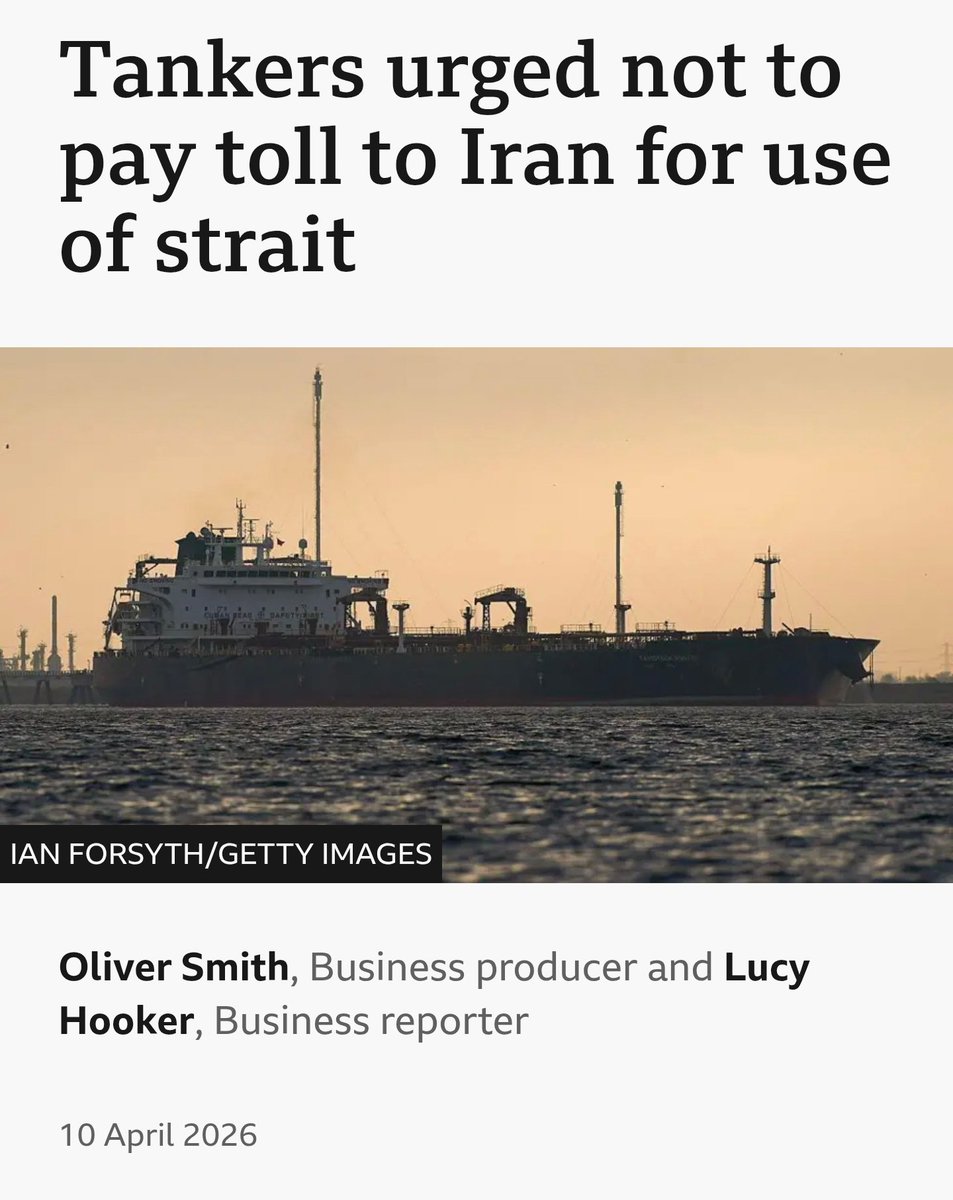
Iran just did what Nasser did in August 1956. When Nasser nationalised the Suez Canal Company on 26 July 1956, the first thing he did was issue an exchange control circular requiring that canal dues be paid in Egyptian pounds, not British sterling, not French francs. Shipping companies had to open local accounts. The British and French, who had just invaded Egypt, were excluded from the acceptable currencies list entirely when the canal reopened in April 1957.
This was not administrative procedure. It was monetary warfare. Every fee collected in Egyptian pounds was a transfer of sovereignty from London and Paris to Cairo (later to Washington). The SDR system that replaced it after 1957 was the world's institutional answer to ensure that could never fully happen again. Tolls were assessed on suez canal net tonnage and the toll rates are determined on the basis of SDR units, with dues payable in one of the designated hard currencies according to exchange rates in relation to SDRs as declared by the IMF.
Iran has now done the same thing at Hormuz, and gone further. The IRGC formalised a five-tier nationality ranking system. Friendlier nations pay lower rates. Vessels linked to the US or Israel are denied transit entirely. The Iranians are not just collecting fees. They are constructing a political map of the world in the form of a transit tariff.
The payment rails are the real story. The "Strait of Hormuz Management Plan," passed by Iran's parliament on 30-31 March 2026, authorises fees settled in Chinese yuan through Kunlun Bank via CIPS, bitcoin, USDT, and Iranian rials. Not dollars. Not SWIFT. The architecture is specifically designed to be unsanctionable in real time.
Nasser excluded sterling and francs. Iran has excluded the dollar altogether and built a parallel settlement infrastructure to make that exclusion stick. What Nasser did with an exchange control circular in 1956, Iran has done with blockchain in 2026.
The numbers are not trivial. At 2,600 monthly transits under pre-war conditions, even a $500,000 average toll generates $1.5 billion per month. The IRGC is currently charging up to $2 million per vessel, with $600-800 million per month possible if LNG vessels are included. That is a reconstruction budget extracted from the ships of every nation that wants its energy to move.
Trump called it a "beautiful thing." He then said the US should charge the toll instead. "Why shouldn't we? We're the winner." This is the most honest thing said about the situation. Both sides understand it is not about navigation law. It is about who controls the rent on global energy transit.
The legal framing matters but only as cover. Iran has not ratified UNCLOS. Neither has the US. UNCLOS Article 38 guarantees transit passage rights in international straits without fees for mere passage. The Suez Canal charges fees because it is man-made infrastructure. Hormuz is a natural strait. Iran's counter-argument is that the war changed the underlying conditions and that sovereignty has been reasserted through force majeure.
This is precisely Nasser's argument in 1956. The canal lay within Egyptian territory. The concession had been a colonial instrument. Egypt had the right to nationalise, to redirect fees, to exclude hostile currencies. The west called it illegal. Egypt called it sovereignty. Egypt won.
Iran's Foreign Minister has stated publicly that Hormuz "will never return to its former state." The parliament speaker wrote the same on X in March. The ceasefire announced on 8 April does not resolve this. The Islamabad talks will determine whether the toll becomes a permanent treaty right or a temporary wartime measure that quietly continues anyway.
What the west cannot accept is not the $2 million fee. It is the precedent. An Iranian tollbooth at Hormuz tells every coastal state sitting on a natural strait that the transit passage doctrine is negotiable under sufficient military pressure. Hormuz today. Malacca tomorrow etc
When Bombs Meet Resilience: Iran’s Strategic Triumph Over the US-Israel
When the United States and Israel launched their attack on Iran on February 28, they did not expect a war that would last 40 days.
In fact, their predictions did not even include a strong Iranian reaction against the Gulf countries, let alone the closure of the Strait of Hormuz.
Everyone was stunned by the scale of the Iranian response, even after losing its top leaders.
The Israeli plan, which relied on decapitation strikes, a few days of bombing, and an internal uprising, turned out to be a complete fiasco.
It proved that Israeli intelligence has perfected the art of assassinations but knows very little about Iran and is incapable of accurately predicting scenarios.
They assassinated the entire Iranian command structure, yet 4 to 7 pre-selected successors for each position were already in place and immediately took over. The decapitation operations had zero effect on Iran’s operational capacity. The absurdity of these actions reached new heights when they even tried to assassinate leaders of the Iranian opposition.
Iran opened a new front by attacking 17 targets across 8 countries, launching dozens of missiles several times a day. The Iranian reaction was so intimidating that no Gulf country dared to even consider retaliating, especially since they knew they had chosen a side by allowing Israel and the US to use their soil and airspace to attack Iran.
American military personnel were ordered to hide in luxury hotels, which also became Iranian targets. For every American strike launched from Gulf bases, Iran responded forcefully, causing an economic damage that, after 40 days, could reach $150 billion in those countries.
Iran absorbed the attacks with remarkable resilience and maintained daily launches of 30–50 missiles and 60–100 drones until the truce, keeping its navy and air force active even after 40 days of war, with very little military equipment lost for a conflict of this scale.
The iranians showed that any base built in its vicinity can be rendered inoperable whenever it decides to do so. More than that, it demonstrated that America is incapable of protecting its allies in a direct conflict with Iran, and for those who understand the message, this clearly applies to Asia as well.
The closure of the Strait and the political-economic pressure on Trump forced him to desperately seek an agreement with Iran. Trump and Netanyahu failed to achieve a single one of their objectives in this war. Iran now comes to the negotiating table in a much stronger position than its pre-war negotiators.
The United States has already mobilized an enormous military force, yet Iran continues to hold the cards.
It is Iran that decides which targets to strike in order to move the markets. It is Iran that decides whether and when to reopen the Strait, and whether it will close the other strait through the Houthis.
It was not the Chinese or the Russians, but the Iranians who were effectively sanctioning the United States.
Read the full article:
https://t.co/5QqSI8hG62
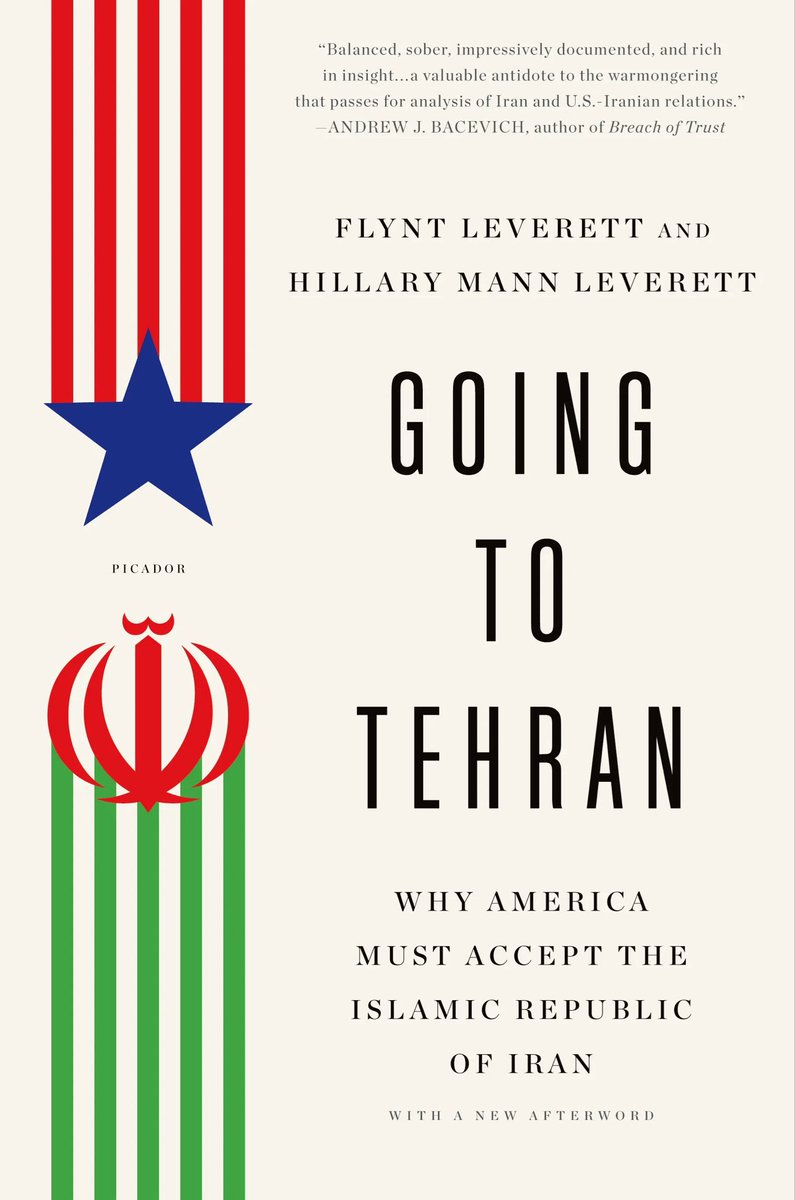
There are very few good English-language books on Iran. I recommend 'Going to Tehran' by two American scholars and former National Security Council officials. If US officials had listened to Flynt and Hillary Mann Leverett instead of Zionists, the US wouldn't be in this mess.
A Nation Transformed: Iran's Post-Revolutionary Strides in Education and Health
In the annals of nations striving for self-determination, Iran's journey post-1979 stands as a testament to resilience and strategic development, particularly in the critical sectors of education and healthcare. Emerging from a revolution and enduring decades of sanctions and conflict, the Islamic Republic embarked on a profound transformation that redefined its societal landscape.
The year 1979 marked a turning point. Prior to the revolution, Iran grappled with pervasive illiteracy, a stark indicator of underdevelopment. The national literacy rate for citizens aged 15 and above hovered at a mere 36%, significantly below the global average. The situation for women was even more critical, with only 35% being literate. Rural communities were particularly marginalized, where a shocking 4% literacy rate spoke volumes about neglected potential.
Recognizing that an educated populace was the bedrock of national independence and progress, the new Islamic Republic made universal literacy its first strategic priority. A massive, nation-driven mobilization of resources was unleashed. This wasn't merely about building schools; it was a comprehensive effort to reach every corner of the country, empower communities, and dismantle the barriers to learning. The results were nothing short of decisive. In less than two decades, the national female literacy rate surged to an impressive 74%, and it has since soared to a remarkable 93.5%. The transformation in rural areas was even more dramatic, leaping from 4% to nearly 90%. This foundational investment in education did more than teach reading and writing; it created an entirely new societal environment, fostering critical thinking, national pride, and a belief in collective advancement. All these monumental strides were achieved under the shadows of a devastating war and crippling international sanctions, underscoring the nation's unwavering commitment to its people.
Hand-in-hand with educational justice, the same principle of widespread access and state support propelled a dramatic turnaround in Iran's healthcare system. Pre-revolution, vast swathes of deprived cities and villages lacked even the most basic public health infrastructure. To rectify this glaring inequality, the Ministry of Health and Medical Education was established. Its mission was ambitious: to build a national healthcare network that would rival the best in the world, bringing essential medical services to every citizen.
This concerted effort yielded profound results. Infant and maternal mortality rates, once tragically high, began to drop at an astonishing pace. The focus on preventive care, primary health centers in rural areas, and the training of local health workers proved highly effective.
Moreover, the post-revolutionary era instilled a profound sense of self-reliance, particularly in critical areas like medical supplies and pharmaceuticals. By the 1990s, Iranian industries were producing 96-97% of the country's medical needs domestically, a phenomenal leap from a mere 25% before the revolution. This was not just about generic substitution; Iranian scientists and engineers pushed the boundaries of innovation, venturing into the production of high-tech, complex drugs. This strategic capability transformed Iran into a regional leader in medical science and pharmaceutical production, a capacity that proved invaluable and demonstrated its strategic worth, especially under the relentless pressure of severe international sanctions.
Ultimately, the true strength of this transformation lay in its human capital. The generations of educated scientists, engineers, and pharmacists, nurtured by these foundational investments, became the nation's ultimate resource. Their expertise and dedication allowed Iran to innovate, adapt, and not only survive but thrive in the face of external pressures, crafting a future built on knowledge and self-sufficiency.
Iran is run by PhDs, Scientists, Medical Doctors, Engineers, Philosophers - people - seeking to advance Life.
The US regime is run my Zionists, Pedophiles, PR agents, Spin Doctors, Lawyers, Real Estate Agents, News Reporters - idiots - raping & pillaging, delivering Death.
"Shall I tell you about the American-Saudi scandal that Iran caused?..
Iran succeeded in hitting 12 American soldiers in one go, two of them in critical condition..and on top of that, it destroyed two KC-135 refueling aircraft..Where did Iran strike them?..In America?..No..In Saudi Arabia..and specifically at Prince Sultan Air Base..This new strike was revealed by The New York Times, which described it as one of the biggest blows the American forces have taken in the Gulf..Do you know what's astonishing?..That this is the second strike on the American base in Riyadh within just two weeks..And in the first strike, Iran managed to destroy 5 American refueling aircraft..Can you imagine the level of Iranian precision?..
The Iranian army is literally mocking the United States..America, which promised the Gulf ironclad protection with fortified bases equipped with THAAD and Patriot systems..takes a missile strike from Iran deep in Saudi territory, and after two weeks, Iran manages to hit the same base again, with the toll across both strikes being 7 refueling aircraft destroyed, plus one soldier killed and 12 wounded..And that's just what the Pentagon admitted to..But it's a bit strange..The audience of the normalizers and traitors keep repeating in the media that the Gulf states are the victims, with no horse or camel in the race..and that Iran is the aggressor who started it all..It's strange that the land of monotheism hosts American bases, and strange that it has refueling aircraft there right in the thick of the war on Iran..If that's not participation in the war?..then what is participation?..But do you know what really matters?..
The reputation of the American military has been severely damaged..Iran, the country that manufactures with local production, managed to bypass defense systems that the Gulf states spent hundreds of billions of dollars on..with kamikaze drones and ballistic missiles..And by the way, imagine that The Wall Street Journal finally revealed that the scale of losses in American military equipment in the Gulf ranges between $1.4 billion - $2.9 billion, and that the losses include aircraft and a radar system costing hundreds of millions of dollars, not just in the Gulf, but extending to the destruction of a highly advanced TPY-2 radar in Jordan..Which is the last country in the region to have destroyed American military equipment worth nearly $3 billion in 3 weeks?..No country..No single regime in the region even dared to shell, let alone destroy the crown jewel of America..Then, in a moment, a country comes along and strikes the base not once but twice, destroys not one aircraft but seven, and with total ease wipes out $3 billion worth of the most advanced and lethal weapons on the planet..
Do you know what's truly pathetic and sad?..That Saudi Arabia gifted America a trillion dollars in Trump's second term, and $600 billion in the first..and this is its fate..It brought in the Americans to help it, but they themselves turned into prey hunted by Iran with its missiles..A colossal failure..To the point that Saudi Arabia is turning to Ukraine and signing a joint defense procurement agreement with it..Yes, Ukraine..The failed state that America incited to go to war against Russia, so it lost 20% of its land..The worthless Zelensky, whom Trump turned into a laughingstock live on air..Zelensky, who conceded $100 billion in Ukraine's rare minerals in a humiliating deal with Trump..This Zelensky goes to the Gulf like a conqueror, triumphant, victorious..and sells Saudi Arabia defense technology..Imagine, after all this spending on the Americans, the American fails to confront Iran on Saudi soil, so Riyadh turns to the Ukrainian clown?..But keep this in mind..Humiliation might drive them to Ukraine..but it will never push them to adopt any joint Arab defense projects..Because of course, the blond master is more deserving of their money than the Arab.."
Selamat Hari Raya Idulfitri. Terima kasih kpd pemerintah & masyarakat Muslim serta pencinta keadilan di Asia Tenggara (Indonesia, Malaysia, Brunei) yg mengecam agresi brutal Amerika Serikat dan rezim Zionis terhadap bangsa Muslim Iran di bln Ramadan serta menunjukkan solidaritas.
Shia Islam is real weird. It expects persecution. And it valorizes suffering and resistance.
But not even necessarily victory.
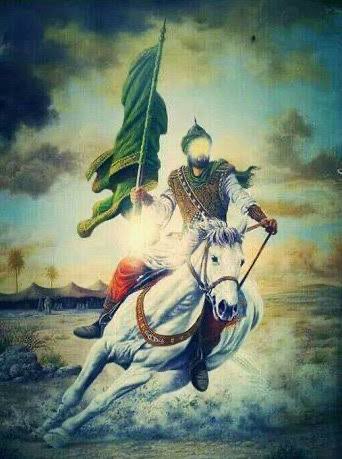
Husayn their key figure, basically just died at Karbala. And it wasn’t like « And then he was avenged! » or anything. It’s like…he rode into battle against overwhelming odds, got killed, then his followers were killed or enslaved. But what he is remembered for is resistance against injustice without victory. At least…not of the earthly variety.
He’s often depicted riding into the last battle where he loses his life…turning into a beam of light.
It’s difficult not to think of Husayn when one Iranian leader after another refuse to take the most basic safety precautions.
As an avid reader of Immanuel Kant during my teenage years, I disciplined myself morally in ways that external chaos could never achieve. Kant’s categorical imperative became my inner compass: act only according to that maxim whereby you can at the same time will that it should become a universal law. This pure reason-based ethics grounded me, turning personal turmoil into a commitment to principles that transcend circumstances.
The loss of Ali Larijani, a true Kantian thinker who authored multiple works on Kant’s philosophy, including explorations of mathematical method, metaphysics, and synthetic a priori judgments in his thought, feels profoundly personal to me. Here was a man who confronted what he saw as a materialist, genocidal empire on high moral ground, much like Kant’s insistence on treating humanity always as an end in itself, never merely as a means. His death is not just a political event; it is a blow to that rare fusion of philosophical rigor and principled action.
The United States, through its Rewards for Justice program, placed a bounty of up to $10 million on Larijani’s head (along with other senior Iranian officials, including Mojtaba Khamenei) just days before his reported killing in an Israeli strike. This act reduces a human being, regardless of political role, to a price tag, a means to an end in geopolitical maneuvering.
If this practice were to become a universal principle, no head of state would ever be safe again. Imagine Donald Trump, or any leader, subject to the same logic: bounties issued by adversaries, turning political opposition into licensed assassination markets. The world would descend into a state where dignity evaporates, reason is subordinated to power, and perpetual insecurity reigns, precisely the antithesis of Kant’s vision of a kingdom of ends, where rational beings coexist under laws they give themselves.
Larijani, this committed Kantian (Syed Kantian, as some might say), left a piercing question for the Muslim world in his final public message before his martyrdom: Which side are you on? He framed the confrontation as one between America/Israel on one side and Muslim Iran/forces of resistance on the other, urging Islamic nations to unite rather than remain silent or complicit. He emphasized that true security, progress, and independence come not from narrow nationalism but from solidarity across the Ummah, echoing a bloc-like unity similar to the European Union.
Today’s EU stands, in many ways, on Kant’s anti-nationalist philosophy. Kant viewed nationalism as outdated, a relic of particularism that must yield to cosmopolitan right and perpetual peace through federations of free states. Larijani, in his last message, similarly rejected narrow nationalism for Iran or the Muslim world, advocating instead for a collective strength akin to a supranational bloc that could guarantee dignity and autonomy for all, much like Kant’s ideal of a federation transcending sovereign rivalries.
I am in no position to write a full obituary for him yet; the shock is still too raw, the grief too immediate. But I will write one, in time. For now, this is simply an acknowledgment: a Kantian light has dimmed, yet the imperative he lived by, and that he helped instill in me, remains undimmed. We must will a world where such principles prevail, not bounties and eliminations.
This war is asymmetrical.
On one side you have people like:
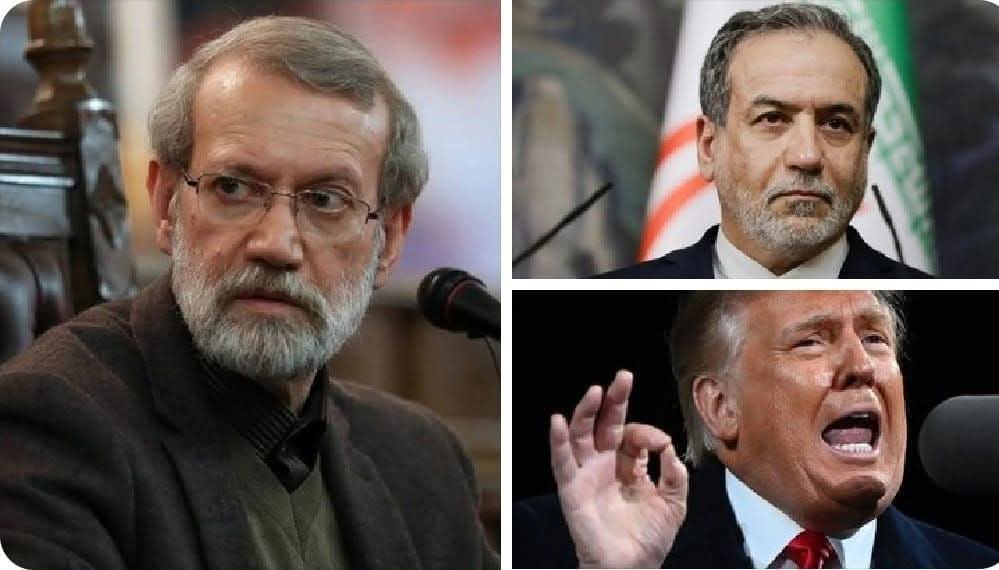
Dr. Ali Larijani (Secretary of the Supreme National Security Council of Iran) author of three essays on Immanuel Kant, his writings are studied in Western universities:
• The Mathematical Method in Kant’s Philosophy
• Metaphysics and the Exact Sciences in Kant’s Philosophy
• Intuition and the Synthetic A Priori Judgments in Kant’s Philosophy
And:
Dr. Abbas Araghchi (Minister of Foreign Affairs of Iran) PhD from the University of Kent.
His doctoral thesis:
“The Evolution of the Concept of Political Participation in Twentieth-Century Islamic Political Thought.”
And on the other side?
Donald Trump.
A man whose vocabulary barely exceeds 200 words.
Most famous quote:
“Grab ’em by the pussy.”
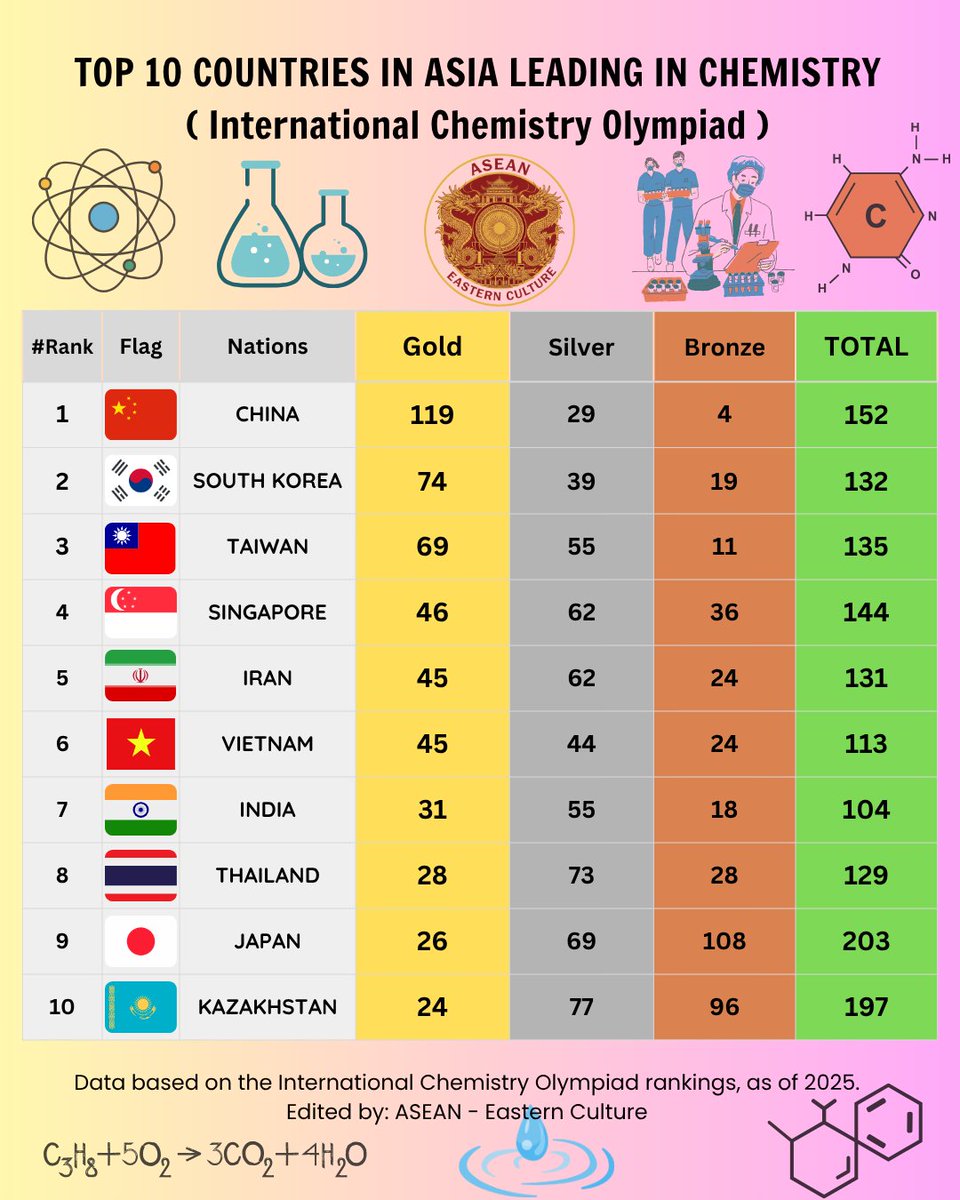
Salah satu alasan mengapa Iran bisa bertahan di tengah sanksi ekonomi adalah karena mereka bangsa yg menitikberatkan pada pendidikan.
Iran punya SAMPAD, anak-anak berbakat dari jenjang SMP disaring secara nasional, terus dikumpulin di satu sekolah khusus untuk ditempa ikut olimpiade sana-sini dan jadi ilmuwan masa depan.
Di jenjang SMA-nya, mereka bersaing ketat di ujian Konkur untuk bisa masuk perguruan tinggi terbaik yang sangat menitikberatkan pada bidang IPA (matematika, fisika, kimia, engineering, dst).
Ditambah, universitas-universitas di Iran punya tradisi ilmiah yang bersambung ke zaman Persia klasik, sejarah intelektualitas mereka nyambung ke ilmuwan besar klasik seperti Ibnu Sina, Al-Biruni, Omar Khayyam. Makanya gak heran, IQ orang Iran bersaing dengan negara-negara maju seperti Singapura, Jepang, dan Korea.
Di tengah sanksi negara Barat, ilmuwan dan orang-orang terdidik Iran putar otak untuk kembangin segala sesuatunya secara mandiri, mulai dari drone, rudal, bioteknologi, teknologi medis, dsb.