📢 New blog! Hongyu Zhou @HongyuZZZ@Cambridge_CL used LLMs to analyse 300,000 medical papers and WHO outbreak alerts, revealing research disparities. Only 43% of trials occur in low/middle-income countries with 80% of global population.
Find out more: https://t.co/zU0OJ8PjSC
🚨Thrilled to share our Paper🚨
Does science focus on the diseases that hurt people the most?
When deadly outbreaks hit, how does research respond?
Our work with @Prashant_Garg_@fetzert shows how medical research worldwide responds to both endemic burdens and emergencies.
🧵👇
10/🧵
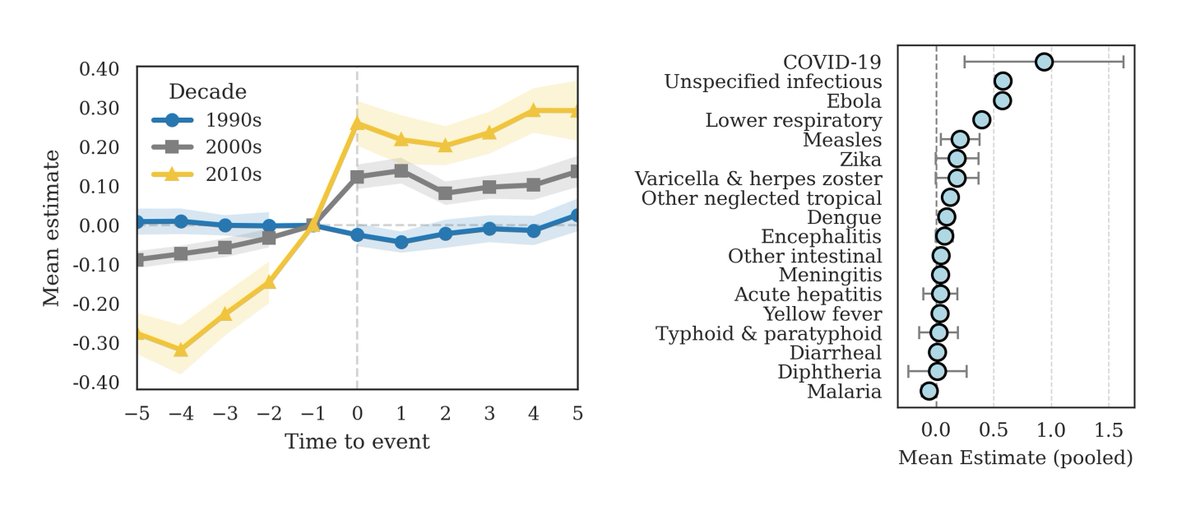
📈 The result: health shocks trigger rapid, durable rises in research attention — both domestic & global.
Responses are strongest for high-lethality threats, showing how the system mobilizes when risks are greatest.
Tomorrow (June 27) at @ICSSIConference we will present our work on "Global disparities in scholarly attention to countries" in 2C: Development Session. It will be held in room L120 2:45–3:45pm. Come join us and leave a comment!
My home country, Turkey, was hit by a devastating earthquake
The situation is dire. Several thousand people are dead. Many others injured or dislocated. Many trapped under rubble
https://t.co/11eJ4rgetK
Please consider donating. Here is a reliable fund:
https://t.co/tpeutm4qDf
A high h-index implies that you work in a densely populated field with a lot of folks all working on the same thing and citing each other. This is therefore an index of how replaceable you are as a scientist.
Discuss.