Analysis finds no definitive link between hantavirus that caused cruise ship outbreak and outbreak strain in Argentina
The 2 strains are related, but passenger travel doesn’t match timing from exposure to symptom onset.
Read more: https://t.co/OElVBfTiax
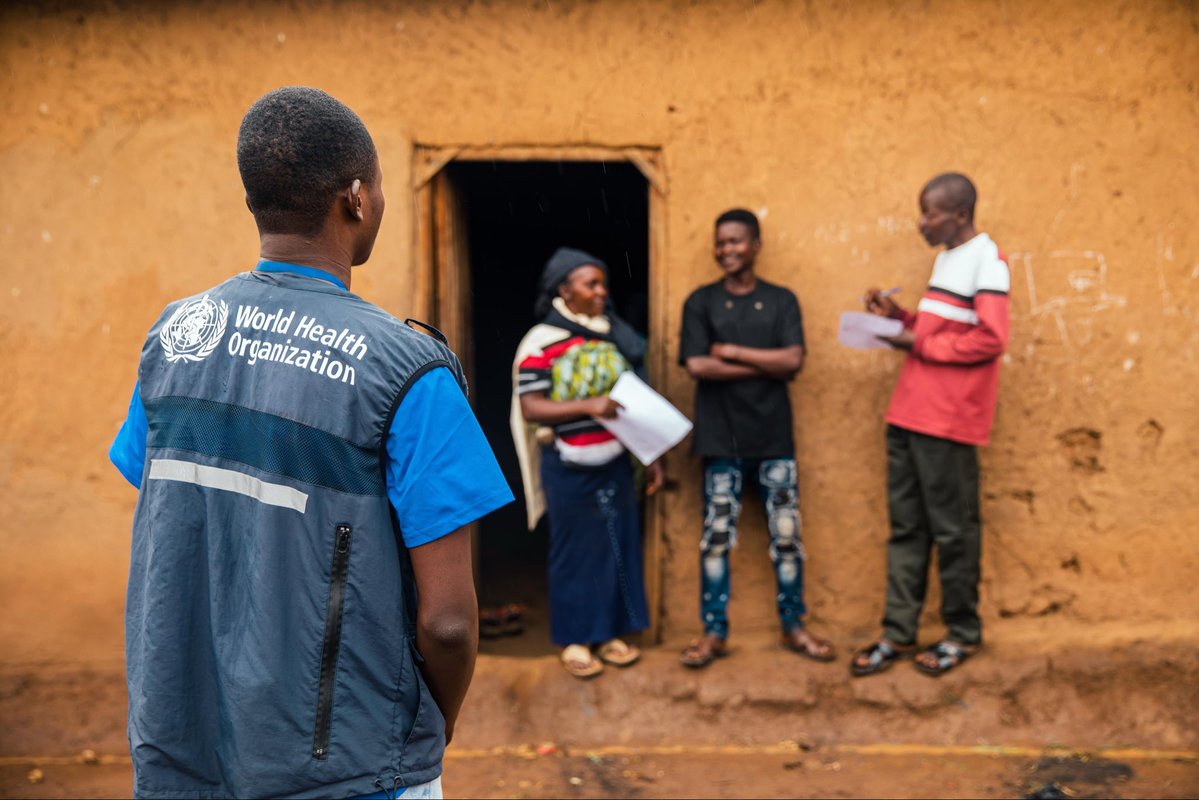
6 months in the Ebola response is progressing thanks to government leadership, the support of African states & the international solidarity of donors, the UN, NGOs & academia. Next we must focus on areas of violence & working with the private health sector
Six months ago, I declared the Bundibugyo virus #Ebola outbreak in the #DRC a Public Health Emergency of International Concern. Since then, over 11,000 cases and 5400 deaths have been recorded across eight provinces, making this the largest and deadliest Ebola outbreak in the country's history, with children bearing a heavy burden. My heart is with every grieving family, and with communities navigating this crisis alongside conflict, displacement, and food insecurity.
Yet amid immense hardship, local responders and global partners, under the leadership of the government, are driving hard-won progress. Transmission is slowing in several early epicentres, and clinical trials, including the Tumaini trial and new vaccine candidates, are advancing rapidly. My deepest gratitude goes to the Congolese nurses, doctors, community health workers, contact tracers, and burial teams working under extraordinary pressure. Because of your courage, around 3000 people have recovered and returned home.
Ending Ebola starts and ends with communities. Trust cannot be demanded. It is earned through listening, respect, and compassionate care so people seek treatment early, when lives can be saved. To finish the job, medical innovation must go hand in hand with proven public health measures, safe humanitarian access, and a cessation of hostilities so health workers can reach every affected area without fear. I also urge donors to step up and close critical funding gaps to sustain the response.
Under the leadership of the government and alongside @AfricaCDC and our partners, @WHO remains steadfast with the people of the DRC until zero cases remain. Together, we can and will end this outbreak.
Hundreds of millions in Ebola aid have vanished into thin air while frontline workers go unpaid, clinics have no water, and people keep dying. This is not "logistical challenges" it is systemic corruption on the ground. Until there is full, independent, and transparent tracking of every dollar from donor to patient, with real accountability for the missing funds, the question is still nt answered, if further resources should be sent.
Please read this article about the ongoing Ebola epidemic in the DRC. It has not gone away; arguably, it is worsening. BBC News - Ebola in DR Congo: My mother told me I would die if I sought treatment for Ebola. - BBC News
https://t.co/2pYwHhJ2Oo
Influenza A is one of the most intensively studied viruses on Earth. Yet over the past 2.5 years, watching H5N1 establish a nationwide reservoir in US dairy cattle — a host textbooks long treated as essentially off-limits to Influenza A — has rewritten parts of the flu playbook in real time, while exposing how many basic questions we still cannot answer after 90+ years of research.
5 things we did NOT know about Influenza A before bovine H5N1:
1. Cattle are not dead-end hosts for IAV — and the cow's udder can act as a viral "bioreactor" (shedding millions/billions infectious particles/mL directly into milk rather than replicating primarily in the lungs).
2. Industrial milking parlors create a novel mammalian transmission engine (hours of live-virus survival on rubber teat-cup liners + airborne fine [<1 um] and coarse milk aerosols).
3. Bird-to-cow spillover was not a one-off fluke: after B3.13 jumped into Texas cows, a second H5N1 genotype (D1.1) independently jumped from wild birds into Nevada and Arizona dairy herds.
4. Repeated HA and NA sweeps in a mammal outside the classic 226/228 receptor sites: cows selected HA:D104G and convergent V147M (plus NA:N434S / K432E), which may help bind cattle Neu5Gc sugars rather than switching to classic human alpha-2,6 receptors.
5. 2.5+ years of mammal-to-mammal spread on PB2:M631L without ever fixing the classic mammalian PB2:E627K mutation in cattle (even though E627K still pops up within days when cows infect humans, cats, or mink).
---
5 basic things we STILL do not know about Influenza A after 90+ years of research:
1. How flu actually spreads: the quantitative split between contaminated surfaces (fomites), short-range droplets, and fine aerosols (<5 um) — both in humans (where the 2020 EMIT-1 challenge trial and 2026 EMIT-2 natural-donor hotel trial infected only 1 of 52 and 0 of 11 room-mates) and inside dairy farms.
2. Why only H1, H2, and H3 have caused human pandemics — and what features / adaptations are needed to sustain human-to-human H5N1 airborne spread; more importantly what can we do to PREVENT its development for H5 and other Hx.
3. How the virus's 8 RNA segments choose which partners they can mix-and-match (reassort) with when two flu viruses co-infect the same cell.
4. Why human-adapting mutations (like PB2:E627K or alpha-2,6 HA variants) repeatedly arise inside single infected hosts but almost never cross the transmission bottleneck.
5. Why human clade 2.3.4.4b H5N1 spans 5 orders of magnitude in severity — from symptom-free antibodies and mild pink eye to fatal pneumonia — and what mechanically triggers winter flu waves.
(Expanded breakdown + primary references in reply below)
There is an active outbreak of avian flu (H5 influenza) in dairy herds in Washington State, particularly the Yakima Valley. A number of dairy workers have been infected, with at least one death. Speaking with workers, we believe the official case numbers are a vast undercount. 1/
❗Ebola Bundibugyo in DR Congo 🇨🇩 has now passed 10,000 confirmed cases, with over 5,300 deaths.
It's 2nd-largest Ebola outbreak ever recorded. Half of everyone infected has died.
There's no licensed vaccine and no specific treatment.
This should be front-page news everywhere
Netflix is quietly hoping you never type a number into your browser.
I did.
There are thousands of genre and subgenre pages the homepage will never show you: 90-minute movies, noir thrillers, cult sci-fi, tearjerkers, gentle British reality TV, deep sea horror, gritty courtroom dramas. Each one has a code, and the codes have been around since the days when Netflix mailed DVDs.
The homepage shows you rows built from what you already watched. The codes skip that and open the category directly. Nothing extra gets unlocked, because every title is already in your plan. You’ve just never been shown the shelf.
Go to https://t.co/sko9YNjwfG in a web browser, add a code at the end, and press Enter.
You’ve been scrolling for 20 minutes saying “there’s nothing to watch” while sitting on a library organized into categories Netflix never put on the front screen.
A former streaming content tagger someone who spent years watching movies and labeling them by genre, mood, and theme so the recommendation engine could sort them walked me through it. She said: “People think the homepage is the catalog. It’s not. It’s a guess about you. The categories are how the catalog is actually organized, and most people have never seen a single one.”
Here’s how to use them, and the 10 codes most worth bookmarking 🧵
Concerning to see masked pro-Palestinian activists at City St George’s University of London, using loudspeakers to chant for the sacking of Professor Michael Ben-Gad, apparently because he — an Israeli citizen — served in the IDF in the early 1980s.
The demonstration took place in a main circulation area of the University Building at Northampton Square, through which anyone entering or leaving would have to pass.
Other allegedly pro-Israeli academics have recently been singled out in an Instagram campaign, with their names and photographs circulated alongside accusations of racism and Islamophobia that implicitly question why the university continues to employ them.
Under the newly strengthened Higher Education and Research Act 2017, English universities have a statutory duty to take reasonably practicable steps to secure the freedom of speech of their staff and students — a duty that also protects students’ rights to protest against academics, criticise their views and call for their dismissal.
But what students are legally entitled to say is not quite the same as what universities, as centres of scholarship and intellectual provocation, should expect from members of their community.
Central to the Humboldtian ideal of the university is the notion that even the sharpest political disagreements, and the personal enmities they engender, should be handled with civility, rather than allowed to descend into crude public denunciations and demands for someone’s sacking.
Sadly, this tendency is by no means confined to one side of the Israel–Palestine debate.
The Committee for Academic Freedom (CAF) knows of a recent case at King’s College London where a pro-Palestinian academic faced a hostile campaign following a student complaint about a seminar on the history of Palestine and Israel. Although the university closed two investigations without taking action, posters appeared on campus accusing the academic of supporting terrorism and demanding their sacking. Perhaps unsurprisingly, the academic subsequently described how persistent harassment undermined their professional confidence and made them think twice about what they could safely say in their teaching.
The political positions of Ben-Gad and the KCL academic may differ, but the underlying dynamic of cancellation is all too similar. And beyond the direct impact on each, hundreds — perhaps thousands — of their colleagues take note and silently resolve to keep quiet rather than risk becoming the next target.
Statutory protections may be necessary to secure academic freedom at an institutional level. But they are not sufficient to sustain it in practice. For that, universities depend on something no legislation can manufacture: a culture of intellectual tolerance and a willingness to engage with people whose views we profoundly reject.
“It does feel like a disaster waiting to happen,” said Prof Ed Hutchinson, a molecular and cellular virologist at the University of Glasgow.
“We keep having a series of near misses, and I wonder how long our luck is going to hold.”
Is America on the brink of creating a new bird flu pandemic ???
It may well be . Full story in post below ⬇️⬇️⬇️
The death rate among confirmed Ebola cases in Congo has climbed above 50% after health authorities added hundreds of previously unallocated fatalities to the official toll @jwgale https://t.co/2YfVcxKGYe
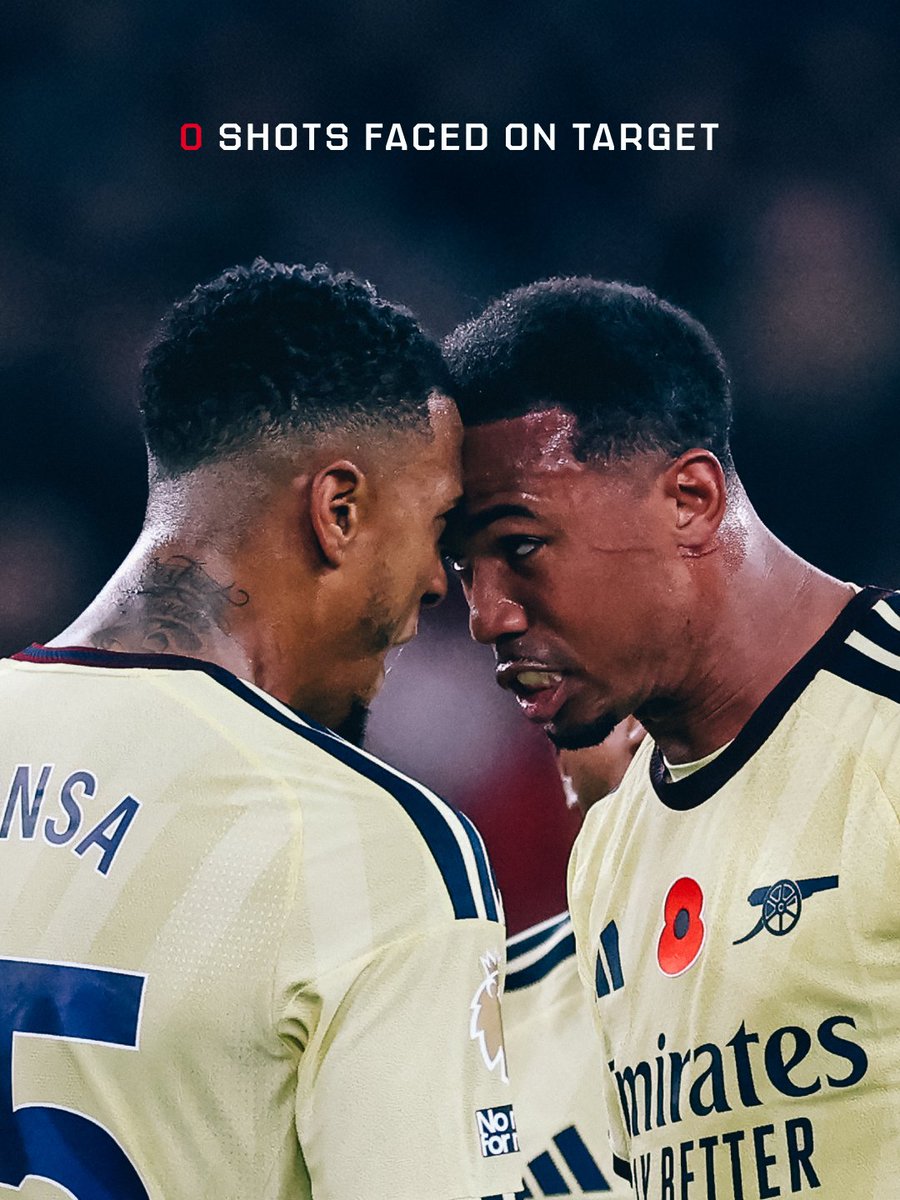
🚨 Mikel Arteta on his conversation with Max Dowman after his red card against Fleetwood Town:
“When Max was coming off, I could see he was upset. He had his head down, and I stopped him before he went into the tunnel.
I asked him, ‘Max, what did we speak about before the game?’
He didn’t answer.
I said, ‘Look at me. What did we speak about?’
He said, ‘Not reacting to the tackles.’
I told him, ‘Exactly. And what have you just done?’
He was trying to explain what happened, that the player had caught him and he was frustrated. I told him I didn’t want to hear it at that moment. He had to go inside, calm himself down and think about what had happened.
I know people saw that conversation and thought I was being too hard on him. But I couldn’t stand there and tell him everything was okay when he’d just made a mistake that could cost his teammates the match.
After the game, I went looking for him.
He was sitting in the dressing room, still in his kit. Most of the boys were getting changed, but Max was sitting quietly, looking at the floor.
I sat beside him and asked, ‘Have you spoken to your parents?’
He shook his head.
I said, ‘Why not?’
He told me, ‘I don’t know what to say to them.’
That was the moment I realised how much it was affecting him.
I told him, ‘Max, you’re 16. You’re allowed to make mistakes. You’re not allowed to pretend they didn’t happen, but you’re allowed to make them.’
He started apologising again.
I said, ‘Stop apologising to me for a moment. Tell me what you learned.’
He said, ‘That I can’t react like that.’
I asked him, ‘And if somebody makes the same tackle on you next week?’
He said, ‘I get up and keep playing.’
I told him, ‘Good. That’s all I wanted to hear.’
Then I asked him something else.
‘Max, do you know why I was so angry with you?’
He said, ‘Because I got sent off.’
I told him, ‘No. Because I know how good you can become, and I don’t want you giving people reasons to take football away from you. You’re going to meet defenders who are stronger than you, older than you, and some who will spend 90 minutes trying to upset you. If they discover that all they need to do is make you angry, they will do it every single week.’
He was listening properly now.
I told him, ‘You cannot control what another player does to you. But you can control what you do next. That’s what separates very good players from the ones who stay at the top.’
Before I left, he asked me, ‘Are you still angry with me?’
I said, ‘A little bit.’
He finally smiled.
Then I put my arm around him and told him, ‘But I’m still your manager tomorrow, Max. And you’re still my player. One red card doesn’t change that.’
He asked whether he’d be playing again.
I said, ‘Of course. Once you’re available. What did you think, I was going to send you back to school?’
He laughed.
And I told him, ‘Now call your parents. They’ll be more worried about you than the red card.’
That’s the part people don’t always see. Sometimes you have to be firm with these boys because the world is not going to be gentle with them. But you also have to remember they’re still boys.
Max made a mistake. He knows that.
My responsibility isn’t just to make sure he never does it again. It’s to make sure he doesn’t spend the next few days believing that one bad moment has changed what I think of him.
Because it hasn’t.”
@bryanrwalsh I share your frustration. IMO, it’s the product of a structural problem in global health best summed up as a cycle of “securitisation and neglect”.
This joyful dance marked the discharge of the last two patients from the #Ebola Treatment Centre in Mongbwalu, Ituri province, #DRC. No new positive cases have been recorded at the facility in the past five days, although suspected cases remain under surveillance.
The outbreak is far from over, but every life saved is worth celebrating. My deepest gratitude goes, as always, to the health workers who make these moments possible.
https://t.co/pENFCjfDIL
Nigeria is tracking 53 contacts linked to its sole confirmed Ebola patient, the Ugandan-born wife of a Swiss diplomat, amid growing worries that the disease could be spreading undetected https://t.co/EntVKeS5am