I waited several weeks before making this post, but now I can say something with certainty regarding the American aircraft carriers deployed in the CENTCOM area.
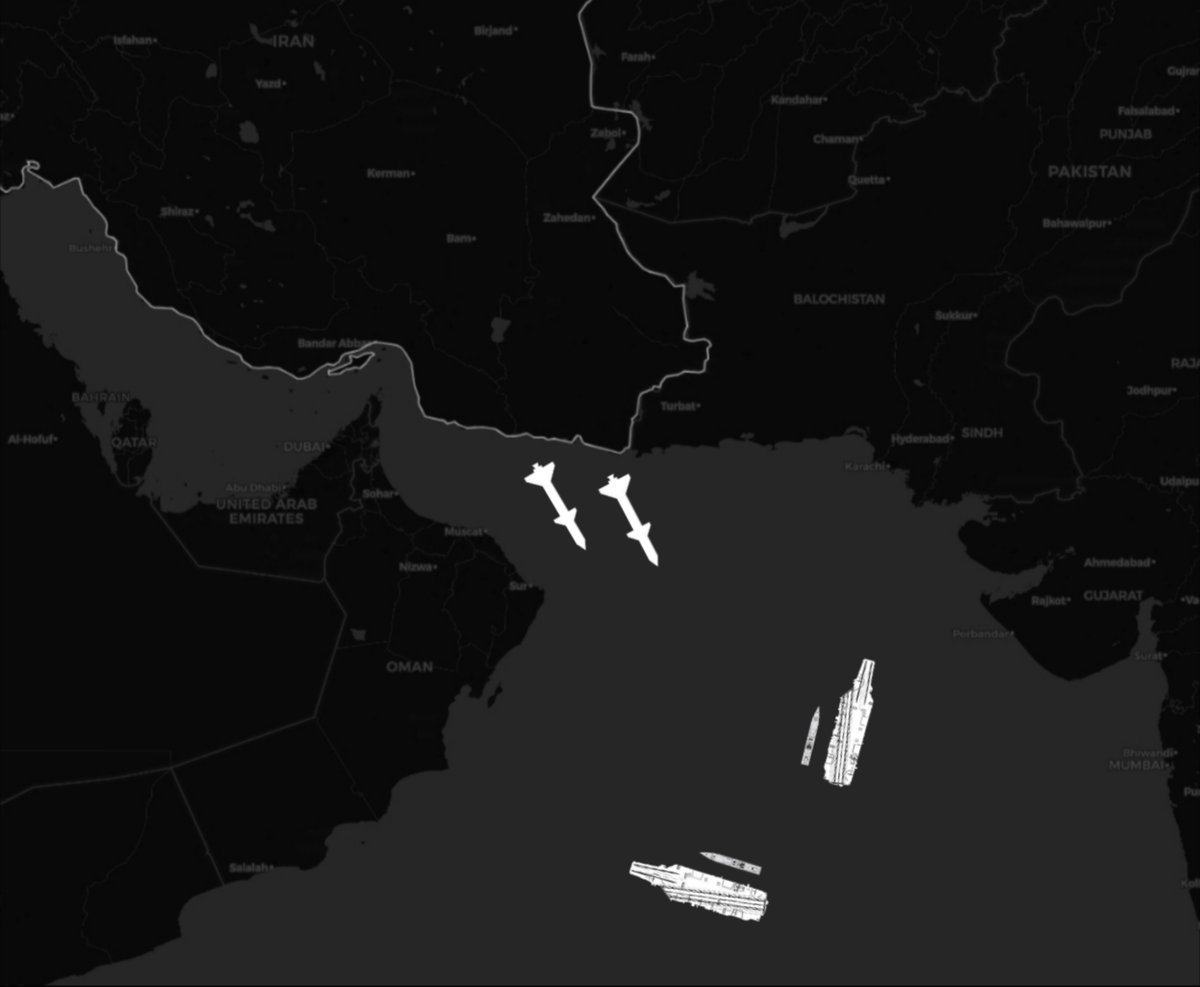
Since roughly the beginning of September, I have not found the USS George H.W. Bush or the USS George Washington, nor the amphibious assault ship USS Tripoli, nor any other components of the carrier strike groups, such as Arleigh Burke-class destroyers, on Sentinel-2 satellite imagery.
This implies that the U.S. has decided to pull back beyond the range of Iranian anti-ship missiles, thereby shifting the naval blockade line, which until August had been positioned at the exit of the Gulf of Oman.
This strategic shift was likely prompted by Iran's first reported use of anti-ship ballistic missiles a few weeks ago, which clearly pose a potential threat to U.S. Navy vessels.
In fact, in early September, the IRGC Navy tested the "Qasem Basir" ASBM for the first time, with a maximum range of approximately 1.200 km, it covers almost the entire Arabian Sea.
IOF is a souless Terrorists Organisation.
🚨 Mahdi Al-Arabi, a child with special needs from the Shu'afat camp, was detained and assaulted by Israel IDF Terrorists.
Palantir and Anthropic targeted Minab school, aided by Pentagon stale data and Hegseth psychopathy stripping target review staff.
And it was a triple tap, not a double tap. Children killed on first strike. Parents killed by second strike getting surviving children. Rescue workers killed by third strike rushing in after second strike.
Unforgivable.
كل تفاصيل هذا المشهد صعبة.
طفل كان على دراجته، يلفظ أنفاسه الأخيرة بعد إصابته من قنبلة ألقتها مسيرة "كواد كابتر إسرائيلية " من دون سبب، فقط لأن المتحكم بالمسيرة قرر قتل فلسطيني .
ومن الطرف الآخر، أشخاص عاجزون يراقبون المشهد أمامهم وغير قادرين على تقديم المساعدة وإنقاذه بسبب خطورة المكان ، شعور العجز وحده قاتل، وهذا الموقف جداً مؤلم.
هذا ما يعنيه الاحتلال .
حي الصبرة - جنوب مدينة غزة
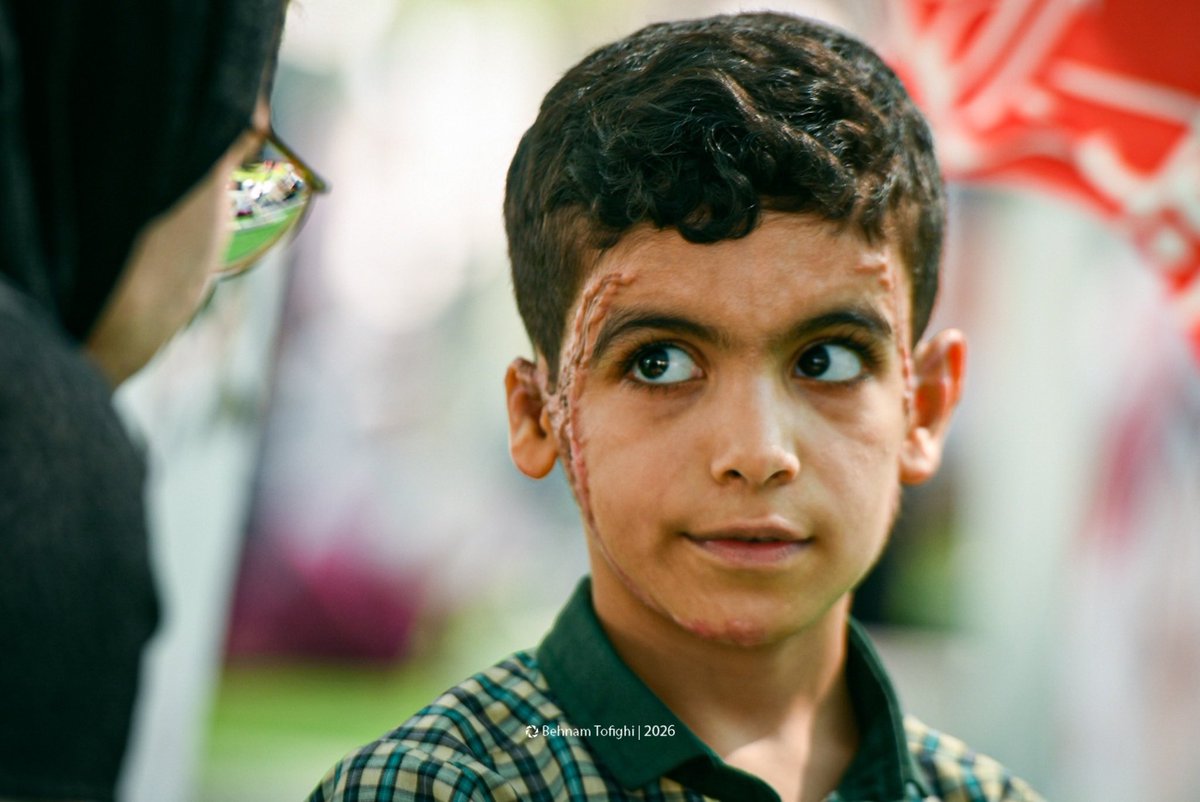
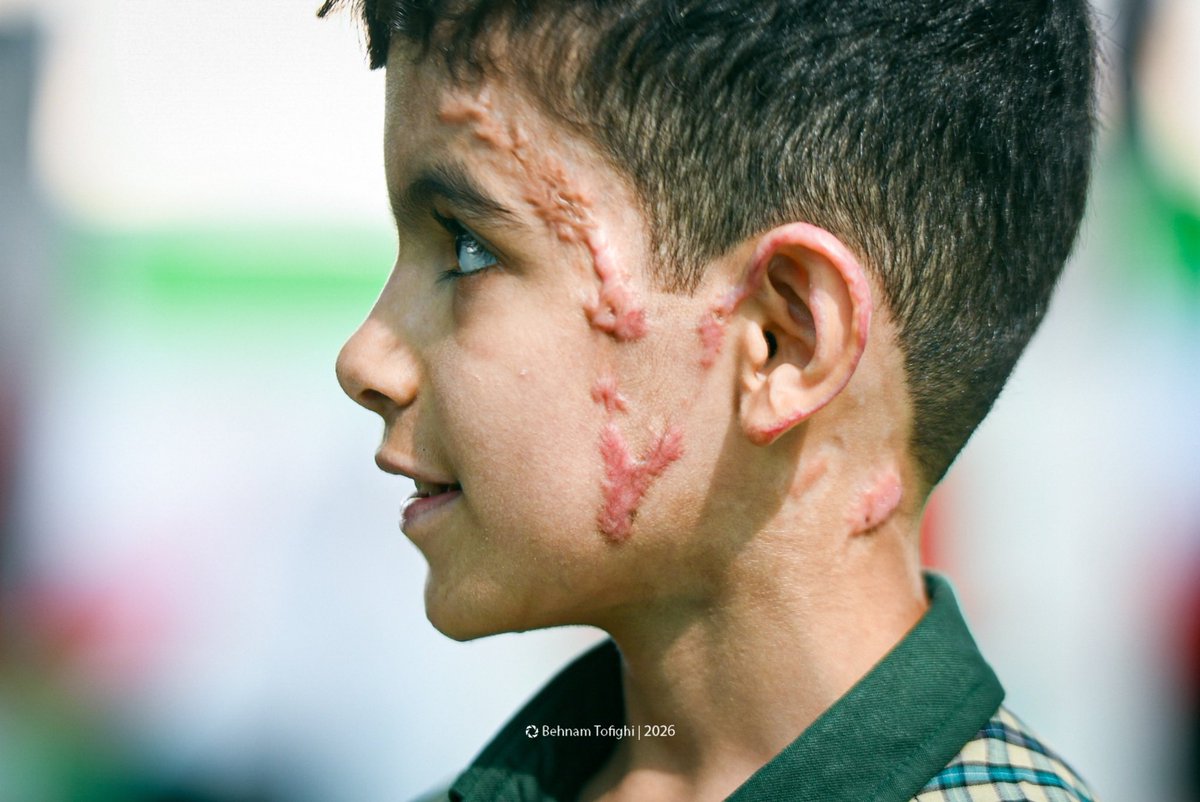
⚡️The scars of a U.S. Tomahawk missile strike remain on the face and hands of Mohammad Sharafi, a second-grade student who survived the attack on Shajareh Tayyebeh School in Minab, southern Iran.
His sister, Zahra, was killed in the strike.
Photo: Behnam Tofighi
🚨 Israel asks for former Syrian air-defense officers to be pursued
Al-Akhbar newspaper, citing Syrian sources, says Syrian security services have carried out a wave of arrests targeting a number of former officers who served in air-defense formations, including personnel who operated SAM, Pantsir, and Buk systems that confronted Israeli airstrikes during the years of the war.
The arrests also included officers who previously worked at defense research centers involved in missile development, as well as others whose names appeared in connection with scientific facilities raided by Israeli forces during the 2024 Masyaf operation in the Hama countryside.
Over the past two months, the campaign has also targeted personnel from the Pantsir system formerly deployed at Mezzeh Airbase, which is credited with responsibility for downing an Israeli fighter jet in February 2018.
Families of the detainees noted that, unlike former air-force officers who had previously been arrested, their photographs were not published on Syrian Interior Ministry platforms.
According to Al-Akhbar, the security campaign intensified following a meeting in Jordan between Foreign Minister Asaad al-Shaibani and Israeli Mossad chief Roman Gofman.
The reasons for the meeting were never officially disclosed, but explanations point to Israeli concerns that parties hostile to Israel—or the new Syrian army—could benefit from the expertise of these officers in rebuilding Syria’s air-defense system after the fall of the previous regime.
According to the newspaper, the arrests carry additional significance because of the sensitive information historically associated with Syria’s air-defense and radar systems, which were of major interest to Israel throughout the war.
In 2011 and 2012, when the Syrian state’s intelligence structure was still relatively intact, Israel relied on more traditional methods of intelligence collection involving paper files and military maps, at a time when today’s advanced technologies were not yet available and opposition factions did not yet control large areas of southern Syria.
In this context, Al-Akhbar referred to an engineer-officer identified by the initials “A.R.”, who later served as spokesman for an opposition faction in southern Syria and was accused of transferring map files and information related to radar systems to the Israeli side.
The officer was also surrounded by suspicions concerning meetings held with Israeli parties in 2017 as part of efforts to revive a negotiating track—claims he later denied on social media.
WATCH my latest coverage here: https://t.co/jwKe1rpj5m
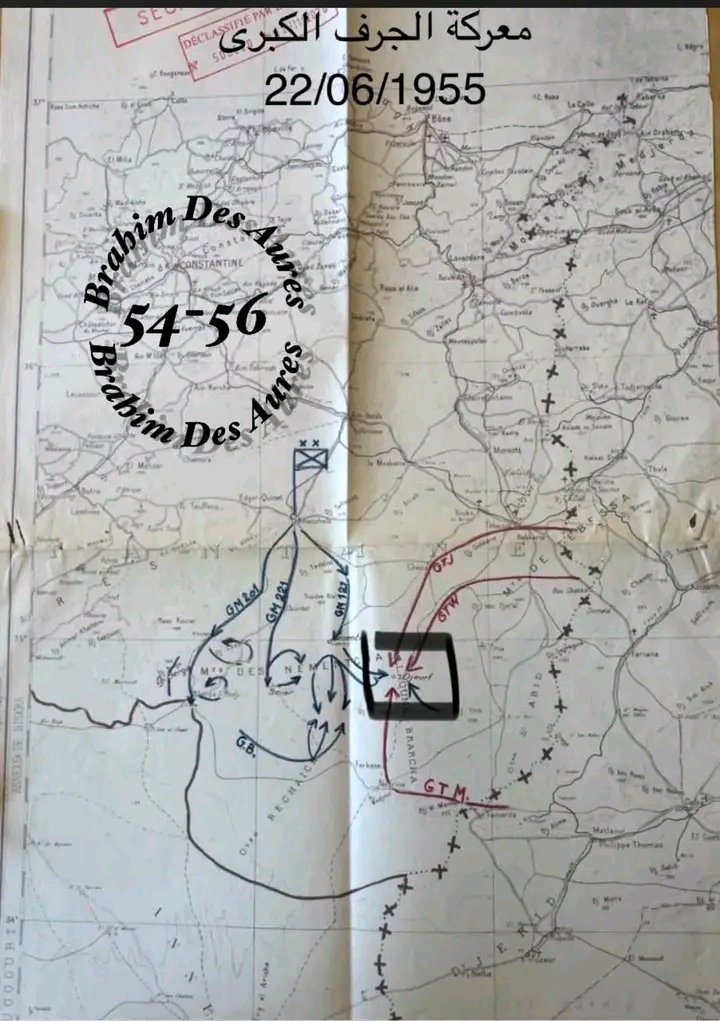
On this day, September 22, 1955, the Battle of Greater Djorf broke out, one of the most prominent and fiercest battles of the Algerian Revolution.
In the Aurès Mountains, around 400 mujahideen led by Abbas Laghrour and Bachir Chihani succeeded in defeating a large French force
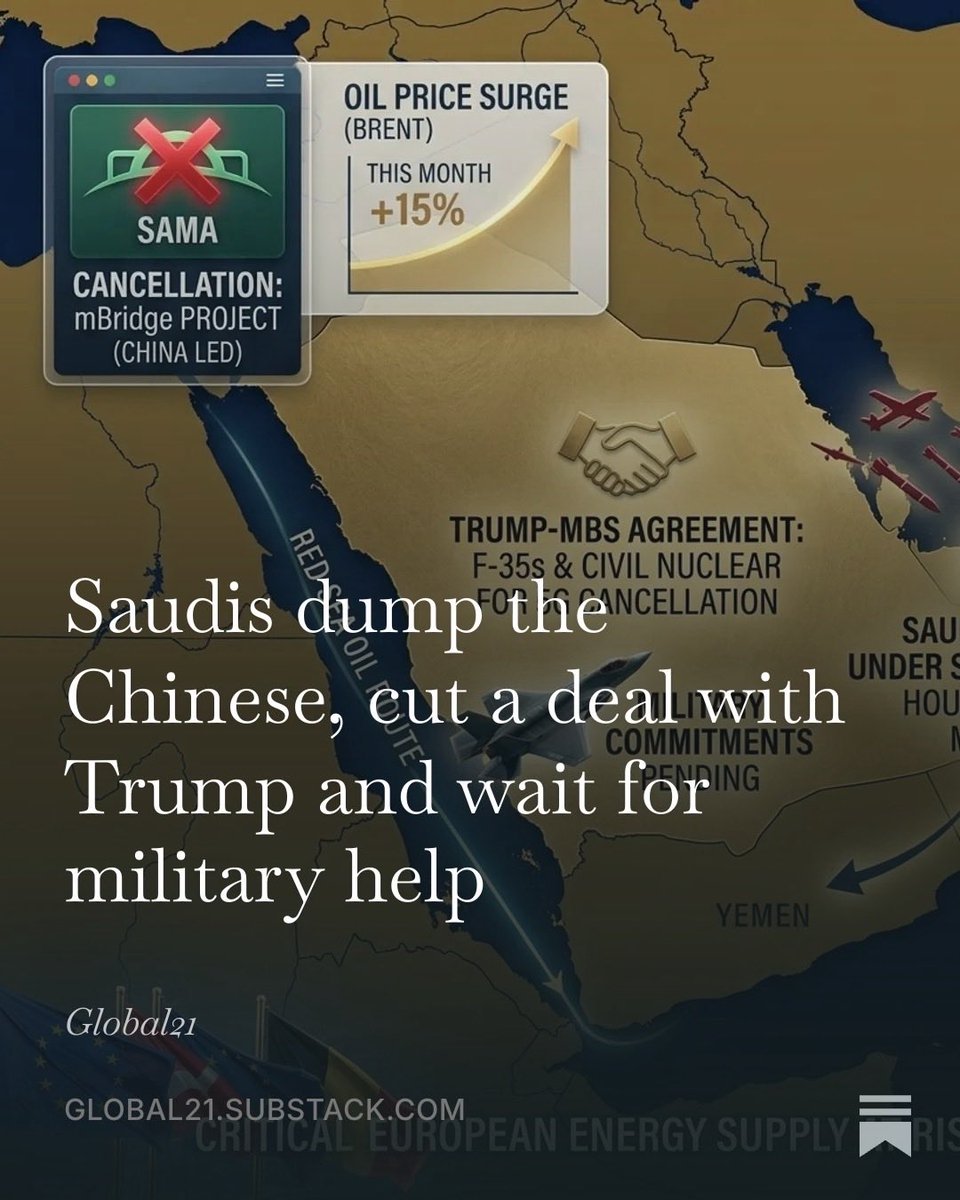
Saudis dump the Chinese, cut a deal with Trump and wait for military help
The Saudis announced the cancellation of mBridge, a central bank digital currency system designed to reduce U.S. dollar reliance.
SAMA (the Saudi Central Bank) joined as an observer in 2023, piloted the project in 2024, and wrapped up formal membership in May 2025.
The kingdom offered a flimsy excuse, claiming it had already walked away from the program long ago and that the relationship never went beyond a test.
The problem is that through May, June and July 2026 the Financial Times itself, the Hong Kong press and analyses such as Forbes were still treating SAMA as a member. In September, a policy paper still listed Saudi Arabia in the project. There is no official SAMA note from May 2025 saying they had left.
What exists now is Riyadh telling the FT that the pilot ended on May 13, 2025, and that after that it was no longer a participant. That is obviously not how governments handle an exit from programs like this.
And it isn’t only that. With the F-35 purchase, the Saudis will also have to give up more of the Chinese 5G networks.
Official contracts for the sale of sensitive technologies like the F-35 come with rigid clauses on data encryption, network security and physical access control at military bases.
The Pentagon formally requires that no communications technology from rival countries interact with, or share networks near, the aircraft’s ecosystem.
They warn that the presence of those companies creates risks of electronic espionage and reverse engineering of F-35 systems.
No question this is a setback for the relationship China had been building with the Saudis.
But what did Trump actually offer the Saudis in this current negotiation?
Trump folded and handed over the nuclear program, now the F-35s, but weeks ago he refused to join the Saudi naval coalition against the Yemenis, and more recently he refused to bomb Yemen to help MBS, who has taken recent hits with the Houthi advance against his allies.
The Houthis then stepped up the bombing of Saudi installations, pushing oil above $105, and that is what brought Trump back to stitch together a deal with Bin Salman.
Read more
https://t.co/ZjlA7gfCCi
What the recent meetings of Israel, the US, the GCC and Egypt say
More than indicating preparation, the recent meetings prove that the US, Israel, Egypt and the Gulf countries are already coordinating the phases of a possible regional conflict against Iran and its allies, where the Red Sea will have a fundamental role.
In fact, the US and Israel have already been in a direct war with the Iranian regime and its allies for more than six months, with Israel resupplying and the US at a slower pace because of logistical, political and economic limits.
The focus of these summit meetings, as the secret military meeting in Germany last week and the presidential meeting Donald Trump called in New York, shifted from prevention to damage management, maintenance of alliances and post-war strategies.
The meeting in Germany was organized by Admiral Brad Cooper, CENTCOM commander, and brought together the chiefs of staff of Israel, Saudi Arabia, the UAE, Bahrain, Kuwait, Qatar, Jordan and Egypt.
The US assured the Gulf countries that American forces will not pull back or vacate their bases in the Middle East, even under the crossfire of Iranian missiles.
That contradicts other recent reports that are much more solid. That information draws my attention to this meeting having as its objective tightening ties with the GCC, which has been encouraging a peace solution with the Chinese as intermediaries.
At the meeting in Germany, CENTCOM detailed aggressive naval plans to try to reopen and expand tanker traffic in the Strait of Hormuz, which was blocked at the peak of the fighting, strangling the global oil flow.
But I would say this is no different from the rhetoric of months, in which this same plan did not take off and did not get allies to put their military ships in to force the Strait of Hormuz back open.
You know why? No commander is crazy enough to stick his ship into a naval strait surrounded by mountains armed with anti-ship missiles, drones, and in the water a naval force that is still very active.
Another fact that stood out in the meeting was Israel’s proposal to defend Saudi interests and enter the war against the Houthis.
But although Prime Minister Benjamin Netanyahu offered Israeli involvement at that level against the Houthis, the Saudis drew a clear red line because of the political costs and the complexity of the regional dynamics.
Saudi Arabia accepted Israel’s intelligence help, but categorically rejected a direct military intervention or Israeli airstrikes in Yemen.
In the eyes of anyone following the conflict, the meeting served to reinforce ties, but there is more involved in this.
The flow of US weapons and combat technologies to the Middle East in recent months reached historic levels.
Donald Trump’s government activated presidential emergency clauses to ignore the regulatory deadlines of Congress. That allowed the immediate shipment of heavy attack weapons to Israel and high-technology air defense shields to the Gulf countries.
The packages approved under emergency clauses ignored the normal Congress review deadlines to fill stocks that are running out fast in the war.
In Israel’s case, the 40,000 one-ton bombs and the JDAM kits approved in September have immediate delivery.
The US is using already existing stocks ready for shipment to guarantee that Israel is prepared for another conflict or the continuation of operations against Iran.
Read more:
https://t.co/eWHkeWIrok
I got a lot of heat from my Algerian brothers over this. I understand the frustration, and it's an expected reaction, but I remain 100% confident in my sources.
Anyway, @CaelumPugnator found a document through dorking that appears to be related to this subject. It was apparently uploaded by Algeria's Ministry of National Defense to Scribd, a digital document library.
What's important is that the document is an official log of military regulations and instructions issued by the command of the 12th Mechanized Infantry Division, dating back to 2024.
Instructions listed in rows 171 and 180 direct units to take precautionary measures against the passage of foreign reconnaissance assets over the Djelfa Military Sector.
The document explicitly refers to a threat, suggesting that foreign ISR activity was taking place over or in the vicinity of Algerian airspace at the time. This also aligns with what I reported in October 2025, when my sources indicated that foreign ISR activity had been observed since at least September 12, 2025. As mentioned in the quoted post, my sources identify the drones as belonging to a NATO member state, with the United States being the most likely operator.