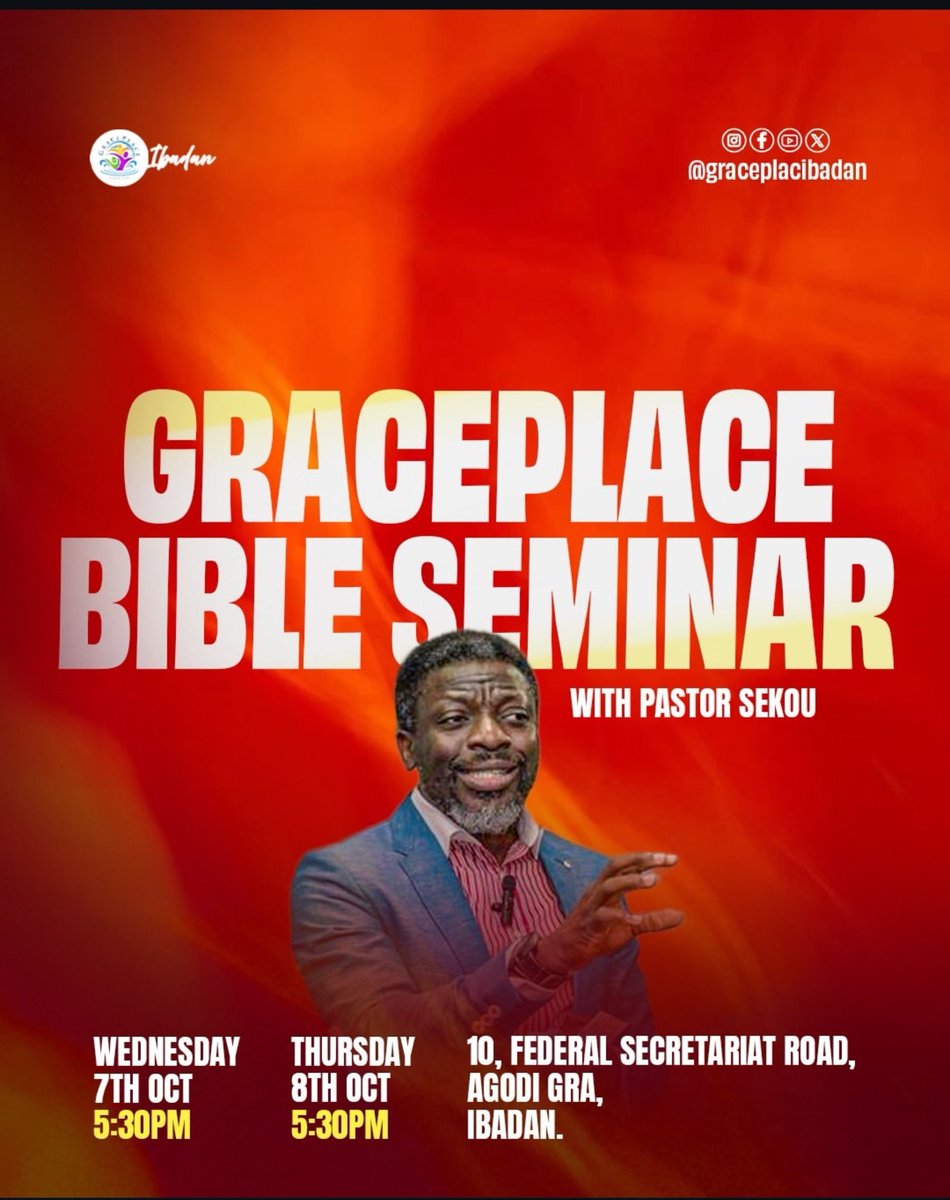
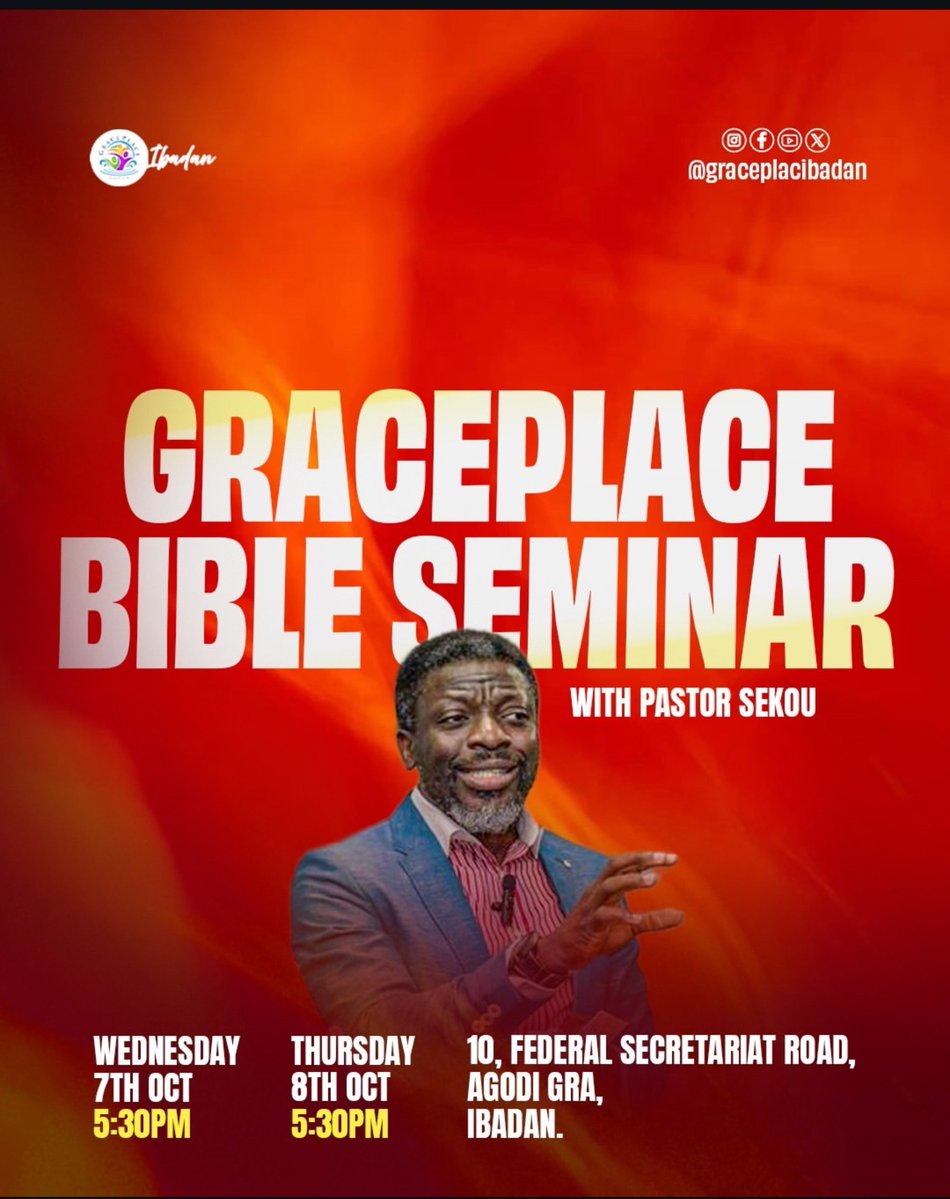
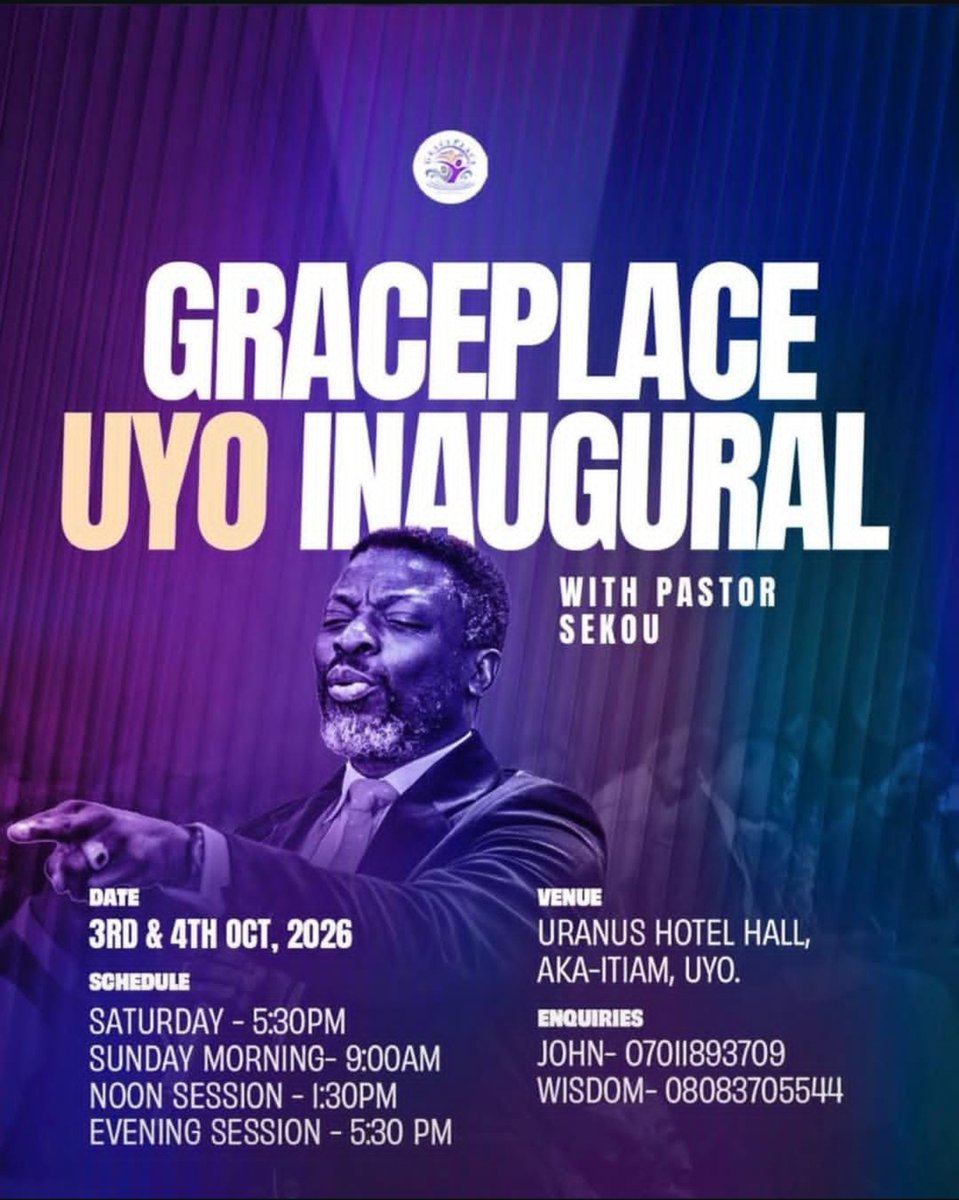
This weekend with Pastor Sekou at @GracePlaceLagos
Do you stay around Ikeja, Ojota, Ogudu, Gbagada, Ogba, or anywhere in Lagos, I am inviting you to join us.
Come around, it's God's Light in all the Earth.
See flyer for Deet's.
Lagos Life was inspired by Lagos Run.
83 hours after launch, it had 738,805 players. Lagos Run's last posted number was 90,000.
I broke down how that happened, and why I think the future belongs to people who steal. https://t.co/F7rwpcriaK
My claude code limits just reset so I'm supposed to be building my Day 3 video.
But I also need to go and hug the birthday girl @ronn_aa
So guess what?
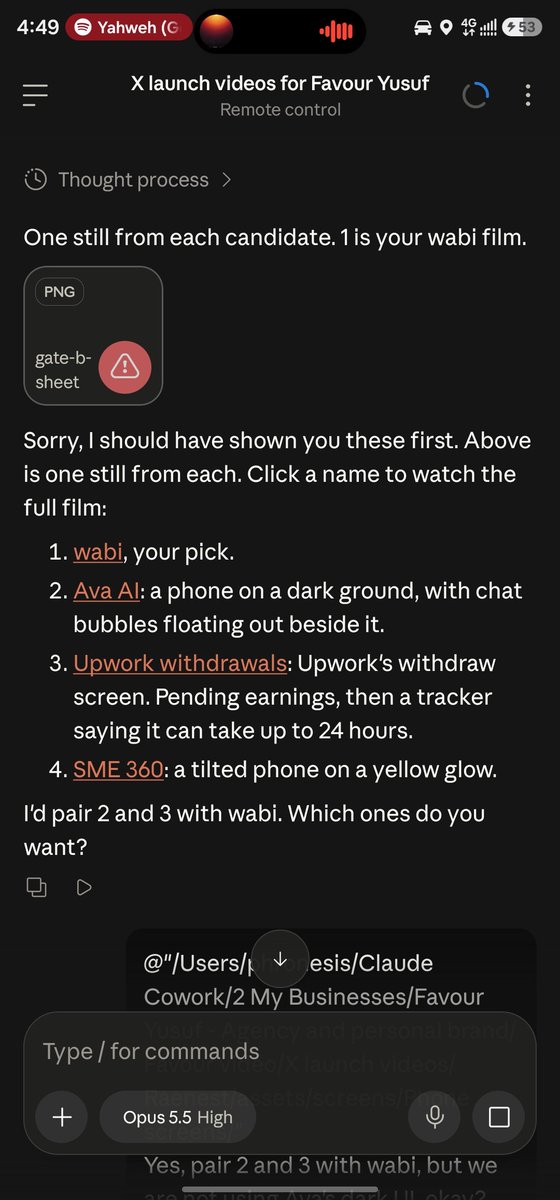
I'm controlling Claude Code from my phone.
Now, I don't need to be stuck to my desk
If you know something that can help me leave Nigeria, further my education, or make money while in Nigeria, please share it. I’m genuinely begging.
I genuinely want to earn money 😭😭
Over the weekend.
I held a free class on building with AI and I built a couple of things.
First is HIT, Hiring Insights Tool, a free AI tool that runs the same process I use to research and apply for jobs.
Then we built 3 videos to tell you about it.
I'll link the videos below.
Oh, and check out HIT at
https://t.co/KAuRe4QiB3
In my AI class yesterday, I built this tool from scratch
https://t.co/sqQHfwlF0r
It's a simple tool built from the idea of my viral article from last year.
It takes a job posting, tells you what the client is actually looking for, and shows you how to tailor your CV or proposal for the job.
It also gives you a deep research prompt to research the client and the industry, and come up with a specific free sample you can build for that client.
We built everything live on the call, from scratch, including choosing the design live.
I made sure to stress one important thing when it comes to building with AI.
Clarity and Context.
You must be very clear about what you want.
The clearer you are about what you want to build, the higher the chances that you can build it.
If you understand how to provide as much context to your AI as you can, and you're very clear about what you're building, then you can build anything no matter how complicated.
If you want to see how I applied this principle live to build an AI tool, check the link below for the recording.
Today is Day 2, and I'll be showing you how to build videos with AI on the internet.
Register at https://t.co/YMnsEIp9kt
Day 1 of Ship with AI is done! 🔥 🔥
We built a working AI tool live and put it online in one evening, with no code written by hand.
The recording, the setup guide, the prompts and the slides are all on my WhatsApp channel.
Day 2 is tomorrow at 7pm WAT.
I be sharing how to build AI videos, SaaS launch videos and animations using AI agents.
https://t.co/f0yi5Uqs6i
Final call:
Going live in about 2 hours to show how I build with AI.
If you haven’t registered, this is the last chance
https://t.co/OFx6ubvTdH
Also, heads up, the webinar link only allows 100 participants, so if you can’t join on meet, I’ll be live on YouTube as well.
You can follow along at https://t.co/OgdXfzsSWL
See you soon!
Musings on Acts 16:24-34
This is a tricky passage.
Paul and Silas had been beaten, severely wounded, and locked in prison.
Yet at midnight, they were praying and singing praises to God.
When the great earthquake shakes the prison, It is worth noting that everyone's chains were unfastened, not just Paul and Silas’s. Those who prayed and those hearing others pray but did not get involved in praising or praying. This reveals God’s heart for humanity prior to human belief or action. God’s power operates to bring liberation to all, demonstrating His inherent desire to unchain humanity and set captives free but not as a reward for their performance or any merit of theirs.
This physical unchaining of all the captives mirrors the ancient Exodus imagery in Moses’ writing.
Paul and Silas were not praising God in order to get released; their praise was a natural outflow of knowing that their life was already secure in the resurrected Jesus. Their joy was not a religious performance to trigger a miracle, but the practice of resting in God's love regardless of their circumstance. Their prayer and praise in prison is not an act of heroic discipline.
The gospel Paul and Silas preached brings with it its song, which flows from knowing that He has made us sharers in Christ’s life.
Paul and Silas were secure in God's life while in chains.
The jailer drew his sword to commit suicide, assuming the prisoners had fled (which meant execution under Roman law). Paul shouted for the jailor not to self-harm, revealing that all the prisoners had stayed with Paul and Silas!
Paul and Silas represented something radical. The love of God had taken away fearful living. It is the fact that God’s new creation had invaded the present age of self-preservation.
These saints proved they were no longer living under the rule of self-preservation. Because their life was already guaranteed by Jesus' resurrection.
Paul and Silas did not view physical escape as their ultimate goal. If they had fled, the jailer would have died by his own hand. By staying back, they demonstrated the love of God, proving that saving a human life from death and despair was far more important than escaping a prison cell.
Paul's intervention displayed a radically new social order where human life, even the life of a brutal jailor, is valued above personal liberty.
That shook the jailor to his foundations!
When the jailer asked, "What must I do to be saved?", in context, he was asking how to be saved from the immediate fear and hopelessness engulfing his life and which was pulling him towards suicide.
The answer? The gospel.
Salvation here was immediate transformation. The jailer moved from the brink of suicide to washing their wounds, sharing a meal, and rejoicing with his whole household. The realization of God’s grace takes a person out of self-destruction and grounds them in the joy of sharing in God’s life. The kind he had witnessed in Paul and Silas.
Acts 16 is not a story about how to use faith to get God to break your physical chains; it is a story about how the resurrection frees you from the fear of death so completely that you become a agent of life to the very people holding you captive.
… to be continued
So you have the agent that finds the leads. Here's the one that writes the outreach.
I wrote out the HOW.
It is very simple to use.
You pop the prompt into Claude Code or ChatGPT, and it opens the lead list you already have in Notion.
It only takes the companies you have not contacted yet.
Then it finds what those companies' customers are already complaining about in public. Review sites, app store reviews, forums.
For example, if the Trustpilot reviews for a prospect keep saying the onboarding takes a week, that quote goes into the email, with the link and the date next to it.
It writes the email under 150 words. It opens with what the customer said, then what it costs them, then one small ask. Two follow-ups after that, one on day three and one on day seven.
It saves all of it into that company's row in Notion, marked ready to send.
It never sends anything. You read it, edit what you want, and send it yourself.
And it turns the whole thing into a scheduled task that runs every Monday, so you always start the week with the drafts waiting.
Get it here 👉🏽 https://t.co/yITWB4F5LH
Musings on Romans 14
Romans 14 is a cornerstone passage for understanding Christian liberty and understanding how that liberty is meant to be exercised.
Romans 14 should be read by more christians frequently throughout a year.
The true heart of Romans 14 is seen in Romans 15:1 “We then that are strong ought to bear the infirmities of the weak, and not to please ourselves.”
Reading Romans 14 without going as far as Romans 15:1 is like pregnancy without child birth. The climax of Romans 14 is not in Romans 14 but in Romans 15. Paul is arguing what the belief of the gospel produces outwardly towards others.
Romans 14 is cruciform thinking and living.
Paul is saying a new creation has begun and this is what it reasons like.
We see that the true proof of revelation knowledge is that you become conscious of community and you readily and willingly lay down your pleasures for the preservation of others.
We see that freedom is never about asserting "my rights" to do whatever I want. Biblical freedom is the power to lay down one's rights out of love for others.
Paul’s argument is that eternal life inspires you to voluntarily lay down liberty out of love.
Romans 14 is really an argument that freedom is about cruciform loving, and not self-indulgence. That which knows just enough to assert personal liberties is not motivated by cruciform love and the consciousness of community preservation. Therefore, it is not useful for edification. That knowledge is incomplete.
… to be continued
Musings on 1 Corinthians 10
1 Corinthians 10:11
11. Now all these things happened unto them for ensamples: and they are written for our admonition, upon whom the ends of the world are come.
The “them” refers to Israel whose story Moses told in his writings in the holy scriptures.
Paul does not treat these narratives as mere moral fables. He told the Corinthians there was much to learn from the journey of Israel, for they are written for our admonition.
Paul establishes a link between Israel’s wilderness experience and the saints at Corinth!
1 Corinthians 10:1-4
1. Moreover, brethren, I would not that ye should be ignorant, how that all our fathers were under the cloud, and all passed through the sea; 2. And were all baptized unto Moses in the cloud and in the sea; 3. And did all eat the same spiritual meat; 4. And did all drink the same spiritual drink: for they drank of that spiritual Rock that followed them: and that Rock was Christ.
By saying “that Rock was Christ" Paul shows that Israel encountered Christ in Moses ministry to them.
The people were exposed to the rich Christ-revealing ministry of Moses.
1 Corinthians 10:7
7. Neither be ye idolaters, as were some of them; as it is written, The people sat down to eat and drink, and rose up to play.
These words “The people sat down to eat and drink, and rose up to play” are from Exodus 32:6.
Paul was referring to Moses’ story in Exodus 32:1-6 of the people building a golden calf, which Aaron falsely called Yahweh. Aaron had proclaimed, "These be thy gods, O Israel, which brought thee up out of the land of Egypt” (see Exodus 32:4).
Paul warned the Corinthians that they were in danger of becoming idolaters as some of the Israelites that Moses wrote about!
In Aaron’s words, we see the real danger. It was a re-definition of Yahweh. The name of the Deliverer is retained, but the nature, character, and representation of the Deliverer are completely replaced!
Aaron, a priest whose role was to direct Israel's belief toward the true redemptive God, took the very gold given during deliverance and reshaped it. He gave the people a physical image they could comprehend, labelling a man-made idol with the sacred name of their Deliverer.
If God’s provision through Moses was an unveiling of Christ, the rebellion through Aaron is anti-Christ.
It is a sober fact that Aaron is the primary catalyst of idolatry.
The tragedy of Exodus 32 was not the abandonment of Yahweh’s name, but the substitution of Yahweh's true nature with a man-made image (the calf) constructed by a minister (Aaron).
The golden calf was not crafted by an Egyptian Prince or a profane pagan king; it was sculpted by Aaron, the appointed high priest!
The priest’s primary vocation is to act as an uncorrupted lens, faithfully reflecting the nature of God to the people.
Interestingly, Aaron caved to the people's demand "make us gods, which shall go before us", he transformed from a steward of divine revelation into an agent of popular projection.
Paul’s point in 1 corinthians 10 is the chaos that follows the worship of a distorted presentation of the True God.
Just as in Moses’ day, today, saints face the danger of the worship of a golden calf.
The golden calf is a man-made image.
In this case, made by Aaron, a minister.
The minister says to the people “this is the God that rescued you from Egypt.” However, it is a lie.
The golden calf is a false visual or mental image of God fabricated by ministerial failure driven by misdirected seeker-sensitivity.
In Paul’s writings, the golden calf is the image referred to as “another gospel” (see Galatians 1:6–7 & 2 Corinthians 11:4).
The calf is an alternate image preached to the saints by one who should have preached Christ.
Therefore, today’s equivalent of Aaron's golden calf is an altered, man-made presentation of God constructed by a minister, namely, “another gospel" that uses the name of Christ while presenting a fabricated image of Him.
The most dangerous form of paganism is the one preached from a pulpit using the name of Jesus.
… to be continued